 Gender Reassignment
Why Some Hair Transplants Look Dense at 6 Months But Worse at 2 Years
Introduction
One of the most common misconceptions about hair transplantation is that the appearance of the hair at six months represents the final outcome. Many patients are thrilled when they begin to see noticeable density during the first year after surgery, only to become concerned a year or two later when the results no longer appear as full as they once did.
This often leads to questions such as, "Did my transplant fail?" or "Why does my hair look thinner now than it did a year ago?"
In many cases, the transplanted hair itself remains healthy, while changes in the surrounding natural hair alter the overall appearance. Hair transplantation restores hair to areas of thinning or baldness, but it does not stop the biological process responsible for ongoing hair loss in untreated follicles.
Understanding how transplanted hair behaves over time, how native hair continues to change, and why long-term planning is just as important as the surgery itself helps patients develop realistic expectations and make informed decisions about their hair restoration journey.
Understanding The Hair Growth Timeline After A Hair Transplant
Hair transplantation is not an instant solution.
After surgery, the transplanted follicles pass through several natural biological stages before reaching their mature appearance.
Although every patient heals differently, the process generally includes:
Initial healing of the scalp
Temporary shedding of transplanted hairs
Dormant follicle phase
Early regrowth
Progressive thickening
Long-term maturation
Each stage contributes to the final cosmetic outcome, and significant changes may continue well beyond the first year.
What Happens During The First Six Months?
The first six months are often the most exciting period for patients.
Following the temporary shedding phase, many transplanted follicles begin producing new hairs.
During this stage:
Hair gradually becomes visible.
Coverage begins improving.
Density appears to increase.
Hair continues thickening.
Confidence often improves.
Although these early results are encouraging, the transplant is still maturing beneath the surface.
Hair calibre, texture, and overall density continue evolving over the following months.
Why Six Months Is Not The Final Result
Many patients mistakenly believe that the six-month mark represents the completion of the transplant.
In reality, transplanted hair continues to mature for many additional months.
Ongoing changes may include:
Increased hair thickness
Improved texture
Better blending with native hair
Enhanced volume
Greater overall density
For this reason, surgeons usually evaluate final results after sufficient maturation has occurred rather than relying solely on early postoperative photographs.
Understanding The Difference Between Transplanted Hair And Native Hair
One of the most important concepts in hair restoration is recognising that two different populations of hair exist after transplantation.
Transplanted Hair
These follicles are carefully selected from donor areas that are generally resistant to androgenetic alopecia.
They usually retain this resistance after transplantation.
Native Hair
The existing hair surrounding the transplant continues to follow its natural biological course.
If affected by male pattern baldness, these follicles may continue to gradually miniaturise over time.
This distinction explains why overall density may change even when the transplanted grafts remain healthy.
What Is Progressive Hair Loss?
Hair transplantation restores hair to areas that have already thinned or become bald.
It does not cure androgenetic alopecia.
Male pattern hair loss is a progressive condition in which genetically susceptible follicles gradually become smaller under the influence of dihydrotestosterone (DHT).
As this process continues:
Hair shafts become thinner.
Growth cycles shorten.
Hair density decreases.
Visible scalp exposure increases.
These changes affect untreated native hair rather than the transplanted follicles themselves.
Why Results Can Look Worse After Two Years
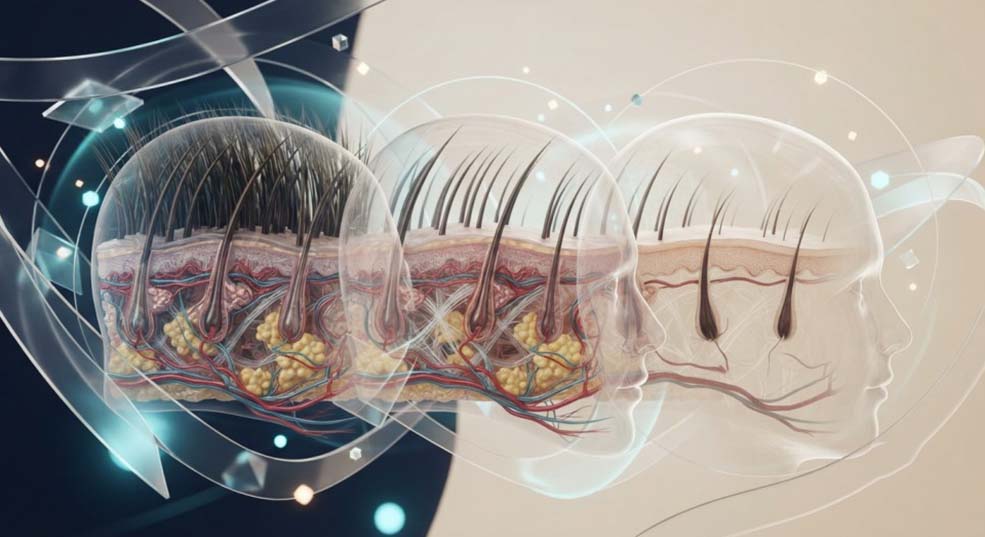
A patient may have excellent transplant survival while simultaneously experiencing ongoing thinning of the surrounding native hair.
This creates several possible changes:
Wider gaps between transplanted hairs
Reduced overall density
Increased scalp visibility
Less blending between transplanted and native hair
Greater contrast in thinning regions
The transplant has not necessarily deteriorated.
Instead, the surrounding hair landscape has changed.
The Importance Of Long-Term Surgical Planning
Experienced hair transplant surgeons plan far beyond the first postoperative photographs.
Every procedure considers not only today's hair loss but also the pattern that may develop over the coming years.
Long-term planning involves assessing:
Family history
Current stage of hair loss
Age
Donor reserve
Hair characteristics
Likelihood of future progression
Long-term restoration goals
This comprehensive approach helps create results that continue to look natural as hair loss evolves.
Why Conservative Hairline Design Matters
One of the biggest mistakes in hair transplantation is designing an excessively low or dense hairline without considering future hair loss.
As native hair behind the transplant continues thinning, an aggressively designed hairline may appear isolated or unnatural.
A thoughtfully planned hairline considers:
Facial proportions
Age
Future hair loss progression
Available donor supply
Long-term aesthetic balance
Conservative planning often produces results that age more naturally over decades.
Donor Hair Is A Limited Resource
Every transplanted follicle comes from a finite donor supply.
Unlike natural hair, donor follicles cannot be regenerated once harvested.
For this reason, surgeons carefully preserve donor reserves by considering:
Current hair loss
Potential future procedures
Long-term donor availability
Expected progression of baldness
Lifetime restoration strategy
Responsible donor management is one of the defining characteristics of high-quality hair restoration.
Can A Hair Transplant Fail After Initially Looking Successful?
This is one of the most common fears among patients who notice reduced fullness after a year or two.
In most cases, the answer is no.
If the transplanted follicles have successfully healed and produced healthy hair, they generally remain permanent because they originate from donor areas that are resistant to androgenetic alopecia.
What often changes is the surrounding native hair.
As untreated follicles continue to miniaturise over time, the contrast between transplanted and native hair becomes more noticeable, creating the impression that the transplant has failed when it has actually remained stable.
Does Transplanted Hair Thin Over Time?
Transplanted hair behaves much like it did in the donor area.
Because these follicles are typically resistant to dihydrotestosterone (DHT), they usually continue producing healthy hair for many years.
However, the appearance of density can still change due to factors such as:
Progressive thinning of native hair
Natural ageing of the hair shaft
Changes in hair colour
Alterations in hairstyle
General reduction in hair calibre with age
These changes affect the overall appearance rather than indicating loss of the transplanted grafts themselves.
Why Medical Hair Loss Management Remains Important
Hair transplantation restores hair to thinning or bald areas, but it does not prevent ongoing hair loss in untreated follicles.
For suitable patients, medical management may help slow the progression of androgenetic alopecia and preserve existing native hair.
Depending on the individual's diagnosis and clinical suitability, a hair restoration specialist may discuss options such as:
Oral medications
Topical treatments
Platelet-rich plasma (PRP)
Low-level light therapy
Lifestyle optimisation
Regular follow-up assessments
A comprehensive treatment plan often combines surgical and non-surgical approaches to support long-term results.
Can A Second Hair Transplant Be Needed?
Yes.
Some patients choose to undergo a second procedure several years later, not because the original transplant has failed, but because hair loss has continued in untreated areas.
A second procedure may be considered to:
Restore newly thinned regions
Improve overall density
Refine previous results
Extend coverage
Maintain facial harmony as hair loss progresses
The need for additional surgery varies greatly between individuals and depends on the progression of hair loss, donor availability, and long-term goals.
How Experienced Surgeons Plan For The Future
Modern hair restoration is not simply about achieving an impressive six-month photograph.
Experienced surgeons design procedures with decades in mind.
Long-term planning may include:
Preserving donor reserves
Anticipating future hair loss
Creating age-appropriate hairlines
Strategic graft distribution
Maintaining flexibility for future treatments
This philosophy helps ensure that the transplant continues to look balanced even if additional native hair is lost over time.
How To Maintain Hair Transplant Results For Years
Long-lasting results depend on more than the surgical procedure alone.
Patients can support the health of both transplanted and native hair by:
Attending regular follow-up appointments
Following postoperative instructions
Discussing appropriate medical therapies
Maintaining good scalp health
Eating a balanced diet
Managing underlying medical conditions
Protecting the scalp from excessive sun exposure
Consistent long-term care helps preserve overall hair quality and appearance.
Common Myths About Long-Term Hair Transplant Results
Several misconceptions contribute to unnecessary anxiety after surgery.
"If My Hair Looks Thinner Later, The Transplant Has Failed"
In many cases, the transplanted follicles remain healthy while surrounding native hair continues thinning.
"Hair Transplants Stop Future Hair Loss"
Hair transplantation restores hair but does not cure androgenetic alopecia or prevent future thinning of untreated follicles.
"The Six-Month Result Is Permanent"
Hair continues to mature well beyond six months, and the surrounding native hair may also change over the years.
"Everyone Will Eventually Need Another Hair Transplant"
Some patients never require another procedure, while others may benefit from additional treatment depending on their pattern of hair loss and long-term goals.
Why Choosing An Experienced Hair Transplant Surgeon Matters
Successful hair restoration is measured not only by early density but by how natural the results continue to appear many years later.
An experienced surgeon carefully evaluates:
Current stage of hair loss
Future progression
Donor availability
Hair characteristics
Family history
Long-term restoration strategy
By balancing immediate cosmetic improvement with future planning, the aim is to achieve results that remain harmonious and sustainable over time.
Why Choose Hair & Shape For Long-Term Hair Restoration In Mumbai?
At Hair & Shape Clinic, every hair transplant is planned with long-term outcomes in mind rather than focusing solely on short-term density. Comprehensive assessments consider the patient's current pattern of hair loss, donor availability, family history, and the likelihood of future progression to develop a restoration strategy that remains natural for years to come.
Dr. Umang Kothari and the Hair & Shape team combine advanced FUE techniques with personalised long-term planning and evidence-based hair loss management. By integrating surgical precision with ongoing follow-up and appropriate medical guidance, the goal is to preserve both transplanted and native hair while achieving natural-looking, durable results that age gracefully.
Final Thoughts
A hair transplant that appears exceptionally dense at six months but less full after two years has not necessarily failed. In many cases, the transplanted follicles remain healthy and permanent, while the surrounding native hair continues to thin as part of the natural progression of androgenetic alopecia. This changing balance between transplanted and existing hair can alter the overall appearance of density over time.
Successful hair restoration is built on realistic expectations, careful donor management, and thoughtful long-term planning. By understanding that hair transplantation restores existing hair loss rather than preventing future thinning, patients can make informed decisions about ongoing care, medical management, and potential future treatments that help maintain natural, long-lasting results.