 Gender Reassignment
Blepharoplasty (Eyelid Surgery) In Mumbai
Rejuvenate tired eyes by correcting drooping lids and under-eye bags.
Eyelid Surgery (Blepharoplasty) in Mumbai
The eyes are often the first feature people notice during a conversation. They communicate emotions, reflect overall health, and play a significant role in facial aesthetics. As the natural ageing process progresses, the delicate tissues surrounding the eyes gradually lose elasticity, fat compartments shift, muscles weaken, and excess skin begins to accumulate. These changes can create drooping upper eyelids, puffy lower eyelids, under-eye bags, loose skin, and a persistently tired or aged appearance even when a person feels well rested.
Eyelid Surgery, medically known as Blepharoplasty, is a surgical procedure designed to rejuvenate the upper eyelids, lower eyelids, or both by removing or repositioning excess skin, muscle, and fat. The procedure not only improves facial appearance but, in some individuals, may also enhance vision when excess upper eyelid skin obstructs the visual field.
Modern blepharoplasty focuses on restoring youthful eyelid contours while preserving the natural shape, function, and expression of the eyes. Rather than simply removing excess tissue, contemporary techniques emphasize conservative reshaping, preservation of healthy structures, and individualized treatment planning to create refreshed, natural-looking results.
At Hair & Shape Clinic, eyelid surgery is carefully customized according to each patient's facial anatomy, ageing pattern, eyelid structure, skin quality, and aesthetic goals to achieve balanced rejuvenation without creating an artificial or over-operated appearance.
What Is Eyelid Surgery (Blepharoplasty)?
Blepharoplasty is a cosmetic and, in some cases, functional surgical procedure that improves the appearance of the eyelids by removing or repositioning excess skin, muscle, and fat.
The procedure may be performed on:
Upper eyelids.
Lower eyelids.
Both upper and lower eyelids simultaneously.
Blepharoplasty may improve:
Drooping upper eyelids.
Excess upper eyelid skin.
Puffy upper eyelids.
Under-eye bags.
Loose lower eyelid skin.
Fine wrinkles around the lower eyelids.
Tired or aged appearance.
Visual obstruction caused by excess upper eyelid skin in selected patients.
The objective is to restore youthful, well-defined eyelids while maintaining natural eye function and facial expression.
Why Do the Eyelids Change with Age?
The eyelids are among the thinnest areas of skin in the human body, making them particularly susceptible to age-related changes.
Several biological processes contribute to eyelid ageing.
Loss of Skin Elasticity
With age, collagen and elastin gradually decrease.
This causes the eyelid skin to become thinner, looser, and less capable of resisting gravity.
Fat Redistribution
The fat pads surrounding the eyes normally provide cushioning and youthful fullness.
Over time, these fat compartments may protrude forward, creating visible puffiness and under-eye bags.
Weakening of Supporting Structures
The connective tissues and septum that normally hold the orbital fat in position gradually weaken, allowing fat to bulge outward.
Muscle Laxity
The muscles supporting the eyelids become less firm, contributing to tissue descent and changes in eyelid contour.
Gravity
Continuous gravitational forces gradually pull the eyelid tissues downward over the years.
Together, these changes contribute to the characteristic appearance of ageing around the eyes.
Understanding Eyelid Anatomy
Successful blepharoplasty requires a detailed understanding of the delicate anatomical structures surrounding the eyes.
Eyelid Skin
The eyelid skin is extremely thin and highly mobile, making precise surgical planning essential.
Orbicularis Oculi Muscle
This circular muscle controls blinking, eye closure, and many facial expressions.
Modern blepharoplasty preserves muscle function whenever possible.
Orbital Septum
The orbital septum is a thin fibrous membrane that helps contain the orbital fat behind the eyelids.
Weakening of this structure contributes to fat bulging.
Orbital Fat Pads
Multiple fat compartments provide cushioning around the eyeball.
Age-related protrusion of these fat pads creates puffy eyelids and under-eye bags.
Tarsal Plate
This dense connective tissue provides structural support to the eyelids and helps maintain proper eyelid position.
Tear Drainage System
The eyelids contain delicate structures responsible for distributing and draining tears.
These are carefully protected during surgery.
A thorough understanding of these anatomical structures allows the surgeon to rejuvenate the eyelids while maintaining normal eyelid function and eye health.
How Does Eyelid Surgery Improve Facial Appearance?
Blepharoplasty restores youthful eyelid contours by addressing excess skin, protruding fat, and age-related tissue laxity.
The procedure may provide several improvements.
Brighter Eyes
Removing excess upper eyelid skin creates a more open and refreshed appearance.
Reduced Under-Eye Bags
Repositioning or removing protruding fat decreases puffiness beneath the eyes.
Smoother Eyelid Contours
Loose skin and irregular tissue are refined to create smoother transitions around the eyes.
More Youthful Appearance
The eyes often appear more alert, rested, and energetic.
Improved Visual Field
In selected patients, removal of excessive upper eyelid skin may improve peripheral vision.
The goal is natural rejuvenation that enhances facial harmony without changing the unique character of the eyes.
Who Is a Good Candidate for Eyelid Surgery?
Blepharoplasty may be appropriate for individuals experiencing cosmetic or functional concerns involving the eyelids.
You may be a suitable candidate if you:
Have drooping upper eyelids.
Notice persistent under-eye bags.
Have loose eyelid skin.
Feel your eyes appear tired or older than you feel.
Experience visual obstruction due to excess upper eyelid skin.
Are in good general health.
Do not smoke or are willing to stop during recovery.
Have realistic expectations regarding surgical outcomes.
A comprehensive consultation helps determine whether blepharoplasty alone or in combination with procedures such as a brow lift or facelift would provide the most balanced result.
What Concerns Can Eyelid Surgery Address?
Blepharoplasty may improve a variety of cosmetic and functional concerns.
Drooping Upper Eyelids
Removes excess skin and restores a more youthful eyelid contour.
Puffy Upper Eyelids
Reduces fullness caused by protruding fat.
Under-Eye Bags
Improves puffiness beneath the eyes by repositioning or removing excess fat.
Loose Lower Eyelid Skin
Smooths excess skin and improves lower eyelid contour.
Fine Wrinkles Around the Eyes
May reduce the appearance of selected wrinkles when combined with skin tightening and tissue repositioning.
Tired Facial Appearance
Creates a brighter, more refreshed look without altering natural facial expressions.
Visual Obstruction
Improves the field of vision in appropriate patients whose upper eyelid skin interferes with sight.
Personalized Eyelid Surgery Planning
No two pairs of eyes age in the same way. The position of the eyebrows, eyelids, orbital fat, skin quality, muscle tone, tear film, facial symmetry, and overall facial proportions all influence the ideal treatment approach. Simply removing excess skin is rarely sufficient to achieve natural, long-lasting results.
At Hair & Shape Clinic, every patient undergoes a comprehensive evaluation of the upper and lower eyelids, brow position, orbital anatomy, facial balance, and skin quality before surgery is recommended. This detailed assessment helps determine whether upper blepharoplasty, lower blepharoplasty, fat repositioning, or a combination of procedures will provide the most harmonious outcome.
The objective is to restore refreshed, youthful eyes while preserving normal eyelid function, facial expression, and the unique character of your appearance.
What Happens During Eyelid Surgery?
Blepharoplasty is performed in an accredited operating facility under carefully controlled sterile conditions. Depending on whether the upper eyelids, lower eyelids, or both are treated, the procedure generally takes between one and three hours.
The surgical plan is individualized according to the patient's eyelid anatomy, skin quality, fat distribution, muscle tone, and aesthetic goals.
A typical blepharoplasty procedure includes the following stages.
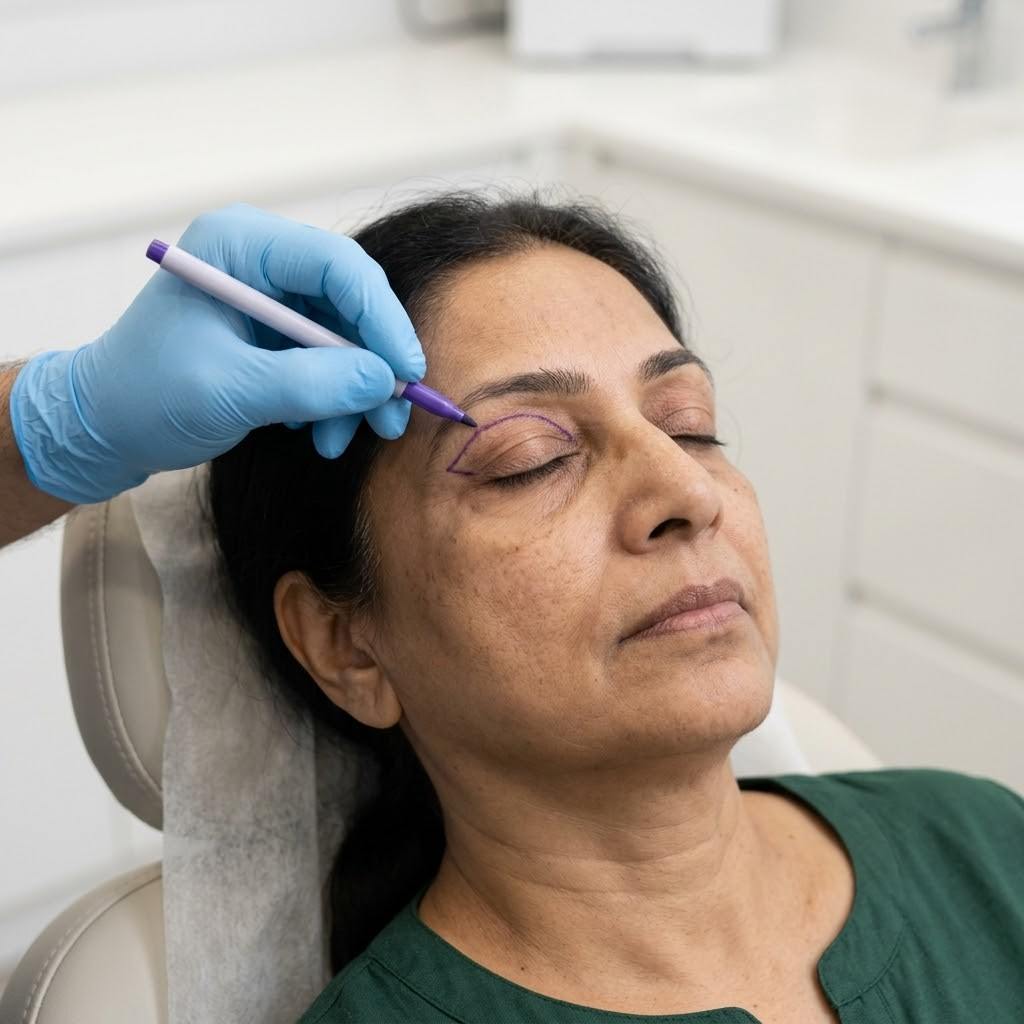
Step 1: Preoperative Planning
Before surgery begins, your surgeon carefully reviews the personalized treatment plan developed during consultation.
This includes:
Upper eyelid assessment.
Lower eyelid evaluation.
Skin laxity analysis.
Fat compartment assessment.
Brow position evaluation.
Facial symmetry assessment.
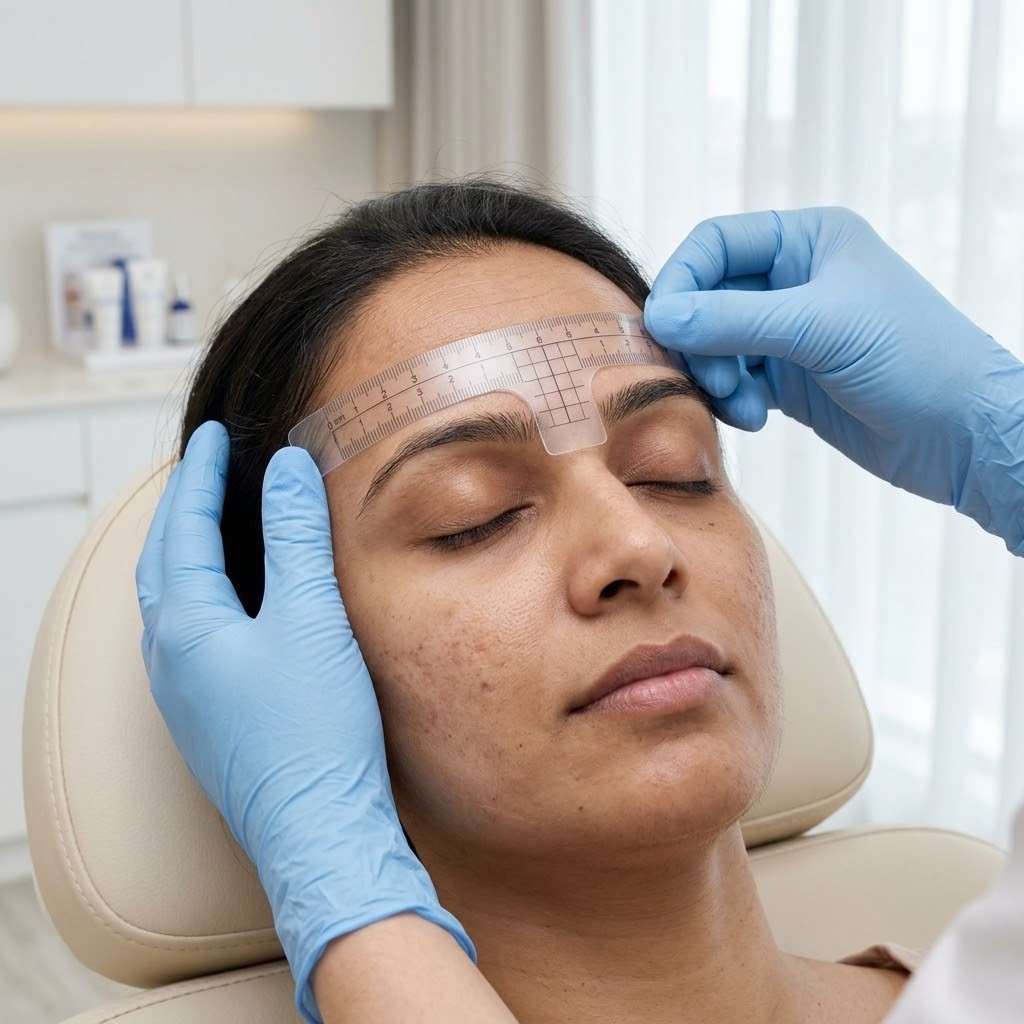
Surgical markings.
Review of aesthetic goals.
The objective is to restore youthful eyelid contours while preserving normal eyelid function and facial expression.
Step 2: Anaesthesia
Blepharoplasty may be performed under local anaesthesia with sedation or general anaesthesia, depending on the complexity of the procedure and whether additional facial surgeries are being performed simultaneously.
Throughout the procedure, your vital signs are continuously monitored to ensure safety.
Step 3: Surgical Incisions
The location of the incisions depends on the type of blepharoplasty.
For upper eyelid surgery, the incision is usually placed within the natural upper eyelid crease.
For lower eyelid surgery, the incision may be positioned:
Just below the lower eyelashes.
Inside the lower eyelid (transconjunctival approach) in selected patients.
These carefully planned locations help conceal scars after healing.
Step 4: Tissue Rejuvenation
After accessing the eyelid structures, the surgeon carefully addresses the tissues responsible for the aged appearance.
Depending on the patient's needs, this may involve:
Removing excess skin.
Repositioning orbital fat.
Removing selected fat deposits.
Tightening supporting tissues.
Refining eyelid contours.
Preserving healthy muscle and connective tissue.
Modern blepharoplasty emphasizes tissue preservation whenever possible to avoid an over-operated or hollow appearance.
Step 5: Eyelid Refinement
The eyelid contours are carefully evaluated for symmetry and natural appearance.
Adjustments are made to create smooth transitions between the eyelids and surrounding facial structures.
The goal is refreshed eyes rather than dramatically altered eyes.
Step 6: Closure
The incisions are closed using extremely fine sutures designed to promote precise healing.
Protective ointments and light dressings may be applied following surgery.
Types of Eyelid Surgery
Several blepharoplasty techniques are available depending on the patient's anatomy and aesthetic concerns.
Upper Blepharoplasty
This procedure removes or repositions excess skin and fat from the upper eyelids to improve eyelid contour and, in selected patients, visual function.
Lower Blepharoplasty
Lower eyelid surgery addresses under-eye bags, protruding fat, loose skin, and lower eyelid wrinkles.
Transconjunctival Blepharoplasty
In selected patients, fat is repositioned or removed through an incision inside the lower eyelid.
This approach avoids visible external scars and is particularly useful when excess skin removal is unnecessary.
Quad Blepharoplasty
Upper and lower eyelid surgery are performed together to rejuvenate the entire eye region.
Functional Blepharoplasty
When excess upper eyelid skin significantly interferes with vision, blepharoplasty may also improve the visual field while enhancing appearance.
What Results Can You Expect After Eyelid Surgery?
Blepharoplasty produces immediate structural improvements, although the final appearance develops gradually as swelling resolves and tissues heal.
Patients commonly notice:
Brighter Eyes
The eyes appear more open and refreshed.
Reduced Under-Eye Bags
Bulging fat beneath the eyes becomes less noticeable.
Smoother Eyelids
Loose skin and puffiness are significantly improved.
More Youthful Appearance
The eye region appears rested without looking surgically altered.
Improved Peripheral Vision
Patients undergoing functional upper blepharoplasty may notice improved vision once excess eyelid skin has been removed.
Long-Lasting Rejuvenation
Although the natural ageing process continues, blepharoplasty provides durable improvement in eyelid appearance for many years.
What Is Recovery Like After Eyelid Surgery?
Recovery varies according to the extent of surgery and whether additional facial procedures are performed simultaneously.
Healing generally progresses through several stages.
Immediately After Surgery
You may experience:
Swelling.
Bruising.
Mild tightness.
Temporary blurred vision from lubricating ointments.
Mild discomfort.
Increased tearing.
These effects are expected and improve gradually.
First Week
Bruising and swelling remain most noticeable during the first several days.
Cold compresses, prescribed eye care, and adequate rest are commonly recommended.
Many sutures, if non-absorbable, are removed during this period.
Two to Four Weeks
Most swelling and bruising continue to improve.
Many patients feel comfortable returning to work, social activities, and light exercise.
Several Months
Residual swelling gradually resolves.
Incisions continue to mature and become increasingly discreet.
The eyelids settle into their final youthful contours.
Long-Term Healing
Final refinement develops gradually over several months, resulting in natural-looking eyelid rejuvenation while maintaining normal blinking and eye protection.
Are There Any Risks or Limitations?
Blepharoplasty is generally considered safe when performed by an experienced plastic surgeon, but every surgical procedure carries potential risks.
Possible complications include:
Bleeding.
Infection.
Swelling.
Bruising.
Dry eyes.
Temporary blurred vision.
Temporary numbness.
Delayed wound healing.
Minor eyelid asymmetry.
Scar formation.
Temporary difficulty closing the eyes completely.
Need for revision surgery.
It is also important to understand the limitations of surgery.
Blepharoplasty improves the eyelids but does not completely eliminate all facial wrinkles or permanently stop the ageing process.
Some patients may benefit from complementary procedures such as brow lift, facelift, laser resurfacing, or injectable treatments to achieve comprehensive facial rejuvenation.
How Much Does Eyelid Surgery Cost in Mumbai?
The cost of blepharoplasty varies according to the complexity of the procedure, whether the upper eyelids, lower eyelids, or both are treated, and whether additional facial procedures are performed simultaneously.
Factors influencing treatment cost include:
Upper eyelid surgery.
Lower eyelid surgery.
Combined upper and lower blepharoplasty.
Functional versus cosmetic surgery.
Anaesthesia.
Operating facility charges.
Postoperative care.
Following a comprehensive consultation, your surgeon will provide a personalized treatment plan outlining the recommended procedure, anticipated recovery, expected results, and associated costs.
Why Choose Hair & Shape for Eyelid Surgery?
Successful blepharoplasty requires exceptional precision and a thorough understanding of eyelid anatomy, facial ageing, and ocular function. The eyelids are delicate structures that protect the eyes while contributing significantly to facial expression. Every surgical decision must preserve normal blinking, eye protection, tear distribution, and natural facial aesthetics.
At Hair & Shape Clinic, every patient undergoes a comprehensive assessment before surgery is recommended. Eyelid skin quality, orbital fat distribution, brow position, muscle tone, tear film, facial symmetry, and overall facial proportions are carefully evaluated to develop an individualized treatment plan. The emphasis is on restoring refreshed, youthful eyes while avoiding an over-tightened, hollow, or artificial appearance.
Why Does Personalized Eyelid Surgery Planning Matter?
Every patient's eyelids age differently, making individualized planning essential for natural and long-lasting outcomes.
Every Eye Is Unique
Skin quality, fat distribution, muscle tone, brow position, and facial anatomy vary considerably from one individual to another.
Upper and Lower Eyelids Age Differently
Some patients primarily develop drooping upper eyelids, while others are more affected by under-eye bags or lower eyelid laxity.
Conservative Tissue Preservation Produces Better Results
Modern blepharoplasty focuses on repositioning and preserving healthy tissues whenever possible rather than aggressively removing them.
Eye Function Must Always Be Protected
Maintaining normal blinking, tear production, and eyelid closure is just as important as achieving cosmetic improvement.
Long-Term Facial Harmony Is the Goal
Natural-looking eyelid rejuvenation enhances the entire face while preserving your individual identity and facial expressions.
International Patients Seeking Eyelid Surgery in Mumbai
Hair & Shape Clinic welcomes patients from across India and internationally seeking advanced eyelid rejuvenation procedures.
Our international patient pathway is designed to simplify consultation, travel planning, surgery, and postoperative care.
Before You Travel
Virtual consultations, facial photographs, medical history review, and discussion of your concerns help determine the most appropriate surgical plan before your visit.
During Your Stay
Your treatment includes consultation, personalized surgical planning, blepharoplasty, postoperative monitoring, and comprehensive recovery guidance before returning home.
Returning Home
Follow-up consultations can often be coordinated remotely. Continued guidance regarding eye care, wound management, swelling reduction, activity restrictions, and long-term healing helps support the best possible outcome wherever you live.
What to Expect
Consultation
A detailed assessment of your goals, suitability, and a personalised plan.
Preparation
Clear pre-treatment guidance so you arrive fully prepared and at ease.
The Procedure
Your treatment, performed by our specialists with comfort and safety first.
Aftercare
Structured recovery support and follow-ups to protect your results.
Begin Your Blepharoplasty (Eyelid Surgery) Journey
Book a consultation today and let our specialists craft a plan built entirely around you.