 Gender Reassignment
Why Beard Hair Is Sometimes Better Than Scalp Hair For Certain Hair Transplants
Introduction
Hair transplantation has evolved far beyond simply moving hair from one part of the scalp to another. Modern techniques allow surgeons to strategically select donor hair from different parts of the body when appropriate, enabling treatment for patients who may previously have had limited options.
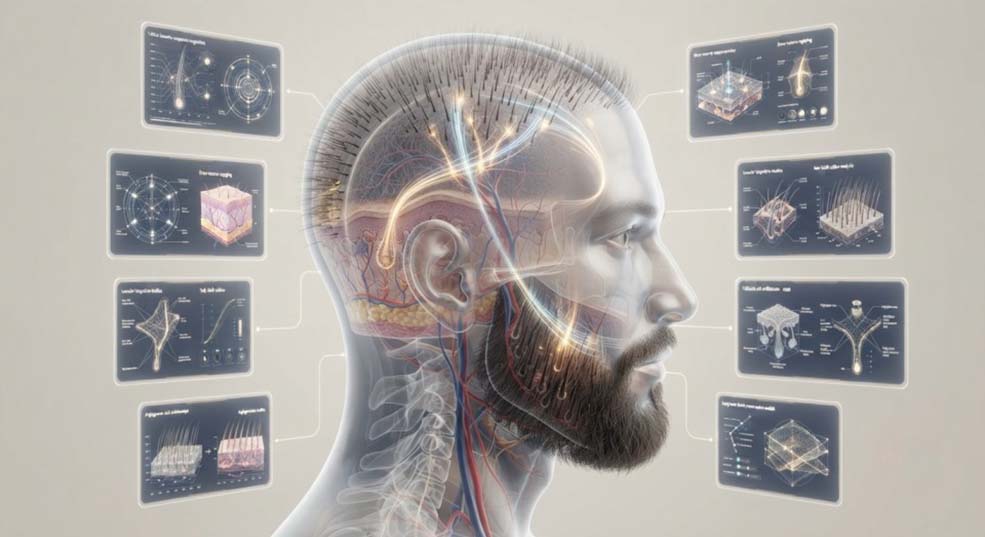
Among all alternative donor sources, beard hair has emerged as one of the most valuable in carefully selected patients, particularly those with advanced hair loss or limited scalp donor reserves. Although it differs slightly in texture, thickness, and growth characteristics from scalp hair, beard hair can significantly increase the total number of grafts available while helping create the appearance of greater density.
Contrary to popular belief, beard hair is not intended to replace scalp hair entirely. Instead, it serves as an additional donor resource that complements traditional scalp grafts when used with careful planning and precise surgical technique.
Understanding when beard hair can be beneficial, how it differs from scalp hair, and which patients are most suitable candidates helps explain why this advanced approach has become an important option in modern hair restoration surgery.
Understanding Donor Hair In Hair Transplantation
Every hair transplant relies on healthy donor follicles that are genetically resistant to long-term hair loss.
Traditionally, these donor follicles are harvested from the back and sides of the scalp because these areas usually remain stable throughout life, even in individuals with significant male pattern baldness.
The donor region is evaluated based on:
Hair density
Hair thickness
Follicular unit quality
Hair calibre
Hair colour
Curl pattern
Long-term stability
The greater the quality and availability of donor hair, the more options surgeons have when planning natural-looking restoration.
Why The Donor Area Can Become Limited
Not every patient has an unlimited supply of scalp donor hair.
As hair loss progresses, the available donor area may become relatively small compared with the size of the balding region that requires treatment.
Several factors can reduce donor availability, including:
Advanced male pattern baldness
Naturally low donor density
Previous hair transplant procedures
Scalp scarring
Fine hair calibre
Extensive bald areas
When donor limitations exist, surgeons must maximise every available graft while preserving the natural appearance of the donor region.
What Is Beard Hair Transplantation?
Beard hair transplantation refers to harvesting healthy hair follicles from the beard and transplanting them into areas of scalp hair loss.
The follicles are usually extracted individually using advanced Follicular Unit Extraction (FUE) techniques.
Common beard donor areas include:
Under the chin
Upper neck
Jawline
Side of the beard
These locations often provide a generous supply of thick, healthy follicles while allowing the remaining beard to retain a natural appearance.
Why Beard Hair Is Different From Scalp Hair
Although both originate from hair follicles, beard hair and scalp hair have distinct biological characteristics.
Compared with scalp hair, beard hair is generally:
Thicker
Coarser
More rigid
More deeply pigmented
Slightly curlier in many individuals
These differences make beard hair unsuitable for certain areas of the scalp but highly valuable in others where increased visual density is desired.
Rather than viewing these differences as disadvantages, experienced hair transplant surgeons use them strategically during surgical planning.
Why Thickness Matters
One of the greatest advantages of beard hair is its larger diameter.
Hair shaft thickness contributes significantly to the visual impression of fullness.
Even when two patients have the same number of hairs, the individual with thicker hair often appears to have greater density because each strand occupies more visual space.
Beard hair can therefore enhance the appearance of:
Mid-scalp density
Crown coverage
Overall fullness
Volume behind the hairline
This characteristic makes beard follicles particularly valuable in advanced reconstruction cases.
When Beard Hair May Be Recommended
Beard hair is not necessary for every patient.
Instead, it is typically considered when additional donor grafts may improve the final outcome.
Situations where beard hair may be beneficial include:
Advanced stages of male pattern baldness
Limited scalp donor reserves
Previous hair transplant surgery
Large areas requiring coverage
Patients seeking greater density
Selected repair procedures
Every recommendation depends upon individual anatomy rather than a standard treatment protocol.
Why Beard Hair Is Usually Not Used For The Hairline
The frontal hairline is one of the most delicate areas of hair transplantation.
Creating a natural hairline requires careful attention to:
Hair calibre
Direction
Angle
Distribution
Irregularity
Facial proportions
Because beard hair is often thicker than scalp hair, placing it directly within the leading edge of the hairline may produce an unnatural appearance.
Instead, surgeons typically reserve finer scalp hairs for the hairline while using beard hair farther behind it to enhance overall density.
Combining Beard Hair With Scalp Hair
One of the greatest strengths of modern hair restoration lies in combining multiple donor sources.
Rather than transplanting only beard follicles or only scalp follicles, surgeons often blend both hair types to achieve balanced results.
For example:
Fine scalp hairs may create the soft frontal hairline.
Medium-calibre scalp hairs may build transition zones.
Beard hair may increase density in the mid-scalp.
Carefully selected grafts may improve crown coverage.
This layered approach allows different hair characteristics to work together while maintaining a natural appearance.
Does Beard Hair Continue To Grow Like Beard Hair?
After transplantation, beard follicles retain many of their original biological characteristics.
This means they generally continue to:
Grow relatively thick hair
Maintain their natural growth cycle
Produce robust hair shafts
However, once transplanted, they adapt to their new blood supply within the scalp while continuing to function as healthy hair follicles.
Their distinctive texture is one reason surgeons place them strategically rather than uniformly across the entire scalp.
Who Is A Good Candidate For Beard Hair Donation?
Not everyone is suitable for beard donor harvesting.
An ideal candidate generally has:
Dense beard growth
Healthy skin
Good-quality donor follicles
Stable hair loss pattern
Realistic expectations
Adequate beard coverage after extraction
A detailed clinical examination helps determine whether sufficient beard donor hair is available without affecting facial appearance.
Are Beard Hair Transplants Permanent?
Yes, provided the transplanted follicles are harvested from healthy donor areas and the underlying cause of hair loss is appropriate for transplantation.
Like scalp donor hair, beard follicles are generally resistant to the hormonal effects that cause androgenetic alopecia.
After transplantation and successful healing, these follicles typically continue to produce hair for many years while retaining their inherent biological characteristics.
However, the longevity of the overall result also depends on the continued health of the surrounding native scalp hair, which may continue to thin over time if affected by male pattern baldness.
Does Harvesting Beard Hair Leave Visible Scars?
Modern Follicular Unit Extraction (FUE) techniques remove individual follicular units using very small punches.
When performed by an experienced surgeon, the tiny extraction sites usually heal as minute, inconspicuous dots that are difficult to notice once healing is complete.
Several factors influence healing, including:
Skin type
Beard density
Healing response
Extraction pattern
Surgical technique
Postoperative care
Careful graft distribution helps preserve a natural appearance within the beard while providing valuable donor follicles for transplantation.
Can Beard Hair Be Used In Every Hair Transplant?
No.
Beard hair is an advanced donor option rather than a routine part of every procedure.
Many patients achieve excellent results using scalp donor hair alone.
Beard donor harvesting is generally considered only when it offers a clear advantage, such as:
Increasing available graft numbers
Improving visual density
Preserving limited scalp donor reserves
Supporting advanced restoration procedures
The decision is based on individual anatomy rather than patient preference alone.
Does Beard Hair Grow At The Same Rate As Scalp Hair?
Beard hair retains many of its original biological characteristics after transplantation.
Although individual growth rates vary, beard hair generally continues to produce thicker, coarser shafts than typical scalp hair.
Over time, many patients find that the transplanted beard hair blends well with surrounding scalp hair, particularly when strategically placed within the mid-scalp or crown.
Its unique characteristics are carefully considered during surgical planning to ensure a balanced and natural-looking result.
Can Beard Hair Improve Hair Density?
One of the greatest strengths of beard hair lies in its ability to increase the visual impression of fullness.
Because beard hair is usually thicker than scalp hair, fewer grafts may create a greater perception of density in selected areas.
This can be particularly valuable for:
Mid-scalp reconstruction
Crown restoration
Extensive baldness
Secondary hair transplant procedures
Patients with limited scalp donor reserves
Rather than replacing scalp donor hair, beard follicles enhance the overall reconstruction strategy when used appropriately.
Are There Any Limitations To Beard Hair Transplants?
Like every surgical technique, beard donor harvesting has certain limitations.
These include:
Differences in hair texture
Thicker hair calibre
Limited suitability for frontal hairlines
Variable beard density between individuals
Requirement for adequate facial donor hair
Need for experienced surgical planning
Understanding these limitations helps ensure that beard hair is used only where it contributes positively to the final aesthetic outcome.
Recovery After Beard Hair Extraction
Recovery from beard donor harvesting is generally similar to recovery following scalp FUE extraction.
Patients may experience temporary:
Mild redness
Small scabs
Swelling
Tenderness
Temporary skin sensitivity
As healing progresses:
The extraction sites gradually close.
Scabs naturally detach.
The skin returns to its normal appearance.
Facial hair continues growing around the harvested areas.
Following postoperative instructions carefully supports optimal healing and reduces the risk of complications.
Common Myths About Beard Hair Transplants
Several misconceptions often discourage patients from considering beard donor grafts.
"Beard Hair Will Always Look Unnatural On The Scalp"
When placed strategically by an experienced surgeon, beard hair can blend remarkably well with scalp hair, especially in areas where increased density is desired.
"Removing Beard Hair Ruins The Beard"
Only selected follicles are harvested in carefully distributed patterns designed to preserve the natural appearance of the beard.
"Beard Hair Can Replace Scalp Hair Everywhere"
Beard hair complements scalp donor hair but does not replace it. Each hair type serves a different purpose during surgical planning.
"Only Patients With Severe Baldness Need Beard Hair"
Although advanced hair loss is the most common indication, beard hair may also be useful in selected repair procedures or when additional density is desired.
Why Choosing An Experienced Hair Transplant Surgeon Matters
Beard hair transplantation requires a detailed understanding of donor management, facial anatomy, hair characteristics, and aesthetic design.
An experienced hair transplant surgeon carefully evaluates:
Beard density
Scalp donor availability
Hair calibre
Curl pattern
Facial proportions
Hair loss progression
Long-term restoration goals
Strategic graft selection and placement allow different hair types to work together naturally while preserving both the scalp and beard donor areas.
Why Choose Hair & Shape For Advanced Hair Transplantation In Mumbai?
At Hair & Shape Clinic, every hair transplant is individually planned to maximise natural results while preserving valuable donor resources. For patients with advanced hair loss or limited scalp donor availability, comprehensive assessments determine whether beard hair can safely and effectively complement traditional scalp donor grafts.
Dr. Umang Kothari and the Hair & Shape team utilise advanced FUE techniques and evidence-based surgical planning to strategically combine donor sources when appropriate. By carefully selecting where beard and scalp follicles are placed, the focus remains on achieving optimal density, natural hairline design, and long-lasting restoration while maintaining the appearance of both the scalp and beard.
Final Thoughts
Beard hair has become one of the most valuable supplementary donor sources in modern hair transplantation, particularly for patients with advanced hair loss or limited scalp donor reserves. Its naturally thicker calibre can significantly enhance visual density when used in carefully selected areas such as the mid-scalp and crown, making it an important tool in advanced restoration rather than a replacement for scalp donor hair.
Successful beard hair transplantation depends on meticulous patient selection, thoughtful donor management, and strategic graft placement. By combining the unique strengths of both scalp and beard follicles, experienced hair transplant surgeons can expand treatment possibilities and create fuller, more natural-looking, and long-lasting results tailored to each patient's individual pattern of hair loss.