 Gender Reassignment
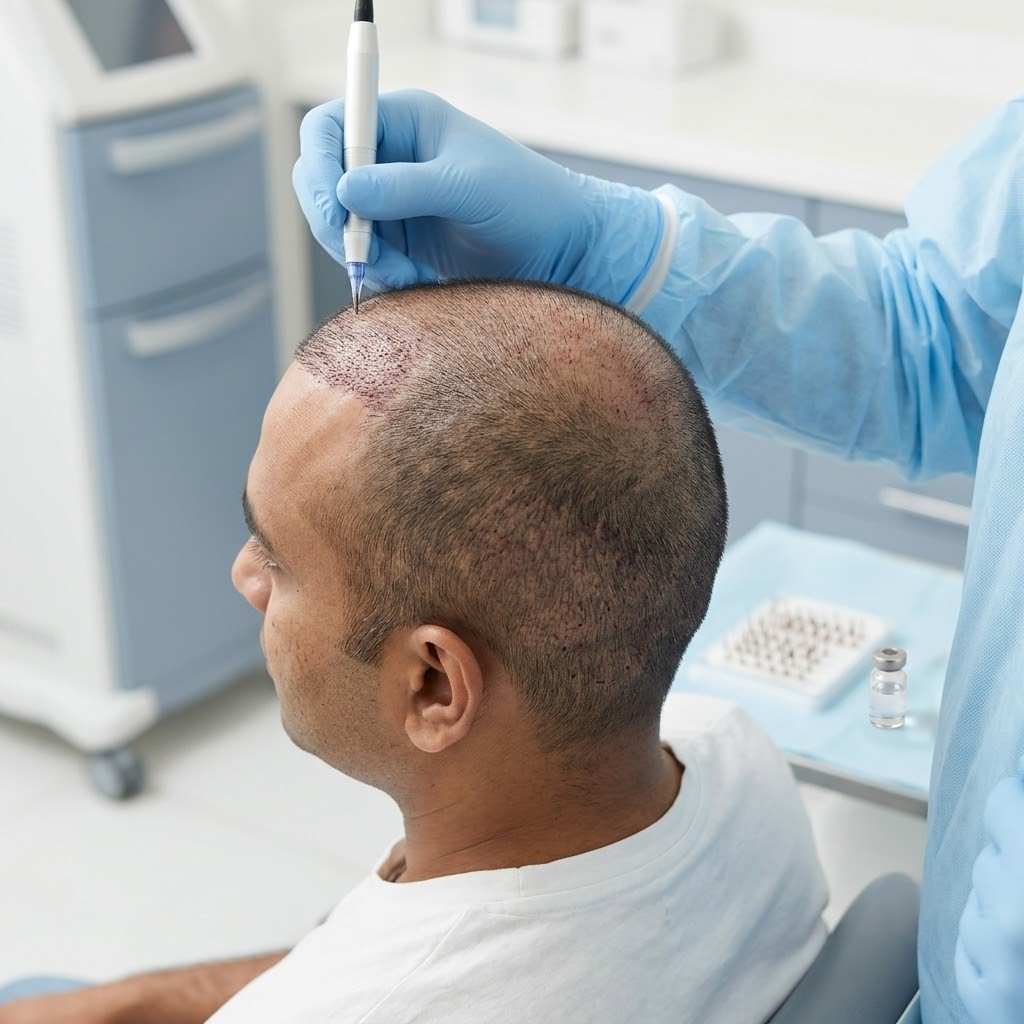
Hair Transplant BIO FUE In Mumbai
Bio-enhanced FUE pairing extraction with growth factors for stronger grafts.
Bio FUE Hair Transplant in Mumbai
Hair transplantation has evolved significantly over the past two decades. While traditional techniques focused primarily on relocating hair follicles, modern hair restoration also emphasizes maximizing graft survival, accelerating healing, preserving donor quality, and creating the most natural long-term outcomes possible. Bio FUE Hair Transplant represents this evolution by combining Follicular Unit Extraction (FUE) with regenerative medicine to support both transplanted follicles and the surrounding scalp.
Unlike conventional FUE, Bio FUE incorporates biological therapies, such as platelet-derived growth factors or other regenerative techniques depending on the patient's needs and the surgeon's treatment protocol, to create a healthier environment for newly transplanted follicles. The objective is not to replace FUE, but to enhance it by improving follicle nourishment, supporting healing, and encouraging stronger hair growth after transplantation.
Hair transplantation remains a surgical procedure, and no biological treatment can overcome poor surgical planning or unhealthy donor follicles. However, when advanced microsurgical techniques are combined with scientifically supported regenerative therapies, they may contribute to improved graft quality, faster recovery, and healthier scalp conditions in appropriately selected patients.
Bio FUE is therefore best understood not as a completely different hair transplant technique, but as an enhanced approach to FUE that combines surgical precision with regenerative science.
What Is Bio FUE Hair Transplant?
Bio FUE Hair Transplant is an advanced variation of Follicular Unit Extraction (FUE) that combines minimally invasive follicular harvesting with biological therapies designed to optimize the environment in which transplanted follicles heal and grow.
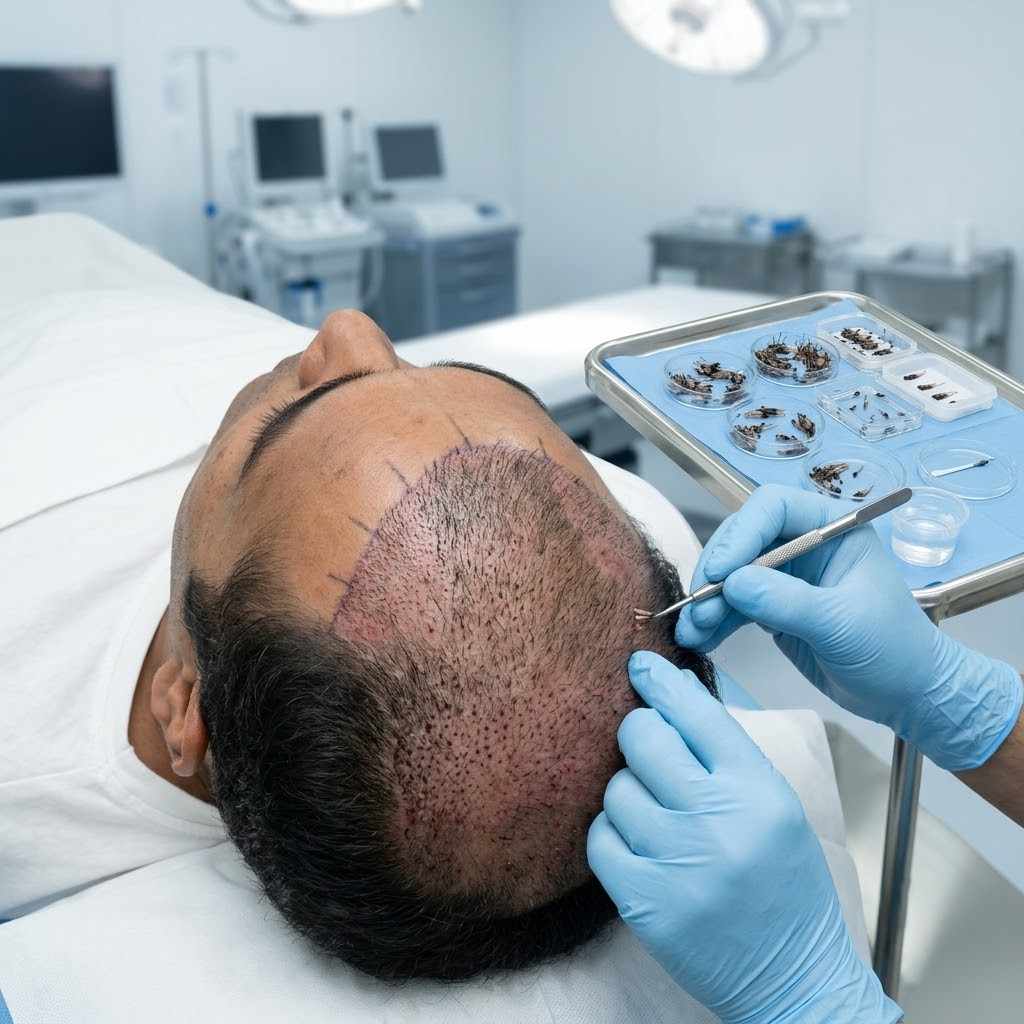
The surgical component remains similar to conventional FUE. Individual follicular units are extracted one by one from the permanent donor area using specialized micro-punch instruments. These follicles are then implanted into carefully planned recipient sites that replicate the natural direction, angle, and density of hair growth.
The biological component is what differentiates Bio FUE.
Depending on the clinical protocol and individual patient requirements, regenerative therapies may be introduced before, during, or after transplantation to support tissue healing and follicle survival. These therapies aim to provide growth factors, cytokines, and bioactive proteins that naturally participate in wound healing and tissue regeneration.
Rather than creating new hair follicles, these biological treatments are intended to improve the environment surrounding transplanted grafts, allowing them to recover under more favourable biological conditions.
How Is Bio FUE Different from Traditional FUE?
Many patients assume Bio FUE is an entirely separate hair transplant procedure.
In reality, the method of harvesting and implanting follicles remains fundamentally the same. The difference lies in the addition of regenerative medicine.
Traditional FUE primarily focuses on:
Harvesting healthy follicular units.
Minimizing follicle trauma.
Implanting grafts naturally.
Achieving long-term hair restoration.
Bio FUE includes all of these objectives while also aiming to:
Support graft survival.
Enhance tissue healing.
Improve scalp recovery.
Encourage healthier follicular activity.
Create an optimal biological environment during the healing process.
This distinction is important because successful Bio FUE still depends on excellent surgical technique. Biological therapies complement the procedure but cannot compensate for poor graft handling or inadequate treatment planning.
How Does Hair Loss Occur?
Hair loss develops through a combination of genetics, hormones, ageing, inflammation, medical conditions, and environmental influences.
The most common form, androgenetic alopecia, occurs when genetically susceptible hair follicles become progressively sensitive to dihydrotestosterone (DHT).
Over time, DHT causes affected follicles to undergo miniaturization, a gradual process in which:
Hair shafts become thinner.
Growth cycles shorten.
Resting phases lengthen.
Hair density decreases.
Eventually, visible hair production stops altogether.
Once a follicle has completely miniaturized, medications can rarely restore it to its original state.
Fortunately, follicles located at the back and sides of the scalp generally remain resistant to DHT throughout life. Bio FUE utilizes these genetically stable follicles as donor grafts, relocating them into thinning areas while simultaneously creating a biological environment intended to support their recovery after transplantation.
How Does Bio FUE Hair Transplant Work?
Bio FUE combines microsurgical hair transplantation with regenerative biological support.
Although treatment protocols vary between surgeons, the process generally involves several coordinated stages.
Donor Follicle Extraction
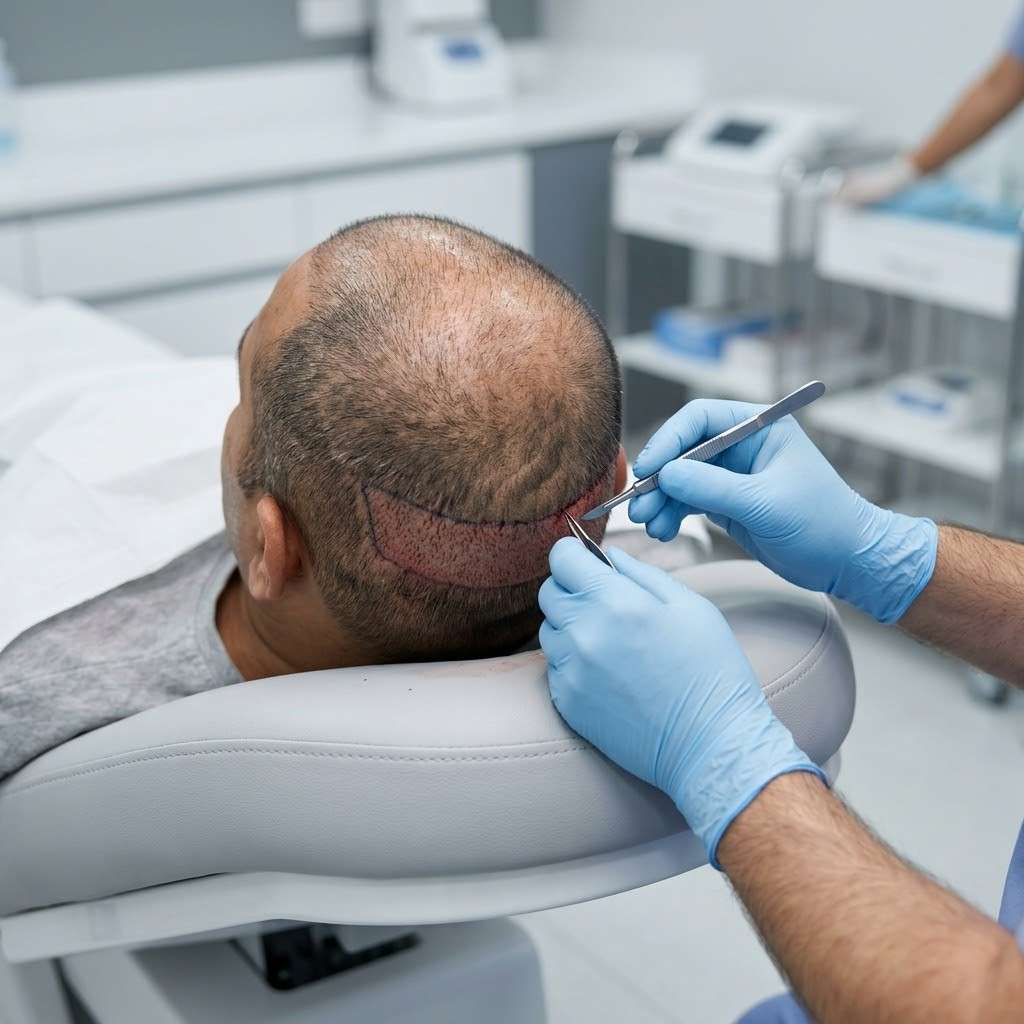
Healthy follicular units are individually harvested from the permanent donor area using precision micro-punch instruments. Because each follicle is removed separately, no linear donor scar is created.
Microscopic Graft Preservation
After extraction, grafts are carefully preserved in specialized storage solutions that help maintain hydration, temperature, and cellular viability before implantation.
Recipient Site Planning
Tiny recipient sites are created according to the desired hairline, density, facial proportions, and natural hair orientation.
Biological Enhancement
Regenerative therapies may be introduced according to the treatment plan to provide naturally occurring growth factors and signaling molecules involved in tissue repair and wound healing.
Follicular Implantation
Each graft is individually implanted into the prepared recipient sites while minimizing unnecessary manipulation to preserve follicular health.
The objective is to create an environment that supports successful graft establishment while maintaining natural aesthetics and long-term hair growth.
What Biological Therapies Are Used in Bio FUE?
The exact regenerative component varies depending on the treating surgeon and individual patient requirements.
Common biological approaches may include platelet-derived regenerative preparations or other autologous biological therapies obtained from the patient's own blood.
These preparations contain naturally occurring biological substances such as:
Growth factors.
Cytokines.
Platelet-derived proteins.
Cellular signaling molecules.
These substances play important roles in normal wound healing throughout the body by coordinating tissue repair, blood vessel formation, and cellular communication.
Within hair restoration, regenerative therapies are primarily intended to improve the healing environment surrounding transplanted follicles rather than directly creating new hair.
Current scientific research continues to evaluate the precise contribution of these therapies to long-term hair transplant outcomes, and results may vary between individuals.
Who Is a Good Candidate for Bio FUE Hair Transplant?
Bio FUE may be suitable for patients seeking modern hair restoration combined with regenerative treatment strategies.
You may be an appropriate candidate if you:
Have male or female pattern hair loss.
Possess adequate donor density.
Prefer to avoid a linear donor scar.
Wear shorter hairstyles.
Want a minimally invasive harvesting technique.
Are interested in combining FUE with regenerative medicine.
Have realistic expectations regarding hair restoration outcomes.
Suitability depends on multiple clinical factors, including donor quality, scalp condition, medical history, ongoing hair loss progression, and overall treatment goals.
What Conditions Can Bio FUE Treat?
Bio FUE may be considered for several forms of permanent hair loss where healthy donor follicles remain available.
Male Pattern Baldness
Restores thinning hairlines, temples, mid-scalp, and crown affected by androgenetic alopecia.
Female Pattern Hair Loss
Selected female patients with stable donor regions may benefit from carefully planned transplantation.
Hairline Reconstruction
Improves naturally high hairlines or restores hairline contours following progressive recession.
Scar Hair Restoration
Selected traumatic or surgical scars may be improved by transplanting healthy follicles into suitable scar tissue.
Corrective Hair Transplant Surgery
Bio FUE may help improve selected cases of previous hair transplantation requiring refinement of density, hairline design, or graft placement.
Personalized Bio FUE Hair Transplant
No two patients experience hair loss in exactly the same way, which is why successful Bio FUE begins with individualized planning rather than immediately scheduling surgery.
At Hair & Shape Clinic, multiple factors are evaluated before determining whether Bio FUE is the most appropriate approach. These include donor density, scalp characteristics, hair calibre, facial proportions, age, ongoing hair loss progression, lifestyle, previous treatments, and the potential role of regenerative therapies within the overall treatment plan.
The goal is not simply to transplant the greatest possible number of grafts. It is to create a balanced, natural-looking result while preserving donor resources and selecting biological enhancements that are appropriate for your individual needs.
What Happens During a Bio FUE Hair Transplant Procedure?
Bio FUE Hair Transplant is usually performed under local anaesthesia, allowing you to remain awake and comfortable throughout the procedure. Since only the scalp is numbed, most patients do not require general anaesthesia or hospital admission.
Although the treatment is minimally invasive, it combines advanced microsurgical hair transplantation with regenerative medicine. Every stage is carefully planned to maximize graft survival, preserve donor follicles, and create the most natural long-term result possible.
The procedure generally follows these stages.
Step 1: Hairline Planning
Every successful hair transplant begins with designing a hairline that complements your facial features rather than simply replacing lost hair.
The surgeon evaluates your forehead proportions, facial symmetry, age, ethnicity, current hair density, donor availability, and the expected progression of future hair loss.
Instead of creating an unnaturally low or perfectly straight hairline, the objective is to design one that looks natural throughout your lifetime.
Step 2: Donor Follicle Extraction
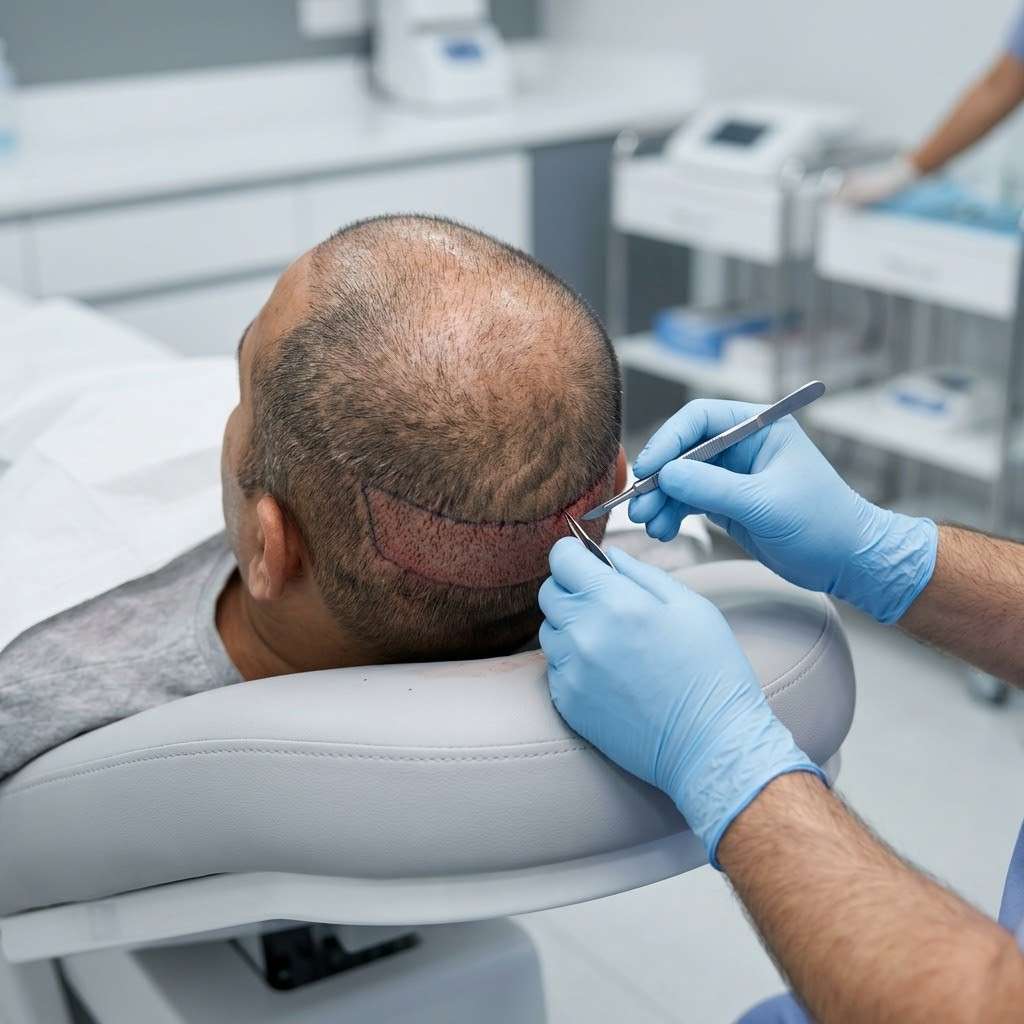
After administering local anaesthesia, healthy follicular units are individually extracted from the permanent donor region using precision micro-punch instruments.
Because follicles are removed individually rather than as a strip, no linear scar is created. Tiny extraction sites gradually heal over time and usually become difficult to detect once the surrounding hair grows.
Careful extraction is essential because excessive trauma can damage follicles and reduce their ability to produce healthy hair after transplantation.
Step 3: Graft Preservation
Immediately after extraction, follicular grafts are placed in specially formulated preservation solutions.
These solutions help maintain:
Cellular hydration.
Stable temperature.
Metabolic activity.
Follicular viability.
Reducing the amount of time grafts remain outside the body while maintaining optimal storage conditions significantly contributes to successful transplantation.
Step 4: Recipient Site Creation
Tiny recipient sites are created within the thinning scalp according to the planned hairline and desired density.
The angle, direction, depth, and spacing of every incision influence how the transplanted hair will grow after healing.
Natural-looking hair restoration depends as much on recipient site planning as it does on healthy graft survival.
Step 5: Biological Enhancement
Depending on the individualized treatment protocol, regenerative therapies may be introduced before, during, or after graft implantation.
These biological preparations contain naturally occurring growth factors and signaling molecules that participate in tissue repair and normal wound healing.
Their purpose is to support the healing environment surrounding newly transplanted follicles rather than replace the surgical procedure itself.
Step 6: Graft Implantation
Each follicular unit is individually implanted into the prepared recipient sites using delicate microsurgical instruments.
Single-hair grafts are generally used to create a soft, natural frontal hairline, while larger follicular units help build density behind the hairline and throughout the transplanted area.
Throughout implantation, every effort is made to minimize unnecessary manipulation, maintain graft hydration, and preserve follicular integrity until the transplanted follicles establish a new blood supply.
Does Bio FUE Leave a Scar?
One of the reasons many patients choose Bio FUE is the absence of a linear donor scar.
Instead of removing a strip of scalp, individual follicular units are harvested using extremely small circular punches.
Each extraction site heals as a tiny wound that gradually closes over time.
Although every skin injury heals by forming microscopic scar tissue, these extraction sites are typically so small and widely distributed that they become very difficult to notice once healing is complete, particularly when performed appropriately in patients with suitable donor characteristics.
However, the visibility of donor marks depends on several factors, including:
Skin type.
Hair colour.
Hair density.
Hair length.
Healing characteristics.
Number of grafts harvested.
Surgical technique.
Patients who completely shave their heads may still notice tiny extraction marks, especially after extensive graft harvesting.
What Results Can You Expect After Bio FUE Hair Transplant?
Hair transplantation produces gradual improvements rather than immediate cosmetic changes.
Following transplantation, the follicles remain securely implanted beneath the scalp while the surrounding skin begins healing.
During the first several weeks, many transplanted hairs naturally shed.
This temporary shedding, known as shock shedding, is an expected biological response and does not indicate transplant failure.
The transplanted follicles remain alive beneath the skin.
Over the following months, these follicles gradually re-enter the active growth phase and begin producing permanent hair.
Patients commonly notice:
Natural Hairline Design
Hair grows according to carefully planned angles and directions, helping the transplant blend naturally with surrounding hair.
Improved Hair Density
Previously thinning areas gradually become fuller as transplanted follicles mature.
Permanent Hair Growth
Because donor follicles retain their resistance to DHT, they generally continue producing hair for many years.
Healthier Scalp Recovery
The regenerative component of Bio FUE is intended to support tissue healing and create a favourable environment for graft recovery.
Long-Term Hair Restoration
The final objective is not simply increased hair volume but natural-looking restoration that continues to appear balanced as the ageing process progresses.
What Is Recovery Like After Bio FUE Hair Transplant?
Recovery following Bio FUE is generally straightforward because the procedure involves individual follicular extraction rather than removal of a donor strip.
Patients commonly experience mild swelling, temporary redness, and minor tenderness during the initial healing period.
Tiny crusts form around each implanted follicle and naturally fall away over the following days without forceful removal.
Consultation & Hair Analysis
Your scalp, donor region, hair characteristics, medical history, and long-term hair restoration goals are carefully evaluated before developing an individualized treatment plan.
Bio FUE Procedure
Healthy follicular units are extracted, preserved, recipient sites are prepared, regenerative therapy is incorporated where appropriate, and grafts are individually implanted.
Early Healing
The donor and recipient areas gradually recover while transplanted follicles establish a new blood supply.
Shock Shedding
Temporary shedding of transplanted hairs occurs during the normal healing process while follicles remain healthy beneath the scalp.
New Hair Growth
New permanent hairs gradually emerge over the following months as transplanted follicles resume their normal biological growth cycle.
Hair Maturation
Hair continues becoming thicker, longer, and denser over time, with improvements continuing well beyond the initial growth phase.
Are There Any Risks or Limitations?
Bio FUE is considered a safe and well-established procedure when performed by experienced hair restoration surgeons.
Like every surgical procedure, however, it carries certain risks.
Temporary effects may include:
Mild swelling.
Temporary redness.
Minor discomfort.
Scalp sensitivity.
Temporary numbness.
Shock loss of nearby native hairs.
Less commonly, infection, reduced graft survival, delayed healing, or uneven growth may occur.
It is also important to understand that regenerative therapies are designed to complement hair transplantation rather than guarantee a specific outcome.
The success of Bio FUE continues to depend primarily on proper patient selection, healthy donor follicles, meticulous surgical technique, and realistic long-term treatment planning.
How Much Does Bio FUE Hair Transplant Cost in Mumbai?
The cost of Bio FUE Hair Transplant varies because every treatment plan is customized according to the patient's clinical requirements.
Several factors influence pricing, including:
Number of grafts required.
Degree of hair loss.
Donor density.
Extent of recipient area.
Type of regenerative therapy incorporated.
Previous hair transplant history.
Complexity of treatment planning.
Following a detailed consultation, your surgeon will explain the recommended number of grafts, the role of regenerative therapies within your treatment plan, expected outcomes, and the associated costs before treatment begins.
Why Choose Hair & Shape for Bio FUE Hair Transplant?
Bio FUE combines modern microsurgical hair transplantation with regenerative medicine, making careful treatment planning more important than simply selecting advanced technology.
At Hair & Shape Clinic, every Bio FUE procedure begins with a comprehensive assessment of donor quality, scalp health, hair characteristics, facial proportions, ongoing hair loss progression, and the potential role of biological therapies within the overall restoration strategy.
Rather than following standardized protocols, every treatment plan is individualized to preserve donor resources, optimize graft survival, and create natural-looking results that remain aesthetically balanced over the long term.
Why Does Personalized Bio FUE Planning Matter?
Every patient's scalp biology is unique. Factors such as donor density, follicular quality, healing capacity, ongoing hair loss, and suitability for regenerative therapies vary considerably.
Hair Loss Progresses Differently
Future hair loss must be considered when planning today's transplant.
Donor Hair Is Finite
Healthy donor follicles should be harvested strategically to preserve future treatment options.
Regenerative Needs Differ
Not every patient requires the same biological enhancement. Treatment should be tailored according to individual scalp characteristics and clinical goals.
Hairline Design Is Permanent
A carefully planned hairline should continue looking natural throughout the ageing process rather than simply providing immediate cosmetic improvement.
Long-Term Success Depends on Planning
The best outcomes result from combining sound surgical technique, realistic expectations, careful donor preservation, and individualized biological support where appropriate.
International Patients Seeking Bio FUE Hair Transplant in Mumbai
Hair & Shape Clinic welcomes patients from across India and internationally who are seeking advanced hair restoration using Bio FUE techniques.
Our international patient pathway is designed to simplify every stage of treatment, from the initial consultation to long-term follow-up after returning home.
Before You Travel
Virtual consultations, medical history review, and assessment of scalp photographs help determine whether Bio FUE is the most appropriate treatment before your visit.
During Your Stay
Your visit includes consultation, hairline planning, Bio FUE transplantation, regenerative treatment where appropriate, postoperative guidance, and detailed recovery instructions.
Returning Home
Hair restoration continues over the months following transplantation. Ongoing guidance regarding scalp care, healing, hair growth milestones, and future maintenance helps support the best possible long-term outcome regardless of where you live.
What to Expect
Consultation
A detailed assessment of your goals, suitability, and a personalised plan.
Preparation
Clear pre-treatment guidance so you arrive fully prepared and at ease.
The Procedure
Your treatment, performed by our specialists with comfort and safety first.
Aftercare
Structured recovery support and follow-ups to protect your results.
Frequently Asked Questions
Everything you need to know about Hair Transplant BIO FUE. Still curious? Our team is one message away.
Will the transplanted hair look natural?
When performed with proper hairline design, density planning, and natural graft placement, Bio FUE is intended to produce results that blend seamlessly with your existing hair.
Can Bio FUE be combined with other hair treatments?
Yes. Depending on your scalp condition and long-term restoration plan, Bio FUE may be combined with medical hair loss treatments or regenerative therapies to support overall hair health.
When will I start seeing new hair growth?
Most patients begin noticing new hair growth between 3 and 4 months after surgery, with continued improvement over the following months. Final maturation commonly occurs between 12 and 18 months.
Is the recovery different from a standard FUE transplant?
Recovery is generally similar to conventional FUE, although the regenerative component is intended to support the natural healing process. Your surgeon will provide individualized aftercare instructions.
Is Bio FUE suitable for everyone?
Not necessarily. The suitability of Bio FUE depends on your hair loss pattern, donor availability, scalp condition, and overall treatment goals. A detailed consultation helps determine whether Bio FUE is the most appropriate option.
Does Bio FUE improve graft survival?
Bio FUE is designed to support the biological conditions that contribute to healthy graft healing and integration. Individual outcomes vary depending on factors such as donor quality, scalp health, surgical planning, and post-operative care.
How is Bio FUE different from traditional FUE?
Traditional FUE focuses on extracting and implanting hair follicles. Bio FUE builds upon this by incorporating regenerative biological support designed to enhance the healing environment during the early stages of recovery.

Begin Your Hair Transplant BIO FUE Journey
Book a consultation today and let our specialists craft a plan built entirely around you.