 Gender Reassignment
Laser Hair Removal In Mumbai
Long-lasting, comfortable hair reduction across all treatment areas.
Laser Hair Removal in Mumbai
Unwanted hair is rarely just a cosmetic concern. For many people, it is a recurring cycle of shaving, waxing, threading, plucking, ingrown hairs, skin irritation, pigmentation, and wasted time. While temporary hair removal methods address visible hair above the skin's surface, they do not affect the biological structures responsible for continuous hair growth. As a result, the cycle repeats every few days or weeks.
Laser hair removal approaches the problem differently. Instead of removing the hair that is visible today, it targets the hair follicle responsible for producing future hair growth. By delivering precisely controlled light energy to actively growing hair follicles, laser technology reduces their ability to regenerate new hair over time. The objective is not simply smoother skin after one session. It is long-term hair reduction based on the science of hair biology and controlled energy delivery.
Modern laser hair removal has become one of the most extensively researched aesthetic procedures worldwide. However, achieving safe, predictable, and lasting results depends on much more than operating a laser machine. Skin type, hair colour, hair thickness, hormonal influences, treatment intervals, laser wavelength, cooling systems, and practitioner expertise all influence the final outcome. Understanding these factors helps patients develop realistic expectations and make informed treatment decisions.
What Is Laser Hair Removal?
Laser hair removal is a medical procedure that uses concentrated light energy to selectively target hair follicles while minimizing damage to the surrounding skin. The treatment works on the principle of selective photothermolysis, a scientifically established concept in laser medicine that allows specific structures within the body to absorb light without significantly affecting nearby tissues.
Human hair contains melanin, the pigment responsible for its colour. During treatment, laser energy is preferentially absorbed by this pigment within the hair shaft and follicle. The absorbed energy is converted into heat, which damages the follicle's ability to produce new hair while preserving the surrounding skin through carefully selected wavelengths and advanced cooling technology.
Unlike shaving, waxing, or depilatory creams, laser hair removal does not merely remove existing hair. It targets the biological source of future hair growth. Because hair follicles cycle through different stages of growth, multiple treatment sessions are necessary to treat follicles when they are most responsive to laser energy.
How Does Hair Grow?
Understanding the natural hair growth cycle explains why laser hair removal requires multiple sessions instead of providing permanent results after a single treatment.
Every hair follicle functions independently and continuously cycles through three primary growth phases.
Anagen Phase (Active Growth)
This is the stage during which the hair remains attached to the follicle and actively receives nutrients through its blood supply. The hair contains the highest concentration of melanin during this phase, making it the ideal target for laser treatment.
Only hairs in the anagen phase respond predictably to laser energy.
Catagen Phase (Transition)
Hair growth gradually stops as the follicle begins separating from its blood supply. Because pigment concentration decreases, laser treatment becomes significantly less effective during this stage.
Telogen Phase (Resting Phase)
The old hair eventually sheds while the follicle remains temporarily inactive before beginning another growth cycle.
Since different follicles are always in different phases, only a percentage of hairs can be effectively treated during each session. This biological reality explains why laser hair removal is performed over multiple appointments rather than a single visit.
How Does Laser Hair Removal Work?
Laser hair removal is fundamentally a physics-based treatment rather than a cosmetic procedure.
The laser emits light at a specific wavelength that is preferentially absorbed by melanin inside the growing hair shaft. Once absorbed, this light converts into thermal energy.
That heat travels down the hair shaft into the follicle, damaging critical structures responsible for future hair production, including cells surrounding the dermal papilla and hair matrix. These structures regulate hair regeneration. By disrupting their function without damaging surrounding tissue, future hair growth becomes progressively slower, finer, and less dense.
Modern laser systems combine this energy delivery with sophisticated cooling mechanisms that continuously protect the epidermis. This selective balance between heating the follicle while cooling the skin is what allows laser treatment to be both effective and safe across appropriately selected patients.
Why Doesn't Laser Hair Removal Remove Every Hair In One Session?
This is one of the most common misconceptions surrounding laser treatment.
The laser does not distinguish between visible and invisible hairs. It distinguishes between active and inactive follicles.
At any given time, only approximately 10% to 30% of body hair is actively growing within the anagen phase, although this percentage varies by body region. The remaining follicles are naturally resting or transitioning between growth phases and therefore cannot absorb sufficient laser energy for long-term reduction.
Each treatment captures a different group of follicles as they enter their active growth cycle.
This biological process explains why treatment plans typically involve multiple sessions performed several weeks apart. Rather than repeating the same treatment, each appointment targets an entirely new population of actively growing follicles.
Which Areas Can Be Treated With Laser Hair Removal?
Modern laser systems can safely treat unwanted hair across most areas of the face and body, provided appropriate laser parameters are selected for the patient's skin type and hair characteristics.
Common treatment areas include:
Face
Upper lip, chin, sideburns, cheeks, jawline, beard shaping, and neck.
Upper Body
Underarms, shoulders, chest, abdomen, back, and arms.
Lower Body
Bikini line, Brazilian area, buttocks, thighs, lower legs, feet, and toes.
Combination Treatments
Many patients choose full-body laser hair reduction plans that address multiple treatment areas during the same appointment, reducing the overall duration of the treatment journey.
Who Is a Good Candidate for Laser Hair Removal?
Laser hair removal is most effective when there is sufficient contrast between the pigment within the hair follicle and the surrounding skin. However, advances in laser technology now allow safe treatment across a much wider range of skin tones than was previously possible.
You may be a suitable candidate if you:
Frequently shave, wax, thread, or pluck unwanted hair.
Experience razor bumps or recurrent ingrown hairs.
Develop pigmentation after hair removal.
Have coarse or rapidly growing hair.
Wish to reduce the time spent on routine hair removal.
Are seeking a long-term solution rather than temporary maintenance.
Suitability depends on several individual factors, including skin type, hair colour, hormonal influences, medical history, current medications, and treatment expectations. A detailed consultation helps determine whether laser hair removal is appropriate and which laser technology is most suitable for your skin.
What Factors Affect Laser Hair Removal Results?
One of the biggest myths is that the laser alone determines the outcome. In reality, successful treatment is influenced by a combination of biological, technological, and clinical factors.
Hair Colour
Dark hair absorbs laser energy more efficiently because it contains higher concentrations of melanin. Grey, white, and very light blonde hairs contain little or no pigment and therefore respond less predictably.
Hair Thickness
Coarser hair generally absorbs more laser energy than finer hair, making it more responsive during treatment.
Skin Type
Different skin tones require different laser wavelengths and treatment parameters to maximize effectiveness while protecting the surrounding skin.
Hormonal Influences
Conditions such as polycystic ovary syndrome (PCOS) or hormonal imbalances may stimulate ongoing hair growth, making maintenance sessions more likely.
Treatment Consistency
Following the recommended treatment schedule allows newly active follicles to be treated at the optimal stage of their growth cycle.
Laser Technology
Not all laser devices are equally effective. The wavelength used, pulse duration, cooling technology, and calibration all contribute to treatment safety, comfort, and long-term hair reduction.
Personalized Laser Hair Removal
No two patients have identical skin biology or hair characteristics. The thickness of the hair, its density, pigment concentration, anatomical location, hormonal influences, previous hair removal methods, and Fitzpatrick skin type all influence how laser energy should be delivered.
At Hair & Shape Clinic, treatment planning begins with understanding these variables rather than selecting a standard machine setting. Laser parameters are adjusted according to your skin type, hair characteristics, treatment area, and response during previous sessions. This personalized approach improves safety, maximizes long-term hair reduction, and minimizes unnecessary treatments while maintaining healthy surrounding skin.
What Happens During a Laser Hair Removal Session?
Laser hair removal is a carefully planned medical procedure rather than a simple cosmetic treatment. Every session is designed around your skin type, hair characteristics, treatment area, and previous response to laser therapy. The objective is to deliver enough energy to damage actively growing hair follicles while protecting the surrounding skin.
Before treatment begins, the target area is examined to ensure there are no active infections, excessive sun damage, or skin conditions that may affect treatment safety. The skin is cleansed, and protective eyewear is provided to both the patient and the practitioner. Depending on the laser system being used, an integrated cooling device, chilled air, or contact cooling helps maintain skin comfort throughout the procedure.
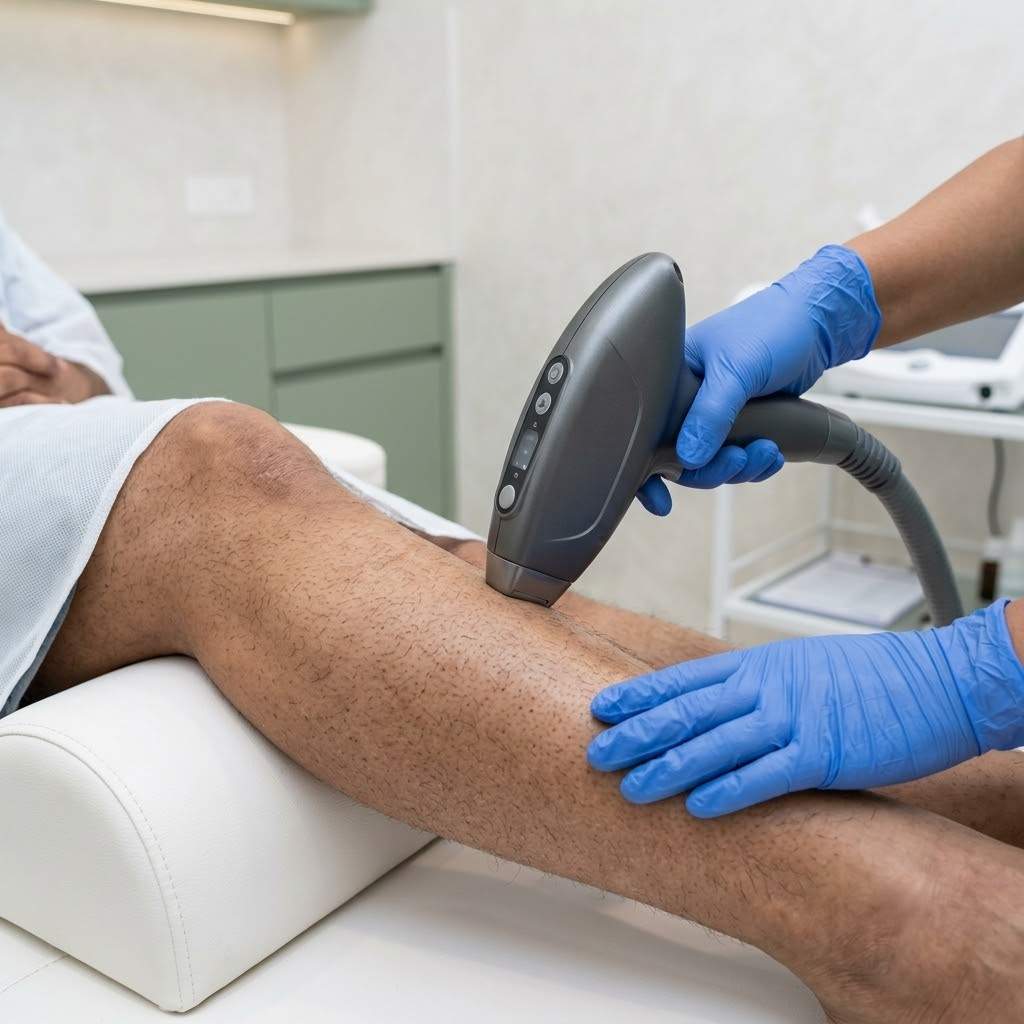
The laser handpiece is placed against the skin, delivering short pulses of light that selectively target pigmented hair follicles. Most patients describe the sensation as a brief snap against the skin followed by cooling. The exact treatment time varies depending on the area being treated, ranging from a few minutes for the upper lip to over an hour for full-body sessions.
What Happens to the Hair Follicle After Laser Treatment?
Many patients expect the treated hair to disappear immediately after the session. In reality, the biological response is more sophisticated.
When laser energy reaches the follicle, it damages the cells responsible for generating new hair growth. The visible hair does not instantly fall out because it remains temporarily trapped within the follicle.
Over the following one to three weeks, these treated hairs gradually shed from the skin. This shedding is a normal part of the treatment process and should not be mistaken for new hair growth. Many patients notice tiny hairs appearing on the skin's surface during this period. These are usually treated hairs being naturally expelled as the follicle heals.
Once a follicle has been successfully treated during its active growth phase, its ability to regenerate thick, healthy hair is significantly reduced. Future hairs often become finer, lighter, slower growing, or may stop growing altogether.
Does Laser Hair Removal Permanently Remove Hair?
This is one of the most misunderstood questions in aesthetic medicine.
Laser hair removal is more accurately described as long-term hair reduction rather than permanent hair removal.
Why?
The human body possesses remarkable regenerative abilities. While many treated follicles lose their capacity to produce significant hair growth, certain biological factors such as ageing, hormonal changes, pregnancy, menopause, endocrine disorders, or medications may stimulate previously inactive follicles years later.
Most patients experience substantial long-term reduction in hair density, thickness, and growth rate after completing the recommended treatment plan. Occasional maintenance sessions may help preserve these results over time.
Understanding this distinction allows patients to develop realistic expectations while appreciating why laser hair removal remains the most effective long-term solution currently available for unwanted hair.
What Results Can You Expect?
The improvements from laser hair removal are progressive rather than immediate.
Each treatment reduces the number of active follicles capable of producing coarse hair. As additional sessions target follicles entering the active growth phase, the cumulative improvement becomes increasingly noticeable.
Patients commonly experience:
Slower Hair Growth
Hair takes longer to reappear between treatments, reducing the need for frequent shaving or waxing.
Finer Hair Texture
Remaining hairs often become softer, thinner, and significantly less noticeable.
Reduced Hair Density
The number of actively growing hairs decreases with each treatment cycle, creating smoother skin.
Fewer Ingrown Hairs
By reducing coarse hair growth beneath the skin, laser treatment often minimizes painful ingrown hairs and associated inflammation.
Improved Skin Quality
Repeated shaving and waxing frequently contribute to irritation, pigmentation, razor bumps, and uneven skin texture. As dependence on these methods decreases, many patients notice healthier-looking skin with improved overall appearance.
What Is Recovery Like After Laser Hair Removal?
Recovery is generally straightforward because laser treatment selectively targets hair follicles without creating surgical wounds.
Immediately after treatment, mild redness and slight swelling around individual hair follicles are common. These temporary changes indicate that the follicles have absorbed laser energy and typically resolve within several hours.
Patients can usually resume normal daily activities immediately, although excessive sun exposure, hot showers, steam rooms, vigorous exercise, and harsh skincare products are often avoided for a short period to minimize unnecessary skin irritation.
Using sunscreen consistently between sessions is particularly important because recently treated skin may be more susceptible to ultraviolet damage.
Consultation
A detailed assessment evaluates your skin type, hair characteristics, medical history, hormonal influences, and treatment goals before developing an individualized treatment plan.
Skin & Hair Analysis
Hair thickness, colour, density, treatment area, and Fitzpatrick skin type are assessed to determine the safest and most effective laser parameters.
Laser Treatment
Precisely calibrated laser energy targets actively growing hair follicles while advanced cooling technology protects the surrounding skin.
Early Recovery
Temporary redness and mild follicular swelling gradually settle while treated hairs remain within the follicles before natural shedding begins.
Progressive Hair Reduction
Over successive treatment sessions, hair becomes progressively finer, lighter, slower growing, and less dense.
Maintenance
Depending on hormonal influences and individual biology, occasional maintenance sessions may help preserve long-term hair reduction.
Are There Any Risks or Side Effects?
Laser hair removal has an excellent safety profile when performed by qualified medical professionals using appropriate laser technology for the patient's skin type.
Temporary redness, mild swelling around hair follicles, and transient skin sensitivity are the most frequently observed effects and usually resolve without treatment.
Less commonly, temporary pigmentation changes may occur, particularly in recently tanned skin or when inappropriate laser settings are used. Blistering, burns, or scarring are uncommon and are generally associated with incorrect patient selection, unsuitable equipment, or improper treatment techniques rather than the laser itself.
For this reason, treatment should always begin with a professional consultation rather than selecting a clinic based solely on discounted pricing.
How Much Does Laser Hair Removal Cost in Mumbai?
There is no universal price for laser hair removal because every treatment plan is individualized.
The cost depends on several clinical and practical factors, including:
The treatment area or combination of areas.
Hair density and thickness.
Number of sessions likely to be required.
Skin type and laser technology used.
Whether treatment is performed as a single session or as part of a comprehensive package.
The experience of the treating medical team.
During your consultation, your skin and hair are carefully assessed before recommending a personalized treatment plan. Based on this evaluation, you will receive a clear explanation of the expected number of sessions, anticipated treatment outcomes, and the associated costs before beginning treatment.
Why Choose Hair & Shape for Laser Hair Removal?
Laser hair removal is not simply about using an advanced machine. It is about selecting the appropriate technology, understanding skin biology, respecting laser physics, and customizing every treatment according to individual anatomy and hair characteristics.
At Hair & Shape Clinic, every patient undergoes a comprehensive assessment before treatment begins. Factors such as skin tone, hair colour, follicle density, hormonal influences, treatment history, and long-term expectations are carefully evaluated to create an individualized treatment strategy.
Our approach prioritizes predictable hair reduction, patient safety, long-term skin health, and natural-looking outcomes rather than rapid treatment or unnecessary sessions.
Why Does Personalized Laser Hair Removal Matter?
No two individuals have identical skin or hair. The same laser settings that produce excellent results for one patient may be unsuitable for another.
Hair Biology Differs Between Individuals
Hair thickness, density, pigment concentration, and growth cycles vary across different body regions and between patients.
Skin Type Influences Laser Selection
Different wavelengths interact differently with melanin, making individualized parameter selection essential for both safety and effectiveness.
Hormones Affect Hair Growth
Hormonal conditions such as PCOS, thyroid disorders, or natural hormonal changes may influence long-term treatment planning and maintenance requirements.
Treatment Timing Matters
Scheduling sessions according to the biological hair growth cycle improves the percentage of follicles treated during their active phase.
Technology Alone Is Not Enough
Even the most advanced laser system depends on proper patient selection, accurate calibration, and experienced clinical judgment to deliver predictable outcomes.
International Patients Seeking Laser Hair Removal in Mumbai
Hair & Shape Clinic welcomes patients from across India and around the world seeking advanced laser hair reduction treatments in a safe and medically supervised environment.
Our international patient program is designed to make treatment planning simple and transparent, from the first virtual consultation to long-term follow-up after returning home.
Before You Travel
Virtual consultations, medical history reviews, and photographs help us assess your skin type, hair characteristics, and treatment goals before your arrival.
During Your Stay
Your visit includes consultation, laser treatment, personalized aftercare guidance, and recommendations for scheduling future sessions based on your travel plans.
Returning Home
Hair reduction continues progressively after each session. We provide ongoing guidance regarding skincare, sun protection, treatment intervals, and maintenance planning to help you achieve the best possible long-term outcome, regardless of where you live.
What to Expect
Consultation
A detailed assessment of your goals, suitability, and a personalised plan.
Preparation
Clear pre-treatment guidance so you arrive fully prepared and at ease.
The Procedure
Your treatment, performed by our specialists with comfort and safety first.
Aftercare
Structured recovery support and follow-ups to protect your results.
Frequently Asked Questions
Everything you need to know about Laser Hair Removal. Still curious? Our team is one message away.
What should I do before and after laser hair removal treatment?
Before treatment, avoid waxing, threading, or plucking the hair for at least 4 to 6 weeks, as the laser needs the hair follicle to be present. Shaving is usually recommended 24 hours before your appointment. After treatment, protect the treated area from direct sun exposure, apply sunscreen if the area is exposed, avoid hot baths, saunas, and vigorous exercise for the first 24 to 48 hours, and follow your dermatologist's aftercare instructions to promote optimal healing and results.
Does laser hair removal hurt?
Most patients describe the sensation as a mild snapping feeling, similar to the flick of a rubber band against the skin. Advanced laser systems often include integrated cooling technology to improve comfort during treatment. The level of discomfort varies depending on the treatment area, hair density, and individual pain tolerance, but the procedure is generally well tolerated.
Is laser hair removal safe for all skin types?
Yes. Modern laser hair removal systems can be safely customized for a wide range of skin tones and hair types when performed by an experienced dermatologist or trained laser specialist. During your consultation, your skin type, hair characteristics, and medical history are evaluated to select the most appropriate laser settings for effective treatment while minimizing the risk of side effects.
How many laser hair removal sessions will I need?
The number of sessions depends on the treatment area, hair thickness, hair color, skin type, and hormonal factors. Most patients require 6 to 8 sessions, spaced several weeks apart, to achieve optimal results because hair grows in different cycles, and the laser is most effective during the active growth phase.
Is laser hair removal permanent?
Laser hair removal provides long-term hair reduction, not always permanent hair removal. The treatment targets hair follicles during their active growth phase, significantly reducing future hair growth. Most patients experience a substantial reduction in hair after completing the recommended sessions, while occasional maintenance treatments may be needed to address new hair growth caused by hormonal changes or ageing.
Begin Your Laser Hair Removal Journey
Book a consultation today and let our specialists craft a plan built entirely around you.