 Gender Reassignment
Hair Transplant FUT In Mumbai
Follicular Unit Transplantation for dense, full coverage in a single session.
FUT Hair Transplant in Mumbai
Hair loss is often described as a cosmetic concern, but for many individuals, it affects far more than appearance. It can gradually influence confidence, self-image, professional interactions, and even the way people perceive themselves in photographs or social situations. While medications may slow hair loss and non-surgical therapies may improve hair quality, neither can restore hair to areas where follicles have permanently disappeared. This is where hair transplantation becomes a scientifically proven restorative procedure.
Follicular Unit Transplantation (FUT), also known as the Strip Method, remains one of the most reliable techniques for harvesting a large number of healthy hair follicles in a single procedure. Unlike temporary cosmetic solutions that conceal hair loss, FUT relocates living hair follicles from the permanent donor area to regions affected by baldness. Because these transplanted follicles retain the genetic characteristics of the donor area, they continue producing natural hair for many years after transplantation.
Although newer techniques such as FUE have gained popularity, FUT continues to play an important role in modern hair restoration. For carefully selected patients, it offers excellent graft survival, efficient harvesting of large graft numbers, and preservation of the donor area for potential future procedures. Choosing between FUT and other hair transplant techniques is not about selecting the newest procedure. It is about understanding which technique is biologically and surgically best suited for your pattern of hair loss, donor availability, lifestyle, and long-term restoration goals.
What Is FUT Hair Transplant?
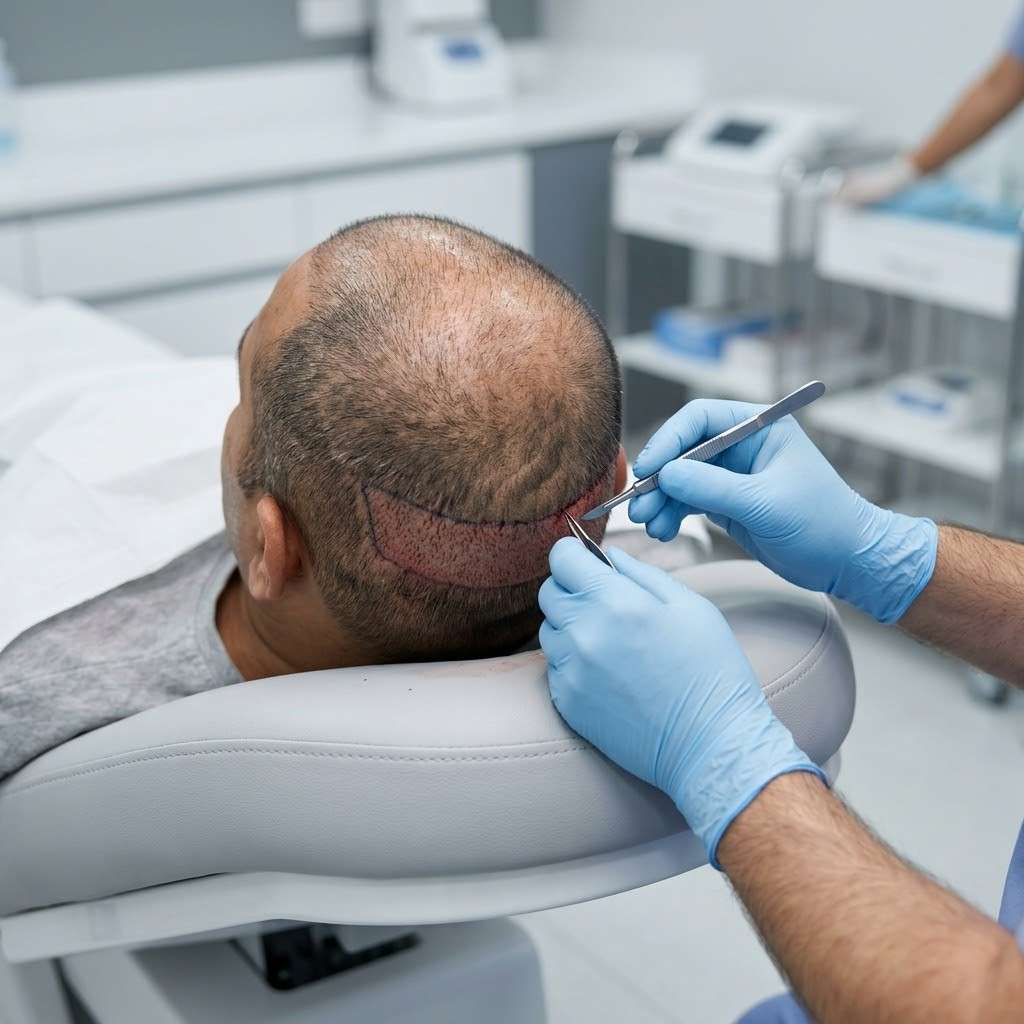
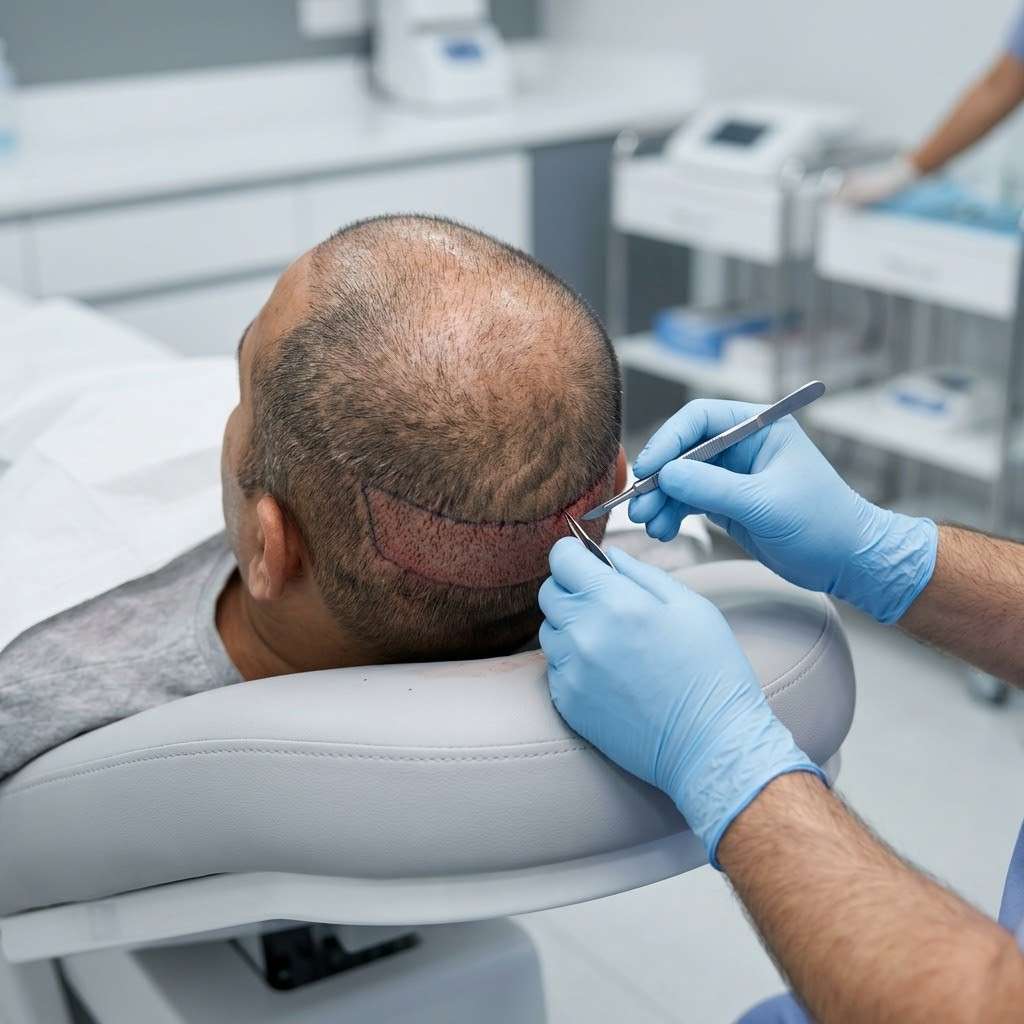
Follicular Unit Transplantation (FUT) is a surgical hair restoration technique in which a thin strip of hair-bearing scalp is carefully removed from the permanent donor region, typically located at the back of the head. This donor area contains genetically resistant hair follicles that are largely unaffected by androgenetic alopecia, commonly known as male or female pattern baldness.
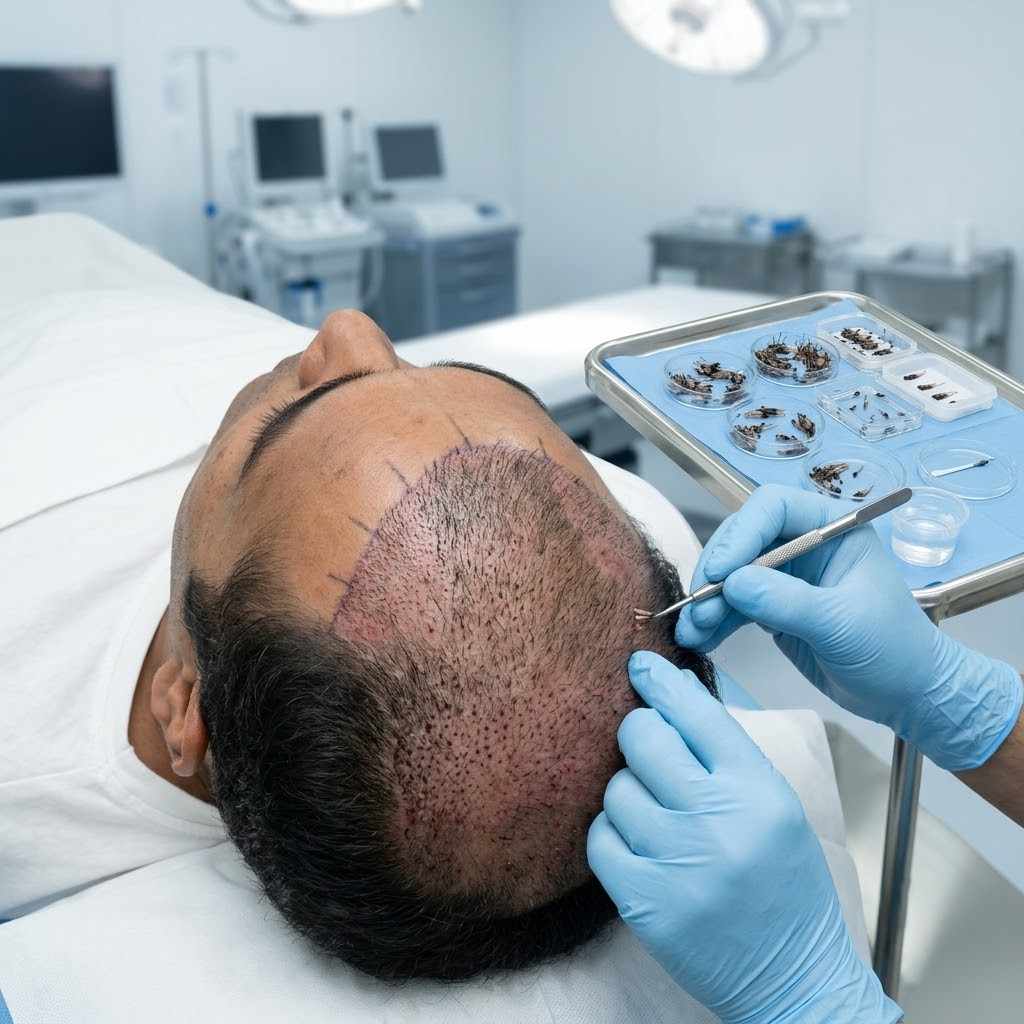
Once the donor strip is removed, it is meticulously examined under high-powered microscopes by trained technicians. The strip is divided into naturally occurring follicular units, each containing one to four hair follicles, while preserving the integrity of every graft.
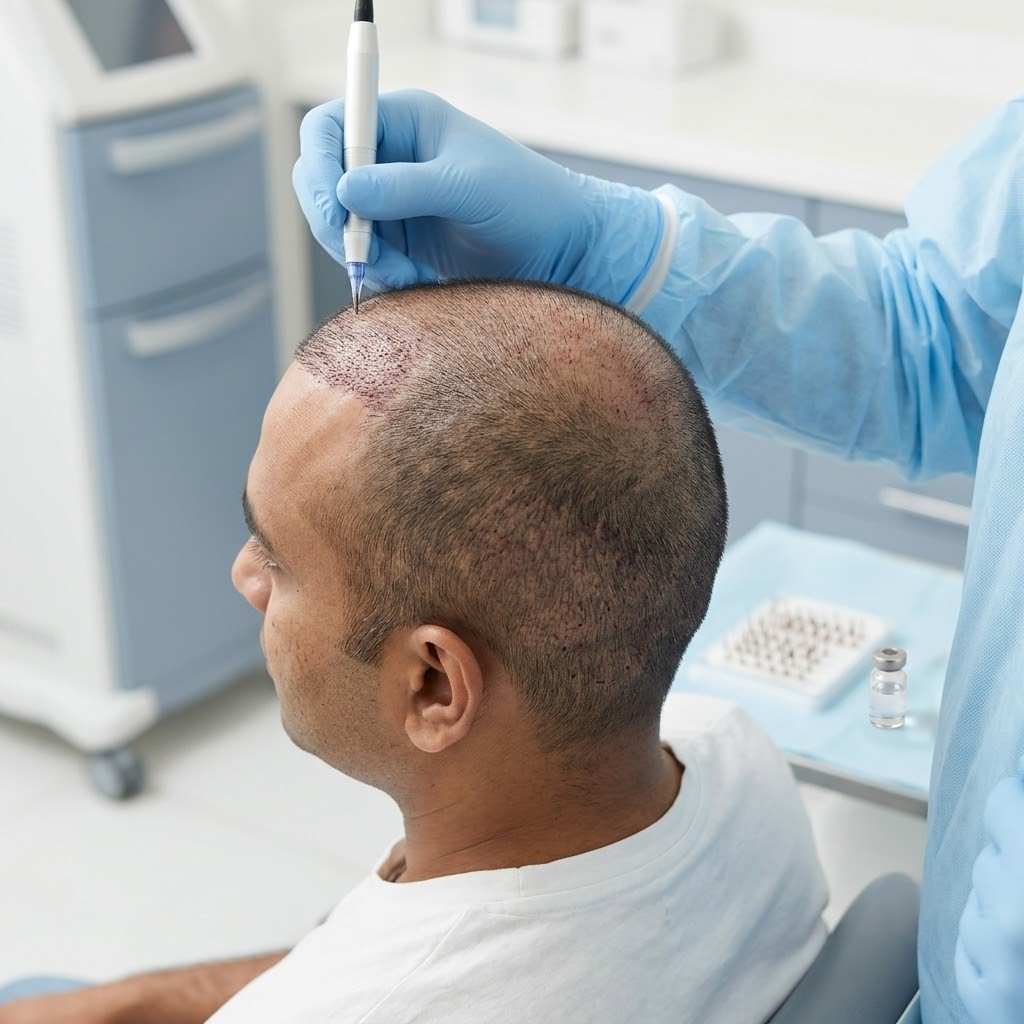
These follicular units are then transplanted into carefully created recipient sites within thinning or bald areas of the scalp. The angle, direction, depth, and density of implantation are planned to replicate natural hair growth patterns, ensuring that the final result appears seamless rather than surgically altered.
Unlike artificial hair implants or cosmetic camouflage products, FUT uses your own living hair follicles. Once these follicles establish a blood supply in their new location, they behave much like they did in the donor area, producing natural hair that can be washed, cut, and styled as normal.
How Does Hair Loss Occur?
Understanding why hair loss occurs helps explain why hair transplantation provides a long-term solution while many temporary treatments do not.
Each hair follicle functions as an independent biological structure that repeatedly cycles through growth, transition, resting, and shedding phases throughout life. In genetically susceptible individuals, exposure to dihydrotestosterone (DHT) gradually causes susceptible follicles to shrink through a process known as miniaturization.
As miniaturization progresses:
Hair shafts become progressively thinner.
Hair growth cycles become shorter.
The resting phase becomes longer.
New hairs emerge finer and weaker.
Eventually, affected follicles stop producing visible hair altogether.
Importantly, not every follicle responds to DHT in the same way.
Hair follicles located along the back and sides of the scalp possess greater genetic resistance to DHT. These follicles continue growing even after significant hair loss develops elsewhere, making them the ideal donor source for hair transplantation.
FUT takes advantage of this biological principle by relocating these genetically resistant follicles into areas where susceptible follicles have permanently stopped producing healthy hair.
Why Do Transplanted Hair Follicles Continue Growing?
One of the greatest strengths of hair transplantation lies in a biological concept known as donor dominance.
Donor dominance refers to the observation that transplanted follicles retain the genetic characteristics of the area from which they originated rather than adapting to the biology of their new location.
For example, follicles harvested from the permanent donor region remain resistant to DHT even after they are transplanted to the front of the scalp.
This means the transplanted follicles continue producing healthy hair according to their original genetic programming rather than adopting the pattern of baldness affecting the recipient area.
Donor dominance has been repeatedly demonstrated through decades of clinical research and remains the scientific foundation upon which modern hair transplantation is built.
How Does FUT Hair Transplant Work?
FUT is much more than relocating hair from one area to another. It is a carefully coordinated surgical process that combines anatomy, microsurgery, vascular biology, and aesthetic planning.
The procedure generally involves four major stages:
Donor Strip Harvesting
A carefully planned strip of hair-bearing scalp is removed from the permanent donor region while preserving surrounding tissues.
Microscopic Follicular Unit Dissection
The donor strip is divided into naturally occurring follicular units under magnification. This microscopic preparation minimizes follicle damage while maximizing graft survival.
Recipient Site Creation
Tiny recipient sites are created within the thinning scalp according to the desired hairline, density, angle, and natural direction of hair growth.
Graft Implantation
Each follicular unit is individually implanted into the prepared sites with careful attention to spacing, orientation, and density to produce natural-looking results.
Every stage influences the final outcome. Successful hair transplantation depends not only on harvesting healthy grafts but also on minimizing follicle trauma, preserving graft hydration, reducing out-of-body time, and ensuring adequate blood supply after implantation.
FUT vs FUE: Which Hair Transplant Technique Is Better?
This is one of the most frequently searched questions by patients considering hair restoration.
The answer is neither technique is universally better. Each has distinct advantages depending on the patient's hair loss pattern, donor characteristics, hairstyle preferences, and long-term restoration strategy.
FUT
Harvests a large number of grafts during one procedure.
Preserves surrounding donor follicles for potential future procedures.
Often suitable for advanced stages of hair loss requiring extensive coverage.
Leaves a fine linear scar that is usually concealed beneath longer hair.
FUE
Individual follicles are removed directly from the donor area.
Produces numerous tiny circular extraction sites instead of a linear scar.
Often preferred by patients who wear very short hairstyles.
May require a larger donor area when harvesting high graft numbers.
Rather than asking which technique is better, the more important question is which technique is better for your scalp. A detailed consultation allows the surgeon to evaluate donor density, scalp laxity, hair characteristics, future hair loss progression, and aesthetic goals before recommending the most appropriate approach.
Who Is a Good Candidate for FUT Hair Transplant?
FUT may be appropriate for patients requiring significant hair restoration while preserving donor resources for the future.
You may be a suitable candidate if you:
Have moderate to advanced pattern baldness.
Require a large number of grafts in one procedure.
Prefer to keep your hair at a medium or longer length.
Have good scalp laxity, allowing safe donor strip removal.
Possess adequate donor density at the back and sides of the scalp.
Have realistic expectations regarding hair restoration.
Suitability depends on far more than age or the degree of baldness. Hair characteristics, donor quality, medical history, scalp condition, family history of hair loss, and long-term progression are all carefully assessed before determining whether FUT is the appropriate treatment.
What Conditions Can FUT Hair Transplant Treat?
Although commonly associated with male pattern baldness, FUT can help restore hair in several situations where permanent follicles have been lost.
Male Pattern Baldness
Restores hair to the frontal hairline, temples, mid-scalp, and crown depending on donor availability and treatment goals.
Female Pattern Hair Loss
Selected female patients with stable hair loss patterns and adequate donor density may benefit from surgical hair restoration.
Scar Restoration
Hair transplantation may improve selected scars resulting from trauma, burns, or previous surgical procedures by introducing healthy follicles into scar tissue where appropriate.
Hairline Reconstruction
Patients with naturally high hairlines or altered hairlines may undergo reconstruction to improve facial balance while maintaining natural proportions.
Corrective Hair Transplant Surgery
FUT may also be used to improve selected cases of previous hair transplantation where density, hairline design, or graft placement requires refinement.
Personalized FUT Hair Transplant
Successful hair transplantation begins long before the first graft is harvested. It begins with understanding how your hair loss is likely to progress over the coming decades.
At Hair & Shape Clinic, treatment planning focuses not only on today's baldness but also on protecting your future appearance. Donor density, scalp laxity, hair calibre, follicular characteristics, facial proportions, age, family history, and predicted progression of hair loss are carefully evaluated before recommending FUT.
Rather than attempting to maximize graft numbers alone, the objective is to create a natural hairline, preserve valuable donor resources, and develop a restoration plan that continues looking balanced as the natural ageing process progresses.
What Happens During a FUT Hair Transplant Procedure?
A FUT hair transplant is performed under local anaesthesia, allowing you to remain awake and comfortable throughout the procedure. Since only the scalp is numbed, patients do not require general anaesthesia or hospital admission in most cases.
Although the procedure may appear straightforward from the outside, it involves meticulous microsurgical precision at every stage. The quality of the final result depends not only on harvesting healthy follicles but also on preserving them, planning natural hair placement, and minimizing trauma throughout the transplantation process.
The procedure generally follows these stages.
Step 1: Designing the Hairline
Every successful hair transplant begins with planning rather than surgery.
The surgeon evaluates your facial proportions, forehead dimensions, age, ethnicity, existing hair pattern, and likely future progression of hair loss before designing the new hairline.
Rather than creating the lowest possible hairline, the objective is to establish a mature, natural-looking hairline that will continue to look appropriate even decades later. An aggressively low or unnaturally straight hairline may appear attractive initially but often becomes obvious as surrounding native hair continues to thin with age.
Step 2: Donor Strip Harvest
After administering local anaesthesia, a carefully measured strip of hair-bearing scalp is removed from the permanent donor region at the back of the head.
The dimensions of the strip depend on several factors, including:
Donor density
Scalp laxity
Number of grafts required
Long-term donor preservation
Future transplantation needs
Once the strip is removed, the donor area is meticulously closed using advanced closure techniques that aim to produce a fine linear scar concealed beneath surrounding hair.
Step 3: Microscopic Graft Preparation
This is one of the most technically demanding stages of FUT.
Instead of implanting the donor strip directly, trained technicians carefully dissect it under high-powered stereoscopic microscopes.
Every naturally occurring follicular unit is separated while preserving:
Hair follicles
Sebaceous glands
Connective tissue
Protective outer follicular structures
Microscopic dissection reduces accidental follicle injury, improves graft survival, and helps produce more natural transplant results.
Step 4: Recipient Site Creation
Tiny recipient sites are created within the thinning scalp according to a carefully planned pattern.
This stage determines many aspects of the final cosmetic outcome, including:
Hair direction
Hair angle
Hair density
Hairline irregularity
Natural growth pattern
Even healthy grafts may produce unnatural results if recipient sites are improperly designed.
Step 5: Graft Implantation
Each follicular unit is individually placed into its prepared recipient site using delicate microsurgical instruments.
Single-hair grafts are typically positioned along the frontal hairline to create softness and natural transition, while grafts containing two to four hairs provide density behind the hairline and throughout the scalp.
Throughout implantation, graft hydration, temperature control, and gentle handling remain essential because transplanted follicles are living biological structures that depend on careful preservation until they establish a new blood supply.
Does FUT Leave a Scar?
One of the most common concerns surrounding FUT is the donor scar.
The answer is yes. FUT produces a linear scar because a strip of scalp is removed during harvesting.
However, understanding this scar requires important context.
Modern FUT techniques are designed to create a fine, narrow scar that is usually hidden beneath surrounding hair when it is worn at a medium or longer length.
Several factors influence scar appearance, including:
Individual healing characteristics.
Scalp laxity.
Surgical technique.
Wound closure method.
Postoperative care.
Future hairstyle preferences.
Patients who prefer very short hairstyles or shaved heads may find the scar more visible compared with individuals who maintain longer hair.
It is important to understand that every surgical procedure creates some form of scar. The objective is not to eliminate scarring entirely but to produce the least noticeable scar possible while achieving excellent graft yield and long-term restoration.
What Results Can You Expect After FUT Hair Transplant?
Hair transplantation requires patience because transplanted follicles undergo a natural biological cycle before producing visible hair.
Immediately after surgery, the transplanted follicles remain securely positioned beneath the skin while tiny crusts gradually heal over the following days.
During the first few weeks, many transplanted hairs naturally shed. This stage, known as shock shedding, is completely expected and should not be interpreted as transplant failure.
The follicles themselves remain alive beneath the scalp.
Over the following months, these follicles gradually re-enter the active growth phase and begin producing new permanent hair.
Patients commonly observe:
A Natural Hairline
Properly designed hairlines avoid the artificial "plugged" appearance associated with older transplantation techniques.
Increased Hair Density
As transplanted follicles mature, areas that previously appeared thin gradually become fuller.
Permanent Hair Growth
Because transplanted follicles originate from DHT-resistant donor regions, they generally continue producing hair for many years.
Improved Facial Balance
Restoring the frontal hairline often improves overall facial proportions, making the forehead appear more balanced and youthful.
Increased Confidence
While cosmetic improvement is the primary objective, many patients also experience significant psychological benefits as their appearance becomes more aligned with how they wish to present themselves.
What Is Recovery Like After FUT Hair Transplant?
Recovery occurs gradually as both the donor area and recipient area heal.
Most patients experience mild swelling, scalp tightness, and temporary tenderness during the first several days.
Tiny crusts form around transplanted follicles and naturally fall away over the following one to two weeks without forceful removal.
The donor incision also heals progressively during this period.
Consultation & Hair Analysis
Your scalp, donor density, hair characteristics, family history, and future hair loss progression are carefully evaluated before recommending FUT.
Surgical Procedure
The donor strip is harvested, follicular units are microscopically prepared, recipient sites are created, and grafts are implanted according to the planned restoration.
Early Healing
Mild swelling, tightness, and temporary discomfort gradually improve as both donor and recipient areas recover.
Shock Shedding
Transplanted hairs commonly shed within the first month while the follicles remain healthy beneath the scalp.
New Hair Growth
New permanent hair gradually begins emerging over the following months as transplanted follicles establish normal growth cycles.
Hair Maturation
Hair continues becoming longer, thicker, and denser as individual follicles mature, with improvements continuing well beyond the initial stages of growth.
Are There Any Risks or Complications?
FUT is considered a safe and well-established surgical procedure when performed by experienced hair restoration surgeons.
Like all surgical procedures, however, it carries potential risks.
Temporary effects may include:
Mild swelling.
Tightness of the scalp.
Temporary numbness.
Mild discomfort.
Shock loss of nearby native hairs.
Temporary redness.
Less commonly, complications such as infection, delayed wound healing, widened donor scars, or reduced graft survival may occur.
Careful surgical planning, meticulous technique, proper postoperative care, and realistic patient selection significantly reduce these risks.
How Much Does FUT Hair Transplant Cost in Mumbai?
The cost of a FUT hair transplant varies because every treatment plan is individualized.
Pricing depends on several factors, including:
Number of grafts required.
Extent of hair loss.
Donor density.
Complexity of hairline reconstruction.
Previous hair transplant history.
Whether additional corrective procedures are required.
Rather than charging based solely on procedure type, treatment planning begins with a comprehensive consultation to determine the number of grafts necessary for natural-looking coverage while preserving donor resources for future needs.
Following your evaluation, you will receive a personalized treatment plan along with a clear explanation of the expected graft requirement, projected outcomes, and associated costs.
Why Choose Hair & Shape for FUT Hair Transplant?
Hair transplantation is not simply about moving follicles from one area of the scalp to another. It is a balance of surgical precision, biological understanding, long-term planning, and aesthetic judgment.
At Hair & Shape Clinic, every FUT procedure is planned around the individual rather than a standard graft target. Factors such as donor density, scalp laxity, hair calibre, facial proportions, age, and the expected progression of hair loss are carefully evaluated before recommending treatment.
Our philosophy focuses on preserving valuable donor resources, maximizing graft survival, and creating hairlines that continue to appear natural for years to come rather than delivering short-term cosmetic improvement alone.
Why Does Personalized FUT Hair Transplant Planning Matter?
No two patients experience hair loss in the same way. Genetics, donor quality, scalp anatomy, and the future progression of baldness differ significantly from one individual to another.
Hair Loss Continues Over Time
A transplant should complement future hair loss rather than only address today's thinning areas.
Donor Hair Is Limited
The permanent donor region contains a finite number of healthy follicles. Every graft should be used strategically.
Hairline Design Is Permanent
An appropriately positioned hairline continues to look natural throughout life, whereas poorly planned designs may become obvious as ageing progresses.
Graft Distribution Influences Naturalness
Creating the illusion of density depends not only on the number of grafts but also on their placement, direction, spacing, and distribution.
Long-Term Planning Protects Future Options
Preserving donor reserves today provides greater flexibility if additional restoration becomes necessary in later years.
International Patients Seeking FUT Hair Transplant in Mumbai
Hair & Shape Clinic welcomes patients from across India and around the world seeking advanced hair restoration in a medically supervised environment.
Our international patient pathway is designed to make treatment planning efficient, transparent, and convenient from the initial consultation through long-term follow-up.
Before You Travel
Virtual consultations, photographs of your scalp, medical history, and an assessment of your hair loss pattern help determine whether FUT is the most suitable option before your visit.
During Your Stay
Your treatment includes consultation, hairline planning, the FUT procedure, postoperative instructions, and detailed guidance on recovery and follow-up care.
Returning Home
Hair restoration continues over several months after surgery. We provide ongoing advice regarding scalp care, healing, hair growth milestones, and future treatment planning to help you achieve the best possible long-term outcome, wherever you are located.
What to Expect
Consultation
A detailed assessment of your goals, suitability, and a personalised plan.
Preparation
Clear pre-treatment guidance so you arrive fully prepared and at ease.
The Procedure
Your treatment, performed by our specialists with comfort and safety first.
Aftercare
Structured recovery support and follow-ups to protect your results.
Frequently Asked Questions
Everything you need to know about Hair Transplant FUT. Still curious? Our team is one message away.
Can FUT be combined with other hair restoration treatments?
Yes. Depending on individual needs, FUT may be combined with medical hair loss treatments or regenerative therapies as part of a comprehensive hair restoration strategy.
Is FUT a permanent solution?
Transplanted follicles are typically resistant to the pattern of hair loss that affected the recipient area. However, existing native hair may continue thinning over time, which is why long-term planning remains important.
When will I see results after FUT?
New hair generally begins growing between 3 and 4 months after surgery. Density continues improving over time, with final maturation commonly occurring between 12 and 18 months.
How many grafts can be transplanted during FUT?
The number depends on factors such as donor availability, scalp flexibility, hair characteristics, and the extent of hair loss. A personalized assessment determines the most suitable graft count.
Who is a good candidate for FUT?
FUT may be recommended for patients with advanced hair loss, higher graft requirements, strong donor density, and those seeking long-term restoration with efficient donor utilization.
Does FUT leave a scar?
FUT typically results in a fine linear scar within the donor area. In many patients, it remains well concealed beneath surrounding hair when proper healing occurs and hair is maintained at an appropriate length.
How is FUT different from FUE?
The primary difference lies in the method of graft harvesting. FUT obtains grafts from a donor strip, while FUE extracts individual follicles directly from the scalp. Both techniques can achieve natural-looking results when recommended for the appropriate patient.

Begin Your Hair Transplant FUT Journey
Book a consultation today and let our specialists craft a plan built entirely around you.