 Gender Reassignment
Hair Transplant BIG FUE In Mumbai
High-volume FUE for extensive baldness, achieving maximum grafts.
BIG FUE Hair Transplant in Mumbai
Hair restoration has advanced far beyond simply replacing lost hair. Modern hair transplantation is now focused on achieving greater coverage, preserving donor resources, creating natural hairlines, and planning results that continue to look balanced as hair loss progresses over time. For patients experiencing extensive baldness or requiring a large number of grafts, conventional hair transplant sessions may not always provide sufficient coverage in a single sitting. This is where BIG FUE Hair Transplant offers a specialized approach.
BIG FUE refers to an advanced Follicular Unit Extraction procedure designed to safely transplant a significantly larger number of follicular grafts during a carefully planned session or staged treatment plan. Rather than representing a completely different transplant technique, BIG FUE is an extension of standard FUE that focuses on harvesting, preserving, and implanting high graft volumes while maintaining donor area integrity and graft survival.
Because larger procedures place greater demands on both the surgical team and the patient's scalp, successful BIG FUE requires meticulous planning, advanced microsurgical techniques, efficient graft handling, and careful assessment of donor capacity. The objective is not to maximize graft numbers at any cost but to achieve the greatest possible coverage while preserving the long-term health of both the donor and recipient areas.
For appropriately selected patients, BIG FUE can restore extensive areas of hair loss while maintaining natural hair direction, density, and aesthetic harmony.
What Is BIG FUE Hair Transplant?
BIG FUE Hair Transplant is an advanced hair restoration procedure in which a large number of individual follicular units are harvested using Follicular Unit Extraction (FUE) and transplanted into areas affected by significant hair loss.
Like conventional FUE, individual follicular units are extracted one by one from the permanent donor region using precision micro-punch instruments. These follicles are then implanted into carefully designed recipient sites according to the patient's hairline, facial proportions, and desired density.
The defining characteristic of BIG FUE is the scale of the procedure.
Patients requiring extensive restoration may need several thousand grafts to recreate natural coverage across the frontal hairline, mid-scalp, crown, or multiple regions simultaneously. Managing such large graft numbers demands advanced surgical planning, efficient graft preservation, coordinated teamwork, and careful donor management.
BIG FUE is therefore not simply "more grafts." It is a comprehensive surgical strategy designed to safely perform large-scale hair transplantation while maintaining high graft quality and natural-looking results.
How Is BIG FUE Different from Standard FUE?
Many patients assume BIG FUE is performed using different instruments or entirely new technology.
In reality, the extraction technique remains the same as conventional FUE.
The difference lies in the complexity of planning and execution.
Standard FUE commonly addresses smaller or moderate areas of hair loss, whereas BIG FUE is intended for patients requiring extensive restoration involving significantly higher graft numbers.
Compared with conventional FUE, BIG FUE requires:
Larger graft harvesting.
Longer surgical planning.
Greater attention to donor preservation.
Advanced graft storage protocols.
Highly coordinated implantation techniques.
Careful management of operative time.
Long-term donor resource planning.
The goal is to maximize restoration without compromising the health of the donor region or reducing graft survival.
How Does Hair Loss Become Extensive?
Hair loss usually progresses gradually rather than suddenly.
In androgenetic alopecia, genetically susceptible follicles become increasingly sensitive to dihydrotestosterone (DHT).
Over many years, repeated exposure to DHT causes affected follicles to undergo miniaturization, resulting in:
Thinner hair shafts.
Reduced hair density.
Shorter growth cycles.
Increased scalp visibility.
Progressive expansion of bald areas.
As hair loss advances, isolated thinning regions often merge into larger areas of baldness involving the frontal scalp, mid-scalp, crown, and temples.
Patients with advanced stages of hair loss frequently require a greater number of grafts than conventional sessions can comfortably provide while maintaining optimal graft quality and donor preservation.
BIG FUE is designed specifically for these situations where comprehensive restoration is required.
How Does BIG FUE Hair Transplant Work?
Although BIG FUE uses the same biological principles as standard FUE, every stage is carefully optimized for high-volume transplantation.
Large-Scale Donor Assessment
The donor area is evaluated to determine follicular density, scalp characteristics, hair calibre, and the maximum number of grafts that can be harvested safely without creating visible thinning.
Individual Follicle Extraction
Healthy follicular units are individually removed using precision micro-punch instruments while distributing extractions evenly throughout the donor region.
Advanced Graft Preservation
Because thousands of grafts may remain outside the body during the procedure, maintaining hydration, temperature, and cellular viability becomes particularly important.
Specialized preservation protocols help minimize cellular stress before implantation.
Recipient Site Planning
The surgeon designs recipient sites according to facial proportions, future hair loss progression, and realistic density targets.
The emphasis is on creating the visual impression of fullness rather than simply maximizing graft density.
Large-Scale Graft Implantation
Every follicular unit is individually implanted while maintaining natural hair angles, direction, spacing, and density.
Even when thousands of grafts are transplanted, careful placement remains essential to achieving a natural appearance.
Why Does Donor Management Matter in BIG FUE?
One of the most important concepts in large-scale hair transplantation is donor preservation.
The permanent donor area contains a finite number of genetically stable follicles.
Unlike hair that naturally regenerates after shaving or cutting, follicles removed during FUE cannot regrow in the donor region.
Every extracted graft permanently reduces the available donor supply.
For this reason, surgeons must carefully calculate:
Safe extraction density.
Remaining donor reserves.
Future hair loss progression.
Potential need for additional procedures.
Long-term cosmetic balance.
An aggressive approach focused solely on maximizing graft numbers may create visible donor thinning and limit future treatment options.
Successful BIG FUE prioritizes both immediate restoration and lifelong donor preservation.
Who Is a Good Candidate for BIG FUE Hair Transplant?
BIG FUE may be appropriate for patients requiring extensive hair restoration while possessing sufficient donor reserves.
You may be a suitable candidate if you:
Have advanced male pattern baldness.
Require several thousand grafts.
Have good donor density.
Prefer a scar-free donor harvesting technique.
Have stable overall health.
Possess realistic expectations regarding density and coverage.
Suitability depends not only on the extent of baldness but also on donor quality, scalp characteristics, age, ongoing hair loss progression, and long-term restoration planning.
What Conditions Can BIG FUE Treat?
BIG FUE is commonly used when large areas of permanent hair loss require comprehensive restoration.
Advanced Male Pattern Baldness
Restores extensive frontal, mid-scalp, and crown baldness in appropriately selected patients.
Extensive Hairline Reconstruction
Rebuilds severely receded hairlines while maintaining natural proportions.
Diffuse Hair Loss
Selected patients with widespread thinning and healthy donor reserves may benefit from large-scale transplantation.
Corrective Hair Transplant Surgery
BIG FUE may also be considered when previous transplant procedures require significant improvement in density or coverage.
Personalized BIG FUE Hair Transplant
Large-scale hair transplantation should never be planned around graft numbers alone.
At Hair & Shape Clinic, treatment planning begins with understanding the entire pattern of your hair loss rather than simply filling today's bald areas. Donor density, scalp elasticity, follicular characteristics, facial proportions, age, future progression of hair loss, and long-term donor preservation are carefully evaluated before recommending BIG FUE.
The objective is to create natural-looking coverage while preserving enough donor follicles to maintain flexibility for future hair restoration if additional treatment becomes necessary.
What Happens During a BIG FUE Hair Transplant Procedure?
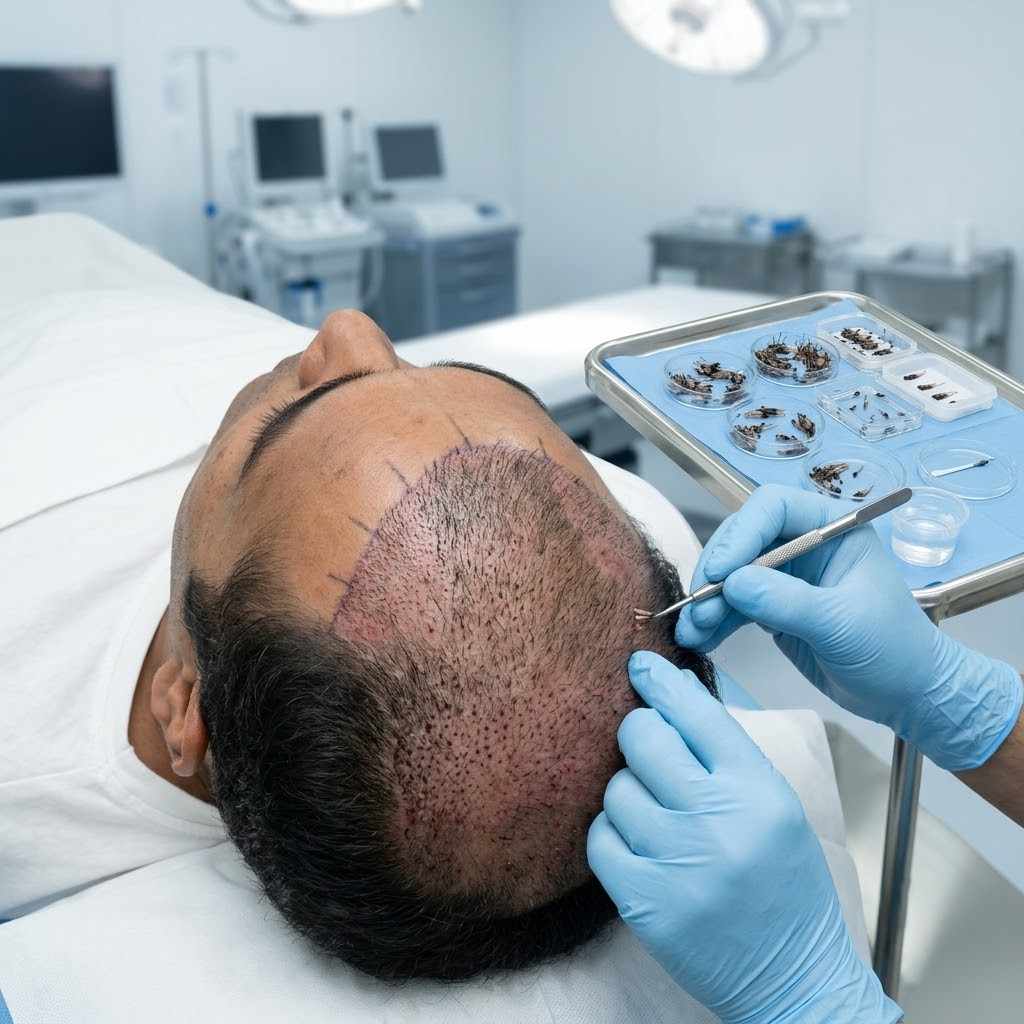
BIG FUE Hair Transplant is usually performed under local anaesthesia, allowing you to remain awake and comfortable throughout the procedure. Since only the scalp is numbed, most patients do not require general anaesthesia or overnight hospitalization.
Although the procedure follows the same principles as conventional FUE, performing a large-scale transplant involving several thousand grafts requires exceptional planning, surgical precision, efficient teamwork, and careful graft preservation. Every stage is designed to maximize graft survival while protecting the donor area for long-term hair restoration.
The procedure generally follows these stages.
Step 1: Comprehensive Hairline & Coverage Planning
The procedure begins with detailed surgical planning rather than immediate graft extraction.
Your surgeon evaluates:
Facial proportions.
Forehead dimensions.
Existing hair pattern.
Degree of baldness.
Donor availability.
Future progression of hair loss.
Long-term restoration goals.
Instead of attempting to achieve maximum density in one small area, BIG FUE focuses on creating balanced coverage across larger regions while maintaining a natural appearance.
Step 2: Large-Scale Donor Extraction
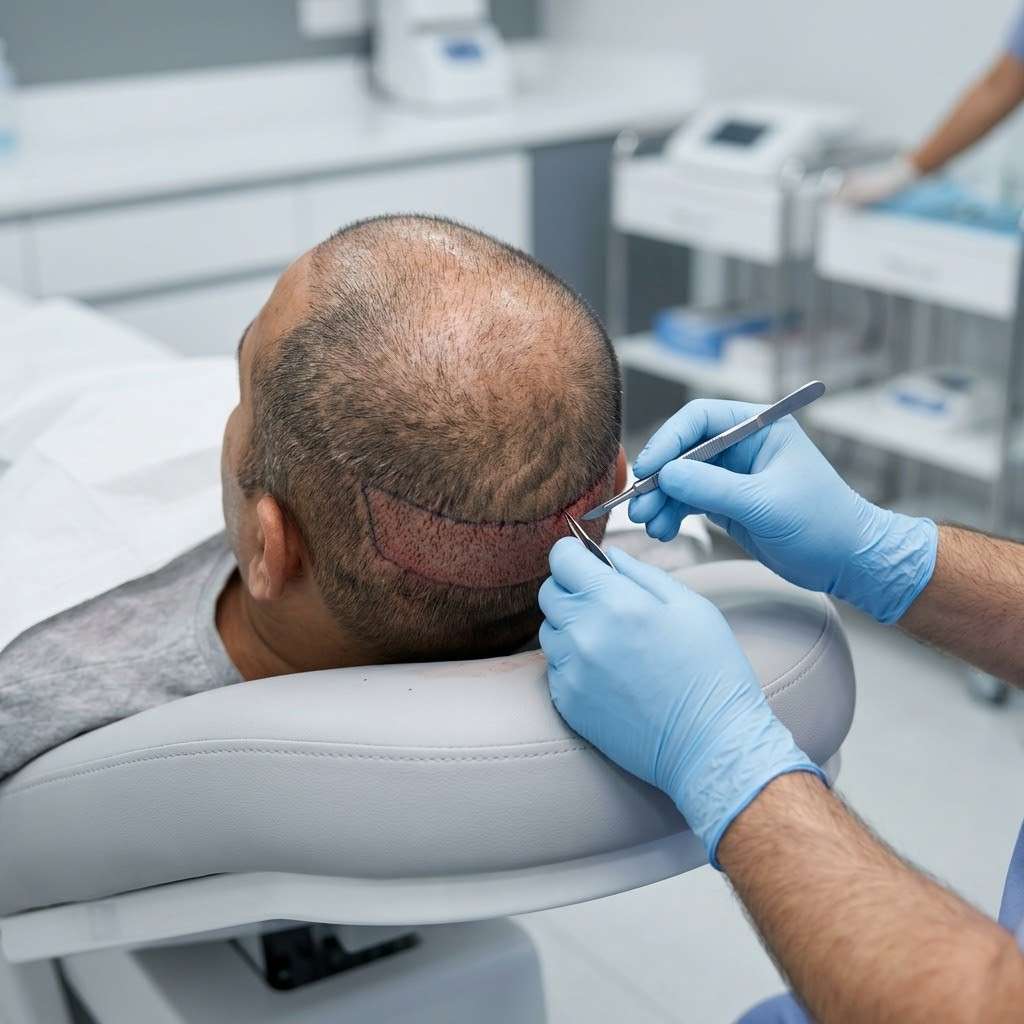
After administering local anaesthesia, individual follicular units are carefully extracted from the permanent donor area using precision micro-punch instruments.
Unlike FUT, no strip of scalp is removed.
Instead, follicles are harvested individually while ensuring extraction sites remain evenly distributed throughout the donor region. This balanced approach helps preserve the visual density of the donor area and reduces the risk of overharvesting.
Every follicle is examined immediately after extraction to ensure it remains intact and suitable for transplantation.
Step 3: Advanced Graft Preservation
One of the greatest challenges in BIG FUE is maintaining thousands of living grafts outside the body without compromising their viability.
Immediately after extraction, grafts are placed into specialized preservation solutions that help maintain:
Cellular hydration.
Stable temperature.
Metabolic activity.
Follicular viability.
Efficient workflow is critical because prolonged out-of-body time may affect graft survival. The surgical team continuously coordinates harvesting and implantation to minimize unnecessary delays.
Step 4: Recipient Site Creation
Tiny recipient sites are created according to the planned hairline and desired distribution of density.
Each incision is designed to replicate natural hair growth by carefully controlling:
Hair angle.
Hair direction.
Hair orientation.
Hair spacing.
Density transitions.
Creating thousands of recipient sites while maintaining natural growth patterns requires both technical precision and aesthetic judgment.
Step 5: High-Volume Graft Implantation
Every follicular unit is individually implanted into its designated recipient site.
Single-hair grafts are generally positioned along the frontal hairline to create a soft, natural transition, while multi-hair follicular units provide fullness behind the hairline and throughout larger treatment areas.
Despite the high number of grafts involved, careful implantation remains essential because natural-looking results depend on precision rather than speed.
Does BIG FUE Leave a Scar?
BIG FUE does not produce the linear donor scar associated with FUT because follicles are extracted individually rather than as a strip of scalp.
Instead, each harvested follicle leaves behind a tiny circular extraction site.
These microscopic wounds gradually heal over time and usually become difficult to detect once the surrounding hair grows.
However, it is important to understand that every extraction creates a minute area of scar tissue.
The visibility of these donor marks depends on several factors, including:
Number of grafts harvested.
Hair length.
Hair density.
Skin type.
Healing characteristics.
Surgical technique.
Because BIG FUE often involves a higher number of grafts than standard FUE, preserving donor aesthetics requires careful extraction planning to prevent visible thinning.
What Results Can You Expect After BIG FUE Hair Transplant?
Hair transplantation produces gradual biological improvements rather than instant cosmetic transformation.
Immediately after surgery, transplanted follicles remain securely positioned beneath the scalp while the surrounding tissue begins healing.
During the first few weeks, many transplanted hairs naturally shed.
This process, known as shock shedding, is completely normal and should not be mistaken for treatment failure.
The follicles themselves remain healthy beneath the skin.
As they re-enter the active growth phase over the following months, new permanent hair gradually begins emerging.
Patients commonly notice:
Extensive Hair Coverage
Large areas of baldness gradually become covered with healthy growing hair as transplanted follicles mature.
Natural Hairline Appearance
Carefully planned hairline design allows the transplant to blend naturally with surrounding native hair.
Improved Hair Density
Thousands of transplanted follicles contribute to fuller overall scalp coverage while maintaining natural density transitions.
Permanent Hair Growth
Because donor follicles originate from DHT-resistant regions, they generally continue producing healthy hair for many years.
Improved Facial Balance
Restoring extensive hair loss often improves overall facial proportions while creating a younger and more balanced appearance.
What Is Recovery Like After BIG FUE Hair Transplant?
Recovery following BIG FUE is generally similar to conventional FUE, although larger procedures may require slightly longer healing because more grafts are involved.
Patients commonly experience:
Mild swelling.
Temporary redness.
Minor scalp tenderness.
Small crusts around transplanted follicles.
Temporary donor area sensitivity.
These changes gradually improve as healing progresses.
Consultation & Hair Analysis
A comprehensive evaluation determines donor capacity, hair characteristics, graft requirements, and long-term restoration strategy before treatment begins.
BIG FUE Procedure
Individual follicular units are harvested, preserved, recipient sites are created, and thousands of grafts are carefully implanted according to the personalized treatment plan.
Early Healing
The donor and recipient areas gradually recover while transplanted follicles establish a healthy blood supply.
Shock Shedding
Temporary shedding of transplanted hairs occurs as part of the normal biological healing cycle.
New Hair Growth
New permanent hairs gradually emerge over the following months as transplanted follicles resume normal growth.
Hair Maturation
Hair continues becoming longer, thicker, and denser while the final cosmetic result develops progressively over time.
Are There Any Risks or Limitations?
BIG FUE is considered a safe and effective procedure when performed by experienced hair restoration surgeons with careful patient selection.
Like every surgical procedure, however, it carries certain risks.
Temporary effects may include:
Mild swelling.
Temporary redness.
Minor discomfort.
Temporary numbness.
Shock loss of nearby native hair.
Scalp sensitivity.
Less commonly, infection, uneven growth, delayed healing, reduced graft survival, or visible donor thinning may occur.
Because BIG FUE involves harvesting a large number of follicles, careful donor preservation becomes especially important. Excessive harvesting can permanently reduce donor density and limit future treatment options.
Successful outcomes depend on appropriate planning, meticulous technique, and realistic expectations rather than simply transplanting the highest possible number of grafts.
How Much Does BIG FUE Hair Transplant Cost in Mumbai?
The cost of BIG FUE Hair Transplant varies according to the complexity of each patient's treatment plan.
Pricing depends on several clinical factors, including:
Number of grafts required.
Degree of baldness.
Donor density.
Extent of recipient area.
Previous transplant history.
Complexity of surgical planning.
Whether treatment is completed in one or multiple sessions.
Following your consultation, a personalized treatment plan is prepared outlining the recommended graft requirement, expected outcomes, treatment strategy, and associated costs before surgery is scheduled.
Why Choose Hair & Shape for BIG FUE Hair Transplant?
Large-scale hair transplantation requires much more than harvesting thousands of grafts. It demands careful donor management, efficient graft preservation, precise implantation, and thoughtful long-term planning.
At Hair & Shape Clinic, every BIG FUE procedure begins with a detailed assessment of donor quality, scalp anatomy, facial proportions, ongoing hair loss progression, and future restoration requirements.
Rather than focusing solely on graft numbers, the emphasis is on preserving donor resources, maximizing graft survival, and creating natural-looking results that remain balanced for years to come.
Why Does Personalized BIG FUE Planning Matter?
Every patient requiring extensive hair restoration presents unique challenges. The amount of donor hair available, the pattern of baldness, and the expected progression of future hair loss vary considerably.
Donor Hair Is a Limited Resource
Every extracted follicle permanently reduces the donor supply. Strategic harvesting protects future treatment options.
Coverage Is More Important Than Numbers Alone
Thousands of grafts do not automatically produce better results. Proper distribution creates the visual impression of greater density.
Hair Loss Continues Throughout Life
A successful transplant should complement future hair loss rather than only address today's appearance.
Hairline Design Influences Long-Term Results
Natural facial proportions and age-appropriate hairline planning remain essential regardless of graft numbers.
Long-Term Planning Protects Future Flexibility
Preserving donor reserves today allows additional restoration if hair loss progresses in later years.
International Patients Seeking BIG FUE Hair Transplant in Mumbai
Hair & Shape Clinic welcomes patients from across India and internationally seeking advanced large-scale hair restoration using BIG FUE techniques.
Our international patient pathway is designed to simplify treatment planning from the initial virtual consultation through long-term follow-up after returning home.
Before You Travel
Photographs, medical history, donor assessment, and virtual consultation help determine whether BIG FUE is the most appropriate solution before your visit.
During Your Stay
Your treatment includes consultation, hairline planning, BIG FUE transplantation, postoperative care, and detailed recovery instructions tailored to your procedure.
Returning Home
Hair restoration continues over several months after surgery. Continued guidance regarding scalp care, healing milestones, hair growth, and future maintenance helps support the best possible long-term outcome regardless of where you live.
What to Expect
Consultation
A detailed assessment of your goals, suitability, and a personalised plan.
Preparation
Clear pre-treatment guidance so you arrive fully prepared and at ease.
The Procedure
Your treatment, performed by our specialists with comfort and safety first.
Aftercare
Structured recovery support and follow-ups to protect your results.
Frequently Asked Questions
Everything you need to know about Hair Transplant BIG FUE. Still curious? Our team is one message away.
How long does recovery take?
Most patients resume light daily activities within a few days, while hair growth continues gradually over the following months as transplanted follicles mature.
Is BIG FUE suitable for severe baldness?
Many patients with advanced hair loss may benefit from BIG FUE, provided they have sufficient donor capacity and realistic treatment expectations.
Can BIG FUE restore the entire scalp?
The objective is to achieve the greatest natural improvement possible while respecting donor limitations. Coverage depends on the extent of hair loss, donor quality, and longterm restoration planning.
Will a larger procedure affect my donor area?
When planned correctly, donor follicles are extracted strategically to maintain a natural appearance while preserving future donor reserves. Responsible donor management is one of the most important aspects of BIG FUE planning.
How many grafts are used during a BIG FUE procedure?
The number varies depending on your donor capacity, hair characteristics, scalp condition, and restoration goals. During consultation, an individualized graft estimate is prepared rather than recommending a standard number.
How is BIG FUE different from a regular FUE hair transplant?
The surgical technique remains FUE, but BIG FUE involves larger restoration planning, more comprehensive donor management, and long-term density distribution for patients with advanced hair loss.

Begin Your Hair Transplant BIG FUE Journey
Book a consultation today and let our specialists craft a plan built entirely around you.