 Gender Reassignment
The Science of Facial Aging: Why Most People Lose Jawline Definition Before They Notice Wrinkles
Introduction
Many people assume facial ageing begins when the first wrinkle appears around the eyes or forehead. While wrinkles are one of the most recognisable signs of ageing, they are rarely the earliest.
In reality, one of the first noticeable changes often occurs much lower on the face. A once well-defined jawline gradually becomes softer, the transition between the jaw and neck becomes less distinct, and the lower face begins to appear heavier—even when the skin itself still looks smooth.
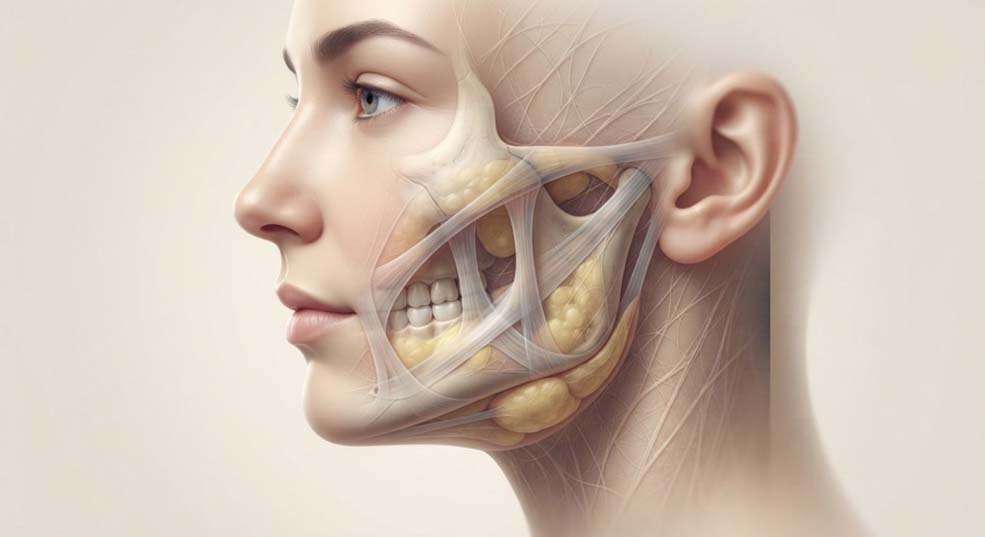
This happens because facial ageing starts beneath the skin. Long before wrinkles become visible, deeper anatomical structures that support the lower face begin changing. Fat compartments shift, retaining ligaments weaken, collagen production declines, facial bones remodel, and soft tissues slowly descend under gravity.
Understanding these hidden biological changes helps explain why jawline definition is often lost years before prominent wrinkles develop and why treating only the skin may not fully address early facial ageing.
What Creates A Sharp And Youthful Jawline?
A youthful jawline is not created by tight skin alone.
Instead, it is the result of multiple anatomical structures working together to maintain definition, support, and facial harmony.
These structures include:
The mandibular bone (lower jaw)
Chin projection
Deep facial fat compartments
Superficial facial fat compartments
Retaining ligaments
Facial muscles
Collagen and elastin
Skin quality
Neck support structures
When all of these components remain healthy and well supported, they create the crisp mandibular border that is commonly associated with a youthful appearance.
As each layer gradually changes with age, jawline definition slowly begins to soften.
What Causes Loss Of Jawline Definition With Age?
Jawline ageing is not caused by a single factor.
Instead, it develops as several biological processes occur simultaneously over many years.
The most important causes include:
Age-related bone remodelling
Loss of deep facial fat
Downward movement of superficial fat
Weakening of facial retaining ligaments
Reduced collagen and elastin production
Gradual skin laxity
The long-term effects of gravity
Genetic factors
Lifestyle influences such as smoking and sun exposure
Each of these changes may appear subtle on its own, but together they significantly alter the contour of the lower face.
Facial Ageing Begins Beneath The Skin
One of the biggest misconceptions about ageing is that it starts on the surface of the skin.
Scientific research has shown that the earliest ageing changes actually occur much deeper within the face.
Before wrinkles become noticeable, gradual changes begin affecting:
Facial bones
Deep fat compartments
Superficial fat compartments
Retaining ligaments
Muscles
Connective tissue
Collagen architecture
Because these structures provide support for the overlying skin, changes beneath the surface often become visible as a softer jawline before wrinkles appear.
This explains why someone may still have relatively smooth skin while already noticing changes in facial definition.
How Does Bone Loss Affect The Jawline?
Many people are surprised to learn that facial bones continue to change throughout adulthood.
The lower jaw, chin, and surrounding facial skeleton undergo gradual remodelling as part of the natural ageing process.
Over time, subtle changes may occur in:
Mandibular angle
Chin projection
Jawbone volume
Structural support for soft tissues
Although these changes develop slowly, they reduce the underlying framework that supports the lower face.
As skeletal support decreases, the overlying tissues become more prone to sagging, contributing to early loss of jawline definition.
Why Do Deep Facial Fat Compartments Shrink With Age?
The face contains multiple deep fat compartments that act as structural support rather than simply adding facial volume.
These deep fat pads help maintain youthful contours by supporting the muscles and skin above them.
As we age:
Deep fat compartments gradually lose volume.
Internal facial support decreases.
Facial contours become flatter.
The lower face loses some of its natural projection.
Unlike superficial fat, deep fat loss occurs beneath the muscles, making it difficult to notice until visible changes begin appearing along the jawline.
Why Does Facial Fat Move Downwards Instead Of Simply Disappearing?
One of the most important discoveries in facial ageing research is that facial fat does not disappear evenly.
Instead, different fat compartments age differently.
Some lose volume.
Others gradually descend due to weakening support structures.
As superficial fat shifts downward:
Early jowls begin forming.
The lower face appears heavier.
The mandibular border becomes less defined.
The distinction between the face and neck gradually fades.
This redistribution of facial fat is one of the primary reasons the jawline changes before wrinkles become prominent.
What Role Do Retaining Ligaments Play In Jawline Ageing?
Retaining ligaments are bands of connective tissue that anchor the skin, fat, and muscles to the facial skeleton.
They function like an internal suspension system, helping maintain youthful facial contours.
During early adulthood, these ligaments provide firm support for:
The cheeks
The jawline
Facial fat compartments
Soft tissues of the lower face
As ageing progresses, these ligaments gradually become less resilient.
Reduced ligament support allows facial tissues to shift downward under their own weight, contributing to:
Softer jawline definition
Early jowl formation
Reduced facial contour
A heavier lower face
Although this process occurs gradually, it is one of the most significant contributors to early facial ageing.
Why Does Collagen Loss Affect The Jawline Before Wrinkles?
Collagen and elastin are essential proteins that give the skin strength, firmness, and elasticity.
Beginning in early adulthood, collagen production gradually declines each year.
Initially, this reduction does not necessarily produce wrinkles.
Instead, it weakens the skin's ability to firmly support the underlying facial structures.
As collagen levels decrease:
Skin becomes less resilient.
Connective tissues lose strength.
Facial support gradually weakens.
The jawline begins losing its crisp definition.
Only later do these same biological changes become visible as wrinkles and folds on the surface of the skin.
Why Are Early Jowls Often The First Visible Sign Of Facial Ageing?
Jowls develop when soft tissues gradually descend below the natural border of the lower jaw.
Rather than being caused by loose skin alone, early jowls result from several structural changes occurring together.
These include:
Bone remodelling
Deep fat volume loss
Downward movement of superficial fat
Ligament laxity
Collagen depletion
The cumulative effects of gravity
Because these changes occur beneath relatively healthy skin, many people notice a softer jawline years before they develop significant wrinkles elsewhere on the face.
How Does Gravity Contribute To Loss Of Jawline Definition?
Gravity is often blamed as the primary cause of facial ageing, but this is only partly true.
Gravity acts on the face throughout life, even during youth. The difference is that younger facial tissues are supported by strong ligaments, healthy collagen, well-positioned fat compartments, and a robust facial skeleton that resist its effects.
As these support structures gradually weaken with age, gravity becomes more noticeable.
Over time, it contributes to:
Downward movement of facial soft tissues
Reduced jawline sharpness
Early jowl formation
Less distinction between the face and neck
A heavier appearance of the lower face
Rather than causing ageing itself, gravity magnifies the biological changes already occurring beneath the skin.
Can Lifestyle Choices Accelerate Jawline Ageing?
Yes.
Although ageing is a natural biological process, certain lifestyle factors can accelerate the structural changes responsible for loss of jawline definition.
These include:
Chronic sun exposure
Smoking
Poor nutrition
Significant weight fluctuations
Chronic stress
Inadequate sleep
Excessive alcohol consumption
Poor skincare habits
These factors may contribute to faster collagen breakdown, increased oxidative stress, and reduced tissue quality, causing facial ageing to become noticeable earlier than expected.
Does Weight Loss Improve Or Worsen Jawline Definition?
The answer depends on the individual's facial anatomy and age.
In younger individuals with good skin elasticity, weight loss often improves jawline definition by reducing excess fat beneath the chin and along the neck.
However, in older adults or individuals with reduced collagen and ligament support, significant weight loss may actually make age-related structural changes more apparent.
This occurs because facial fat provides natural support and volume.
When facial fat decreases without adequate skin elasticity or structural support, patients may notice:
Increased skin laxity
More visible jowls
A softer jawline
Reduced lower facial volume
This is why facial rejuvenation is not simply about reducing fat but restoring overall structural balance.
At What Age Does Jawline Ageing Usually Begin?
There is no single age at which jawline ageing starts.
The process develops gradually and is influenced by:
Genetics
Skin quality
Hormonal changes
Lifestyle
Sun exposure
Smoking
Body weight
Overall health
Microscopic changes in collagen production often begin during the late twenties.
Visible structural changes commonly become more noticeable during the thirties and forties, although some individuals may notice earlier or later changes depending on their facial anatomy and genetics.
Can Jawline Definition Be Restored?
In many patients, yes.
The most appropriate treatment depends on the underlying cause of the ageing process rather than the appearance alone.
Treatment options may focus on improving:
Facial volume
Skin quality
Collagen production
Soft tissue support
Neck contour
Jawline definition
Rather than simply tightening the skin, modern facial rejuvenation aims to restore the structural balance that has gradually changed with age.
A comprehensive assessment allows treatment to be tailored to each patient's anatomy and aesthetic goals.
How Do Facial Plastic Surgeons Assess Jawline Ageing?
Rather than evaluating the skin alone, facial plastic surgeons assess every anatomical layer contributing to lower facial definition.
This typically includes evaluation of:
Facial bone support
Chin projection
Deep and superficial fat compartments
Ligament support
Skin elasticity
Muscle activity
Neck anatomy
Overall facial proportions
Understanding which structures have changed allows treatment recommendations to address the underlying causes instead of only the visible symptoms.
Why Choosing An Experienced Facial Plastic Surgeon Matters
Loss of jawline definition is rarely caused by a single anatomical change.
Treating only one layer—such as tightening the skin or removing fat—may fail to produce natural, balanced results if deeper support structures are not considered.
An experienced facial plastic surgeon understands how:
Bone
Fat
Ligaments
Muscles
Skin
Facial proportions
work together to create youthful lower facial contours.
A comprehensive understanding of facial anatomy helps ensure that treatment plans are individualised, evidence-based, and designed to achieve harmonious, long-lasting outcomes.
Why Choose Hair & Shape For Facial Rejuvenation In Mumbai?
At Hair & Shape Clinic, facial rejuvenation is approached through a detailed understanding of facial anatomy rather than focusing on wrinkles alone. Every consultation includes a comprehensive assessment of the skin, facial volume, jawline, neck contour, ligament support, and overall facial proportions to identify the underlying causes of ageing.
Dr. Umang Kothari combines advanced facial plastic surgery expertise with evidence-based rejuvenation techniques to restore natural facial harmony while preserving each patient's unique features. Whether concerns involve early jawline softening, facial volume loss, or more advanced signs of ageing, treatment recommendations are personalised to achieve balanced, natural-looking, and long-lasting results.
Final Thoughts
Loss of jawline definition is often one of the earliest visible signs of facial ageing, frequently appearing years before noticeable wrinkles develop. Rather than being caused by loose skin alone, it results from gradual changes in the facial skeleton, fat compartments, retaining ligaments, collagen, and connective tissues that collectively reduce structural support for the lower face.
Understanding these underlying biological processes helps explain why modern facial rejuvenation focuses on restoring facial support rather than simply tightening the skin. By addressing the deeper causes of ageing through a personalised treatment approach, it is often possible to achieve natural-looking improvements that restore facial definition while maintaining long-term harmony and balance.