 Gender Reassignment
How to Tell If Your Abdominal Skin Will Respond to a Tummy Tuck vs Liposuction Alone
Introduction
One of the most common questions people ask before considering body contouring surgery is whether liposuction alone will tighten loose abdominal skin or if a tummy tuck (abdominoplasty) is necessary.
The answer depends on much more than the amount of fat present. The condition of your skin, the quality of the underlying connective tissues, the elasticity of your abdominal wall, previous pregnancies, weight changes, age, and genetics all influence how your abdomen will respond after fat removal.
Many people assume that removing fat automatically creates a flatter, tighter stomach. In reality, liposuction removes fat but does not directly tighten significantly stretched skin. If the skin has lost its ability to retract, removing the underlying fat may actually make loose skin more noticeable.
Understanding the difference between excess fat and excess skin is one of the most important steps in choosing the right procedure. While some patients achieve excellent results with liposuction alone, others require a tummy tuck to remove redundant skin and restore a smoother abdominal contour.
This article explains how plastic surgeons evaluate abdominal skin, why skin elasticity matters, and how to determine whether liposuction, abdominoplasty, or a combination of both is likely to provide the most natural and long-lasting result.
Understanding The Difference Between Fat And Loose Skin
Although they often appear together, fat and loose skin are two entirely different anatomical concerns.
Excess Fat
Excess fat develops within the subcutaneous layer beneath the skin.
It may be influenced by:
Genetics
Lifestyle
Diet
Hormonal changes
Ageing
Pregnancy
Weight gain
Liposuction is designed to reduce these localised fat deposits.
Loose Skin
Loose skin occurs when the skin's collagen and elastin fibres become stretched beyond their ability to recoil.
Common causes include:
Pregnancy
Significant weight loss
Natural ageing
Sun damage
Genetic skin quality
Repeated weight fluctuations
Once skin elasticity has been significantly compromised, the skin often cannot shrink completely on its own.
Understanding which problem is more dominant helps determine the most appropriate treatment.
Why Skin Elasticity Matters
Skin behaves much like an elastic fabric.
Healthy skin contains large amounts of collagen and elastin, allowing it to stretch and then gradually return to its original shape.
As we age, these structural proteins naturally decline.
Factors that accelerate this process include:
Pregnancy
Major weight loss
Smoking
Chronic sun exposure
Genetics
Hormonal changes
When skin retains good elasticity, it can often contract after fat is removed.
When elasticity is poor, excess skin may remain even after successful liposuction.
This is one of the primary reasons why skin quality is evaluated before recommending any body contouring procedure.
How Plastic Surgeons Assess Skin Elasticity
During consultation, surgeons evaluate much more than the appearance of the abdomen.
Several characteristics are carefully examined, including:
Skin thickness
Skin recoil
Degree of laxity
Collagen quality
Stretch marks
Distribution of excess skin
Fat thickness
Muscle integrity
Overall body proportions
Rather than relying on a single measurement, these findings are combined to determine how the abdomen is likely to respond after surgery.
The Pinch Test: One Part Of The Assessment
Many patients have heard about the "pinch test" and wonder whether they can evaluate themselves at home.
While gently pinching the abdominal skin may provide a general idea of skin thickness and flexibility, it cannot accurately determine whether liposuction alone will achieve the desired result.
Professional assessment considers multiple factors, including:
Quality of skin recoil
Depth of subcutaneous fat
Skin redundancy
Muscle separation
Location of loose skin
Previous pregnancies
Weight stability
For this reason, the pinch test should be viewed as only one small component of a comprehensive evaluation.
When Liposuction Alone May Be Enough
Some patients have stubborn fat but relatively healthy skin.
These individuals often demonstrate:
Good skin elasticity
Minimal skin laxity
Stable body weight
Localised fat deposits
Strong abdominal wall support
Little or no muscle separation
In carefully selected patients, liposuction alone may produce excellent contour improvement because the skin retains enough elasticity to contract naturally after fat removal.
When A Tummy Tuck May Be A Better Option
Liposuction cannot remove excess skin.
When significant skin redundancy is present, removing fat alone may leave folds of loose tissue that continue to affect abdominal contour.
Patients who may benefit more from abdominoplasty often have:
Hanging lower abdominal skin
Multiple skin folds
Significant stretch marks below the navel
Muscle separation after pregnancy
Loose skin following major weight loss
Poor skin elasticity
Excess tissue that extends beyond fat alone
A tummy tuck addresses these concerns by removing excess skin and, when appropriate, repairing the abdominal wall to create a firmer, flatter appearance.
Can Skin Tighten Naturally After Liposuction?
Yes, but only to a certain extent.
Following liposuction, the body begins a natural healing process during which collagen fibres remodel and the skin gradually adapts to its new contour.
The degree of tightening varies considerably from one individual to another.
Factors that influence natural skin contraction include:
Age
Skin elasticity
Amount of fat removed
Genetics
Smoking status
Overall health
Collagen quality
Treatment area
Patients with healthy, elastic skin generally experience greater natural contraction than those with significant skin laxity.
Pregnancy And Its Lasting Effects On The Abdomen
Pregnancy stretches not only the skin but also the abdominal muscles and connective tissues.
Although many women regain excellent abdominal tone after childbirth, others experience permanent structural changes.
These may include:
Loose skin
Stretch marks
Muscle separation (diastasis recti)
Lower abdominal bulging
Reduced skin elasticity
In these situations, liposuction alone may improve fat deposits but is unlikely to correct the underlying skin and muscle changes.
A comprehensive consultation helps determine whether abdominoplasty, liposuction, or a combined approach is more appropriate.
Can Liposuction And A Tummy Tuck Be Performed Together?
Yes.
In many patients, combining liposuction with abdominoplasty provides more comprehensive body contouring than either procedure alone.
While liposuction removes localised fat deposits, a tummy tuck addresses loose skin and, when necessary, repairs separated abdominal muscles.
A combined approach may improve:
Waist definition
Lower abdominal contour
Abdominal firmness
Body proportions
Overall silhouette
The exact surgical plan depends entirely on each patient's anatomy and treatment goals.
What Happens If Liposuction Is Performed When A Tummy Tuck Is Actually Needed?
Choosing liposuction alone when significant skin laxity is present may lead to disappointing results.
Although the abdomen may become smaller because fat has been removed, excess skin often remains.
This may result in:
Persistent loose skin
Skin folds
Wrinkling
Reduced abdominal definition
Less predictable contour
Continued lower abdominal overhang
This is why proper patient selection is one of the most important factors in successful body contouring.
Signs That Your Skin May Not Retract Well
Although every patient is different, certain characteristics may suggest that natural skin tightening after liposuction will be limited.
These include:
Significant skin overhang
Deep skin folds
Extensive stretch marks
Thin, crepey skin
Poor skin recoil
History of major weight loss
Multiple pregnancies
Advanced skin laxity
These findings do not automatically mean that a tummy tuck is necessary, but they often indicate that further evaluation is warranted.
Does Age Alone Determine Which Procedure You Need?
No.
Although collagen production naturally decreases with age, chronological age alone is not the deciding factor.
Many younger individuals have poor skin elasticity following pregnancy or substantial weight loss.
Conversely, some older patients maintain remarkably healthy skin quality.
Surgeons place greater emphasis on:
Skin elasticity
Tissue quality
Muscle integrity
Weight stability
Overall health
Individual anatomy
Treatment recommendations are based on these anatomical findings rather than age alone.
Can Exercise Tighten Loose Abdominal Skin?
Exercise is one of the best ways to improve overall health, strengthen the abdominal muscles, and maintain body weight.
However, exercise cannot remove excess skin that has permanently lost its elasticity.
Building stronger abdominal muscles may improve core strength and posture, but it does not restore stretched collagen or eliminate redundant skin.
When significant skin laxity is present, surgical treatment is often the only reliable method of removing excess skin.
Why Stretch Marks Can Help Predict Skin Elasticity
Stretch marks develop when collagen and elastin fibres within the skin are damaged by excessive stretching.
Although not every person with stretch marks requires a tummy tuck, their presence may provide valuable information about skin quality.
Plastic surgeons evaluate:
Number of stretch marks
Their location
Skin thickness
Overall elasticity
Associated skin laxity
Stretch marks are considered alongside many other clinical findings when planning treatment.
The Importance Of Individualised Surgical Planning
There is no universal rule that determines whether someone should undergo liposuction or abdominoplasty.
Every abdomen is different.
Successful surgical planning considers multiple factors simultaneously, including:
Amount of excess fat
Skin elasticity
Degree of loose skin
Muscle separation
Previous pregnancies
Weight history
Lifestyle
Future pregnancy plans
Overall body proportions
A personalised assessment helps ensure that the selected procedure addresses the actual anatomical concerns rather than only the visible symptoms.
Why Choosing An Experienced Plastic Surgeon Matters
Body contouring involves much more than removing fat.
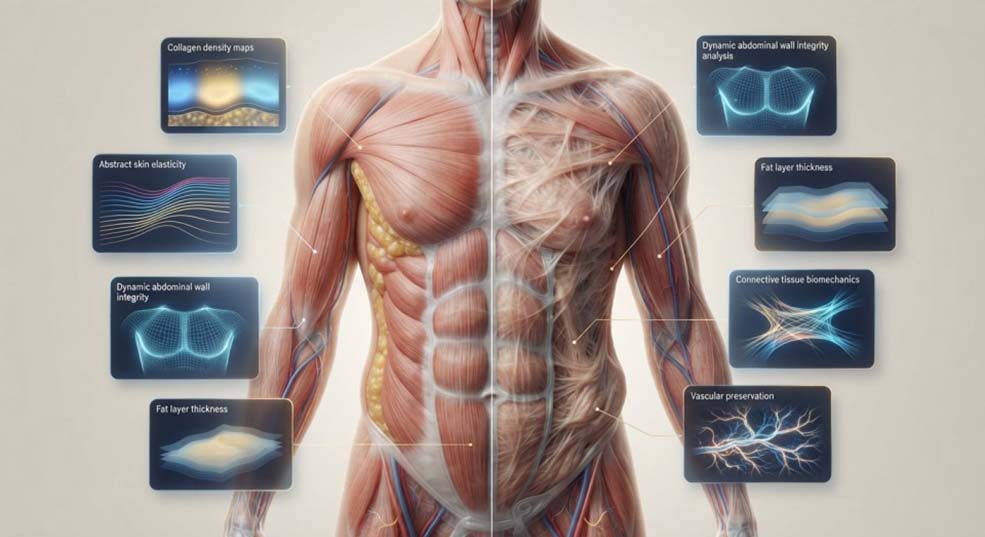
A successful outcome depends upon understanding how the skin, fat, connective tissues, and abdominal wall function together.
An experienced plastic surgeon carefully evaluates:
Skin quality
Fat distribution
Fascial support
Muscle integrity
Body proportions
Long-term contour stability
This comprehensive approach helps minimise the risk of under-treatment or unnecessarily extensive surgery while achieving balanced, natural-looking results.
Why Choose Hair & Shape For Body Contouring In Mumbai?
At Hair & Shape Clinic, every body contouring procedure begins with a detailed evaluation of abdominal anatomy rather than a one-size-fits-all recommendation. Factors such as skin elasticity, fat distribution, muscle separation, previous pregnancies, weight changes, and overall body proportions are carefully assessed before determining whether liposuction, abdominoplasty, or a combination of procedures is the most appropriate solution.
Dr. Umang Kothari believes that successful body contouring is achieved through personalised planning and evidence-based surgical decision-making. By tailoring each procedure to the patient's unique anatomy and aesthetic goals, the focus remains on creating smooth, natural-looking abdominal contours while preserving long-term functional support and body harmony.
Final Thoughts
Choosing between liposuction and a tummy tuck is not simply a matter of how much abdominal fat is present. The quality of the skin, its ability to contract, the condition of the abdominal muscles, and overall body anatomy all play a crucial role in determining which procedure is likely to produce the best outcome.
While liposuction can provide excellent contour improvement for patients with good skin elasticity, individuals with significant loose skin or muscle separation often benefit more from abdominoplasty. A comprehensive consultation with an experienced plastic surgeon is the most reliable way to determine the treatment approach that aligns with your anatomy, lifestyle, and long-term goals.