 Gender Reassignment
The Biology Of Aging: Why Faces Lose Volume Before Wrinkles Appear
Introduction
When most people think about facial ageing, wrinkles are usually the first feature that comes to mind. Fine lines around the eyes, forehead creases, and folds around the mouth are often considered the earliest visible signs of getting older. However, modern facial anatomy and ageing research tells a different story. Long before wrinkles become prominent, subtle structural changes begin beneath the skin. The earliest and most significant change is the gradual loss and redistribution of facial volume.
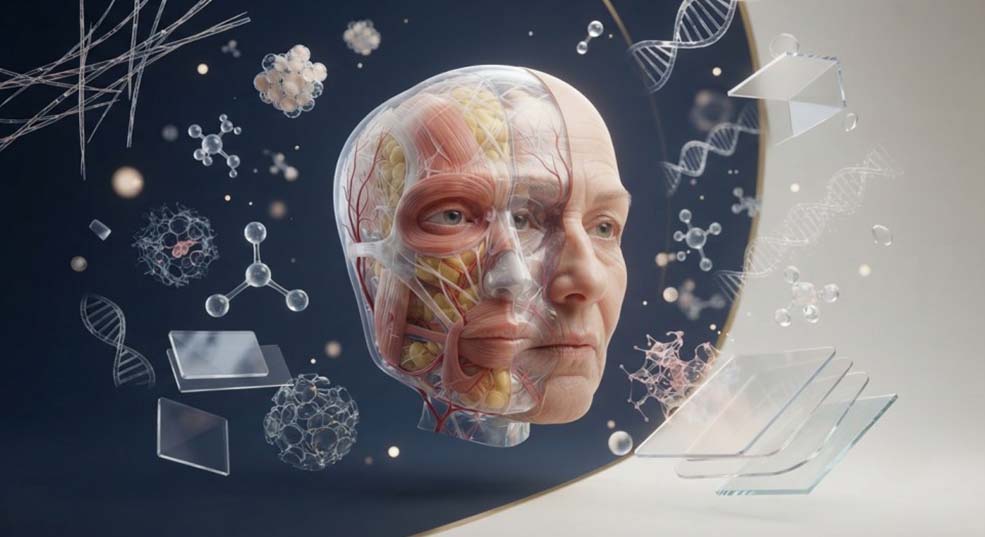
Facial ageing is not simply a skin problem. It is a complex biological process involving changes in fat compartments, bone structure, ligaments, muscles, collagen, elastin, and skin quality. These deeper anatomical changes alter the way light reflects from the face, reduce youthful contours, and create shadows that eventually make wrinkles and folds appear more noticeable.
Understanding the sequence of facial ageing is essential because treating wrinkles alone often fails to restore a naturally youthful appearance. Modern facial rejuvenation focuses on replacing lost support, restoring facial proportions, and improving overall facial harmony rather than simply tightening the skin.
At Hair & Shape Clinic, facial rejuvenation begins with understanding the underlying biology of ageing. Every treatment plan is tailored to the patient's facial anatomy, volume loss, skin quality, and long-term aesthetic goals, ensuring natural-looking results rather than an overfilled or over-tightened appearance.
Facial Ageing Begins Beneath The Skin
Although wrinkles are the most visible sign of ageing, they are rarely the first biological change.
Ageing starts years earlier within the deeper supporting structures of the face.
These changes occur gradually in:
Facial fat compartments.
Facial bones.
Retaining ligaments.
Muscles.
Collagen fibres.
Elastin fibres.
Skin hydration.
Cellular repair mechanisms.
Initially, these changes may not produce visible wrinkles, but they slowly reduce facial support and alter youthful facial contours.
As structural support diminishes, the overlying skin begins to fold, creating the wrinkles that most people associate with ageing.
Understanding Facial Volume
Facial volume refers to the natural three-dimensional fullness created by the interaction of bone, fat, muscle, connective tissue, and skin.
A youthful face typically demonstrates:
Smooth facial transitions.
Full cheeks.
Well-supported temples.
Balanced jawline.
Soft under-eye contours.
Gentle facial curves.
Uniform light reflection.
This balanced architecture produces a healthy, rested, and youthful appearance.
Volume is not simply "fat."
It is the combined result of multiple anatomical structures working together.
Why Facial Fat Is More Complex Than Most People Think
The face contains multiple independent fat compartments rather than one continuous layer of fat.
These compartments are separated by connective tissue and age differently over time.
Some compartments lose volume.
Others gradually descend.
Some remain relatively stable.
Because each compartment behaves independently, facial ageing does not occur uniformly across the face.
This explains why one person may develop hollow cheeks while another develops deeper nasolabial folds or temple hollowing.
Modern facial rejuvenation therefore focuses on restoring individual fat compartments rather than simply adding volume everywhere.
The First Areas To Lose Volume
Early facial ageing often begins in regions that many people do not initially notice.
Temples
Loss of temple volume creates a narrower upper face and reduces the youthful frame around the eyes.
Midface
Cheek fat gradually diminishes, reducing facial projection and making the lower face appear heavier.
Under-Eye Region
Support beneath the eyes decreases, producing hollowness, shadowing, and a tired appearance even before wrinkles develop.
Lateral Cheeks
Subtle flattening of the outer cheeks reduces facial contour and changes how light reflects across the face.
These early changes often become visible years before significant wrinkle formation.
The Role Of Collagen In Facial Ageing
Collagen is the primary structural protein responsible for maintaining skin strength and firmness.
Beginning in early adulthood, collagen production gradually declines.
At the same time:
Existing collagen fibres become thinner.
Repair mechanisms slow.
Collagen organisation becomes less efficient.
Skin gradually loses mechanical support.
Reduced collagen alone does not immediately produce wrinkles.
Instead, it weakens the skin's ability to resist folding as deeper structural support diminishes.
Elastin Also Changes With Age
Elastin provides skin with its ability to stretch and return to its original shape.
Young skin quickly rebounds after facial expressions.
Over time:
Elastin fibres fragment.
Elastic recovery decreases.
Skin becomes less resilient.
Repeated facial movement leaves more persistent creases.
Loss of elastin contributes to wrinkle formation, but usually after deeper structural ageing has already begun.
Facial Bones Also Change During Ageing
One of the lesser-known aspects of facial ageing is gradual skeletal remodelling.
With increasing age, certain facial bones undergo slow resorption.
These changes may involve:
The eye sockets becoming larger.
Reduced cheekbone projection.
Changes in the upper jaw.
Alterations around the chin and jawline.
Although these changes occur slowly over many years, they reduce the structural framework that supports the overlying soft tissues.
Loss of bony support contributes significantly to facial volume loss and the eventual development of folds and sagging.
Why Ligaments Become Less Supportive
Retaining ligaments anchor facial soft tissues to the underlying skeleton.
In younger individuals, these ligaments maintain facial fat compartments in their proper anatomical position.
As ageing progresses:
Ligaments gradually elongate.
Mechanical support weakens.
Fat compartments shift downward.
Facial contours become less defined.
This descent contributes to jowls, deepening folds, and changes in facial shape.
Importantly, these processes begin before prominent wrinkles appear.
How Gravity Contributes To Facial Ageing
Gravity alone does not cause facial ageing.
Instead, gravity acts upon tissues that have already become weaker due to biological ageing.
As bone support decreases, collagen declines, ligaments loosen, and fat compartments lose volume, gravity gradually accentuates tissue descent.
This combination creates:
Flattened cheeks.
Deeper nasolabial folds.
Marionette lines.
Jowl formation.
Less defined jawlines.
Gravity therefore magnifies existing structural changes rather than initiating them.
Why The Face Begins To Look Tired Before It Looks Old
Many patients first notice that they appear tired, stressed, or less refreshed, even though obvious wrinkles have not yet developed.
This happens because subtle volume loss changes the way light interacts with facial contours.
Instead of reflecting evenly across full cheeks and smooth transitions, the face begins developing:
Hollow areas.
Darker shadows.
Reduced cheek projection.
Under-eye depressions.
Flattened facial curves.
These changes create the impression of fatigue despite healthy skin.
Recognising these early signs allows treatment before more advanced ageing develops.
Why Wrinkles Eventually Become More Visible
Wrinkles are typically the final visible result of multiple ageing processes occurring simultaneously.
By the time wrinkles become noticeable, several structural changes have often already taken place:
Reduction in facial fat volume.
Bone remodelling.
Collagen depletion.
Elastin fragmentation.
Ligament laxity.
Repeated facial muscle movement.
Reduced skin hydration.
Slower cellular repair.
These combined changes reduce the skin's ability to remain smooth during facial expressions and at rest.
This is why treating wrinkles alone often produces less natural results than addressing the underlying causes of facial ageing.
Intrinsic And Extrinsic Ageing
Facial ageing results from both natural biological processes and environmental influences.
Intrinsic Ageing
Intrinsic ageing is the genetically programmed ageing process that occurs naturally over time.
It includes:
Reduced collagen production.
Slower cell turnover.
Hormonal changes.
Bone remodelling.
Gradual fat compartment changes.
Even individuals with excellent skincare experience intrinsic ageing.
Extrinsic Ageing
Extrinsic ageing results from external factors that accelerate biological ageing.
These include:
Sun exposure.
Smoking.
Air pollution.
Poor nutrition.
Chronic stress.
Sleep deprivation.
Excessive alcohol consumption.
Repeated ultraviolet radiation.
Unlike intrinsic ageing, many extrinsic factors can be modified through healthy lifestyle choices.
Why Facial Expressions Create Permanent Wrinkles Later
Every smile, laugh, blink, or frown temporarily folds the skin.
In younger individuals, healthy collagen and elastin allow the skin to return to its original position immediately.
As structural support declines:
Skin becomes thinner.
Elastic recoil decreases.
Collagen repair slows.
Expression lines recover less efficiently.
Eventually, these temporary folds remain visible even when the face is relaxed, resulting in static wrinkles.
This explains why expression lines become permanent only after deeper ageing has already weakened facial support.
Different Parts Of The Face Age At Different Rates
The face does not age uniformly.
Each anatomical region has unique fat compartments, muscle activity, skin thickness, and structural support.
For example:
Forehead
Dynamic muscle movement contributes to horizontal forehead lines over time.
Around The Eyes
Thin skin and frequent blinking make this area particularly susceptible to early ageing.
Cheeks
Volume loss is often more significant than wrinkle formation during the early stages of ageing.
Jawline
Loss of structural support contributes to reduced definition and eventual jowl formation.
Neck
Skin laxity and collagen loss become increasingly apparent with age due to thinner supporting tissues.
Because every facial region ages differently, effective rejuvenation requires a comprehensive rather than isolated treatment approach.
Why Simply Tightening The Skin Is Not Enough
Traditional approaches to facial rejuvenation often focused primarily on skin tightening.
While tightening may improve certain concerns, it does not replace the deeper anatomical support that has been lost.
An overemphasis on tightening alone may result in:
Flattened facial contours.
Unnatural tension.
Distorted facial proportions.
Less expressive facial movement.
Modern facial rejuvenation instead aims to restore youthful anatomy while preserving natural facial expression and individuality.
Restoring Volume Before Treating Wrinkles
Current facial rejuvenation strategies often prioritise restoring structural support before addressing surface wrinkles.
Depending on the patient's anatomy and goals, treatment may involve improving:
Midface projection.
Temple fullness.
Under-eye support.
Jawline definition.
Skin quality.
Collagen production.
When underlying support is restored appropriately, many wrinkles appear softer because the skin is no longer collapsing over depleted tissues.
This approach creates more natural and harmonious outcomes than focusing exclusively on lines and creases.
Can Facial Volume Loss Be Prevented Completely?
No.
Ageing is a natural biological process that cannot be completely prevented.
However, several factors may help slow the visible effects of facial ageing:
Consistent sun protection.
A balanced diet rich in antioxidants.
Adequate protein intake.
Good hydration.
Regular physical activity.
Sufficient sleep.
Avoiding smoking.
Managing chronic stress.
Appropriate skincare.
Professional assessment when early changes appear.
Although these measures cannot stop ageing, they may help preserve healthier skin and facial structure for longer.
Why Personalised Assessment Matters
No two faces age in exactly the same way.
Factors influencing facial ageing include:
Genetics.
Ethnicity.
Facial anatomy.
Hormonal changes.
Body weight fluctuations.
Lifestyle.
Previous cosmetic procedures.
Medical conditions.
For this reason, successful facial rejuvenation begins with understanding each patient's unique ageing pattern rather than following a standard treatment plan.
A personalised assessment helps identify which structures have changed and which treatments are most appropriate to restore natural facial balance.
Why Choose Hair & Shape For Facial Rejuvenation?
Facial ageing is far more complex than the appearance of wrinkles alone. At Hair & Shape Clinic, facial rejuvenation is based on a detailed understanding of facial anatomy, volume distribution, skin biology, and the natural ageing process. Every assessment considers changes in bone support, fat compartments, ligaments, collagen, and skin quality rather than focusing on a single visible concern.
Our approach is designed to achieve subtle, balanced, and natural-looking results that respect each patient's unique facial features. By addressing the underlying causes of ageing instead of simply treating surface wrinkles, we create personalised treatment plans that help restore youthful contours while preserving natural facial expression and harmony.
Final Thoughts
Wrinkles are often viewed as the first sign of facial ageing, but they are actually one of its later manifestations. Long before fine lines become noticeable, the face undergoes gradual biological changes involving volume loss, collagen reduction, ligament laxity, bone remodelling, and shifting fat compartments. These deeper structural changes alter facial contours, create shadows, and eventually contribute to wrinkle formation.
Understanding the biology of facial ageing allows both patients and clinicians to focus on treatments that address the true source of age-related changes. By restoring structural support, improving skin quality, and respecting the natural anatomy of the face, modern facial rejuvenation can achieve results that look refreshed, balanced, and authentically natural rather than simply tighter or smoother.