 Gender Reassignment
How Testosterone & HRT Affect Hair Transplant Results
Introduction
Hormones play a fundamental role in regulating hair growth, hair density, and the long-term health of hair follicles. Among the many hormones that influence the scalp, testosterone and its derivative, dihydrotestosterone (DHT), have the greatest impact on androgenetic alopecia, the most common cause of progressive hair loss in both men and women. As hormone replacement therapy (HRT) becomes increasingly common among transgender individuals and as testosterone replacement therapy (TRT) is more frequently prescribed for cisgender men with low testosterone, many patients considering hair restoration have an important question: How do testosterone and hormone therapy affect hair transplant results?
The answer is more complex than many people expect. Testosterone itself is not the direct cause of hair loss. Instead, the body's conversion of testosterone into DHT, combined with an individual's genetic sensitivity to this hormone, determines whether hair follicles gradually miniaturize over time. Hormone therapy can influence this biological process by altering hormone levels, which may either accelerate, stabilize, or improve scalp hair depending on the type of treatment and the individual's genetics.
Hair transplantation remains an effective treatment for many transgender and cisgender patients. However, successful outcomes depend on understanding how hormone therapy interacts with donor hair stability, future hair loss progression, medical treatment, and long-term surgical planning. A personalized approach is essential because every patient's hormonal profile, transition goals, medical history, and pattern of hair loss are unique.
At Hair & Shape Clinic, hair restoration planning extends beyond the visible pattern of baldness. We carefully evaluate hormonal status, medical history, donor quality, future hair loss risk, and long-term aesthetic goals to create individualized treatment strategies that produce natural-looking, durable results.
Understanding How Hormones Influence Hair Growth
Hair follicles are highly responsive to hormonal signals throughout life.
Different hormones regulate various aspects of the hair growth cycle, including:
Hair follicle development.
Hair shaft thickness.
Hair growth duration.
Sebum production.
Hair shedding.
Follicle miniaturization.
Among these hormones, testosterone and DHT have the greatest influence on androgen-sensitive scalp follicles.
Other hormones, including estrogen, progesterone, thyroid hormones, cortisol, insulin, and growth hormone, also contribute to maintaining healthy hair growth and scalp function.
The balance between these hormones often determines whether hair remains thick, gradually thins, or begins to recover after treatment.
What Is Testosterone?
Testosterone is the primary androgen hormone produced mainly by the testes in cisgender men and, in smaller amounts, by the ovaries and adrenal glands in cisgender women.
It plays an essential role in:
Muscle development.
Bone strength.
Libido.
Red blood cell production.
Facial and body hair growth.
Sexual development.
Overall metabolic health.
Although testosterone influences many tissues throughout the body, it is not directly responsible for androgenetic alopecia.
The key hormone affecting scalp follicles is DHT.
How Testosterone Becomes DHT
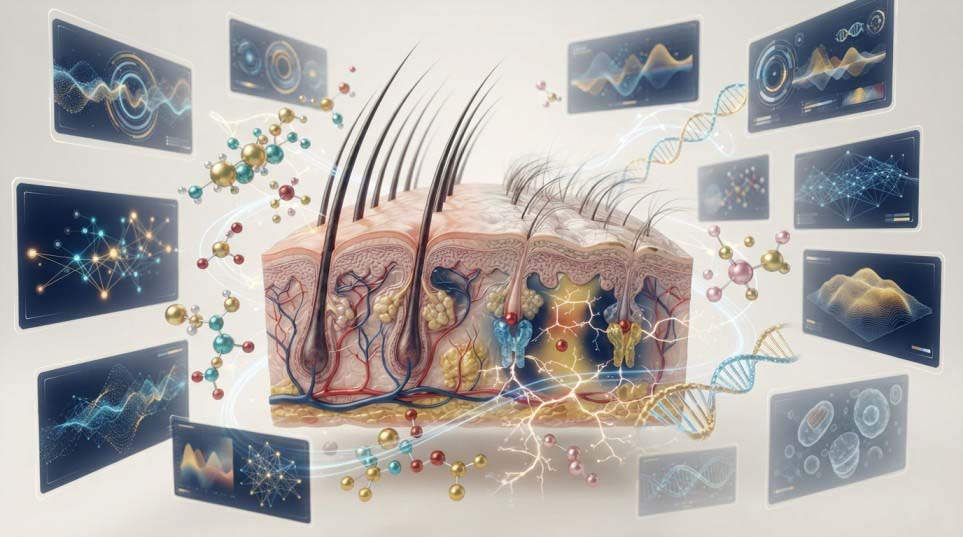
Inside the skin and hair follicles, the enzyme 5-alpha reductase converts testosterone into dihydrotestosterone (DHT).
DHT has a much stronger affinity for androgen receptors than testosterone itself.
When genetically susceptible follicles are repeatedly exposed to DHT:
Hair growth cycles shorten.
Hair shafts become progressively thinner.
Follicles gradually shrink.
Hair density decreases.
Eventually, affected follicles may stop producing visible hair.
This biological process occurs gradually over many years and forms the basis of androgenetic alopecia.
Why Genetics Matter More Than Hormone Levels Alone
Not everyone with high testosterone develops hair loss.
Similarly, individuals with normal or even relatively low testosterone levels may still experience significant androgenetic alopecia.
This is because hair loss depends primarily on:
Genetic sensitivity of hair follicles.
Density of androgen receptors.
Local DHT production.
Individual follicular response.
Hormone levels alone cannot accurately predict future hair loss.
Instead, genetics determine how each follicle reacts to circulating hormones.
Does High Testosterone Always Cause Hair Loss?
No.
High testosterone by itself does not automatically lead to baldness.
Many individuals naturally maintain high testosterone levels while retaining excellent scalp hair throughout life.
Conversely, others experience significant hair loss despite having hormone levels within the normal range.
The determining factor remains follicular sensitivity to DHT rather than testosterone concentration alone.
What Is Hormone Replacement Therapy (HRT)?
Hormone Replacement Therapy (HRT) refers to medical treatment that modifies hormone levels to achieve specific therapeutic goals.
HRT is commonly used in several situations.
Testosterone Replacement Therapy (TRT)
Prescribed for cisgender men with clinically confirmed testosterone deficiency.
Feminizing Hormone Therapy
Used by transgender women to reduce testosterone activity while increasing estrogen levels.
Masculinizing Hormone Therapy
Used by transgender men through testosterone administration to develop masculine secondary sexual characteristics.
Each form of hormone therapy affects hair biology differently.
How Testosterone Replacement Therapy (TRT) May Affect Hair
Testosterone replacement therapy helps restore normal hormone levels in men with testosterone deficiency.
Benefits may include:
Increased energy.
Improved muscle mass.
Better libido.
Enhanced mood.
Increased bone density.
However, because additional testosterone can be converted into DHT, genetically susceptible individuals may experience accelerated androgenetic alopecia.
Not everyone receiving TRT develops increased hair loss.
Risk depends largely on inherited follicular sensitivity rather than testosterone treatment itself.
Can Patients on TRT Still Have Hair Transplants?
Yes.
Patients undergoing testosterone replacement therapy can achieve excellent hair transplant outcomes.
However, surgeons consider several important factors before surgery.
These include:
Stability of hair loss.
Donor area quality.
Future progression risk.
Current medications.
Overall hormonal management.
Medical therapies that reduce DHT activity may sometimes be discussed as part of comprehensive treatment planning, depending on the patient's individual goals and medical suitability.
How Feminizing Hormone Therapy Affects Hair
Many transgender women receive hormone therapy consisting of estrogen together with medications that suppress testosterone activity.
Reduced testosterone generally results in:
Lower DHT production.
Reduced androgen activity.
Slower follicle miniaturization.
Decreased progression of androgenetic alopecia.
Gradual improvement in hair quality for some patients.
Hormone therapy may also reduce excessive scalp oil production and improve overall hair texture.
However, follicles that have already become permanently inactive before treatment typically cannot regenerate without surgical restoration.
Can Estrogen Reverse Advanced Hair Loss?
Estrogen can improve hair quality in some individuals by reducing androgen influence on genetically sensitive follicles.
However, hormone therapy cannot reliably restore follicles that have undergone permanent miniaturization or complete follicular loss.
Patients with advanced recession or significant bald areas often require hair transplantation to restore density, even after achieving stable hormone levels.
Hormone therapy and surgery frequently work together as complementary treatments rather than alternatives.
How Masculinizing Hormone Therapy Affects Hair
Transgender men receiving testosterone therapy experience hormonal changes similar to those occurring during male puberty.
These changes may include:
Increased facial hair growth.
Increased body hair.
Greater muscle mass.
Voice deepening.
Increased scalp DHT production.
For genetically susceptible individuals, increased DHT exposure may gradually initiate or accelerate androgenetic alopecia.
The degree of hair loss varies considerably depending on inherited follicular sensitivity and family history.
Hair Transplant Planning for Transgender Patients
Hair restoration for transgender individuals extends beyond replacing lost hair.
The procedure often plays an important role in supporting gender affirmation and facial harmony.
Planning differs from conventional hair transplantation because surgeons consider:
Facial proportions.
Desired gender expression.
Hairline shape.
Hairline height.
Temporal recession patterns.
Long-term hormone therapy.
Future hair loss progression.
Donor preservation.
Every treatment plan is individualized according to the patient's transition goals, anatomy, and long-term expectations.
Does Hormone Therapy Affect Donor Hair?
The donor area, typically located at the back and sides of the scalp, is naturally more resistant to DHT than the frontal scalp and crown. This biological property, known as donor dominance, allows transplanted follicles to retain their characteristics after being moved to recipient areas.
In most patients, hormone therapy does not significantly alter the long-term stability of healthy donor follicles.
However, surgeons still evaluate:
Donor density.
Hair shaft thickness.
Scalp health.
Existing miniaturization.
Family history of advanced hair loss.
This assessment ensures that sufficient permanent grafts are available for long-term restoration.
Should Hormone Levels Be Stable Before Hair Transplant Surgery?
In many cases, yes.
Patients who have recently started hormone therapy may continue experiencing changes in hair density and hair loss patterns for several months.
Allowing hormone levels to stabilize helps surgeons:
Better evaluate the final pattern of hair loss.
Design an appropriate hairline.
Estimate long-term graft requirements.
Reduce the likelihood of unexpected future thinning.
For transgender patients, hair restoration is often planned after hormone therapy has reached a relatively stable phase, although the timing varies according to individual circumstances and treatment goals.
Can Hair Continue to Thin After a Hair Transplant?
Yes.
Hair transplantation restores hair to affected areas but does not eliminate the biological process responsible for androgenetic alopecia.
Transplanted follicles generally retain their resistance to DHT.
However, surrounding native hair may continue to miniaturize if the underlying hormonal and genetic factors remain active.
For this reason, some patients benefit from ongoing medical therapy and regular follow-up after surgery to help preserve their existing hair.
Medical Treatments That May Complement Hair Transplant Surgery
Hair transplantation is often only one component of a comprehensive hair restoration plan.
Depending on the patient's hormonal profile, pattern of hair loss, and medical history, additional treatments may be recommended.
These may include:
DHT-Modulating Medications
Certain prescription medications reduce the effect of DHT on susceptible hair follicles.
Growth-Stimulating Therapies
Some treatments help prolong the anagen phase and improve overall hair density.
Platelet-Rich Plasma (PRP)
PRP may support follicular health in selected patients when used alongside medical and surgical treatment.
Lifestyle Optimisation
Adequate nutrition, stress management, quality sleep, and treatment of underlying medical conditions contribute to healthier hair growth.
Treatment recommendations are always individualized rather than universally applied.
Hairline Design Differs Between Patients
Hairline planning is influenced by far more than the current pattern of hair loss.
For cisgender patients, surgeons aim to create age-appropriate, natural-looking hairlines that remain balanced as hair continues to mature.
For transgender patients, hairline design may also reflect gender-affirming goals.
Examples include:
Feminizing Hairline Design
Often characterised by:
A lower hairline.
Rounded temporal corners.
Softer frontal contours.
Reduced temporal recession.
Masculinizing Hairline Design
May include:
Slightly higher frontal positioning.
More defined temporal angles.
Natural masculine contours.
Preservation of age-appropriate proportions.
Every design is customised according to facial anatomy, ethnicity, donor availability, transition goals, and long-term planning.
Common Myths About Testosterone, HRT, and Hair Transplants
Several misconceptions can create unnecessary confusion for patients considering hair restoration.
Myth: Testosterone Always Causes Baldness
Hair loss depends primarily on genetic sensitivity to DHT rather than testosterone levels alone.
Myth: Estrogen Completely Reverses Hair Loss
Hormone therapy may slow progression and improve hair quality, but permanently lost follicles generally cannot regenerate without transplantation.
Myth: Transgender Patients Cannot Have Hair Transplants
Hair transplantation is an established treatment option for appropriately selected transgender patients and can play an important role in gender-affirming care.
Myth: Hormone Therapy Eliminates the Need for Surgery
While hormone therapy may stabilise hair loss, advanced baldness often requires transplantation to restore density.
Myth: Hair Transplants Stop Future Hair Loss
Hair transplantation relocates resistant follicles but does not prevent continued thinning of untreated native hair.
Why Choose Hair & Shape for Hair Restoration?
Successful hair transplantation requires a personalised understanding of each patient's hormonal profile, genetic predisposition, pattern of hair loss, and long-term goals. Whether someone is undergoing testosterone replacement therapy, feminising hormone therapy, masculinising hormone therapy, or no hormone treatment at all, careful planning is essential to achieve natural, lasting results.
At Hair & Shape Clinic, every patient receives a comprehensive hair restoration assessment that considers donor quality, scalp health, hormonal influences, medical history, and future hair loss progression. Treatment plans are tailored to each individual, ensuring that surgical techniques, hairline design, and long-term management work together to create balanced, natural-looking outcomes that continue to look appropriate over time.
Final Thoughts
Testosterone, DHT, genetics, and hormone replacement therapy all influence hair biology, but none of these factors alone determine the success of a hair transplant. Hair restoration outcomes depend on a combination of donor hair quality, genetic susceptibility, hormonal stability, surgical planning, and long-term management. Understanding how these elements interact allows patients to make informed decisions and helps surgeons develop treatment strategies that remain effective for years to come.
For both transgender and cisgender patients, successful hair transplantation is about more than replacing lost hair. It is about creating a personalised restoration plan that respects individual anatomy, medical needs, aesthetic goals, and future hair loss patterns to deliver results that are both natural and durable.