 Gender Reassignment
Does Sleep Quality Affect Hair Transplant Growth?
Introduction
Hair transplant success depends on far more than the surgical procedure itself. While donor quality, graft handling, surgical technique, and postoperative care all influence the outcome, many patients overlook one important biological factor: sleep. Since much of the body's repair and recovery occurs during sleep, it is natural to wonder whether poor sleep can affect graft survival and long-term hair growth.
Sleep is a complex physiological process during which the body performs many essential functions involved in tissue repair. Blood flow is regulated, inflammatory responses are balanced, hormones involved in healing are released, and cellular repair mechanisms become highly active. These biological processes contribute to normal wound healing throughout the body, including the tiny recipient sites created during hair transplantation.
After a hair transplant, newly implanted follicles undergo several stages of healing. Tiny incisions close, inflammation gradually subsides, new blood vessels begin supplying transplanted follicles, and surrounding tissues recover from the surgical procedure. Although sleep itself does not directly make hair grow faster, consistently poor sleep may influence some of the biological systems that support normal healing.
Scientific research has shown that chronic sleep deprivation can affect immune function, inflammatory regulation, hormone balance, and overall tissue repair. These changes may influence the body's ability to heal efficiently after surgery. However, it is equally important to understand that a single night of poor sleep or occasional interrupted rest is unlikely to determine the success or failure of a hair transplant.
At Hair & Shape Clinic, postoperative care extends beyond surgical technique alone. Patients receive guidance on sleep positioning, recovery habits, scalp protection, nutrition, and lifestyle factors that collectively support healthy healing and optimal long-term hair restoration outcomes.
Why Is Healing Important After A Hair Transplant?
Every transplanted follicle must establish itself within the recipient scalp before entering a normal growth cycle.
During the early healing period, several biological processes occur simultaneously.
These include:
Closure of recipient sites.
Blood clot stabilisation.
Tissue repair.
Formation of new blood vessels.
Reduction of inflammation.
Integration of transplanted follicles.
Successful healing provides the foundation for healthy long-term hair growth.
What Happens While We Sleep?
Sleep is an active biological process rather than simply a period of rest.
During normal sleep, the body regulates:
Tissue repair.
Cellular regeneration.
Immune activity.
Hormone secretion.
Protein synthesis.
Energy conservation.
Many restorative processes become more active during deeper stages of sleep.
Why Does The Body Repair Tissue At Night?
The body continuously repairs tissues throughout the day.
However, during sleep, energy that would otherwise support physical activity can be redirected toward maintenance and recovery.
This includes:
Repairing microscopic tissue injury.
Producing structural proteins.
Supporting immune regulation.
Restoring cellular function.
Promoting wound healing.
These normal physiological processes contribute to recovery after many types of surgery.
How Do Hair Grafts Heal?
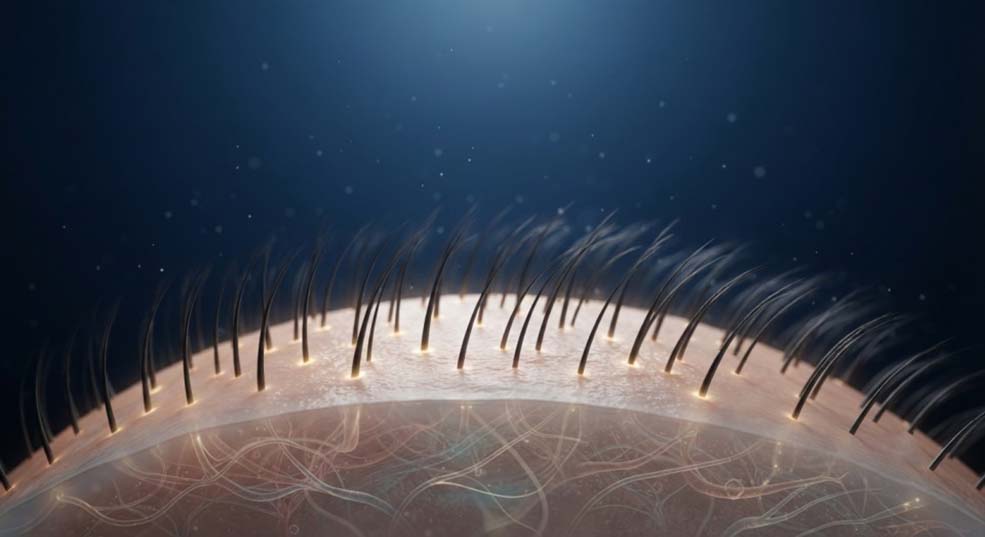
Following transplantation, each follicular unit gradually becomes incorporated into the surrounding scalp tissue.
The healing process includes:
Initial clot formation.
Tissue adhesion.
New capillary development.
Cellular repair.
Revascularisation.
Progressive graft stabilisation.
These stages occur over several days and weeks after surgery.
Does Sleep Directly Make Hair Grow?
No.
Hair growth is influenced by many biological factors including:
Genetics.
Hormonal regulation.
Follicle health.
Blood supply.
Nutrition.
Overall medical health.
Sleep does not directly stimulate transplanted follicles to grow faster.
Instead, adequate sleep helps support the body's normal healing environment during recovery.
How Can Poor Sleep Affect Healing?
Research suggests that chronic sleep deprivation may influence several physiological systems involved in wound healing.
These include:
Immune function.
Inflammatory regulation.
Hormonal balance.
Cellular repair.
Protein synthesis.
When these systems become disrupted over prolonged periods, overall recovery following surgery may become less efficient.
Does Sleep Affect Blood Supply To Hair Grafts?
Healthy blood circulation is essential for every transplanted follicle.
As grafts heal, they gradually establish a new microscopic blood supply through revascularisation.
Good cardiovascular health supports this process.
Although normal sleep contributes to overall physiological function, there is no evidence that a single poor night's sleep suddenly deprives grafts of blood flow or causes graft loss.
Can One Bad Night Ruin A Hair Transplant?
No.
This is one of the most common postoperative concerns.
A single night of poor sleep, temporary insomnia, or waking frequently is not expected to cause transplanted grafts to fail.
Hair transplant healing depends on the cumulative recovery process occurring over many days and weeks rather than one isolated night.
Why Do Surgeons Recommend Sleeping With Your Head Elevated?
During the first few postoperative days, many surgeons advise sleeping with the head elevated.
This recommendation may help:
Reduce facial swelling.
Minimise fluid accumulation.
Protect newly transplanted grafts.
Improve postoperative comfort.
Reduce accidental contact with the recipient area.
The exact duration varies according to the surgeon's postoperative protocol.
Does Sleep Affect Growth Hormone?
Growth hormone is released naturally during sleep, particularly during deep sleep.
This hormone plays an important role in:
Tissue repair.
Protein synthesis.
Cellular regeneration.
Muscle recovery.
Wound healing.
While growth hormone supports normal healing processes, hair transplant success depends on many interacting biological factors rather than growth hormone alone.
Does Sleep Affect Inflammation?
Inflammation is a normal and essential part of healing after surgery.
Following a hair transplant, the body temporarily increases inflammatory activity to:
Remove damaged cells.
Prevent infection.
Initiate tissue repair.
Support wound healing.
Chronic sleep deprivation has been associated with alterations in inflammatory regulation, which may influence the efficiency of healing over time.
Maintaining healthy sleep habits helps support the body's natural recovery mechanisms.
Can Stress And Poor Sleep Work Together?
Yes.
Sleep quality and psychological stress often influence one another.
Poor sleep may increase perceived stress, while ongoing stress can make restorative sleep more difficult.
Both may contribute to:
Increased fatigue.
Reduced recovery.
Altered hormone regulation.
Slower overall healing responses.
Although occasional stress is unlikely to affect transplant results, maintaining healthy lifestyle habits supports postoperative recovery.
Does Sleeping Position Matter?
Yes, particularly during the first few days after surgery.
Patients are commonly advised to avoid sleeping directly on the transplanted area.
Depending on the treatment area, your surgeon may recommend:
Sleeping on your back.
Keeping your head elevated.
Using a travel pillow for support.
Avoiding excessive turning during sleep.
These measures help minimise pressure on newly implanted grafts during their earliest healing phase.
What Happens If You Accidentally Touch The Grafts While Sleeping?
Many patients worry after waking to find they may have brushed or lightly touched the recipient area.
Minor accidental contact does not necessarily damage healthy grafts.
However, repeated friction or significant pressure should be avoided during the initial healing period.
If there is concern about significant trauma, patients should contact their treating clinic for personalised advice.
How Much Sleep Is Recommended During Recovery?
There is no specific number of hours unique to hair transplant patients.
Instead, surgeons generally encourage maintaining healthy sleep habits that support normal recovery.
This includes:
Consistent sleep schedules.
Adequate nightly sleep.
Comfortable sleeping position.
Good sleep hygiene.
Avoiding unnecessary sleep disruption where possible.
The overall quality and consistency of sleep are often more important than any single night's duration.
What Other Lifestyle Factors Support Hair Transplant Healing?
Successful recovery depends on multiple factors working together.
These include:
Following postoperative instructions.
Gentle scalp care.
Good nutrition.
Adequate hydration.
Avoiding smoking.
Managing chronic medical conditions.
Taking prescribed medications correctly.
Protecting the scalp from trauma.
Sleep is one important component within this broader recovery process.
Why Personalised Aftercare Matters
Every patient's recovery is unique.
Healing may be influenced by:
Age.
General health.
Hair transplant technique.
Number of grafts.
Existing medical conditions.
Medications.
Lifestyle habits.
Individual healing response.
For this reason, postoperative advice should always be tailored to the individual rather than relying solely on general information found online.
Why Choose Hair & Shape For Hair Restoration?
At Hair & Shape Clinic, successful hair restoration is supported by comprehensive postoperative care as well as meticulous surgical technique. Patients receive personalised guidance covering sleep positioning, scalp protection, washing routines, nutrition, and recovery habits that promote healthy healing during the weeks following transplantation.
Dr. Umang Kothari and the hair restoration team believe that achieving natural, long-lasting results requires careful attention to every stage of the patient journey. By combining evidence-based surgical planning with detailed aftercare education, the clinic helps patients recover with confidence while supporting the biological processes that allow transplanted follicles to heal and grow successfully.
Final Thoughts
Sleep quality is an important part of overall health and plays a valuable role in supporting the body's natural healing mechanisms after a hair transplant. While adequate sleep does not directly accelerate hair growth or determine whether grafts survive, it contributes to the normal physiological processes involved in tissue repair, immune regulation, inflammation control, and recovery following surgery.
Patients should also remember that occasional poor sleep is unlikely to compromise their transplant results. Instead, consistent healthy habits—including proper postoperative care, good nutrition, careful scalp protection, and adequate rest over the course of recovery—collectively provide the best environment for transplanted follicles to heal, establish a new blood supply, and enter their normal cycle of long-term hair growth.