 Gender Reassignment
Can You Swim After a Hair Transplant?
Introduction
A hair transplant is a carefully planned surgical procedure that relies on the successful healing of thousands of newly transplanted hair follicles. While the procedure itself may be completed within a day, the biological healing process continues for weeks as the grafts establish a blood supply, integrate into the scalp, and begin producing new hair.
During this recovery period, many patients wonder when they can safely return to activities they enjoy, including swimming. Whether you regularly swim for fitness, relaxation, or holidays, it is natural to ask whether exposure to swimming pools, seawater, or lakes could affect your transplant results.
The short answer is that swimming should be avoided during the early stages of recovery. Chlorinated pool water, salt water, bacteria, prolonged moisture, and physical friction can all interfere with healing if the scalp has not yet fully recovered.
Understanding when it is safe to swim, why timing matters, and how different types of water affect healing can help protect your investment and support optimal hair growth after transplantation.
Why The First Few Weeks After A Hair Transplant Are So Important
Immediately after a hair transplant, each graft sits within a tiny recipient site created in the scalp.
Although these grafts are carefully positioned during surgery, they require time to become securely anchored.
During the early healing period:
Blood vessels begin reconnecting.
New oxygen supply develops.
Microscopic wounds gradually close.
Scabs naturally form and shed.
Inflammation gradually decreases.
Hair follicles begin adapting to their new location.
Any unnecessary trauma during this period may increase the risk of disrupting healing.
Protecting the scalp during the first few weeks gives the transplanted follicles the best opportunity to survive and grow successfully.
What Happens During Hair Transplant Healing?
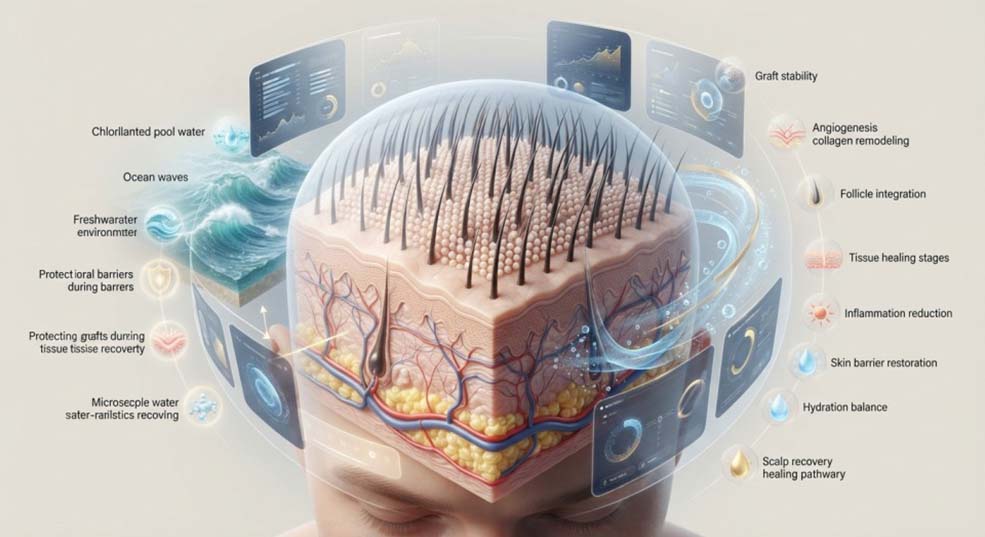
Healing after a hair transplant occurs in several biological stages.
Immediate Healing
Within the first few days:
Tiny scabs develop.
Mild redness appears.
Small blood vessels begin repairing.
The grafts remain relatively delicate.
Early Tissue Repair
During the following one to two weeks:
The scalp gradually closes around each follicle.
Scabs naturally detach.
Inflammation continues improving.
Hair follicles become progressively more stable.
Follicle Integration
Over the next several weeks:
The transplanted follicles establish a stronger blood supply.
Healing continues beneath the skin.
Temporary shedding of transplanted hairs often occurs.
New growth enters the normal hair cycle.
Although the scalp may appear healed externally, biological recovery continues beneath the surface.
Why Swimming Can Affect Healing
Swimming introduces several environmental factors that can interfere with the healing scalp.
These include:
Chlorine
Salt
Bacteria
Chemical disinfectants
Prolonged moisture
Physical rubbing
Ultraviolet exposure
Water pressure
The risk depends not only on the type of water but also on how far the healing process has progressed.
Can Chlorinated Pool Water Damage Hair Transplants?
Swimming pools are commonly disinfected with chlorine and other chemical agents to control microorganisms.
While chlorine itself does not permanently damage transplanted hair follicles once healing is complete, early exposure may create unnecessary irritation.
Potential concerns during the early recovery period include:
Scalp irritation
Dryness
Delayed healing
Softening of healing scabs
Increased sensitivity
Greater risk of inflammation
For these reasons, most surgeons recommend avoiding chlorinated swimming pools until the scalp has healed sufficiently.
Is Salt Water Safer Than Chlorinated Water?
Many people assume seawater is safer because it is natural.
However, natural does not necessarily mean appropriate for a healing surgical site.
Sea water contains:
Salt
Sand particles
Organic matter
Microorganisms
Marine bacteria
Environmental contaminants
Although salt has mild antimicrobial properties, seawater is not sterile.
Exposure before complete healing may increase irritation and introduce unwanted microorganisms into healing tissues.
What About Lakes, Rivers, And Natural Water?
Natural freshwater environments generally present an even greater risk during the early recovery period.
Unlike properly maintained swimming pools, lakes and rivers contain unpredictable concentrations of:
Bacteria
Fungi
Parasites
Organic debris
Environmental pollutants
Because the healing scalp contains thousands of microscopic surgical sites, exposure to untreated natural water may increase the possibility of infection before healing is complete.
For this reason, natural bodies of water are typically avoided until full recovery has occurred.
Why Infection Prevention Matters
Although hair transplant infections are relatively uncommon when proper postoperative care is followed, preventing contamination remains extremely important.
Every transplanted follicle represents living tissue that depends upon healthy healing.
An infection may interfere with:
Follicle survival
Wound healing
Blood supply
Tissue recovery
Overall transplant outcome
Maintaining a clean healing environment significantly reduces unnecessary risk during the most vulnerable stages of recovery.
Can Water Pressure Dislodge Hair Grafts?
This is one of the most common concerns among patients.
Immediately after surgery, transplanted grafts are not yet fully secured within the scalp.
Activities involving forceful water exposure may theoretically increase the risk of disturbing newly placed follicles.
Examples include:
Diving into pools
High-pressure swimming jets
Powerful shower streams
Water sports
Frequent rubbing with wet towels
As healing progresses, the grafts gradually become more firmly anchored within the scalp, making accidental displacement increasingly unlikely.
Does Swimming Increase Sun Exposure?
Swimming is often accompanied by prolonged outdoor sun exposure.
Following a hair transplant, the scalp remains particularly sensitive to ultraviolet radiation.
Excessive sun exposure during the healing phase may contribute to:
Increased inflammation
Prolonged redness
Skin irritation
Pigment changes
Delayed recovery
Protecting the scalp from direct sunlight is just as important as avoiding unnecessary water exposure during the early weeks after surgery.
When Is It Safe To Swim After A Hair Transplant?
The exact recovery timeline varies between individuals depending on the surgical technique, healing response, and postoperative progress.
Rather than focusing on a specific number of days, surgeons assess whether the scalp has healed sufficiently before patients resume swimming.
Generally, swimming should only be considered after:
The recipient sites have completely healed.
All scabs have naturally fallen off.
There are no open wounds.
Redness has significantly improved.
The scalp is no longer tender.
Your surgeon has confirmed that healing is progressing appropriately.
Following your individual postoperative instructions is always more reliable than following general timelines found online.
What Happens If You Swim Too Soon?
Entering a swimming pool or natural body of water before the scalp has healed may expose the newly transplanted follicles to unnecessary risks.
Possible consequences include:
Increased scalp irritation
Delayed wound healing
Infection
Softening of healing scabs
Excessive inflammation
Increased discomfort
Disturbance of fragile grafts during the earliest healing stage
Although not every patient who swims early will experience complications, avoiding unnecessary exposure provides the safest environment for healing.
Can You Wear A Swimming Cap?
Many patients assume a swimming cap offers sufficient protection during recovery.
However, during the early healing period, swimming caps are generally not recommended.
A tight-fitting cap may:
Create pressure on healing grafts
Produce friction against the scalp
Trap moisture
Increase sweating
Delay drying of healing tissues
Even if the cap prevents direct contact with water, it does not eliminate the mechanical stress placed on the healing scalp.
Does Showering Affect Hair Transplants The Same Way?
No.
Proper washing is actually an important part of postoperative care.
Unlike swimming, postoperative washing follows carefully controlled instructions regarding:
Water temperature
Water pressure
Shampoo selection
Washing technique
Drying methods
Patients are provided with personalised guidance on when and how to begin washing the scalp safely after surgery.
Gentle cleansing helps maintain hygiene without exposing the scalp to unnecessary environmental contaminants.
Can You Exercise Before Swimming?
Many patients return to light physical activity before they resume swimming.
However, strenuous exercise may also increase:
Sweating
Scalp inflammation
Blood flow
Friction around the scalp
The appropriate time to resume exercise varies according to the type of activity and the individual's recovery.
Your surgeon will usually recommend gradually increasing activity levels rather than returning immediately to high-intensity workouts.
What If You Are Planning A Beach Holiday?
Patients frequently schedule hair transplantation before holidays and wonder whether swimming at the beach will be possible.
When planning surgery before travel, it is important to consider that beaches involve several factors simultaneously, including:
Salt water
Sand
Wind
Strong ultraviolet exposure
Heat
Sweating
If your holiday falls within the early recovery period, discussing travel plans during your consultation allows your surgeon to recommend the most appropriate timing for surgery.
How To Protect Your Hair Transplant During Recovery
Protecting the healing scalp during the first few weeks helps maximise graft survival and supports optimal long-term growth.
Simple precautions include:
Following postoperative instructions carefully
Avoiding swimming until advised
Keeping the scalp clean
Avoiding unnecessary rubbing
Protecting the scalp from excessive sunlight
Attending scheduled follow-up appointments
Reporting any unusual symptoms promptly
Consistent postoperative care plays an important role in achieving successful results.
Common Myths About Swimming After Hair Transplant
Several misconceptions continue to circulate online.
"Salt Water Speeds Up Healing"
Although salt possesses mild antimicrobial properties, seawater is not sterile and is not recommended for healing surgical wounds.
"Once The Scabs Fall Off, Swimming Is Always Safe"
Scab removal represents only one stage of healing.
The follicles continue integrating beneath the skin long after the surface appears normal.
"Chlorine Kills All Germs, So Pools Are Safe"
Swimming pools reduce bacterial levels but are not completely sterile.
Chlorine itself may also irritate recently operated skin.
"A Swimming Cap Fully Protects The Grafts"
Swimming caps do not eliminate pressure, friction, moisture, or the possibility of disturbing healing tissues.
Why Choosing An Experienced Hair Transplant Surgeon Matters
Successful hair transplantation extends beyond the surgical procedure itself.
Comprehensive postoperative care plays an equally important role in protecting newly transplanted follicles and supporting healthy long-term growth.
An experienced surgeon provides:
Personalised recovery instructions
Regular follow-up assessments
Guidance on returning to daily activities
Individualised healing recommendations
Early recognition of potential complications
Careful postoperative management helps maximise graft survival and optimise the final outcome.
Why Choose Hair & Shape For Hair Transplant In Mumbai?
At Hair & Shape Clinic, hair transplantation is supported by comprehensive postoperative care designed to protect every transplanted follicle throughout the healing process. Patients receive detailed guidance on washing, physical activity, sun protection, travel, swimming, and other everyday activities to ensure that recovery progresses safely and comfortably.
Dr. Umang Kothari and the Hair & Shape team believe that excellent long-term results depend not only on precise graft placement but also on personalised aftercare and continuous follow-up. Every patient receives individual recommendations based on their healing progress, helping achieve healthy graft survival and natural-looking hair growth.
Final Thoughts
Swimming may seem like a harmless activity, but during the early stages of hair transplant recovery, exposure to chlorinated pools, seawater, lakes, and other natural water sources can interfere with the healing process. Newly transplanted follicles require time to establish a secure blood supply and become firmly integrated into the scalp before they are exposed to environmental irritants and microorganisms.
Allowing the scalp to heal fully before returning to swimming is one of the simplest ways to protect your investment and support successful long-term hair growth. By following your surgeon's personalised postoperative instructions and attending regular follow-up appointments, you can safely return to your normal activities while giving your transplanted hair the best possible opportunity to thrive.