Hair Transplant FUT: Complete Guide To Procedure, Recovery & Results
Introduction
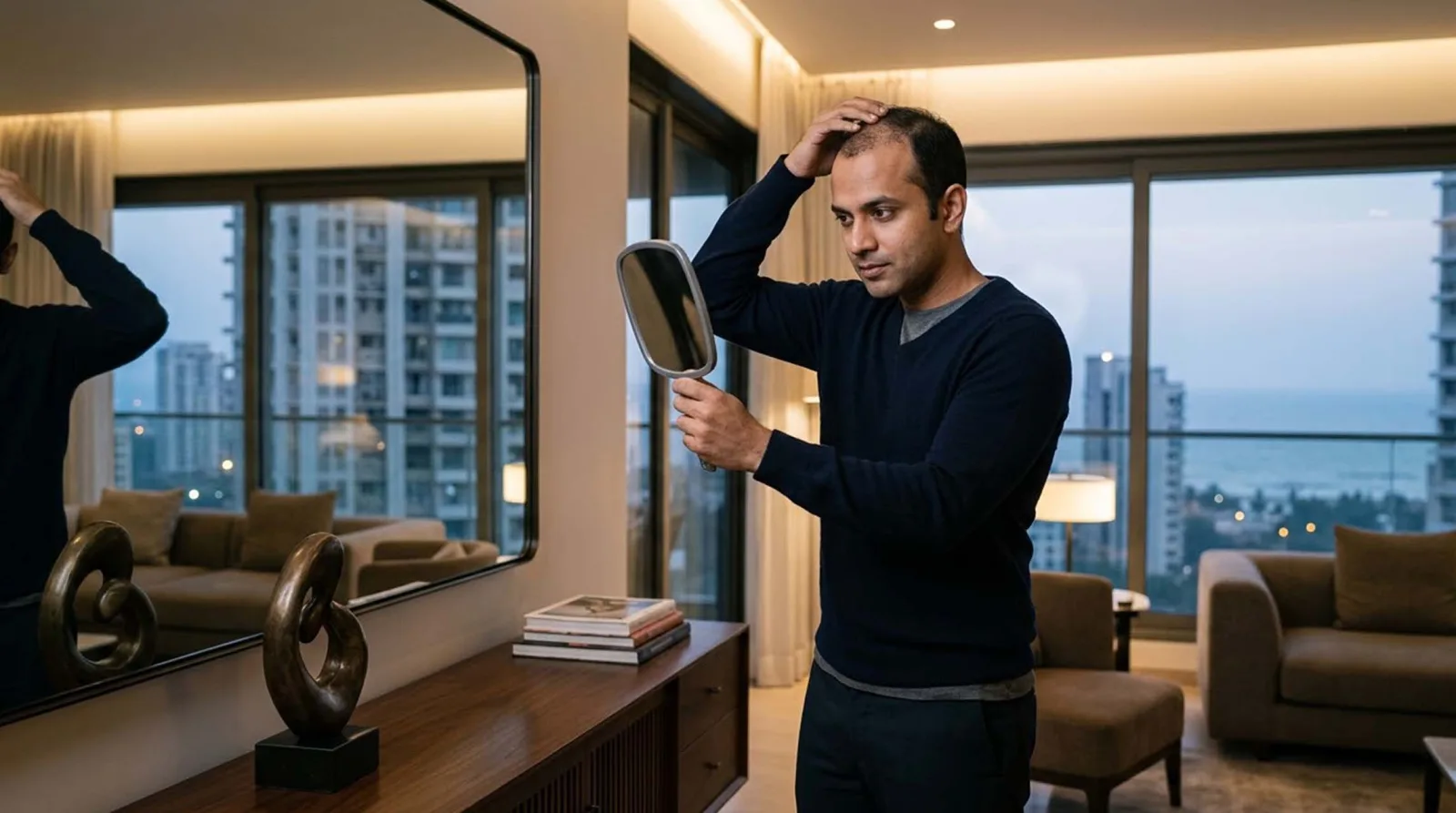
Hair loss is a common concern that affects confidence, appearance, and self-image. While temporary hair fall can often be managed with lifestyle changes or medical treatments, advanced hair thinning and baldness may require a more permanent solution.
One of the established surgical hair restoration techniques is FUT (Follicular Unit Transplantation), a procedure that has helped many individuals restore natural-looking hair density.
Unlike temporary solutions that only cover thinning areas, a hair transplant focuses on using your own healthy hair follicles to create long-lasting results.
At Hair & Shape Clinic, Malad West, Mumbai, FUT hair transplant procedures are planned according to individual hair loss patterns, donor area quality, and desired outcomes under the guidance of experienced plastic surgeon Dr. Umang Kothari, MBBS, MS (General Surgery), DNB (Plastic Surgery).
What Is Hair Transplant FUT?
FUT, or Follicular Unit Transplantation, is a hair restoration technique where a thin strip of healthy hair-bearing skin is removed from the donor area, usually the back or sides of the scalp.
This strip contains naturally growing hair follicles, which are carefully separated into individual follicular units under magnification.
These follicular units are then implanted into areas affected by hair thinning or baldness.
The objective of FUT hair transplant is to recreate a natural hairline and improve hair density while using the patient's own permanent hair follicles.
How Does FUT Hair Transplant Work?
A FUT hair transplant involves multiple carefully planned steps to achieve natural-looking results.
Consultation And Hair Assessment
The first step is a detailed consultation where the surgeon evaluates:
Pattern of hair loss
Quality of donor hair
Scalp condition
Existing hair density
Future hair loss possibility
Expected results
This evaluation helps create a personalized treatment plan.
Every person's hair loss pattern is different, so the number of grafts and placement strategy varies from patient to patient.
Donor Area Evaluation
The donor area plays a crucial role in hair transplant success.
Usually, the hair follicles from the back and sides of the scalp are considered suitable because these follicles are generally more resistant to hair loss.
Before surgery, the surgeon evaluates:
Donor hair density
Hair thickness
Follicle quality
Available grafts
A strong donor area helps achieve better long-term outcomes.
FUT Hair Transplant Procedure Explained
During the FUT procedure, a narrow strip of scalp tissue containing healthy hair follicles is carefully removed from the donor area.
The wound is closed using advanced techniques to minimize visible scarring.
The extracted strip is then processed by the surgical team. Individual follicular units are separated and prepared for implantation.
These grafts are placed into small recipient sites created in the balding areas according to:
Natural hair direction
Hairline design
Existing density
Facial proportions
The placement technique is important because it determines how natural the final result appears.
Why Is Hairline Design Important In FUT?
A natural hairline is one of the most important aspects of a successful hair transplant.
An experienced surgeon considers factors such as:
Age
Facial structure
Existing hair pattern
Future hair loss progression
A poorly planned hairline can look unnatural, while a carefully designed hairline blends with the individual's facial features.
The goal is not simply adding hair but restoring a natural appearance.
Advantages Of FUT Hair Transplant
FUT remains a preferred hair restoration technique for many individuals because of several advantages:
Higher Number Of Grafts In A Single Session
FUT can allow harvesting a larger number of grafts in suitable candidates, making it useful for individuals with advanced hair loss.
Suitable For Extensive Hair Loss
Patients with significant thinning or larger bald areas may benefit from FUT because it can provide a higher graft yield.
Utilizes Permanent Hair Follicles
The transplanted follicles are taken from areas that are typically more resistant to hair loss.
Natural-Looking Results
When performed with proper planning and technique, FUT can create natural-looking hair density and hairline restoration.
FUT Hair Transplant Recovery Process
Recovery after a FUT hair transplant is an important part of the overall hair restoration journey.
Immediately after the procedure, patients may experience:
Mild swelling
Redness around the implanted area
Small scabs around grafts
Tightness or discomfort in the donor area
These symptoms are usually temporary and gradually improve during the healing process.
Following the surgeon's post-operative instructions plays an important role in protecting newly implanted grafts and supporting proper healing.
Hair Growth Timeline After FUT Hair Transplant
Hair growth after FUT does not happen overnight. Since transplanted follicles go through a natural growth cycle, visible results appear gradually.
A general timeline may include:
First Few Weeks
The transplanted hair may shed as part of the normal hair growth cycle. This does not mean the transplant has failed.
The hair follicles remain inside the scalp and prepare for new growth.
3 To 4 Months
New hair growth usually begins gradually.
Initially, the hair may appear thin, but the thickness improves over time.
6 To 9 Months
Patients generally start noticing more visible improvement in:
Hair density
Coverage
Hairline appearance
12 To 18 Months
The final results become more noticeable as transplanted hair continues to mature and gain thickness.
The exact timeline varies depending on individual healing and hair characteristics.
Is FUT Hair Transplant Permanent?
One of the biggest advantages of FUT hair transplant is that it uses the individual's own permanent hair follicles.
The transplanted follicles are usually taken from the donor area, which is less affected by pattern hair loss.
Once successfully transplanted and grown, these hairs can continue to grow naturally.
However, existing non-transplanted hair may continue to experience hair loss. This is why proper planning and long-term hair management are important.
FUT Hair Transplant vs FUE Hair Transplant
Both FUT and FUE are advanced hair restoration techniques, but the extraction method is different.
FUT Hair Transplant
A strip of scalp tissue is removed from the donor area
Individual follicular units are extracted from the strip
Suitable for patients requiring a larger number of grafts
Leaves a linear scar that can usually be concealed with surrounding hair
FUE Hair Transplant
Individual follicles are extracted directly from the donor area
No strip removal is involved
Multiple small extraction points are created
The right technique depends on factors such as:
Hair loss pattern
Donor area availability
Number of grafts required
Individual expectations
A consultation with an experienced hair transplant surgeon helps determine the most suitable option.
Who Is A Good Candidate For FUT Hair Transplant?
FUT may be suitable for individuals who:
Have pattern baldness or significant hair thinning
Have a healthy donor area
Want permanent hair restoration
Require a larger number of grafts
Have realistic expectations from the procedure
A detailed evaluation is necessary because not every person is an ideal candidate for the same technique.
Why Choose Hair & Shape Clinic For FUT Hair Transplant In Mumbai?
Choosing the right clinic and surgeon is an important decision when considering hair restoration.
Hair & Shape Clinic, Malad West, Mumbai, focuses on personalized hair restoration plans based on each patient's hair loss pattern, donor area quality, and desired results.
The clinic is led by Dr. Umang Kothari, MBBS, MS (General Surgery), DNB (Plastic Surgery), with an approach focused on natural-looking outcomes and patient-specific treatment planning.
The FUT hair transplant process at Hair & Shape Clinic involves:
Detailed hair assessment
Personalized graft planning
Natural hairline design
Surgical precision
Post-procedure guidance
For more information about FUT hair transplant services, visit:
https://hairandshape.com/services/hair-transplant-fut-in-mumbai
Frequently Asked Questions About FUT Hair Transplant
How long does a FUT hair transplant procedure take?
The duration depends on the number of grafts required and the complexity of the procedure. A consultation helps estimate the expected procedure time.
Does FUT hair transplant leave a scar?
FUT creates a linear scar in the donor area. With proper surgical technique and suitable hair length, the scar can usually be concealed by surrounding hair.
When can I see final results after FUT hair transplant?
Visible improvement generally develops gradually, with final results becoming noticeable around 12 to 18 months after the procedure.
Is FUT better than FUE hair transplant?
Neither technique is universally better. The suitable method depends on individual hair loss patterns, donor area condition, and restoration goals.
Can FUT hair transplant restore a receding hairline?
Yes, FUT can be used to restore receding hairlines when planned appropriately according to facial proportions and future hair loss considerations.
Conclusion
Hair Transplant FUT is a proven hair restoration technique that can help individuals regain natural-looking hair density and improve confidence.
The success of a FUT procedure depends on proper candidate selection, realistic expectations, surgical planning, and long-term care.
If you are considering FUT hair transplant in Mumbai, a consultation with an experienced plastic surgeon can help you understand your options and create a personalized treatment plan.
Keep reading
Laser Hair Removal: Complete Guide To Procedure, Benefits, Recovery & Results
Laser Hair Removal is an advanced aesthetic treatment designed to reduce unwanted hair growth and provide smoother skin with long-lasting results. This guide explains how laser hair removal works, treatment areas, procedure steps, benefits, recovery, number of sessions required, candidate suitability, and the importance of choosing an experienced aesthetic clinic at Hair & Shape Clinic, Mumbai.

BIO FUE vs BIG FUE vs FUT: Which Hair Transplant Technique Is Right for You?
BIO FUE, BIG FUE and FUT are different approaches to hair transplantation, each with unique advantages depending on hair loss stage, donor availability and restoration goals. This guide explains how these techniques differ, who may benefit from each method, recovery expectations, graft planning and choosing the right hair transplant approach.

Mustache Hair Transplant: Complete Guide To Procedure, Recovery & Results
Mustache Hair Transplant is an advanced facial hair restoration procedure that helps improve patchy or uneven moustache growth using the individual's own hair follicles. This guide explains the moustache transplant procedure, graft extraction, moustache design, recovery timeline, benefits, candidate suitability, and factors that influence natural-looking long-term results at Hair & Shape Clinic, Mumbai.