Genioplasty (Chin Surgery) In Mumbai
Reshape and define the chin for improved facial harmony and balance.
Introduction
The chin plays an important role in determining the balance between the nose, lips, jawline, and lower face. A chin that appears too small, recessed, prominent, or asymmetrical can change the overall facial profile even when the other facial features are proportionate.
Genioplasty, also known as chin surgery or mentoplasty, is performed to reshape or reposition the chin. Depending on the concern, this may involve moving a portion of the chin bone, reducing prominent bone, or using a chin implant to improve projection and contour.
Because chin position can also influence how prominent the nose or jawline appears, genioplasty is often planned as part of overall facial balancing rather than treating the chin in isolation.
At Hair & Shape Clinic in Mumbai, facial procedures are planned according to individual anatomy and proportion. Dr. Umang Kothari, Founder and Director of the clinic, has more than 14 years of experience in aesthetic and reconstructive surgery and approaches facial contouring with attention to how each feature relates to the rest of the face.
The choice between an implant and bone-based genioplasty depends on factors such as chin projection, jaw position, facial symmetry, and the degree of correction required.
The aim is to create a better-balanced facial profile while maintaining a result that looks natural and appropriate for the patient’s existing features.
What Is Chin Surgery (Genioplasty)?
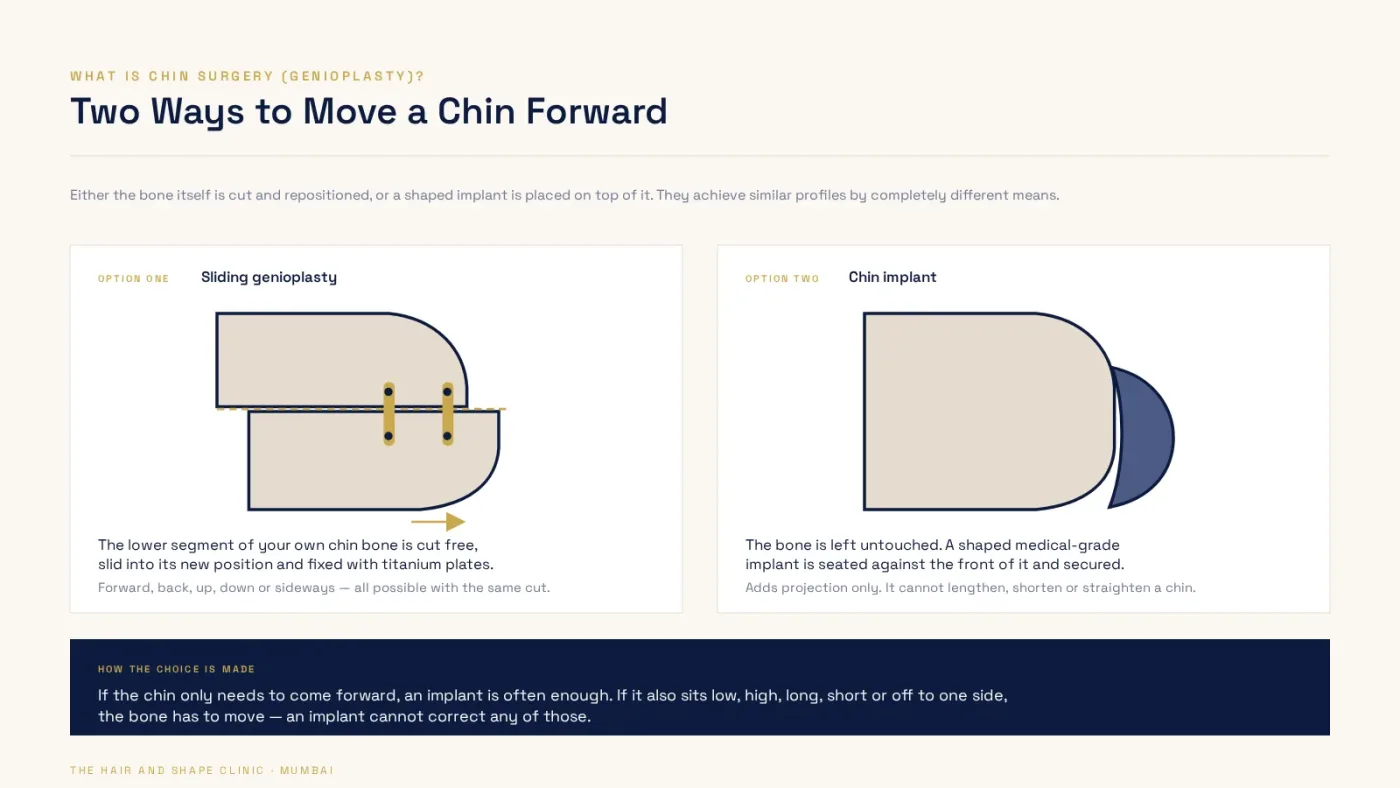
Chin surgery is a facial procedure performed to modify the size, shape, position, or projection of the chin.
Depending on the patient's needs, the procedure may:
Increase chin projection.
Reduce an overly prominent chin.
Correct chin asymmetry.
Lengthen or shorten the chin.
Improve facial profile.
Enhance jawline definition.
Correct congenital deformities.
Restore facial balance following injury.
There are two primary approaches to chin surgery.
Sliding Genioplasty
Sliding genioplasty reshapes the patient's own chin bone.
The lower portion of the chin bone is carefully cut, repositioned, and secured using small titanium plates and screws.
This technique allows the chin to be:
Advanced forward.
Moved backward.
Lengthened.
Shortened.
Corrected for asymmetry.
Because it uses the patient's own bone, sliding genioplasty provides highly customizable correction without requiring an implant.
Chin Implant Surgery
For selected patients, chin enhancement may be achieved by placing a medical-grade implant over the existing chin bone.
Implants increase projection without altering the underlying bone structure.
The most appropriate technique depends on facial anatomy, degree of correction required, and long-term treatment goals.
Understanding Chin Anatomy
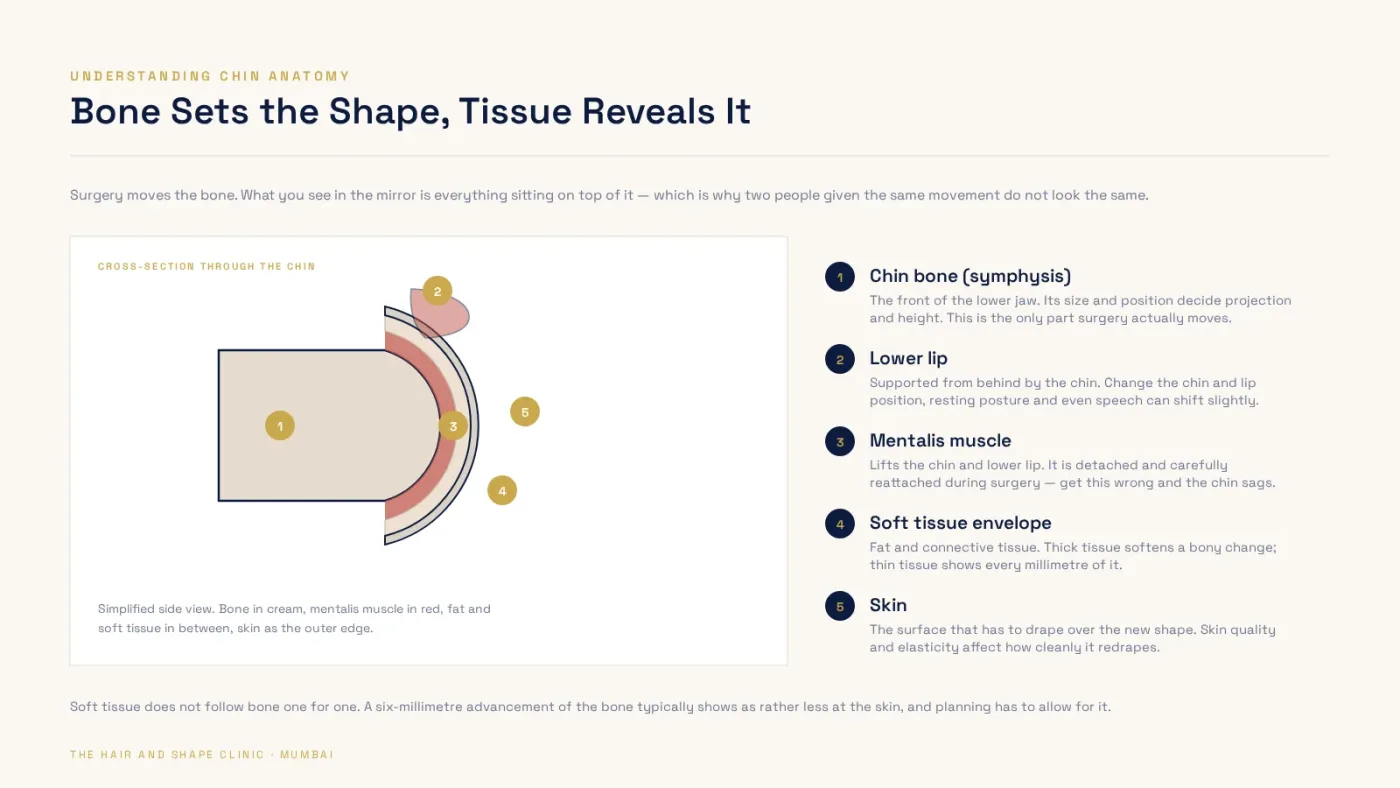
The chin is formed by several anatomical structures working together to create facial support and profile definition.
Successful chin surgery requires a detailed understanding of these structures.
Chin Bone (Mandibular Symphysis)
The central portion of the lower jaw forms the bony foundation of the chin.
Its size and position determine:
Chin projection.
Chin height.
Overall facial profile.
Soft Tissue Envelope
The skin, muscles, and soft tissues covering the chin influence the final visible contour after surgery.
Their thickness affects how skeletal changes appear externally.
Mentalis Muscle
This muscle supports lower lip movement and chin contour.
Preserving its normal function is essential during surgery.
Lower Jaw (Mandible)
The chin is part of the larger mandibular framework.
Its relationship with the jawline influences lower facial balance.
Lower Lip
The position of the chin affects the appearance and support of the lower lip during both rest and facial expression.
Understanding these anatomical relationships allows surgical planning that improves overall facial harmony rather than altering the chin in isolation.
Why Do People Consider Chin Surgery?
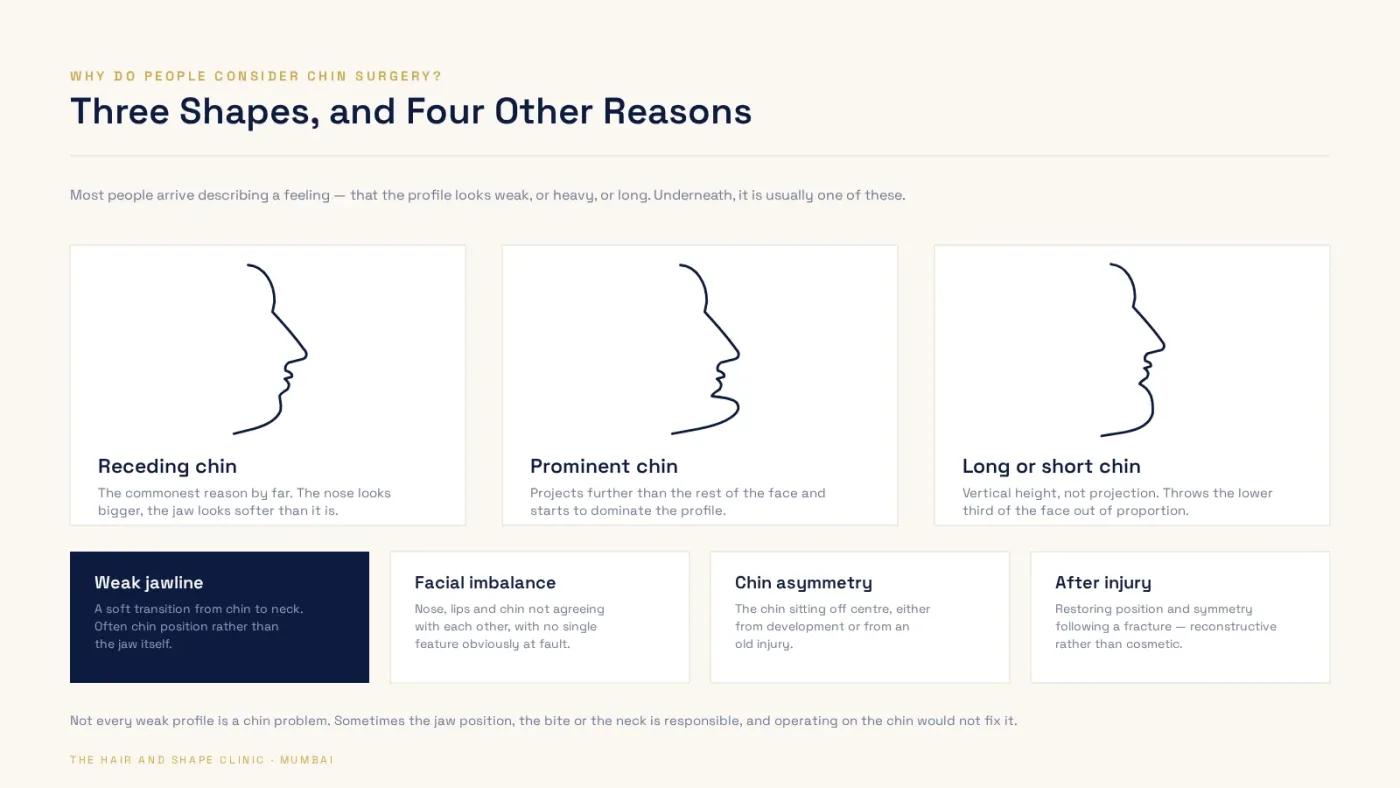
Patients choose chin surgery for a variety of cosmetic and reconstructive reasons.
Receding Chin
A chin positioned too far backward can make the nose appear larger and reduce jawline definition.
Weak Jawline
Insufficient chin projection may contribute to a poorly defined lower face.
Prominent Chin
An excessively projecting chin can dominate facial proportions.
Facial Imbalance
Disproportion between the chin, nose, lips, and forehead may affect overall facial harmony.
Chin Asymmetry
Some individuals naturally have a chin that deviates to one side or developed asymmetry following injury.
Congenital Conditions
Certain developmental abnormalities may affect chin size or position.
Post-Traumatic Deformities
Facial injuries may alter both the appearance and structural position of the chin.
How Does Chin Surgery Improve Facial Balance?

The chin serves as one of the primary reference points in facial profile analysis.
Rather than evaluating the chin alone, surgeons assess its relationship with the rest of the face.
Facial Profile
Increasing or reducing chin projection can dramatically improve profile balance.
Nose-to-Chin Relationship
A properly proportioned chin often makes the nose appear more balanced.
In some patients, rhinoplasty and genioplasty may be considered together to optimize facial harmony.
Jawline Definition
Improved chin projection often creates a stronger transition between the jawline and neck.
Lower Facial Proportions
The vertical height of the chin contributes to balanced lower facial dimensions.
Neck Contour
Better chin projection may improve the visual transition between the face and neck, particularly in selected patients.
The objective is to enhance the overall facial profile rather than simply enlarging or reducing the chin.
Who Is a Good Candidate for Chin Surgery?

Chin surgery may be appropriate for individuals seeking cosmetic improvement, correction of facial imbalance, or reconstruction following injury.
You may be a suitable candidate if you:
Feel your chin is too small or too large.
Have a weak or poorly defined jawline.
Notice facial asymmetry.
Wish to improve side-profile balance.
Have completed facial skeletal growth.
Are in good general health.
Do not smoke or are willing to stop during recovery.
Have realistic expectations regarding surgical outcomes.
A comprehensive consultation helps determine whether chin surgery is appropriate and whether sliding genioplasty or chin implant surgery is likely to provide the best result.
What Conditions Can Chin Surgery Address?
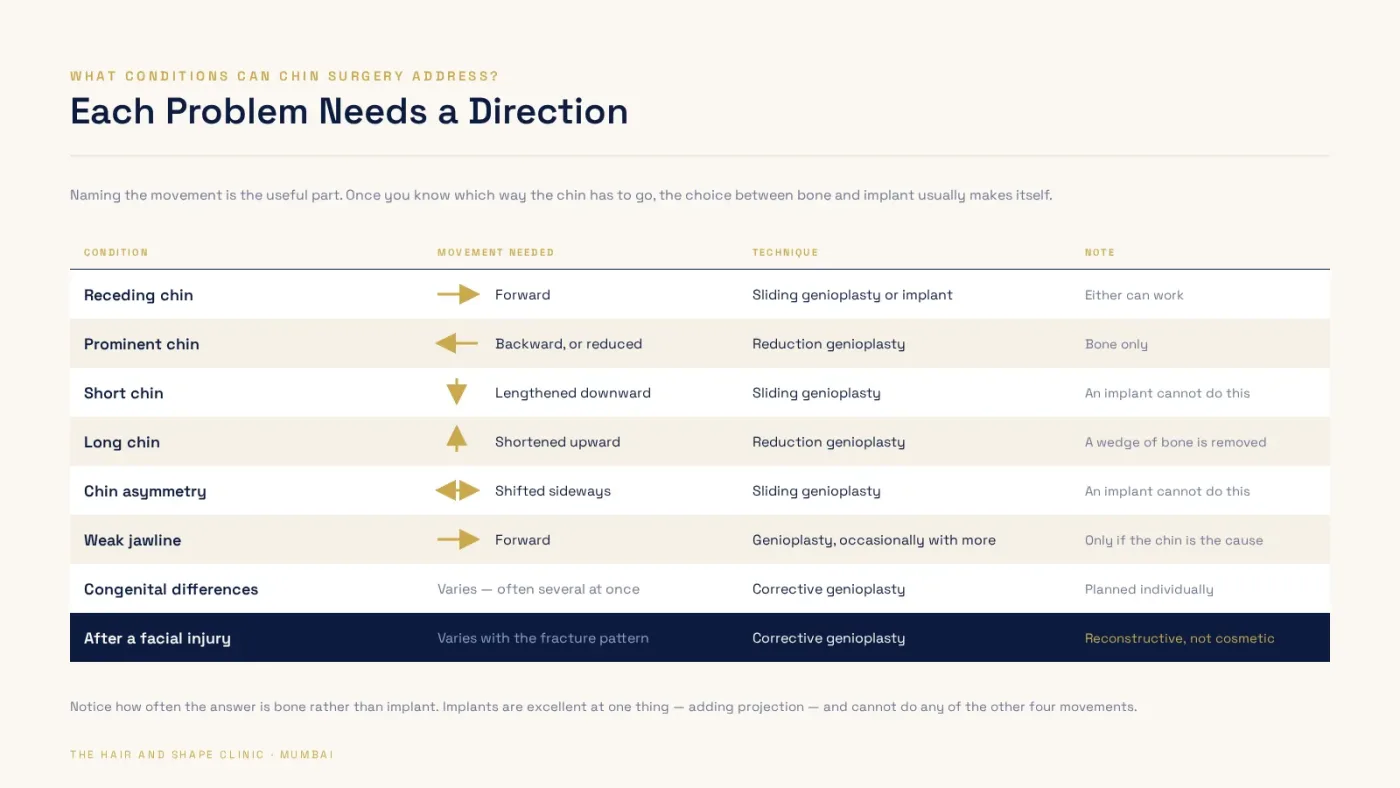
Chin surgery may be performed to treat a wide range of aesthetic and reconstructive concerns.
Receding Chin
Improves forward projection to create a more balanced facial profile.
Prominent Chin
Reduces excessive projection while maintaining facial harmony.
Chin Asymmetry
Corrects deviation or uneven skeletal positioning.
Short Chin
Increases vertical height where appropriate.
Long Chin
Reduces excessive lower facial height through precise bone reshaping.
Weak Jawline
Enhances lower facial definition by improving chin support.
Congenital Chin Deformities
Corrects developmental abnormalities affecting chin shape or position.
Post-Traumatic Chin Deformities
Restores facial symmetry following fractures or facial injuries.
Personalized Chin Surgery Planning
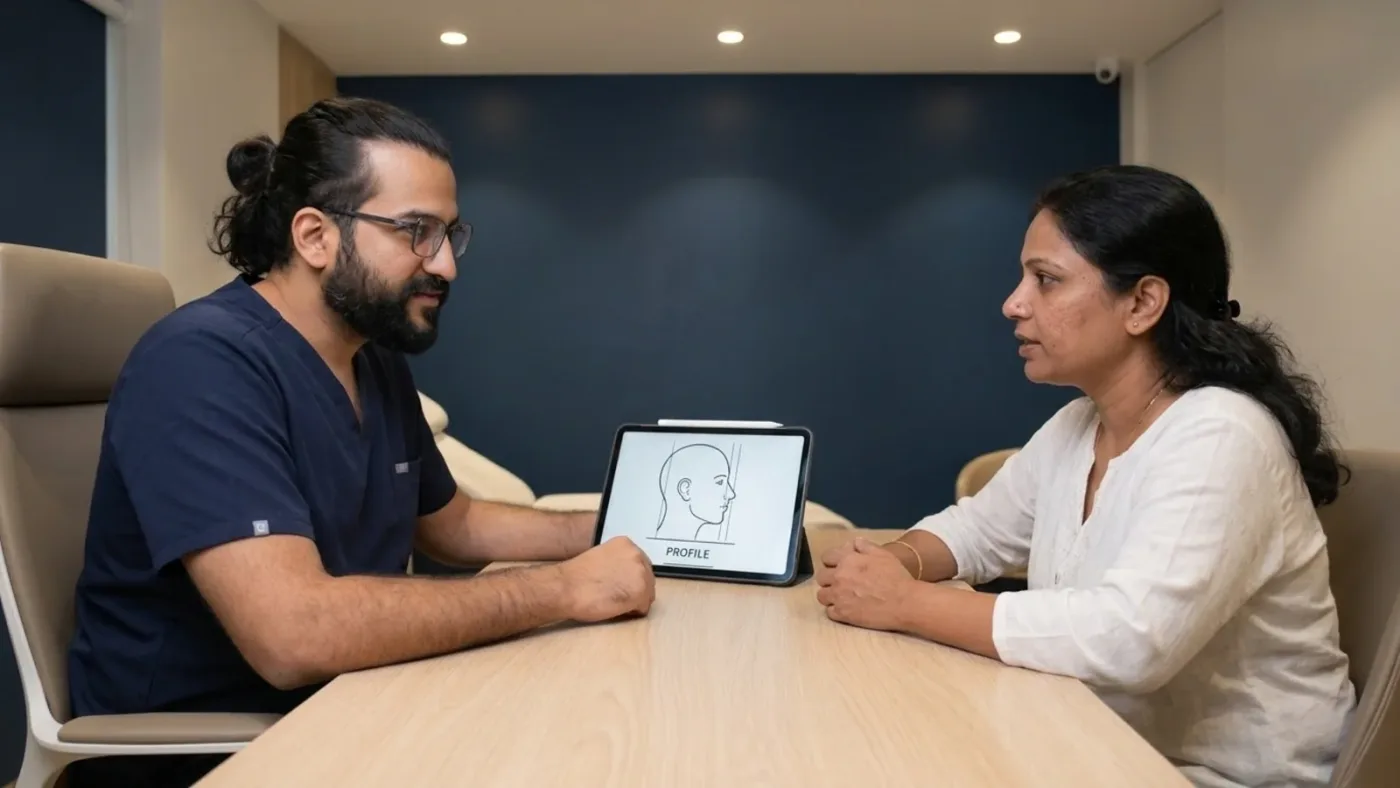
No two faces share the same proportions, and successful chin surgery requires much more than simply increasing or decreasing chin size. Careful planning begins with a comprehensive analysis of facial balance, profile aesthetics, jaw position, soft tissue thickness, dental occlusion, and skeletal anatomy. The goal is to understand how the chin relates to the nose, lips, jawline, neck, and overall facial structure before recommending surgery.
At Hair & Shape Clinic, every treatment plan is individualized based on your unique facial characteristics and aesthetic goals. Whether sliding genioplasty or chin implant surgery is recommended, the objective is to create natural-looking improvement that complements your face while maintaining structural stability and long-term facial harmony.
What Happens During Chin Surgery?
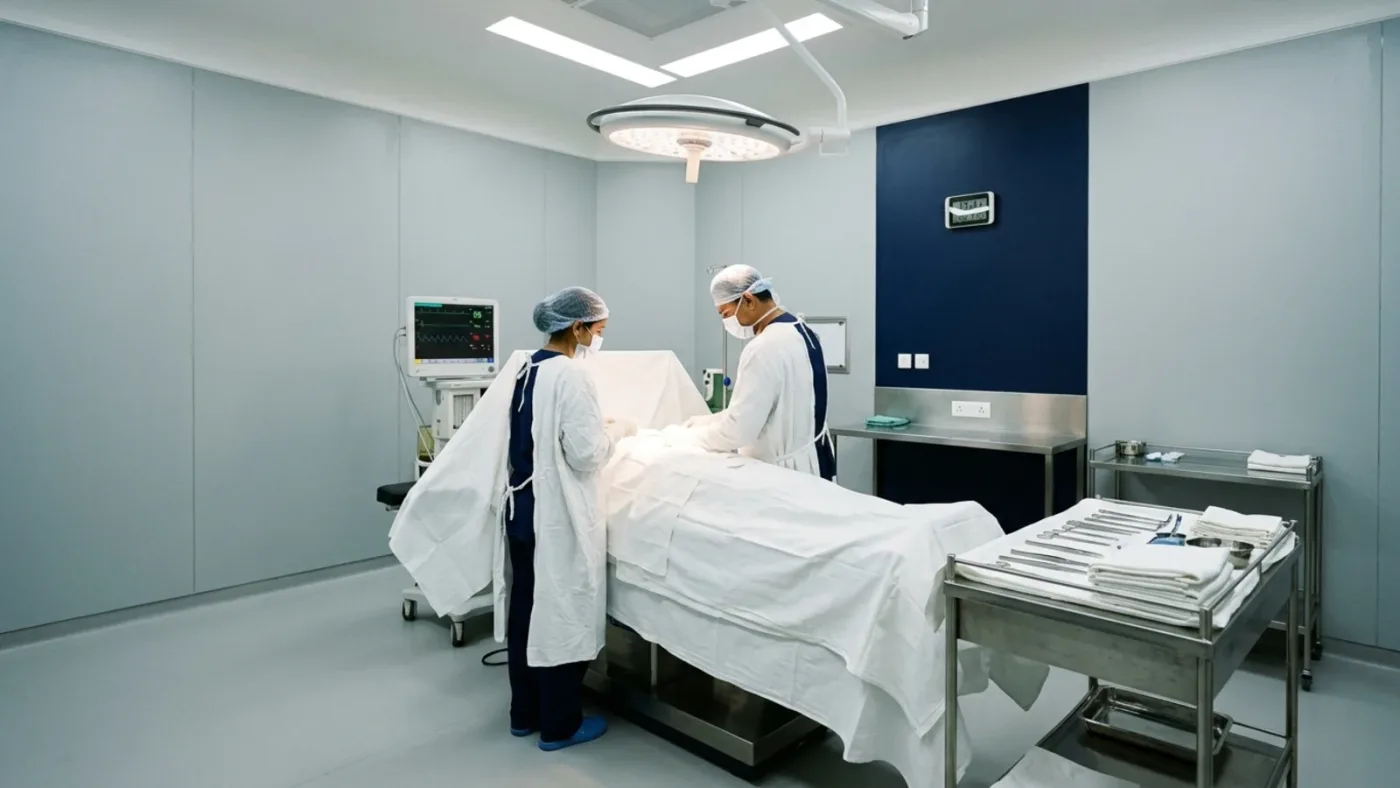
Chin surgery is performed in an accredited operating facility under carefully controlled sterile conditions. Depending on the complexity of the procedure and whether sliding genioplasty or chin implant surgery is planned, the operation usually takes between one and three hours.
The exact surgical approach is tailored to each patient's facial anatomy, skeletal proportions, and aesthetic goals.
A typical chin surgery procedure includes the following stages.
Step 1: Preoperative Planning
Before surgery begins, your surgeon reviews the individualized treatment plan developed during consultation.
This includes:
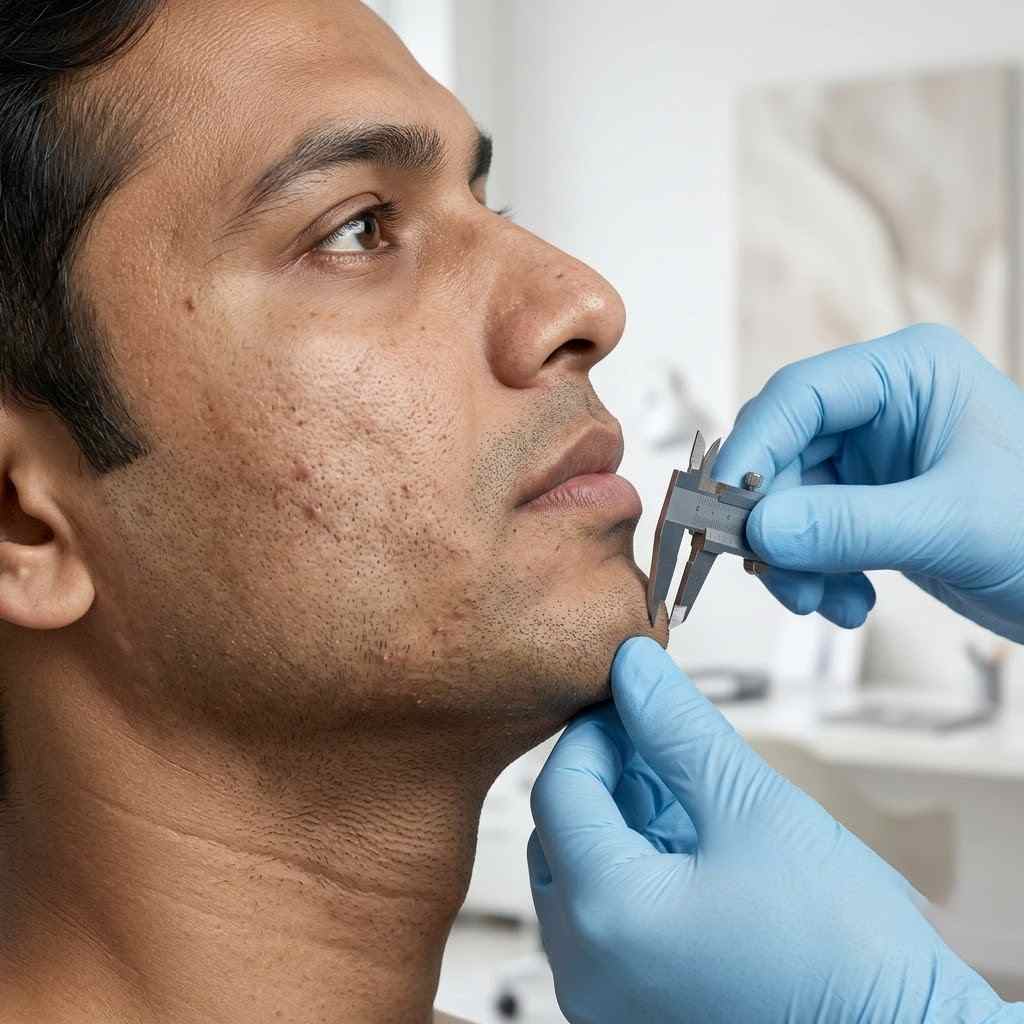
Facial measurements.
Profile analysis.
Chin projection assessment.
Jawline evaluation.
Dental relationship.
Surgical markings.
Review of treatment goals.
Every aspect of planning focuses on improving facial harmony while preserving normal function.
Step 2: Anaesthesia
Chin surgery is commonly performed under general anaesthesia, although selected cases may be performed using local anaesthesia with sedation.
Throughout the procedure, your vital signs are continuously monitored to ensure safety.
Step 3: Surgical Access
Most chin surgery is performed through an incision placed inside the lower lip.
This approach avoids visible external scars while providing direct access to the chin bone.
In selected implant procedures, a small incision beneath the chin may occasionally be recommended depending on the surgical plan.
Step 4: Chin Reshaping
The next stage depends on the type of genioplasty being performed.
Sliding Genioplasty
A carefully planned cut is made in the chin bone.
The lower segment is then repositioned according to the desired correction.
The bone may be:
Advanced forward.
Moved backward.
Lengthened.
Shortened.
Shifted sideways to improve symmetry.
Once positioned correctly, the bone is stabilized using small titanium plates and screws designed to remain safely within the bone.
Chin Implant Surgery
If chin augmentation is planned using an implant, a precisely selected medical-grade implant is positioned over the existing chin bone.
The implant is carefully secured to provide natural projection and long-term stability.
The implant size and shape are chosen according to each patient's facial proportions.
Step 5: Closure
After achieving the planned correction, the incision is closed using dissolvable sutures.
The surgical area is cleaned, and a supportive dressing may be applied to reduce swelling during the initial stages of healing.
Types of Chin Surgery
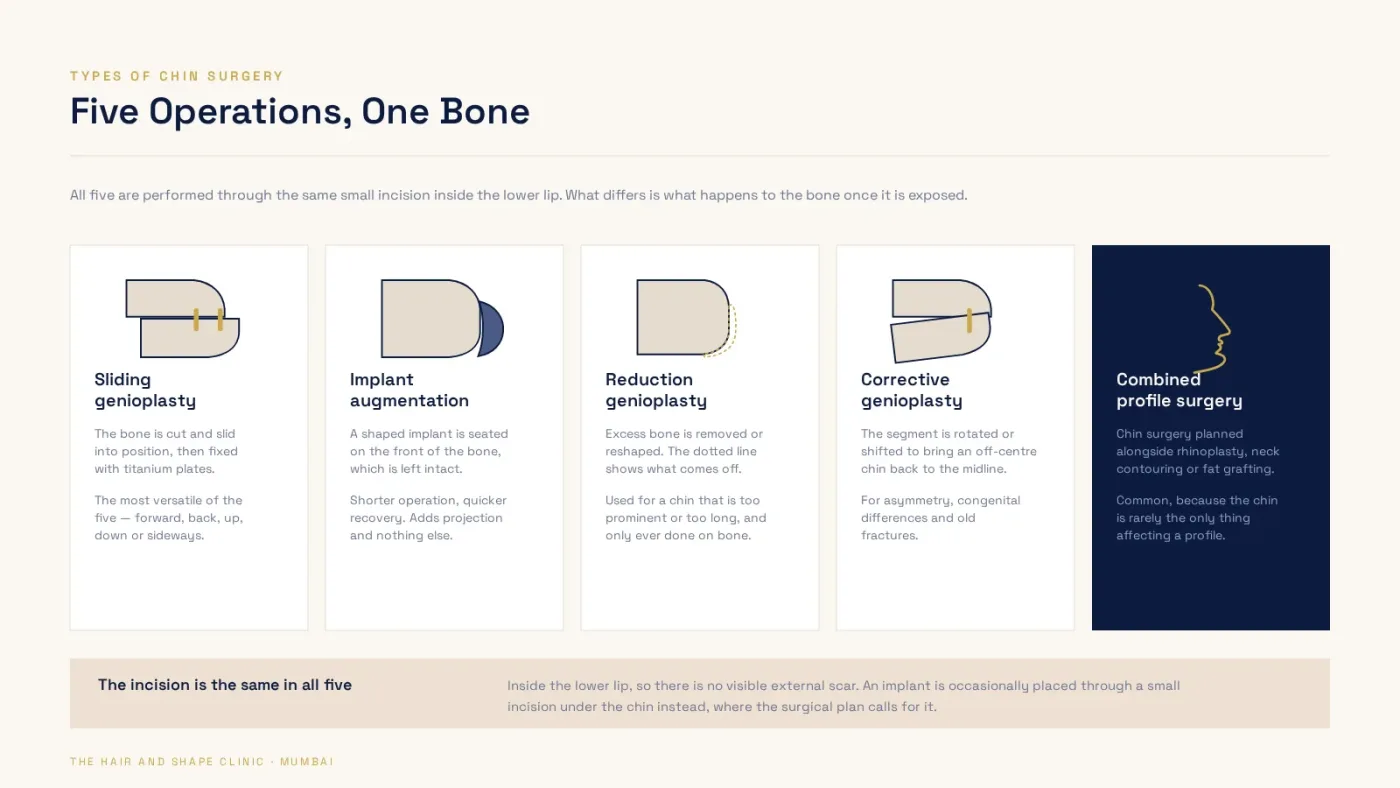
Several surgical techniques are available depending on the patient's anatomy and treatment goals.
Sliding Genioplasty
Uses the patient's own chin bone to reposition the chin.
Provides highly customizable correction for:
Projection.
Height.
Length.
Asymmetry.
Chin Implant Augmentation
Increases chin projection using a medical-grade implant.
Suitable for selected patients requiring moderate enhancement without altering the underlying bone.
Reduction Genioplasty
Removes or reshapes excess chin bone in patients with an overly prominent chin.
Corrective Genioplasty
Addresses congenital deformities, developmental abnormalities, or post-traumatic asymmetry.
Combined Facial Profile Surgery
Some patients benefit from combining chin surgery with other facial procedures such as rhinoplasty, neck contouring, or facial fat grafting to optimize overall facial balance.
What Results Can You Expect After Chin Surgery?
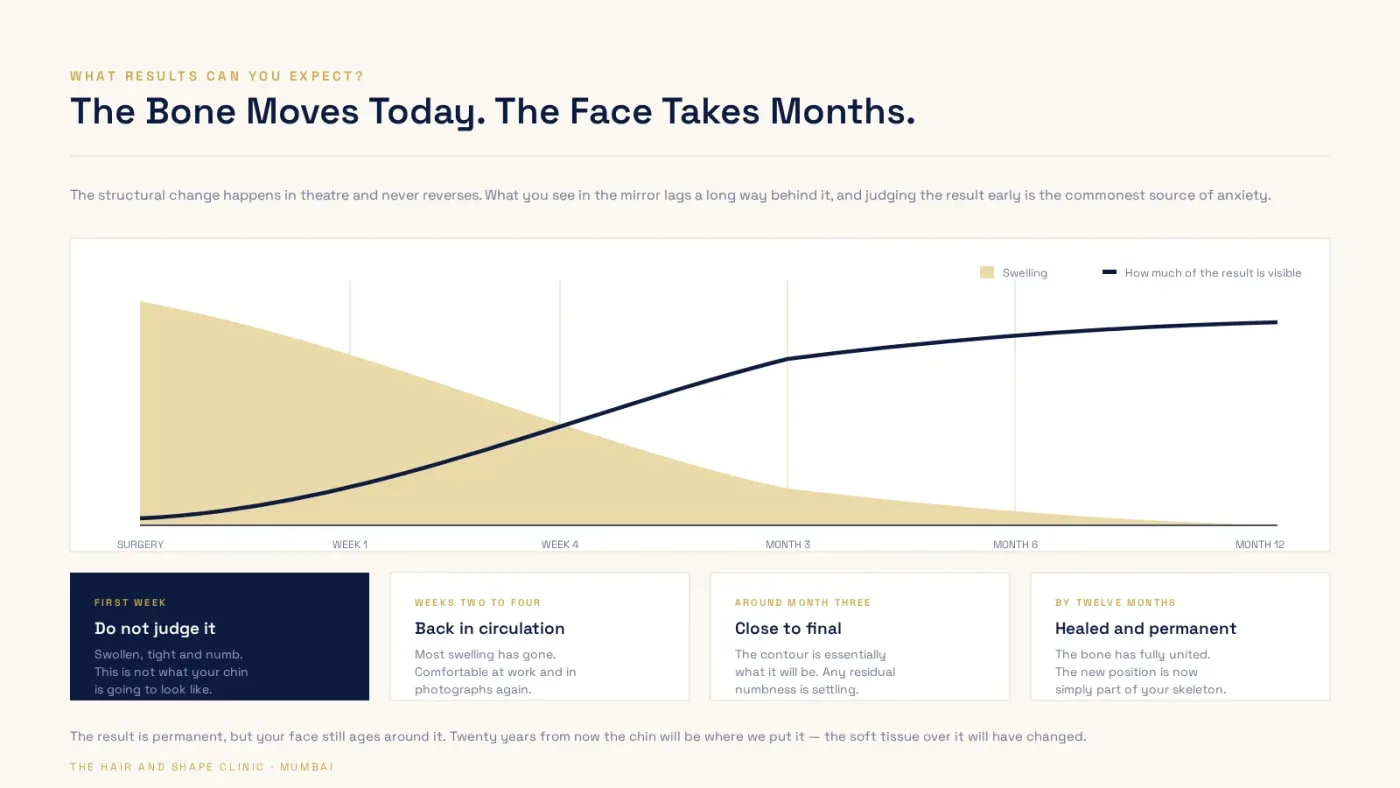
Chin surgery produces immediate structural changes, although the final appearance develops gradually as swelling resolves.
Patients typically notice:
Improved Facial Profile
The chin appears more proportionate to the forehead, nose, lips, and jawline.
Better Jawline Definition
Improved chin projection often creates a stronger and more defined lower face.
Enhanced Facial Harmony
Balanced proportions help the face appear more symmetrical and naturally attractive.
Improved Neck Contour
Selected patients may notice a smoother transition between the chin and neck.
Long-Lasting Results
The structural changes achieved through sliding genioplasty or chin implants are generally long-lasting, with natural ageing continuing over time.
As postoperative swelling gradually decreases, the refined chin contour becomes increasingly visible.
What Is Recovery Like After Chin Surgery?
Recovery varies according to the surgical technique and the extent of correction, but most patients return to normal daily activities within a relatively short period.
Healing generally progresses through several stages.
Immediately After Surgery
You may experience:
Swelling.
Mild bruising.
Temporary numbness.
Tightness around the chin.
Mild discomfort.
These symptoms are expected and gradually improve.
First Week
Swelling remains noticeable but begins to decrease.
Soft foods may be recommended if the incision is inside the mouth.
Patients are advised to follow detailed oral hygiene instructions to reduce the risk of infection.
Two to Four Weeks
Most swelling and bruising continue to improve.
Many patients feel comfortable returning to work, social activities, and light exercise.
Several Months
The chin continues settling into its final position as deeper tissues heal.
Scar tissue gradually softens, and facial contours become more refined.
Long-Term Healing
Once healing is complete, the new chin position becomes a stable part of the facial skeleton, producing durable improvements in facial balance.
Are There Any Risks or Limitations?
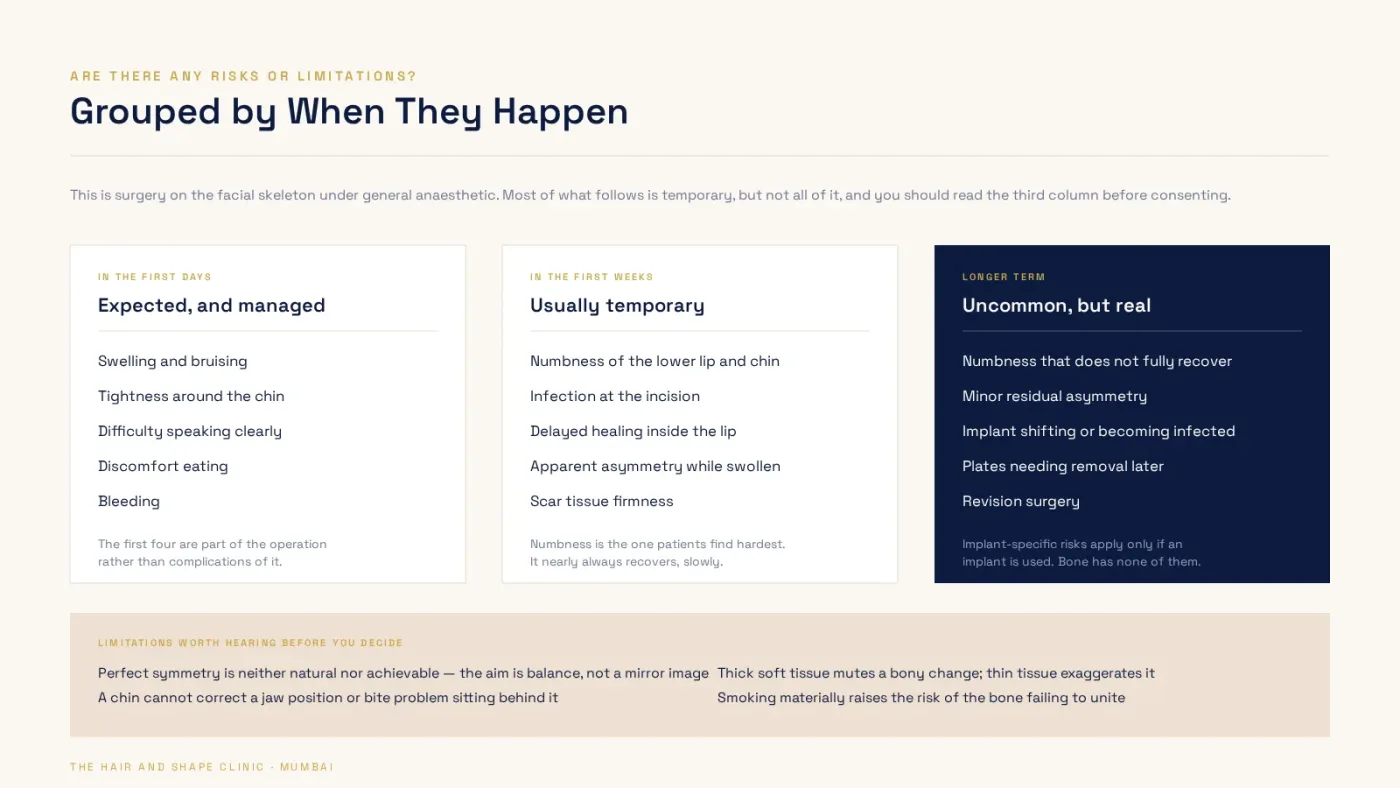
Chin surgery is generally considered safe when performed by an experienced plastic surgeon, but like every surgical procedure, it carries potential risks.
Possible complications include:
Bleeding.
Infection.
Temporary numbness.
Swelling.
Bruising.
Implant movement in augmentation procedures.
Minor asymmetry.
Delayed healing.
Scar tissue formation.
Need for revision surgery.
Sliding genioplasty also involves healing of the repositioned chin bone, which requires time before full stability is achieved.
It is important to understand that perfect facial symmetry is neither natural nor surgically achievable.
The objective is to create balanced, natural-looking improvement that complements the rest of the face.
How Much Does Chin Surgery Cost in Mumbai?

The cost of chin surgery depends on the type of procedure and the complexity of the correction required.
Several factors influence the overall treatment cost, including:
Sliding genioplasty or chin implant surgery.
Degree of skeletal correction.
Requirement for custom implants.
Combined facial procedures.
Anaesthesia.
Operating facility charges.
Postoperative care.
Following a comprehensive consultation, your surgeon will explain the recommended procedure, expected outcomes, recovery process, and personalized cost estimate before surgery.
Why Choose Hair & Shape for Chin Surgery?
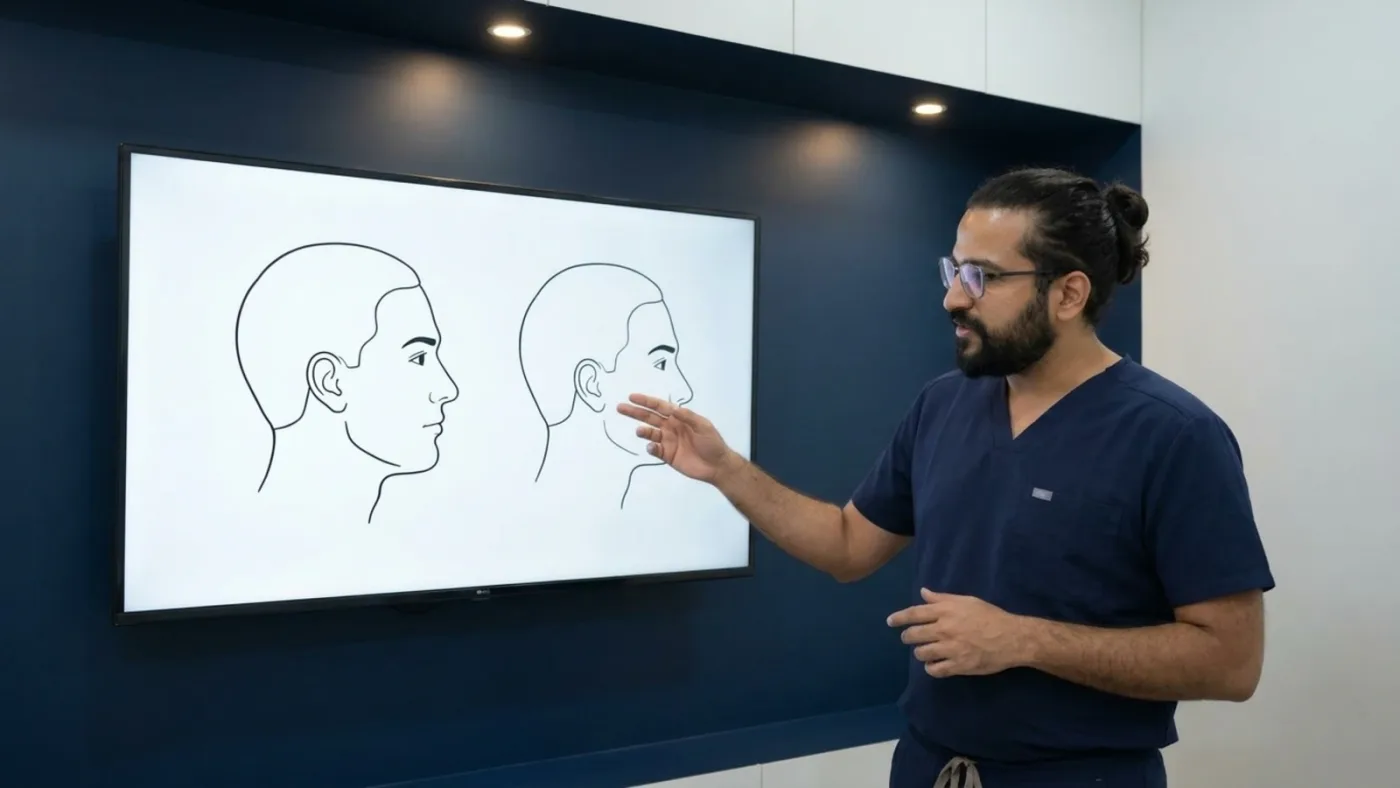
Successful chin surgery requires both technical precision and a deep understanding of facial aesthetics. Even small changes in chin position can significantly influence the appearance of the nose, lips, jawline, and neck. Achieving natural-looking results depends on careful planning, accurate skeletal analysis, and meticulous surgical execution.
At Hair & Shape Clinic, every patient undergoes a comprehensive facial assessment before surgery is recommended. Factors such as skeletal anatomy, facial proportions, chin projection, soft tissue thickness, and overall profile balance are carefully evaluated to determine the most appropriate surgical technique. Whether sliding genioplasty or chin implant augmentation is performed, the focus remains on creating harmonious, stable, and proportionate facial results.
Why Does Personalized Chin Surgery Planning Matter?
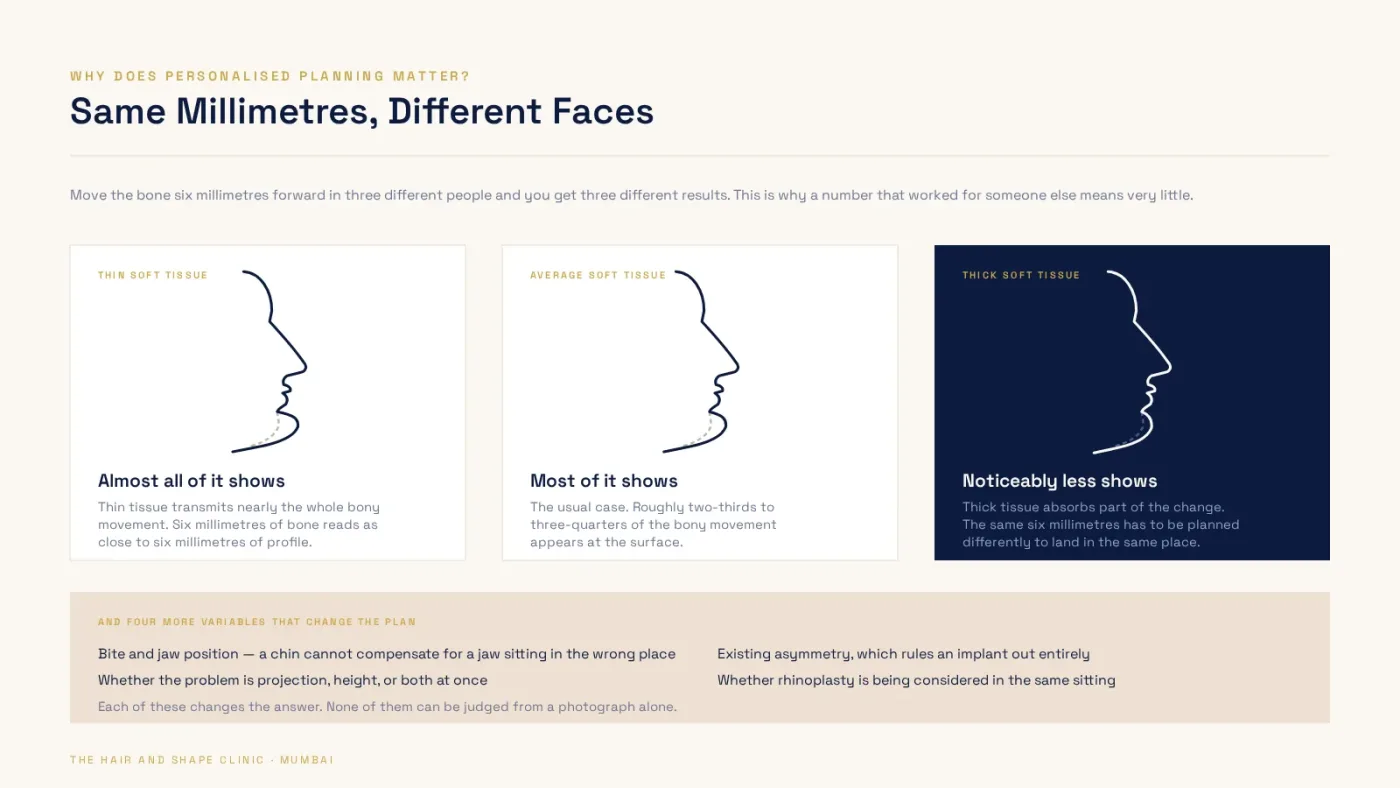
The chin is a key landmark of the lower face, and every adjustment influences overall facial proportions.
Every Face Has Unique Proportions
The ideal chin position varies according to the nose, lips, forehead, jawline, and neck.
Bone and Soft Tissue Must Be Considered Together
Successful planning evaluates not only the underlying skeleton but also how the overlying skin and muscles will shape the final appearance.
Different Procedures Suit Different Patients
Some individuals benefit most from sliding genioplasty, while others achieve excellent results with chin implants or reduction surgery.
Long-Term Stability Is Essential
Proper surgical planning helps preserve structural support and maintain balanced facial contours over time.
Natural Harmony Is the Goal
The objective is not to create a noticeably altered chin but to improve the balance of the entire face in a subtle and proportionate manner.
International Patients Seeking Chin Surgery in Mumbai
Hair & Shape Clinic welcomes patients from across India and around the world seeking advanced facial contouring procedures.
Our international patient pathway is designed to simplify consultation, travel planning, surgery, and postoperative care.
Before You Travel
Virtual consultations, facial photographs, medical history review, and profile analysis help determine whether chin surgery is appropriate before your visit.
During Your Stay
Your treatment includes consultation, surgical planning, chin surgery, postoperative monitoring, and detailed recovery guidance before returning home.
Returning Home
Follow-up consultations can often be coordinated remotely. Continued guidance regarding healing, activity restrictions, scar care, oral hygiene where applicable, and long-term recovery helps support the best possible outcome regardless of where you live.
What to Expect
Consultation
A detailed assessment of your goals, suitability, and a personalised plan.
Preparation
Clear pre-treatment guidance so you arrive fully prepared and at ease.
The Procedure
Your treatment, performed by our specialists with comfort and safety first.
Aftercare
Structured recovery support and follow-ups to protect your results.
Before & After Transformations
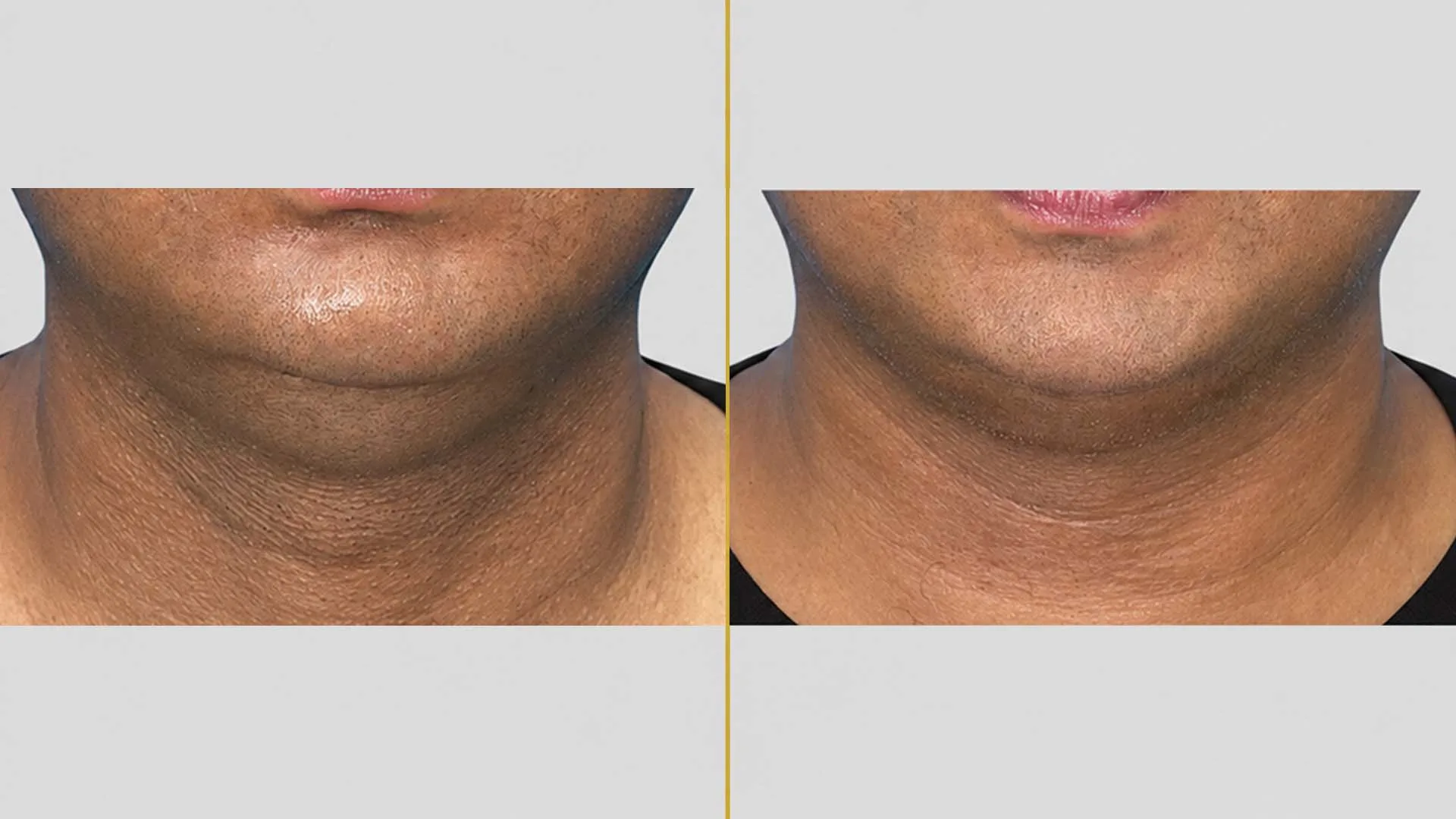
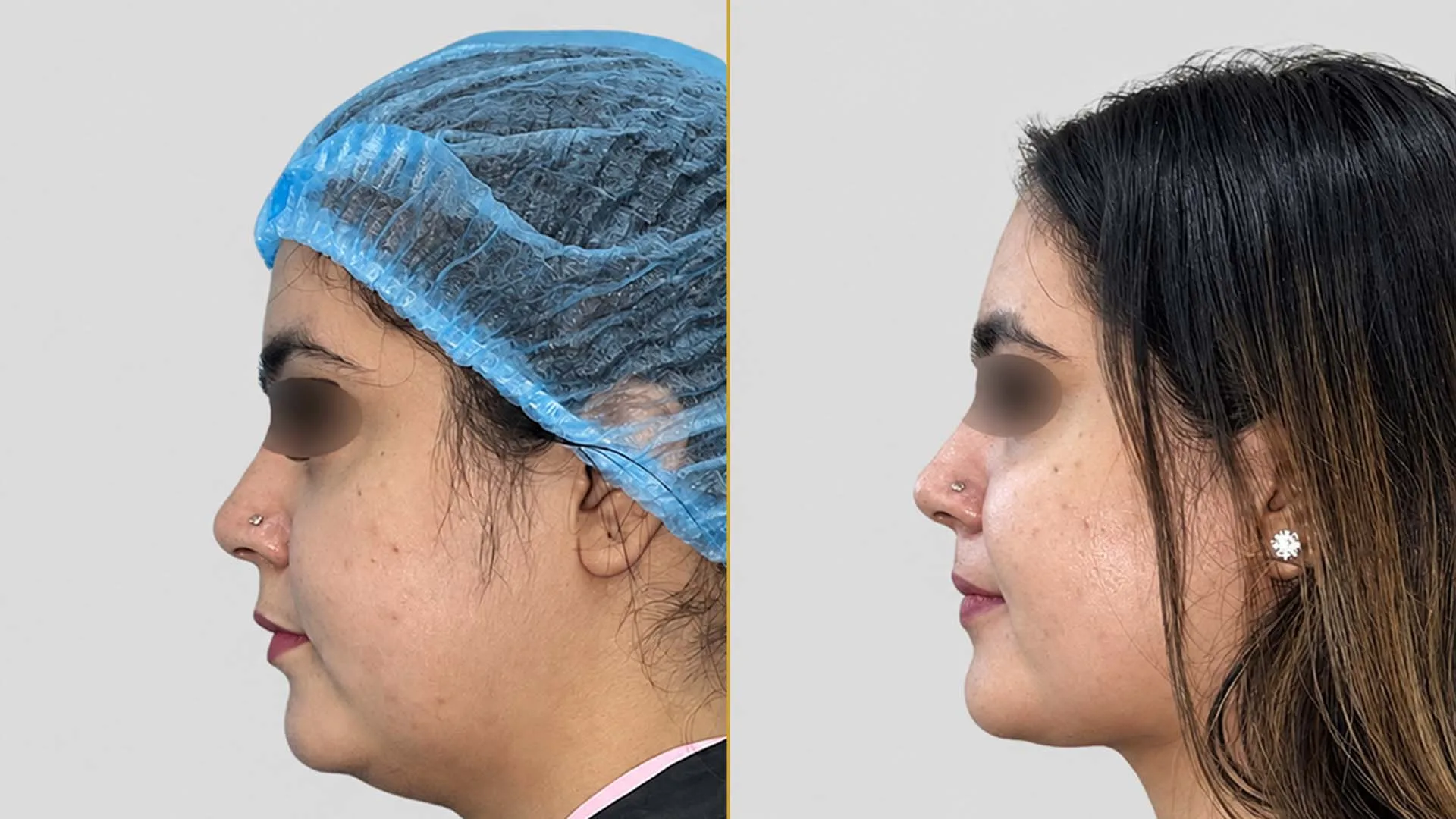
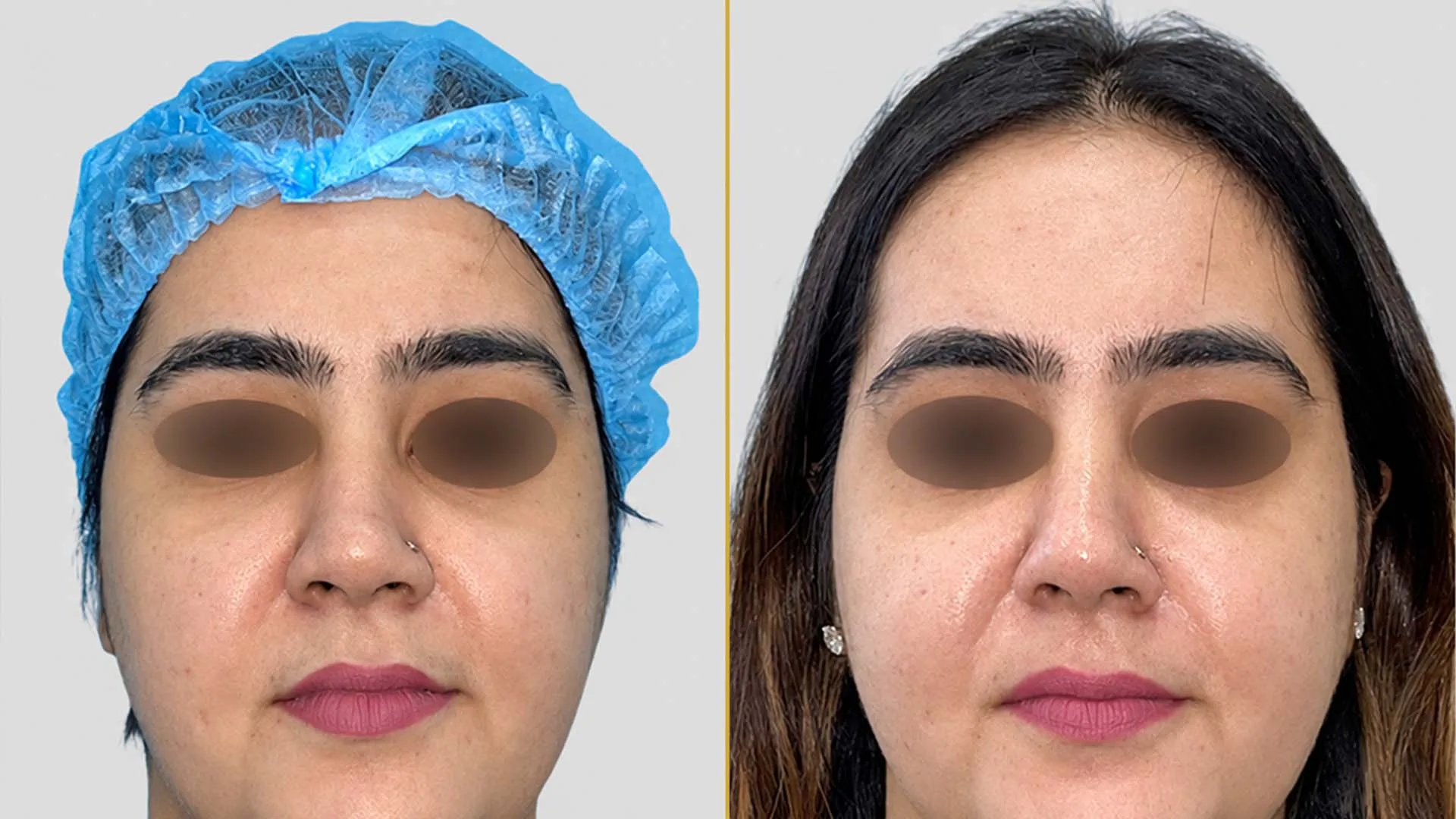
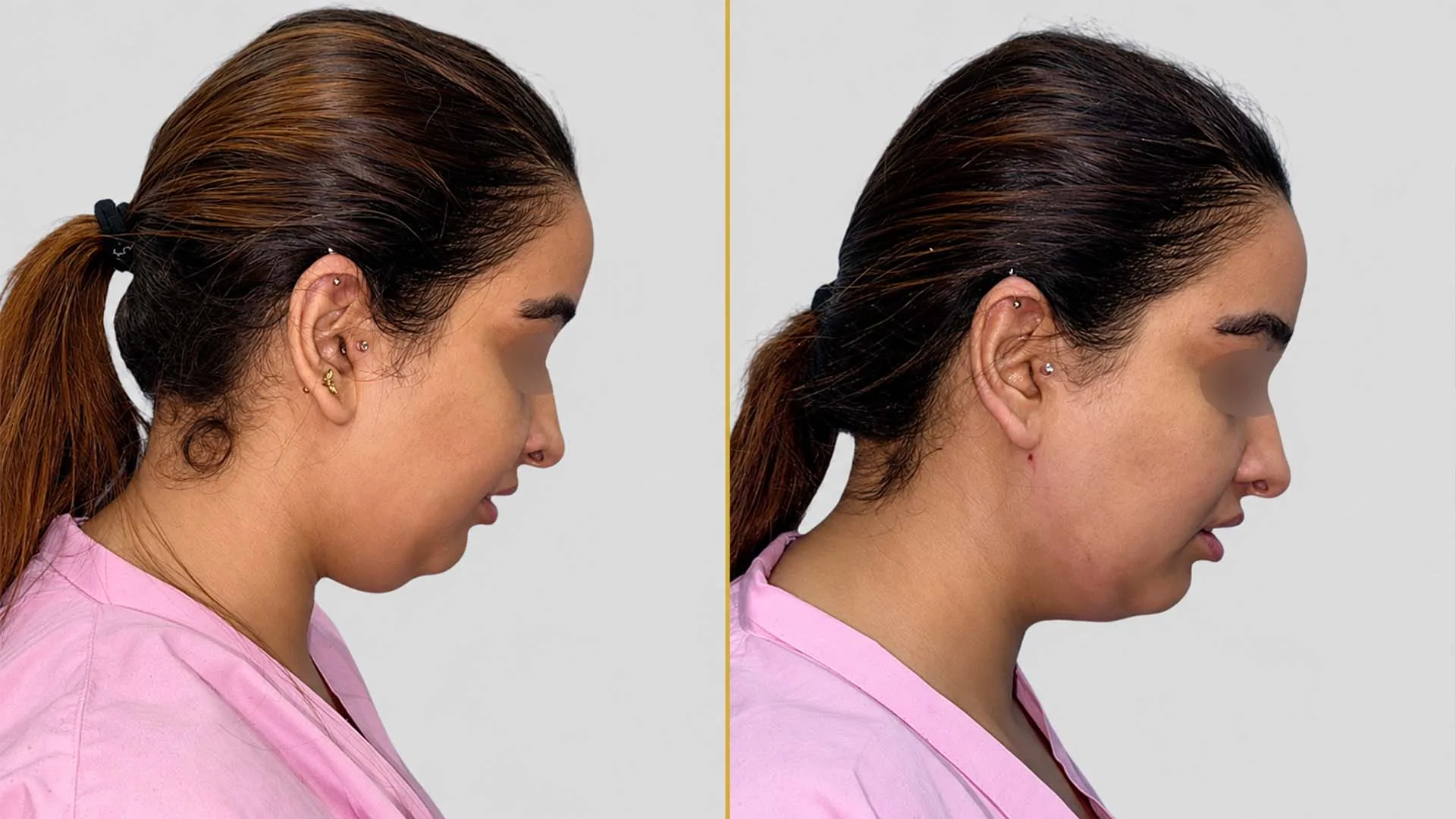
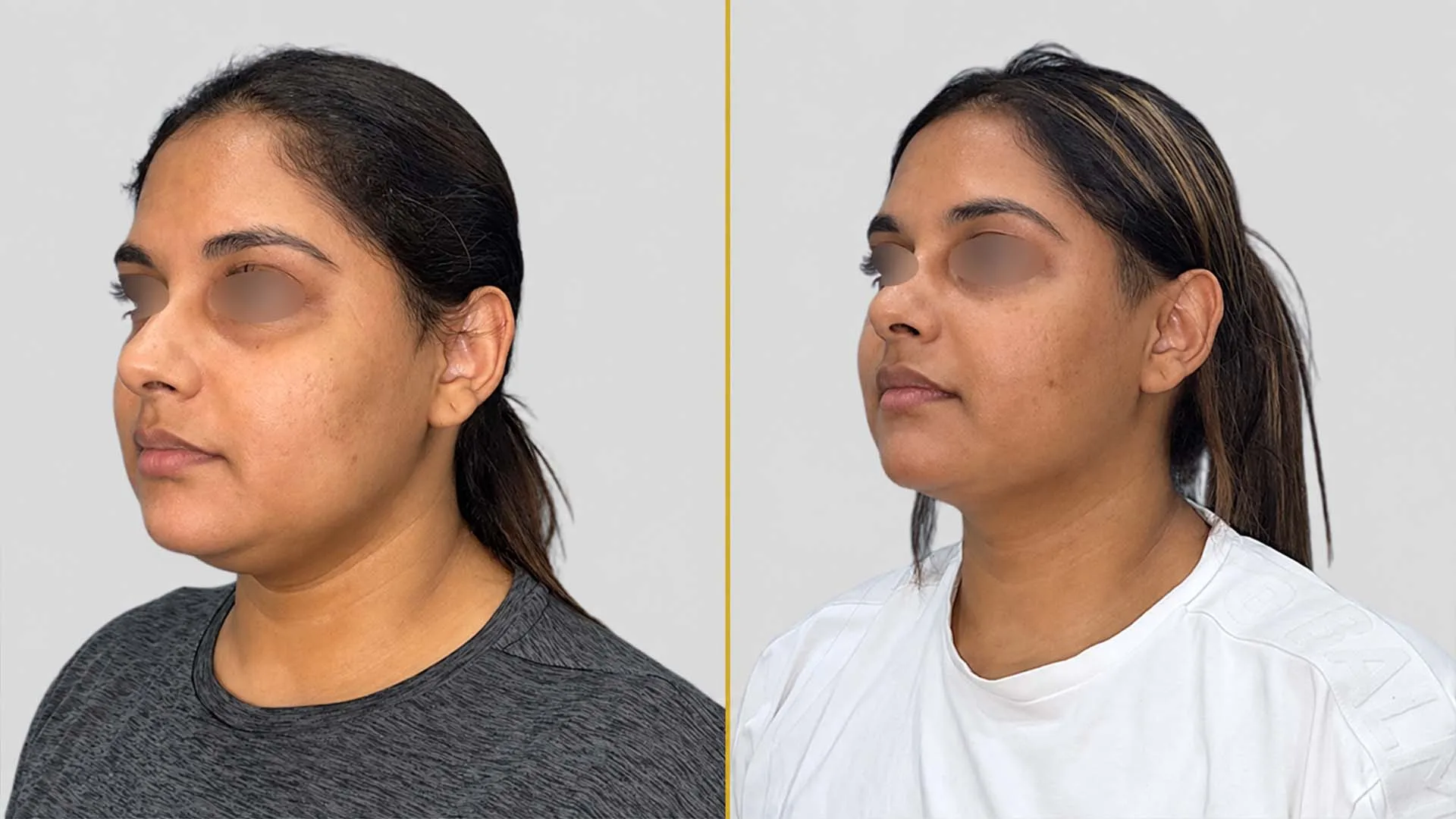
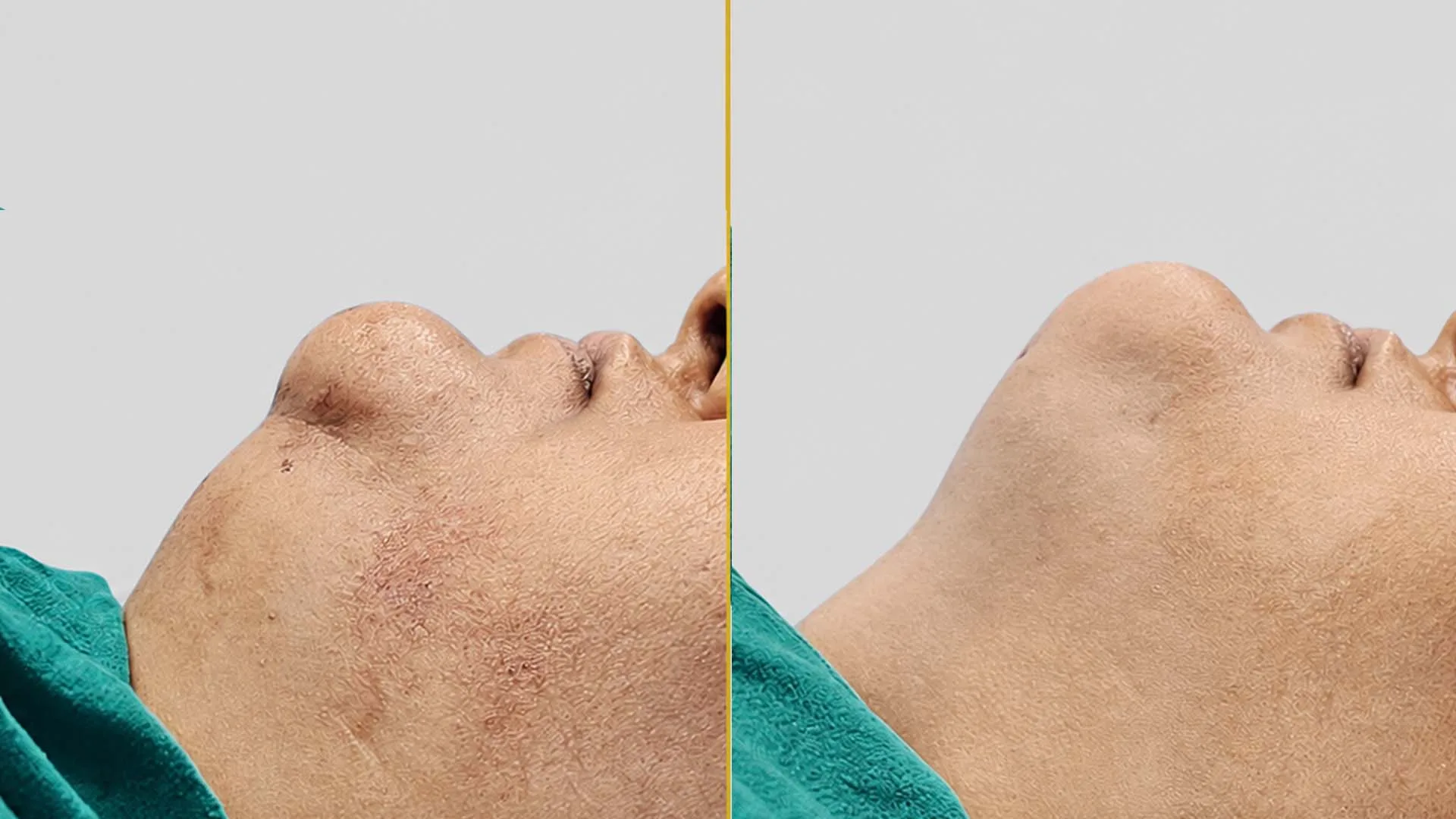
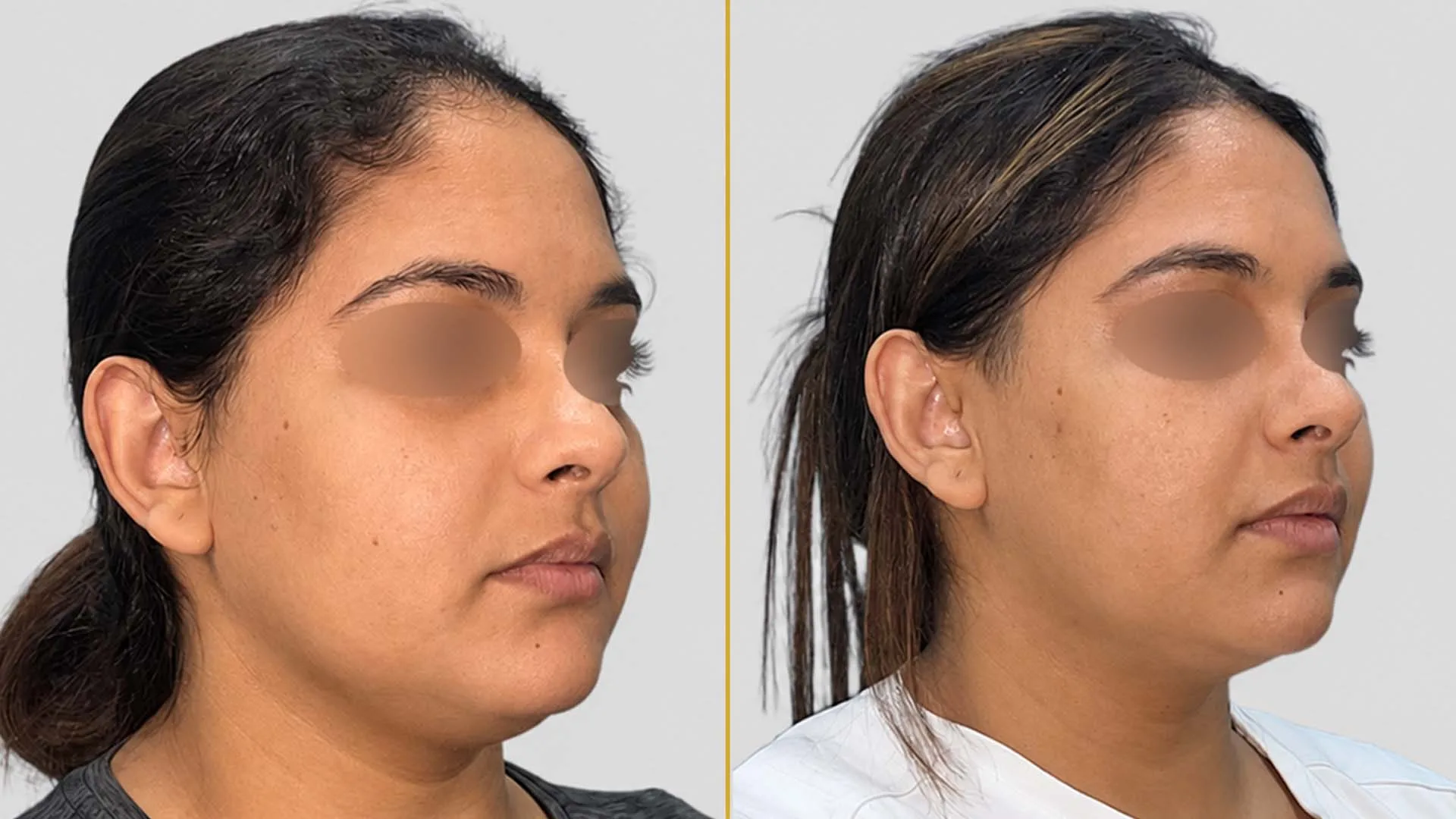
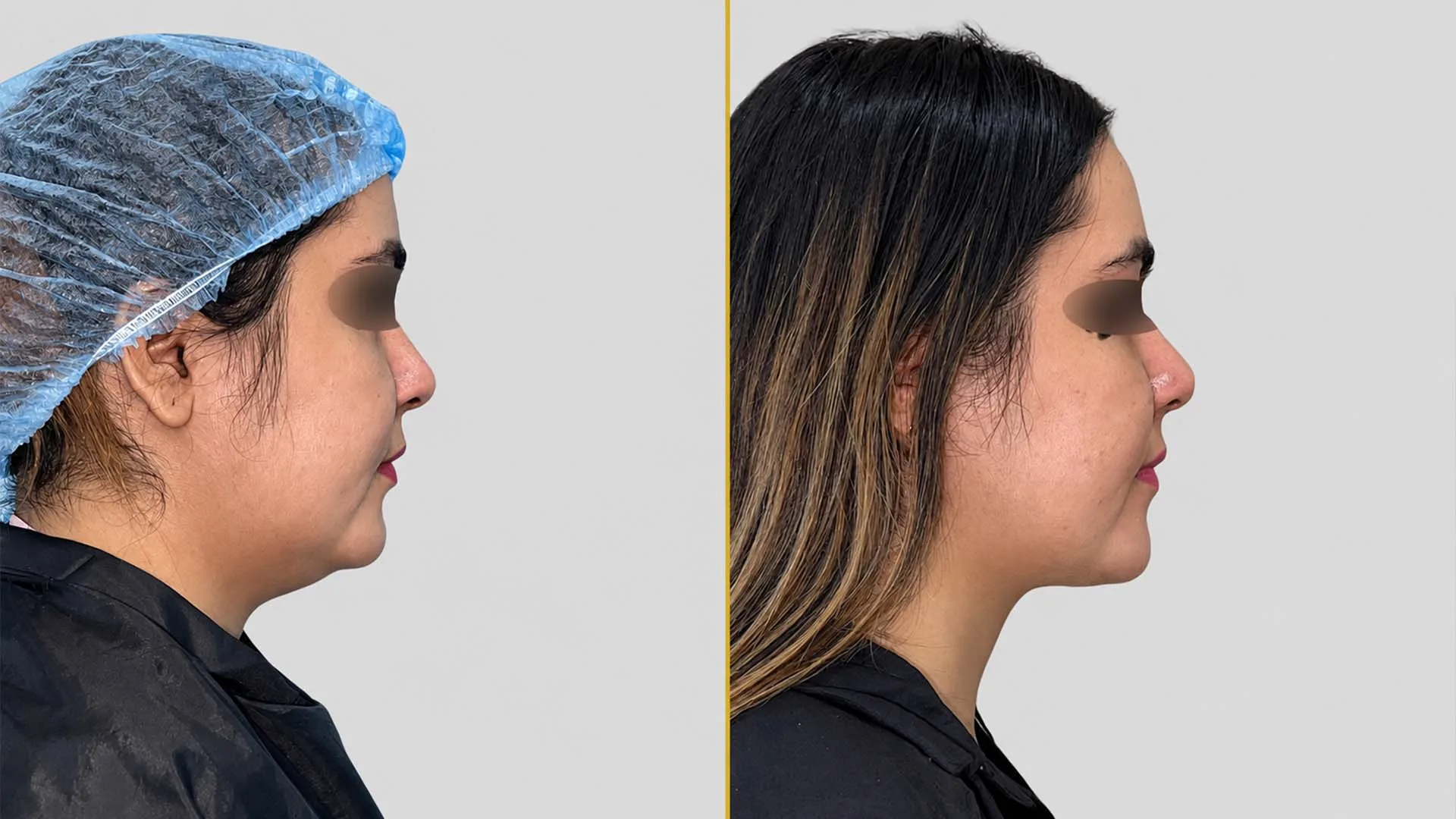
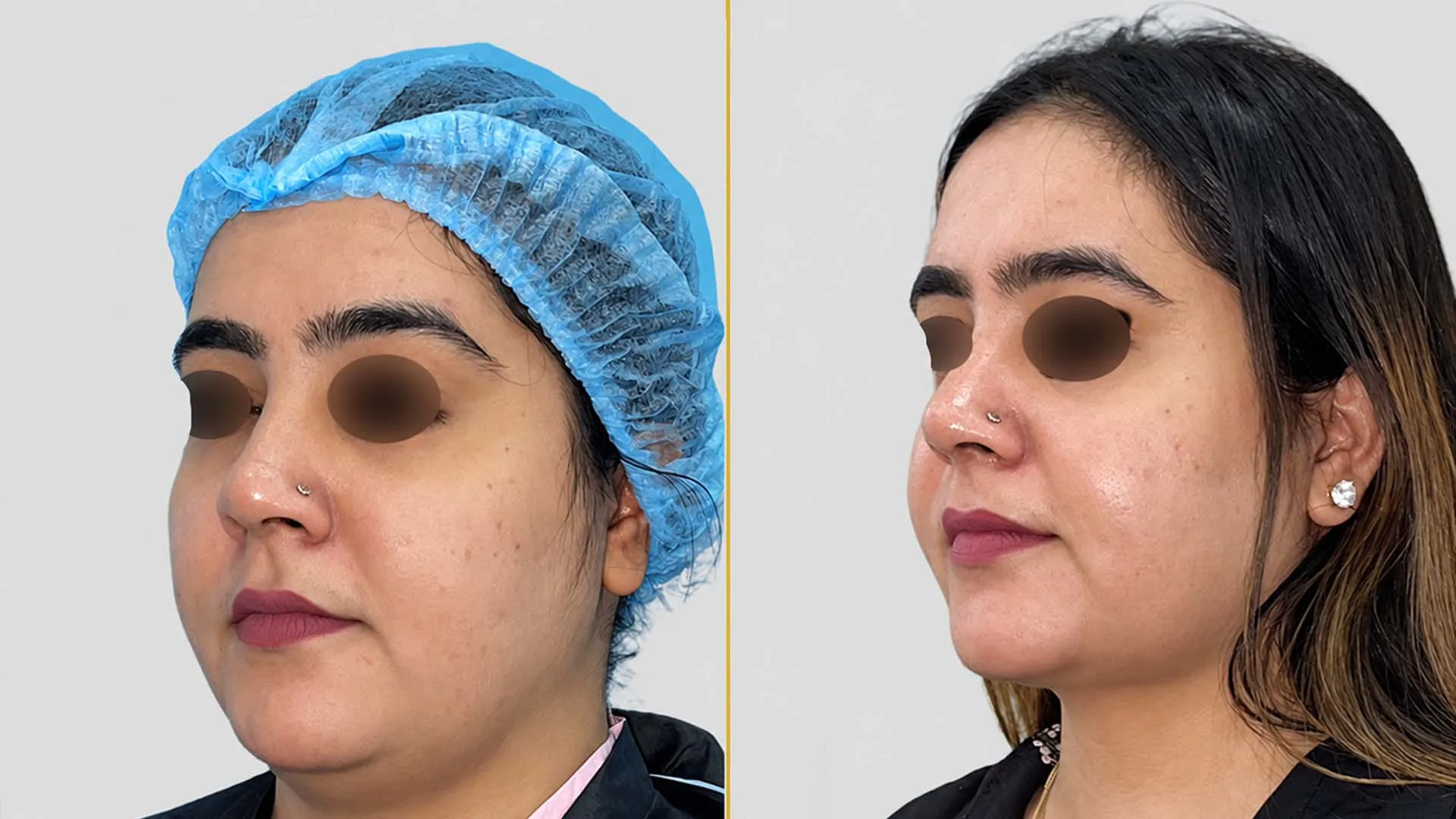
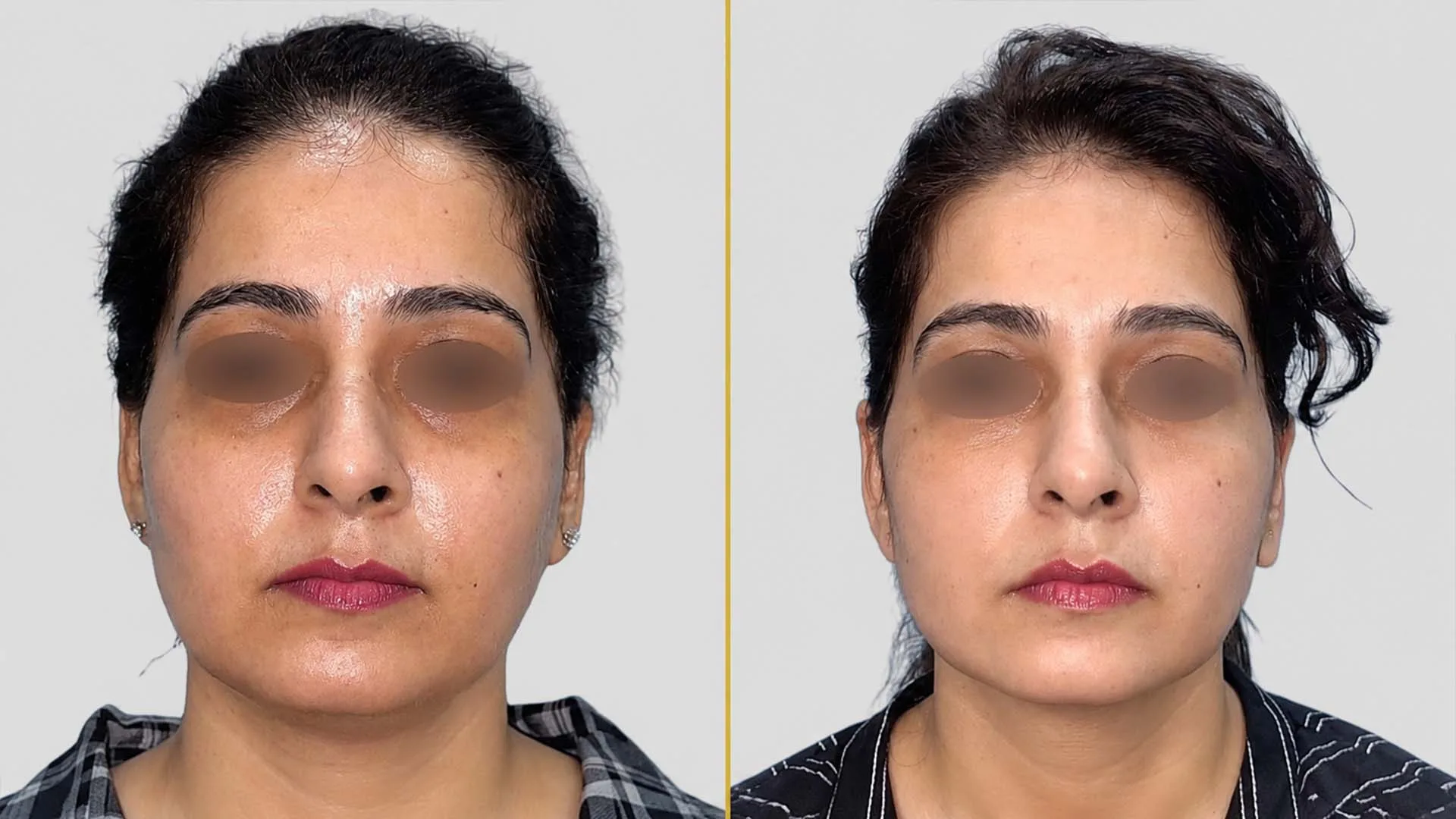
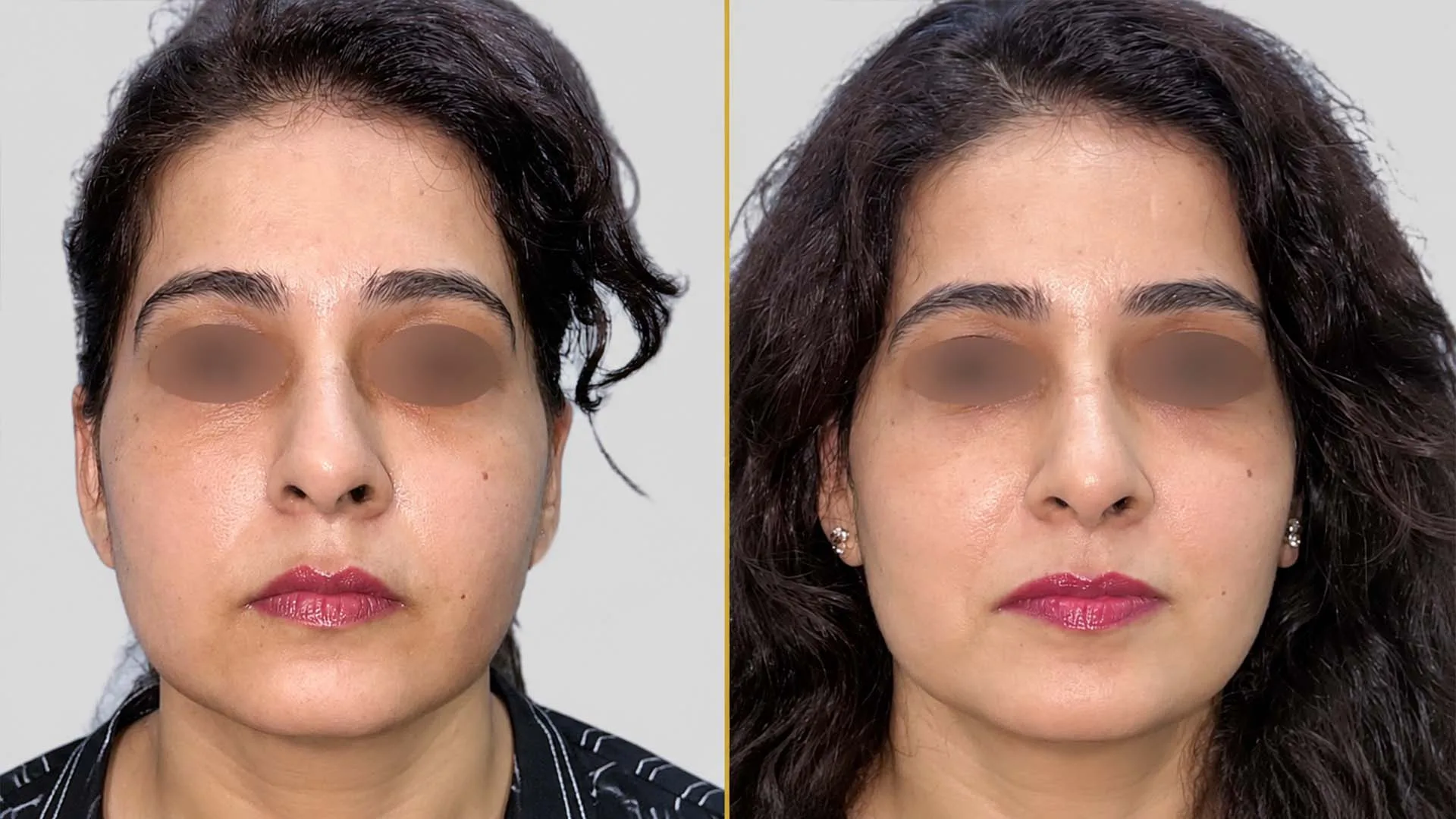
Frequently Asked Questions
Everything you need to know about Genioplasty (Chin Surgery). Still curious? Our team is one message away.
Is genioplasty safe and are the results permanent?
Genioplasty generally provides long-lasting or permanent structural changes to the chin, particularly when the chin bone is repositioned. Like any surgery, it has potential risks including bleeding, infection, swelling, numbness, asymmetry, healing problems or issues with implants or fixation hardware. Choosing an appropriately qualified surgeon and following post-operative instructions can help reduce complications.
How long does it take to recover after genioplasty?
Initial recovery after genioplasty usually involves swelling, bruising and temporary discomfort, while healing continues over several weeks. Some patients may need a soft or liquid diet for a short period, especially when the incision is made inside the mouth. Swelling gradually decreases, and the final chin contour becomes clearer as healing progresses.
What is the difference between sliding genioplasty and a chin implant?
Sliding genioplasty repositions the patient’s own chin bone, while a chin implant adds volume and projection using an implant. Sliding genioplasty can move the chin forward, backward or sideways and is secured with plates and screws. Chin implants are usually used to enhance a small or recessed chin. The best option depends on facial anatomy and the desired correction.
Who is a good candidate for genioplasty?
A good candidate for genioplasty is generally someone who is physically healthy, has completed facial growth and wants to improve a recessed, prominent, asymmetrical or poorly defined chin. Patients should also have realistic expectations and ideally be non-smokers. A detailed facial and bite assessment helps determine whether genioplasty is the right procedure.
What is genioplasty and how does chin surgery work?
Genioplasty is a surgical procedure used to reshape or reposition the chin to improve facial balance and profile. Depending on the patient’s needs, the surgeon may move the chin bone forward, backward or sideways, reduce excess bone, or use a chin implant to improve projection and contour.
What matters more-the size of the chin or its position?
A chin that's perfectly sized but poorly positioned can still create facial imbalance. Successful chin surgery is about placing the chin where it naturally belongs, not simply making it larger.
Is chin surgery permanent?
Yes. Both sliding genioplasty and chin implants are designed to provide long-term structural improvement.
Will there be visible scars?
Incisions are typically placed inside the mouth or in discreet locations whenever appropriate, minimizing visible scarring.
Can chin surgery improve my jawline?
If the jawline appears weak because of inadequate chin projection, surgery can create a cleaner transition between the chin, jaw, and neck. However, jawline definition also depends on bone structure, skin quality, and body fat.
Will my face look noticeably different?
The goal isn't to create a new face. It's to improve facial balance. Most patients look more proportionate rather than dramatically changed.
What is the difference between a chin implant and sliding genioplasty?
A chin implant adds projection using a medical implant. Sliding genioplasty repositions your own chin bone. The ideal option depends on your facial anatomy, skeletal structure, and treatment goals.
Can improving my chin really make my nose look smaller?
Often, yes. A stronger chin creates better facial proportion, making the nose appear more balanced without changing the nose itself. This is one of the most common reasons profile harmony improves after chin surgery.
My chin feels small. How do I know if surgery is actually the right solution?
Not every weak profile is caused by the chin. Sometimes the jaw, bite, neck, or nose influences facial balance. A consultation determines which structure is responsible before recommending treatment.
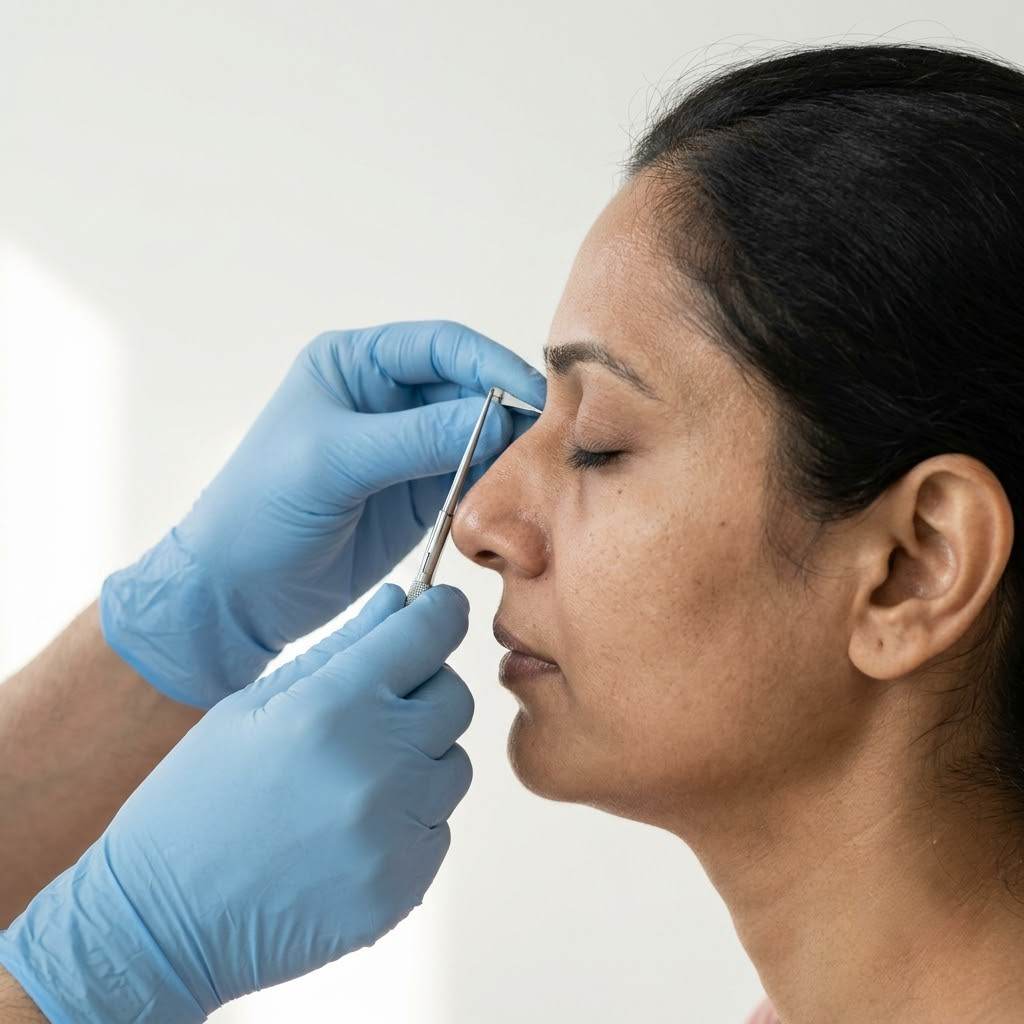



Begin Your Genioplasty (Chin Surgery) Journey
Book a consultation today and let our specialists craft a plan built entirely around you.