Butt Contouring In Mumbai
Enhance and shape the buttocks for a firmer, proportionate look.
Introduction
The shape of the buttocks is influenced by pelvic anatomy, muscle development, fat distribution, skin elasticity, ageing, pregnancy, and weight changes. Because of this, butt contouring is not simply about adding volume—it is about improving how the buttocks relate to the waist, hips, thighs, and lower back.
Butt contouring refers to a group of procedures that can improve projection, symmetry, firmness, or overall lower-body proportions. Depending on the concern, treatment may involve fat grafting, liposuction around the waist and flanks, a buttock lift, skin tightening, or a combination of techniques.
At Hair & Shape Clinic in Mumbai, the planning process considers the patient’s existing buttock volume, available donor fat, skin quality, waist-to-hip proportions, and degree of sagging before deciding which approach is appropriate.
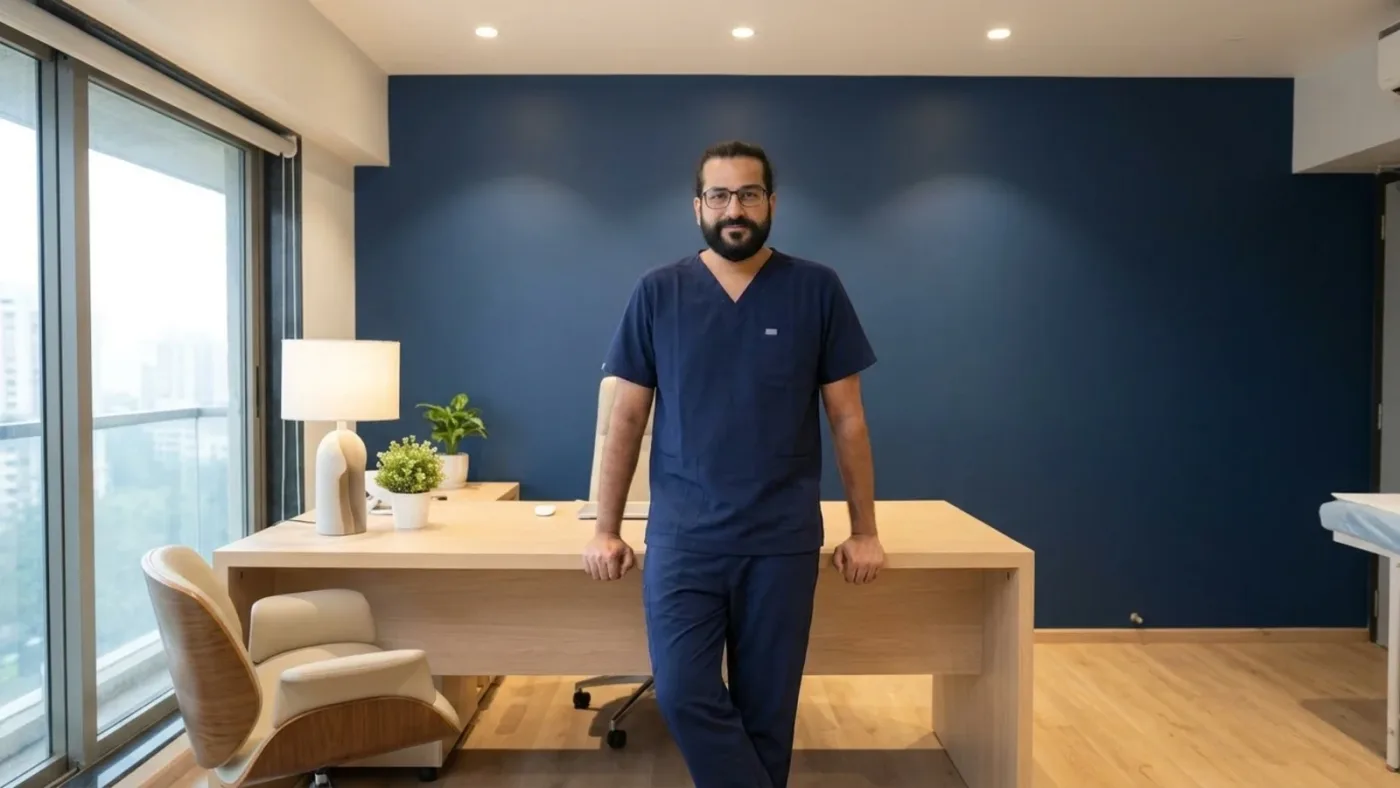
As a Plastic, Cosmetic and Reconstructive Surgeon, Dr. Umang Kothari approaches body contouring by considering the entire silhouette rather than treating one area in isolation.
For example, a patient with adequate volume but loose skin may require a different procedure from someone seeking greater projection or improved symmetry. Fat grafting can add volume, while a buttock lift primarily addresses loose or sagging tissue.
The objective of butt contouring is therefore to create balanced, natural-looking lower-body proportions that complement the patient’s existing anatomy rather than pursuing excessive augmentation.
What Is Butt Contouring?
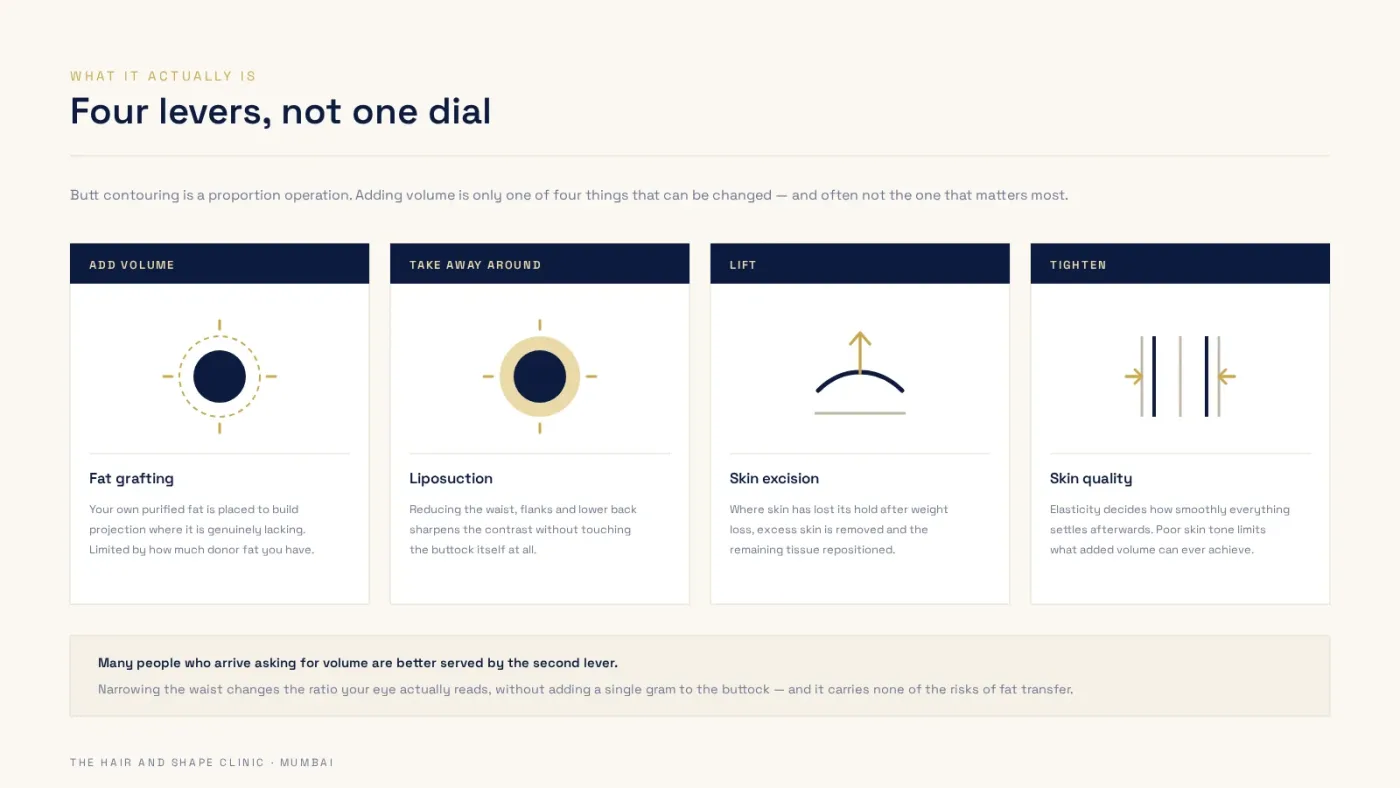
Butt contouring is a customized body contouring procedure that improves the shape, projection, symmetry, and overall appearance of the buttocks.
Rather than focusing solely on increasing size, butt contouring aims to create balanced body proportions by improving the relationship between the waist, hips, buttocks, and thighs.
Depending on the patient's anatomy, treatment may include:
Fat grafting to the buttocks (Brazilian Butt Lift).
Liposuction of the waist and flanks.
Buttock lift surgery.
Skin tightening procedures.
Combined body contouring techniques.
The most appropriate treatment depends on the amount of available body fat, skin elasticity, existing buttock volume, and individual aesthetic goals.
The primary objective is to achieve natural-looking enhancement while preserving normal anatomy and smooth body transitions.
Why Do the Buttocks Change Shape Over Time?
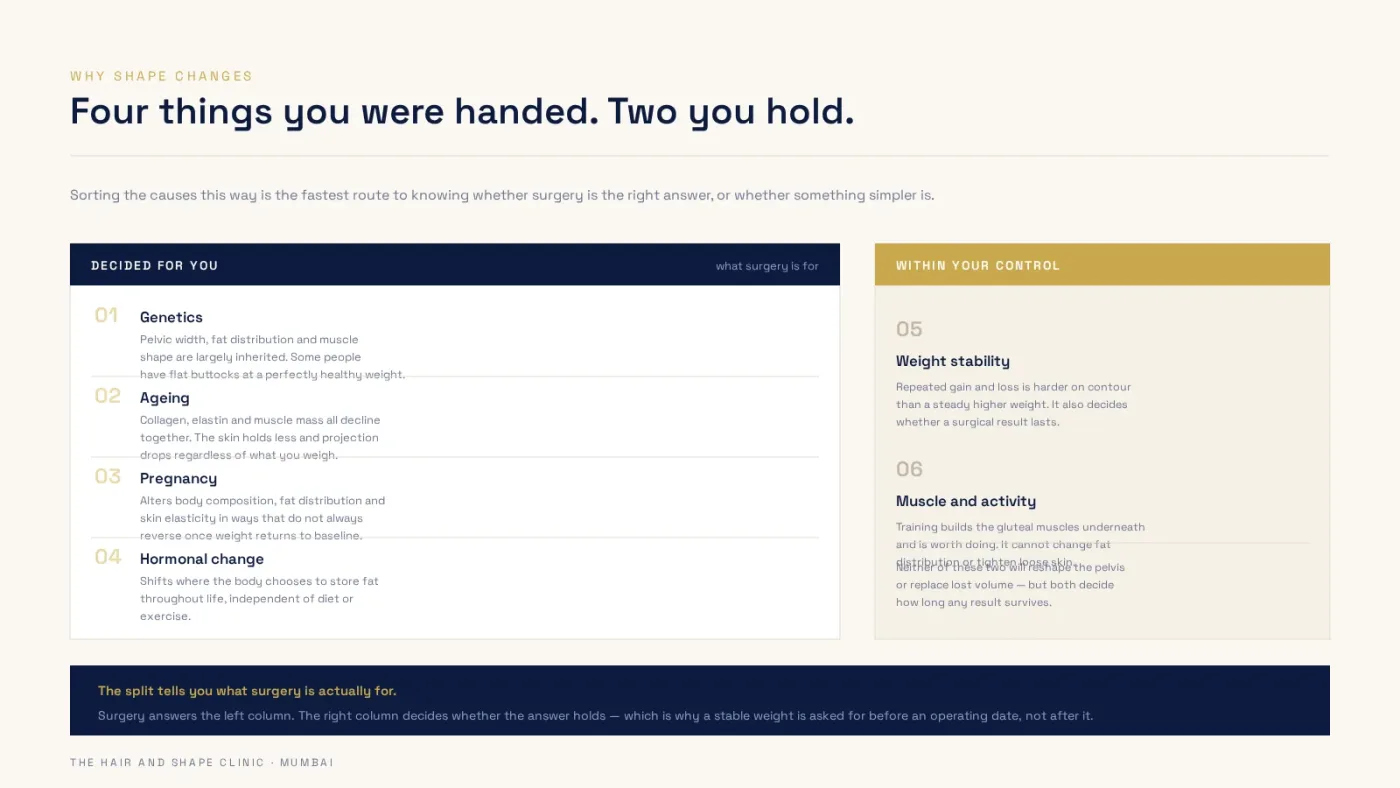
Several biological and lifestyle factors influence buttock size, firmness, and contour.
Genetics
Inherited body proportions largely determine buttock shape, fat distribution, pelvic width, and muscle development.
Some individuals naturally have flatter buttocks despite maintaining a healthy weight.
Ageing
Collagen, elastin, and muscle mass gradually decrease with age, leading to reduced skin firmness and loss of buttock projection.
Pregnancy
Pregnancy alters body composition, fat distribution, and skin elasticity, which may affect buttock shape following childbirth.
Major Weight Loss
Significant weight reduction may leave loose skin and volume loss in the buttocks despite successful weight management.
Hormonal Changes
Hormonal influences affect fat storage patterns and contribute to changes in body proportions throughout life.
Lifestyle
Prolonged sitting, inactivity, repeated weight fluctuations, and reduced muscle tone may contribute to gradual flattening of the buttocks.
Understanding these factors helps determine which contouring techniques are most appropriate for each individual.
Understanding Buttock Anatomy
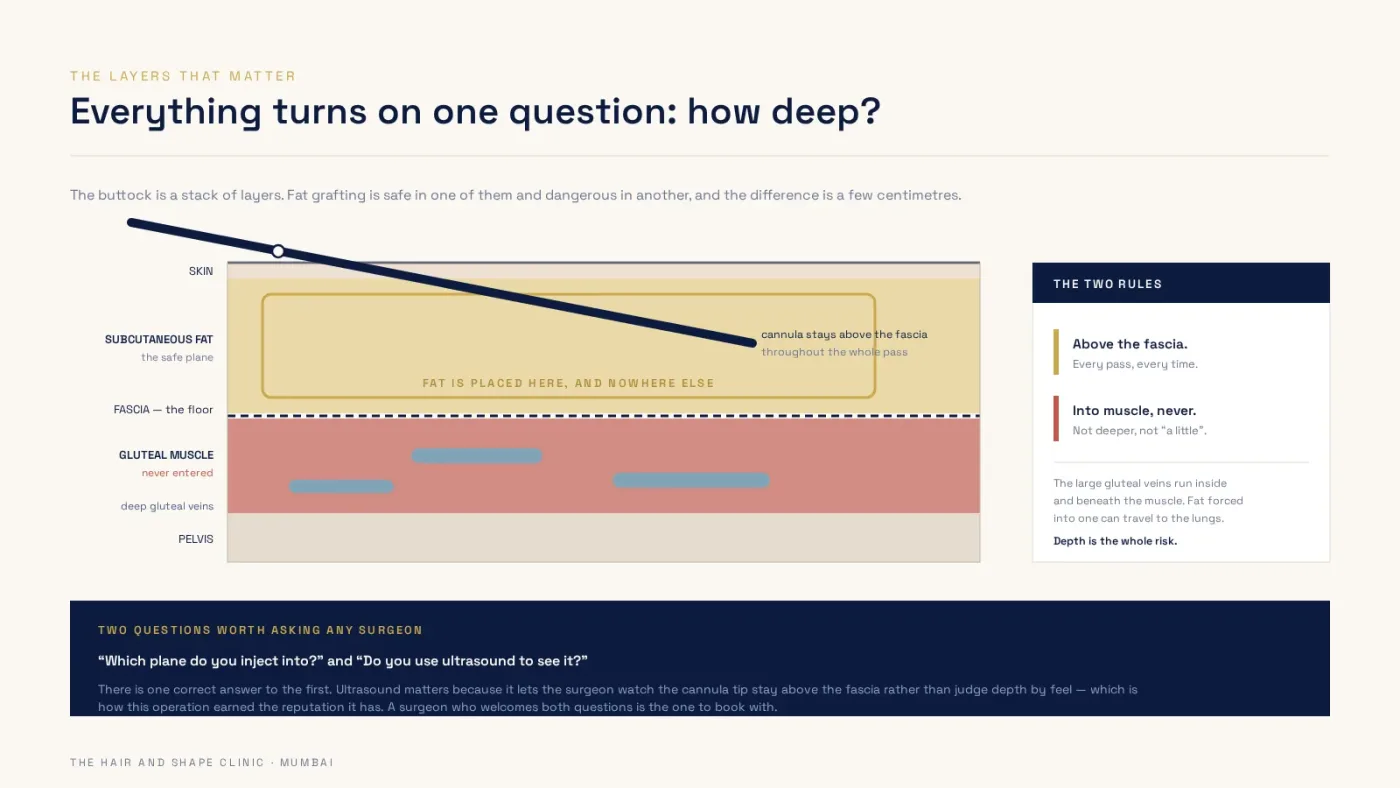
Successful butt contouring requires a detailed understanding of the complex anatomical structures that determine buttock shape.
Skin
Healthy skin elasticity allows the skin to conform smoothly after contouring or volume enhancement.
Subcutaneous Fat
The thickness and distribution of subcutaneous fat largely influence buttock projection and contour.
Gluteal Muscles
The gluteus maximus, gluteus medius, and gluteus minimus provide the structural foundation of the buttocks.
Exercise strengthens these muscles but cannot significantly alter fat distribution or skin laxity.
Connective Tissue
Fibrous connective tissue supports the skin and contributes to smooth contour transitions between the buttocks and surrounding body regions.
Pelvic Structure
Pelvic width and skeletal anatomy influence the overall shape and projection that can be achieved safely.
Blood Vessels and Nerves
Detailed knowledge of gluteal vascular anatomy is essential, particularly during fat grafting procedures, to maximize safety and preserve healthy tissues.
Understanding these anatomical layers allows surgeons to enhance buttock contours while maintaining natural movement, proportion, and tissue integrity.
How Does Butt Contouring Improve Body Proportions?
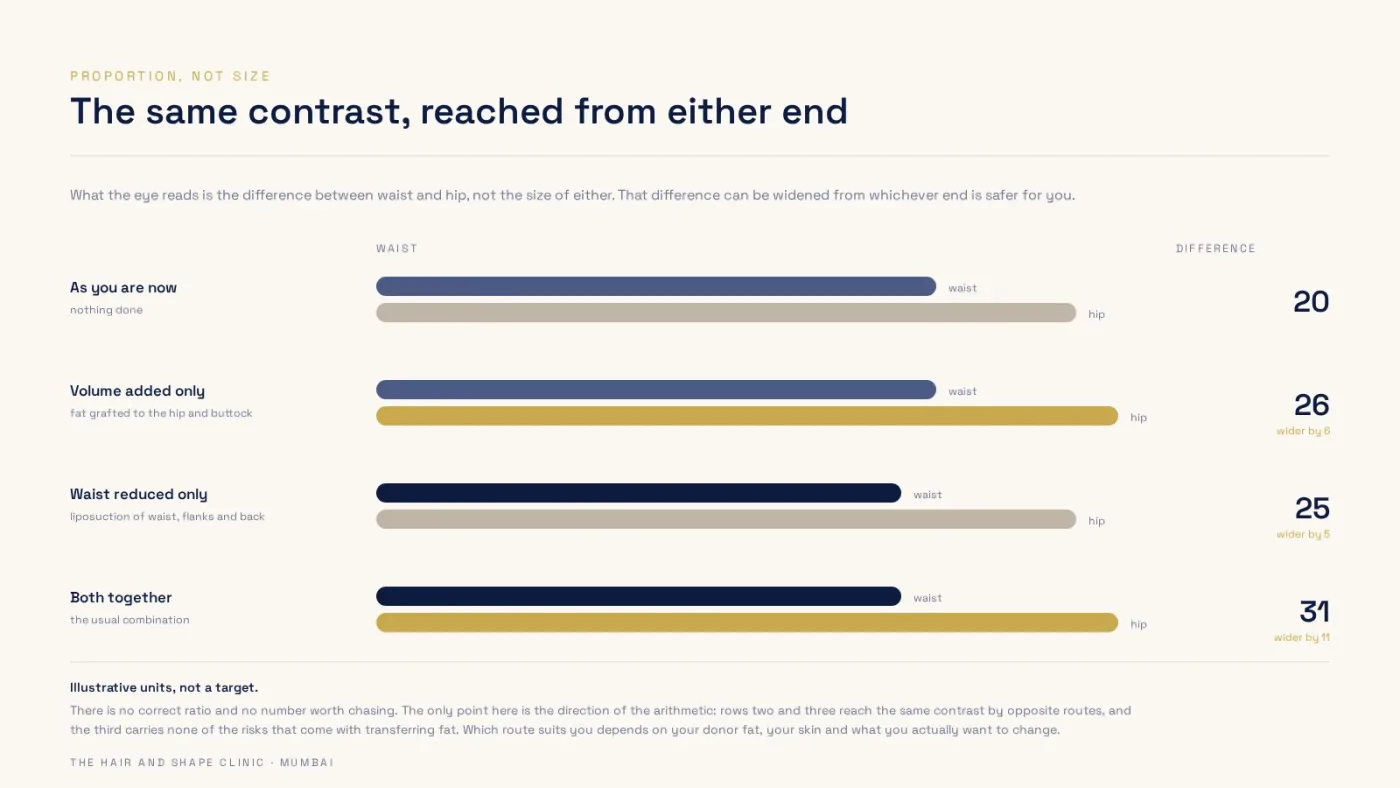
Butt contouring improves the relationship between the lower back, waist, hips, thighs, and buttocks through carefully planned body sculpting.
Benefits may include:
Improved Buttock Projection
Volume enhancement creates fuller, naturally projected buttocks when appropriate.
Better Waist-to-Hip Ratio
Liposuction around the waist and flanks enhances the contrast between the waist and buttocks.
Improved Body Symmetry
Differences in buttock size or shape may be reduced through individualized contouring.
Smoother Lower Body Contours
The transition between the lower back, buttocks, and thighs becomes more balanced.
Correction of Volume Loss
Fat grafting or lifting procedures restore contour following ageing or major weight loss.
Enhanced Overall Silhouette
Balanced contouring creates natural-looking proportions without excessive augmentation.
The goal is to enhance existing anatomy while maintaining realistic body contours that complement the patient's physique.
Who Is a Good Candidate for Butt Contouring?

Butt contouring is generally recommended for healthy individuals seeking improvement in buttock shape, projection, or body proportions.
You may be a suitable candidate if you:
Desire fuller or better-shaped buttocks.
Have localized fat suitable for fat grafting, if considering a Brazilian Butt Lift.
Have loose buttock skin following major weight loss.
Maintain a stable body weight.
Have good general health.
Do not smoke or are willing to stop during recovery.
Have realistic expectations.
Patients with insufficient donor fat or significant medical conditions may require alternative treatment approaches.
What Concerns Can Butt Contouring Address?
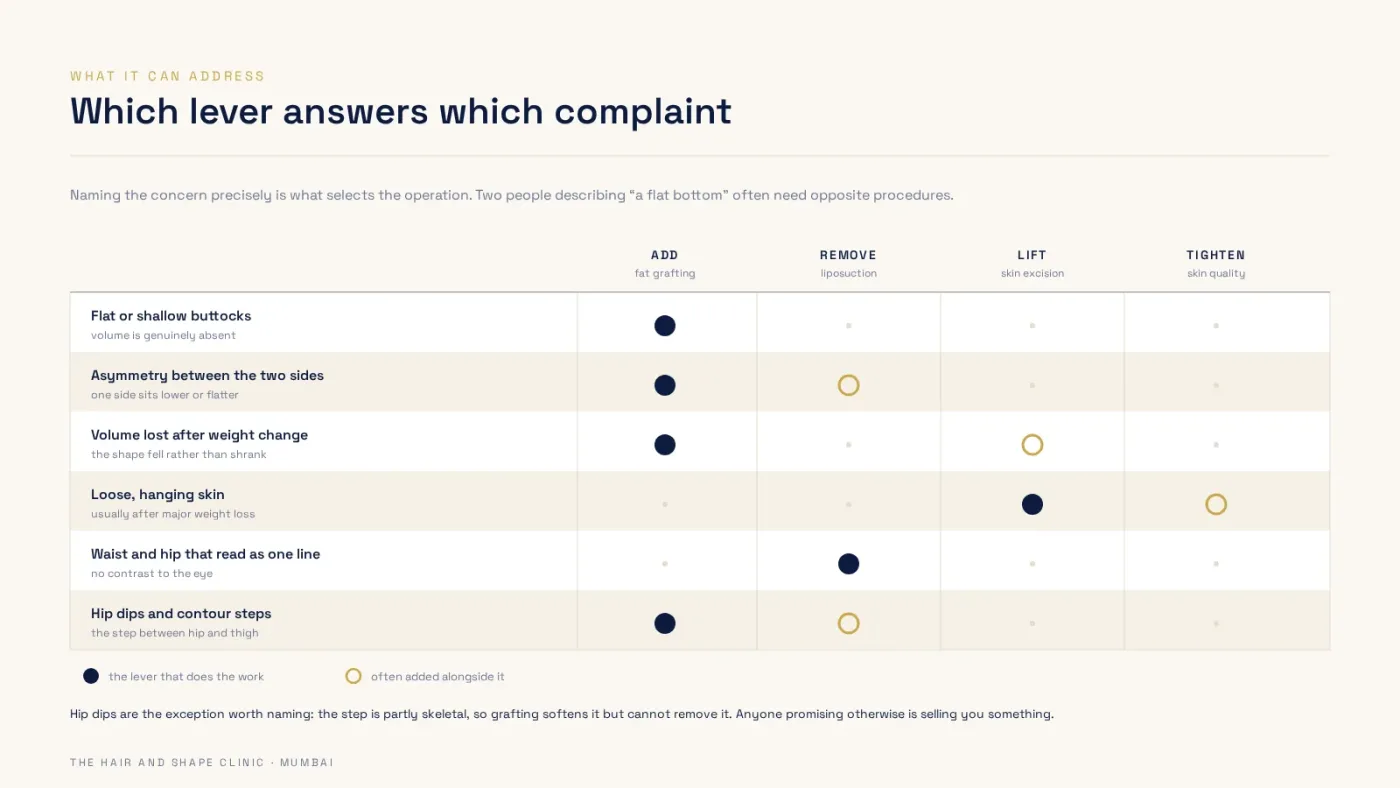
Butt contouring can improve several aesthetic concerns.
Flat Buttocks
Enhances natural projection and volume.
Buttock Asymmetry
Improves balance between both sides.
Loss of Volume
Restores fullness following ageing, pregnancy, or weight loss.
Loose Buttock Skin
Improves contour through lifting procedures when appropriate.
Poor Waist-to-Hip Proportions
Refines surrounding body contours for improved overall balance.
Lower Body Contour Irregularities
Creates smoother transitions between the waist, buttocks, and thighs.
Personalized Butt Contouring Planning
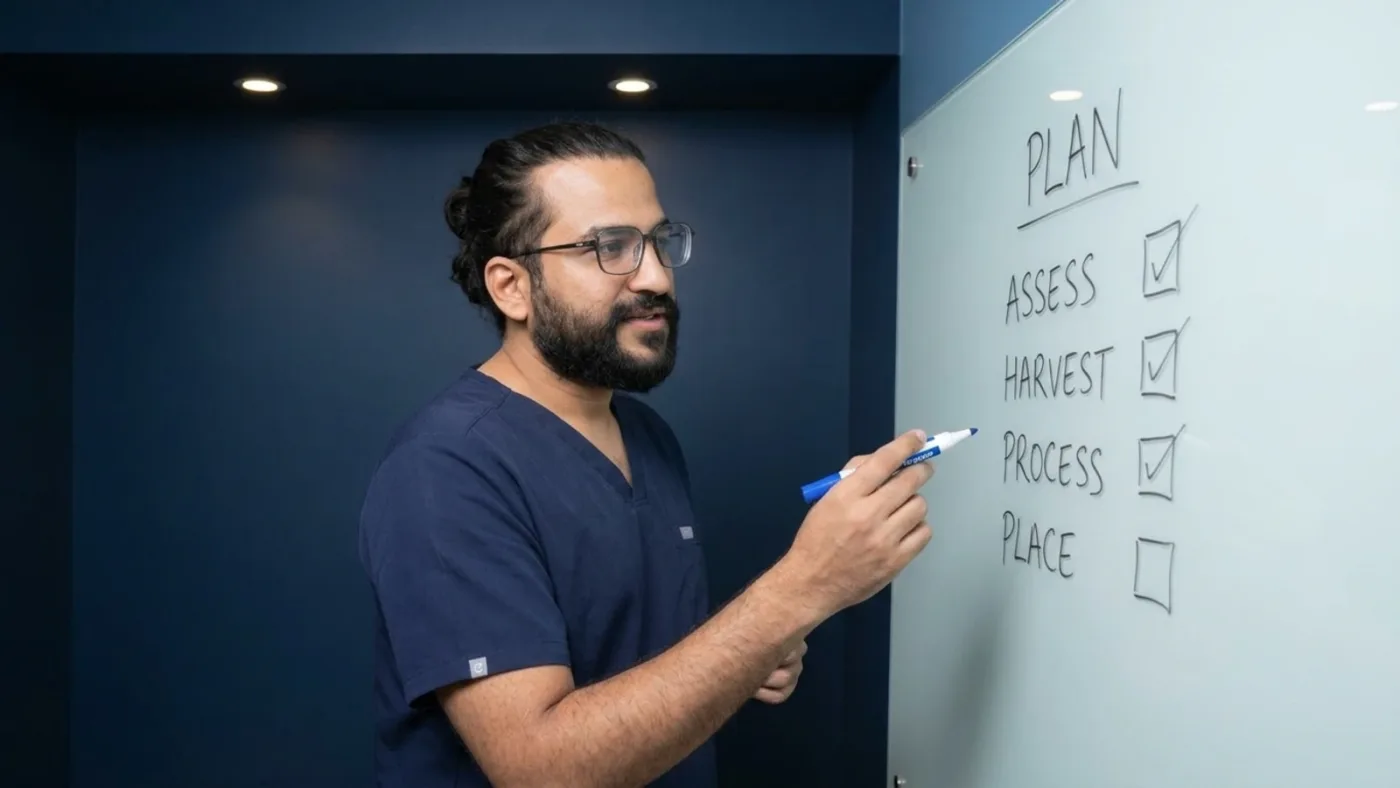
No two individuals have identical body proportions, which is why butt contouring must always be tailored to the patient's unique anatomy. The amount of available donor fat, skin elasticity, gluteal muscle development, pelvic structure, fat distribution, previous weight changes, and aesthetic goals all influence the treatment approach. Some patients benefit primarily from fat grafting to improve projection, while others require skin tightening, liposuction around the waist, or a combination of procedures to achieve balanced lower body contours.
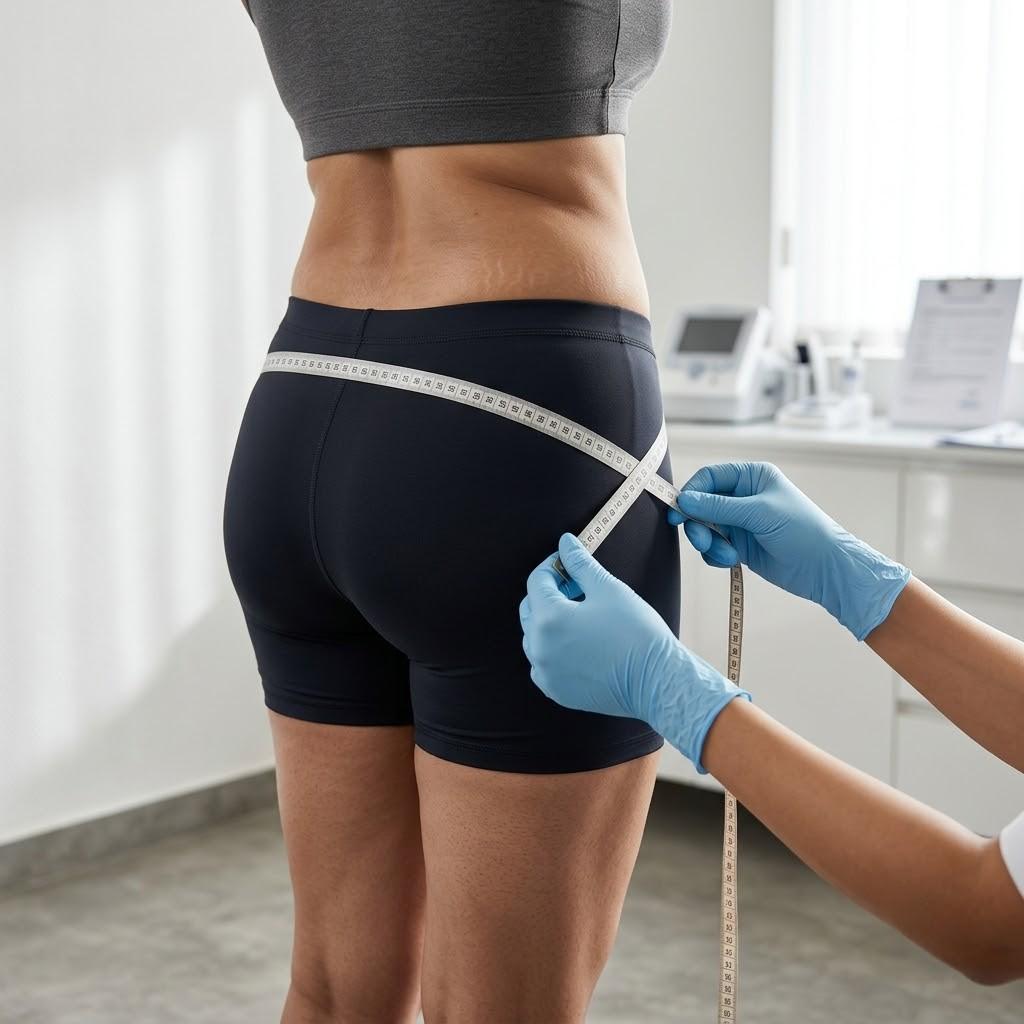
At Hair & Shape Clinic, every patient undergoes a comprehensive body contour assessment before surgery is recommended. The waist, hips, buttocks, thighs, lower back, skin quality, donor fat availability, and overall body proportions are carefully evaluated to determine the most appropriate treatment plan. Surgical planning focuses on achieving smooth transitions, natural projection, symmetry, and long-term body balance while prioritizing patient safety.
The objective is not simply to increase buttock size but to create harmonious lower body contours that appear proportionate, elegant, and naturally integrated with the rest of the body.
What Happens During Butt Contouring?
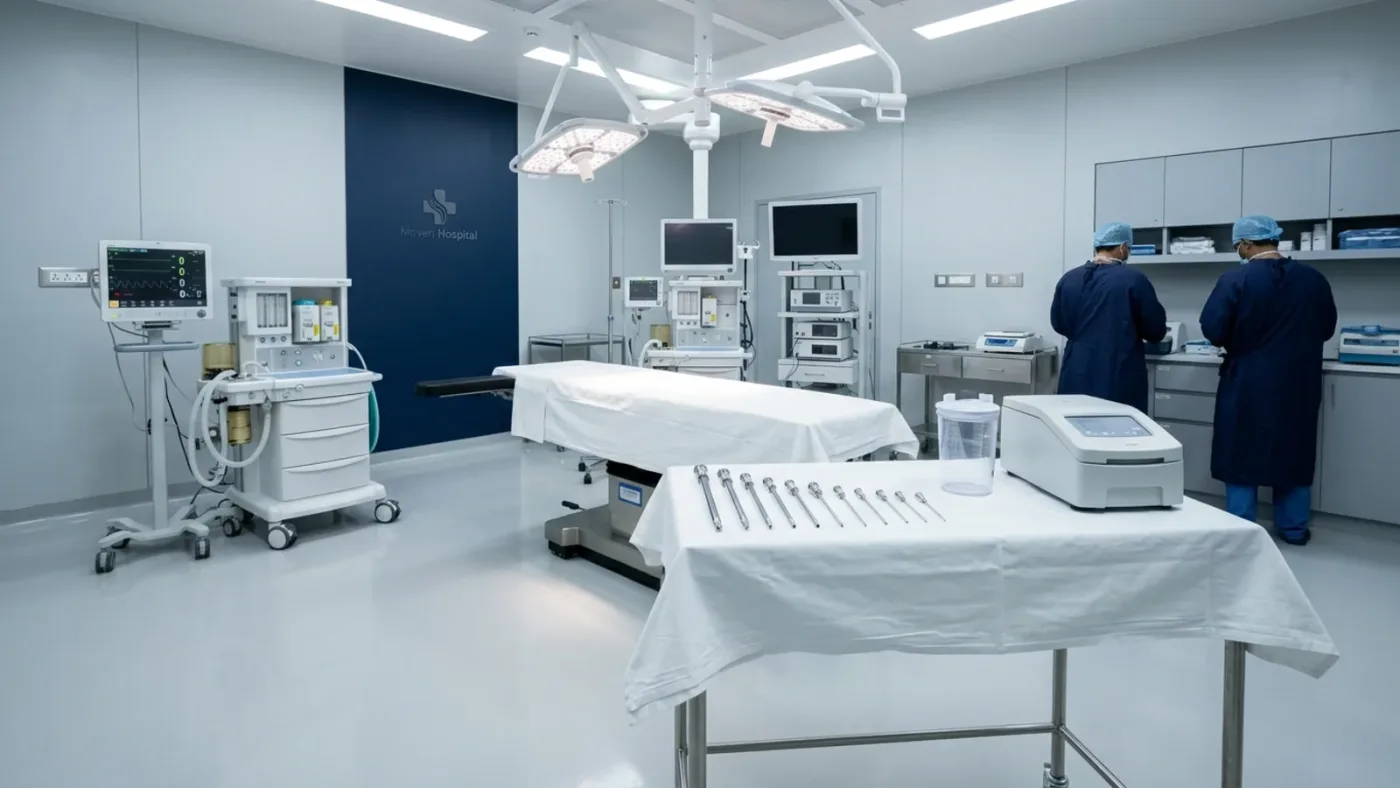
Butt contouring is performed in an accredited operating facility under sterile conditions using advanced body contouring techniques. The exact procedure depends on whether the treatment involves fat grafting (Brazilian Butt Lift), buttock lift surgery, liposuction, or a combination of procedures. Surgery generally takes between two and five hours depending on the complexity of the treatment plan.
Every procedure is carefully customized according to the patient's anatomy, skin quality, available donor fat, body proportions, and aesthetic goals.
A typical butt contouring procedure includes the following stages.
Step 1: Preoperative Planning
Before surgery, detailed markings are made while the patient is standing.
The surgeon carefully evaluates:
Buttock shape.
Body symmetry.
Waist-to-hip proportions.
Donor fat availability.
Skin elasticity.
Gluteal anatomy.
Areas requiring liposuction.
Desired projection and contour.
These markings serve as a precise surgical blueprint for achieving balanced, natural-looking body contours.
Step 2: Anaesthesia
Most butt contouring procedures are performed under general anaesthesia.
Throughout surgery, your heart rate, blood pressure, oxygen levels, and other vital signs are continuously monitored to ensure maximum safety.
Step 3: Liposuction and Fat Harvesting
If fat grafting is planned, liposuction is first performed to remove excess fat from donor areas such as:
Abdomen.
Waist.
Flanks.
Back.
Hips.
Thighs.
The harvested fat is carefully collected while preserving the viability of the fat cells.
Step 4: Fat Processing
The harvested fat undergoes purification to remove excess fluid, blood, damaged cells, and other unwanted components.
Only healthy, viable fat cells are selected for transfer to improve long-term survival after grafting.
Step 5: Buttock Sculpting
The purified fat is strategically injected into carefully selected areas of the buttocks using specialized techniques.
Rather than concentrating all the fat in one location, multiple small deposits are placed throughout different tissue planes to create smooth contours, natural projection, and improved symmetry.
If a buttock lift is required, excess skin is removed and the remaining tissue is repositioned to restore firmness and improve contour.
Step 6: Final Contour Assessment
Before completing surgery, the surgeon evaluates the body from multiple angles.
Minor refinements may be performed to ensure:
Smooth contour transitions.
Symmetry.
Balanced projection.
Natural waist-to-hip proportions.
Step 7: Closure
The tiny liposuction incisions require minimal closure.
If skin removal has been performed, incisions are closed in multiple layers to support healing and reduce tension.
Compression garments are applied to the do
nor areas immediately after surgery. Special postoperative instructions are provided to minimize pressure on the buttocks during the early healing period following fat grafting.
Types of Butt Contouring Procedures
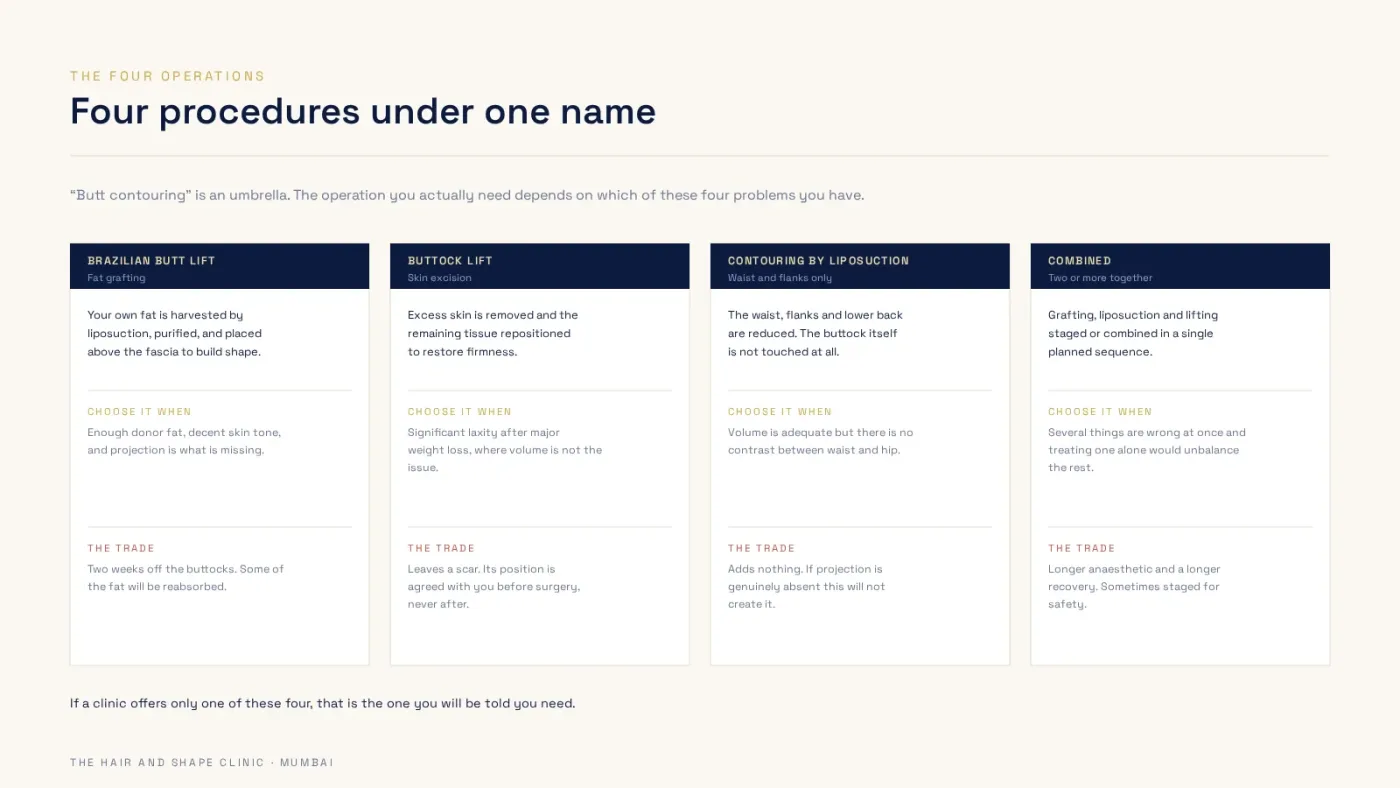
The most appropriate technique depends on body composition, skin quality, available donor fat, and the patient's desired outcome.
Brazilian Butt Lift (BBL)
This procedure uses the patient's own purified fat to enhance buttock volume, shape, and projection while simultaneously contouring donor areas through liposuction.
Buttock Lift
A buttock lift removes excess skin and repositions the remaining tissues to improve firmness and contour.
It is commonly recommended following significant weight loss.
Butt Contouring with Liposuction
In some patients, improving the waist, flanks, lower back, and hips through liposuction enhances buttock appearance without directly increasing buttock volume.
Combined Butt Contouring
Some patients benefit from combining fat grafting, skin tightening, and liposuction to achieve comprehensive lower body rejuvenation.
What Results Can You Expect After Butt Contouring?
Although swelling temporarily obscures the final outcome, many patients notice immediate improvements in lower body shape following surgery.
As healing progresses, the results become increasingly refined.
Enhanced Buttock Projection
The buttocks appear fuller and more naturally projected when volume enhancement is performed.
Improved Waist-to-Hip Ratio
Contouring of the waist and flanks creates greater visual contrast between the waist and buttocks.
Better Lower Body Proportions
The transition between the lower back, hips, buttocks, and thighs becomes smoother and more balanced.
Improved Body Symmetry
Differences in shape or projection between the two sides are reduced.
Natural-Looking Contours
Careful sculpting creates subtle enhancement that complements the patient's existing anatomy.
Long-Lasting Results
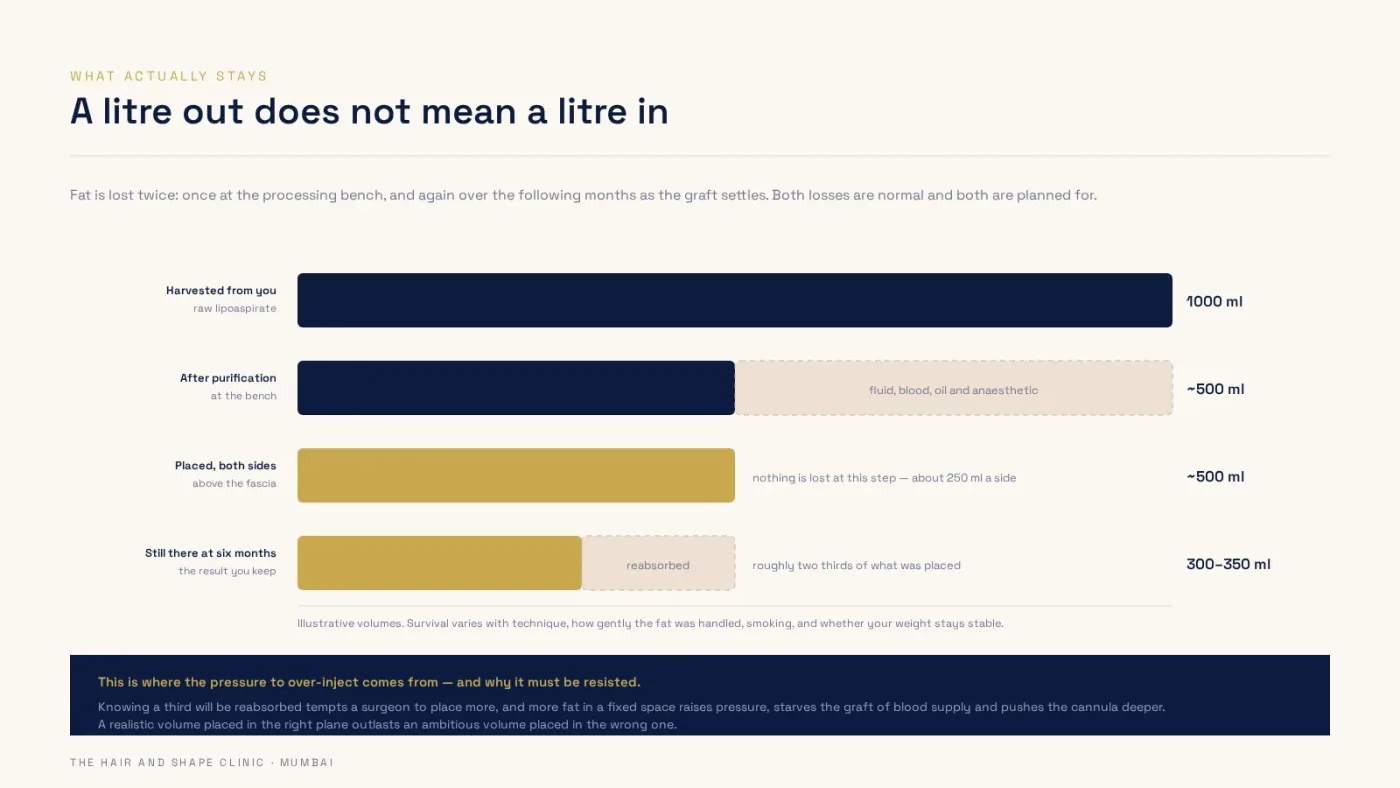
The transferred fat that successfully establishes a blood supply becomes a permanent part of the body. Maintaining a stable body weight helps preserve these results for many years.
Final contours usually continue improving over three to six months as swelling subsides and transferred fat stabilizes.
What Is Recovery Like After Butt Contouring?
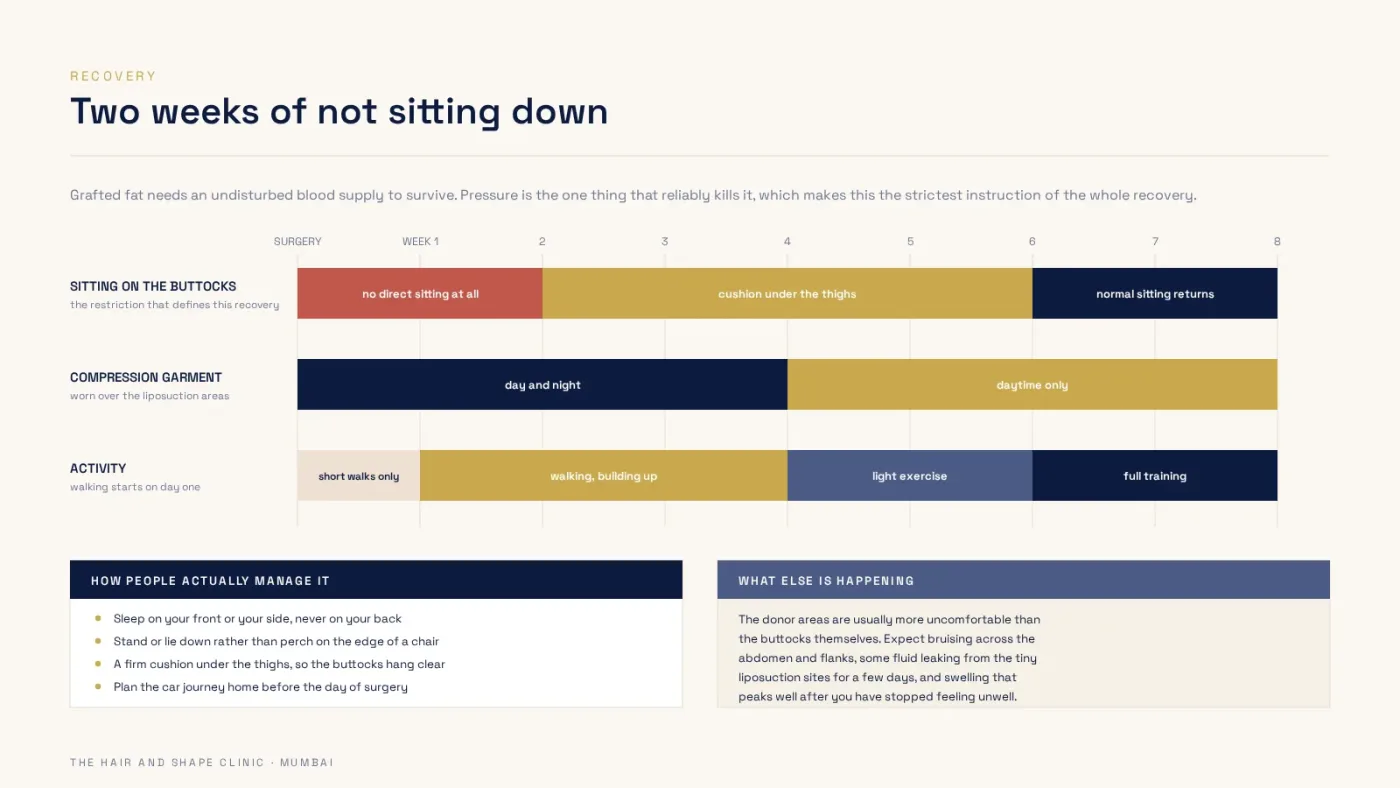
Recovery depends on the procedures performed, the amount of fat transferred, and individual healing characteristics.
Healing generally progresses through several stages.
Immediately After Surgery
Patients commonly experience:
Swelling.
Bruising.
Mild soreness.
Tightness in donor areas.
Temporary fluid drainage from liposuction incisions.
These symptoms gradually improve during the first several days.
First Two Weeks
Special care is required following fat grafting.
Patients are usually advised to avoid prolonged direct pressure on the buttocks to maximize fat survival.
Compression garments are worn over the liposuction areas to reduce swelling and support healing.
Walking is encouraged soon after surgery to improve circulation.
Two to Six Weeks
Bruising steadily fades.
Swelling continues to decrease.
Most patients gradually return to office-based work depending on the extent of surgery and their ability to avoid prolonged sitting.
Exercise is resumed gradually according to the surgeon's recommendations.
Several Months
Residual swelling continues to improve.
Transferred fat stabilizes.
Body contours become increasingly defined and natural.
Long-Term Healing
Final results generally become apparent between three and six months after surgery, although subtle refinement may continue as tissues fully mature.
Are There Any Risks or Limitations?
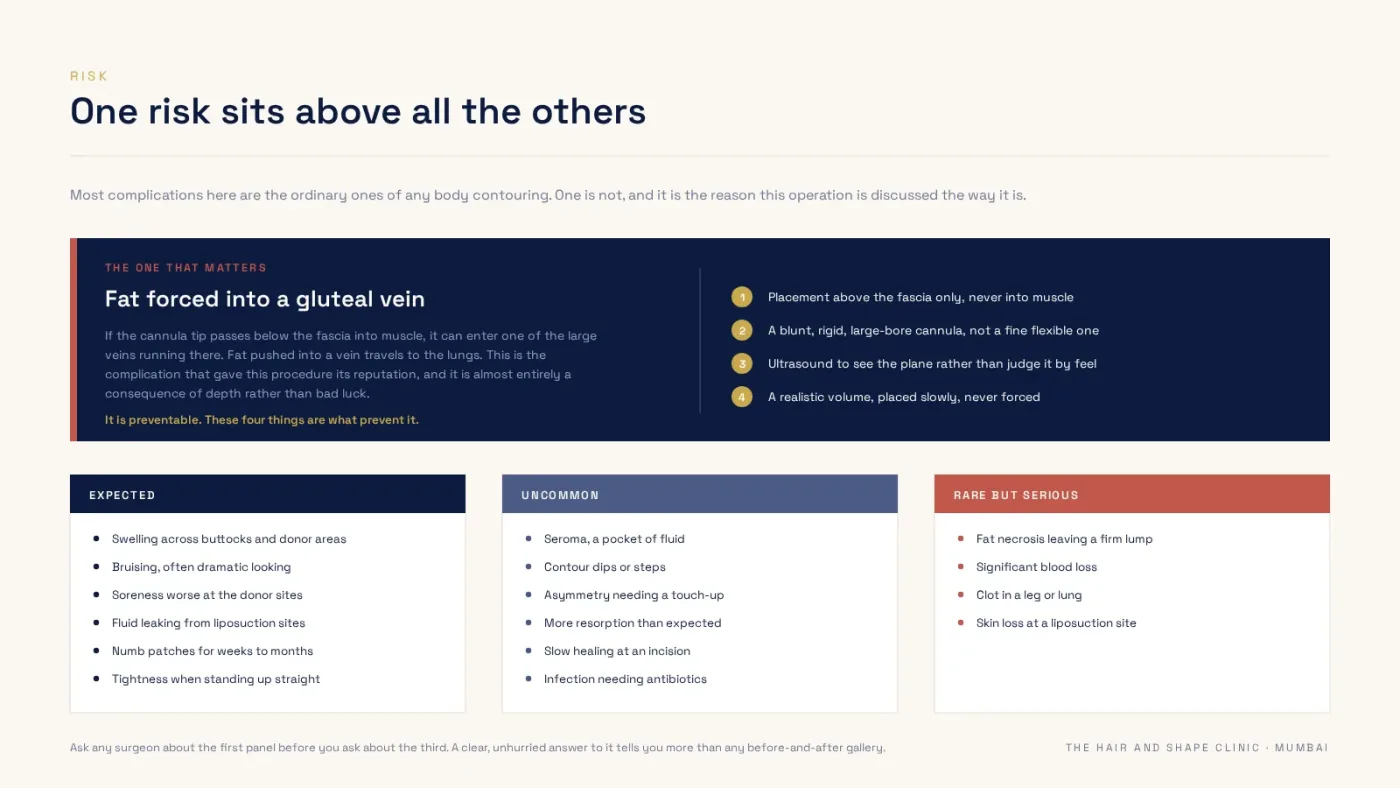
Butt contouring is generally considered safe when performed by an experienced plastic surgeon, but every surgical procedure carries potential risks.
Possible complications include:
Bleeding.
Infection.
Swelling.
Bruising.
Fluid accumulation (seroma).
Temporary numbness.
Fat resorption.
Contour irregularities.
Fat necrosis.
Asymmetry.
Need for revision surgery.
It is also important to understand the limitations of surgery.
Not all transferred fat survives permanently. A portion of the transferred fat is naturally absorbed by the body during the healing process, making careful surgical planning essential. Patients with limited donor fat may not be candidates for large-volume fat grafting. Maintaining a stable body weight is important because significant weight fluctuations can alter long-term body contours.
How Much Does Butt Contouring Cost in Mumbai?
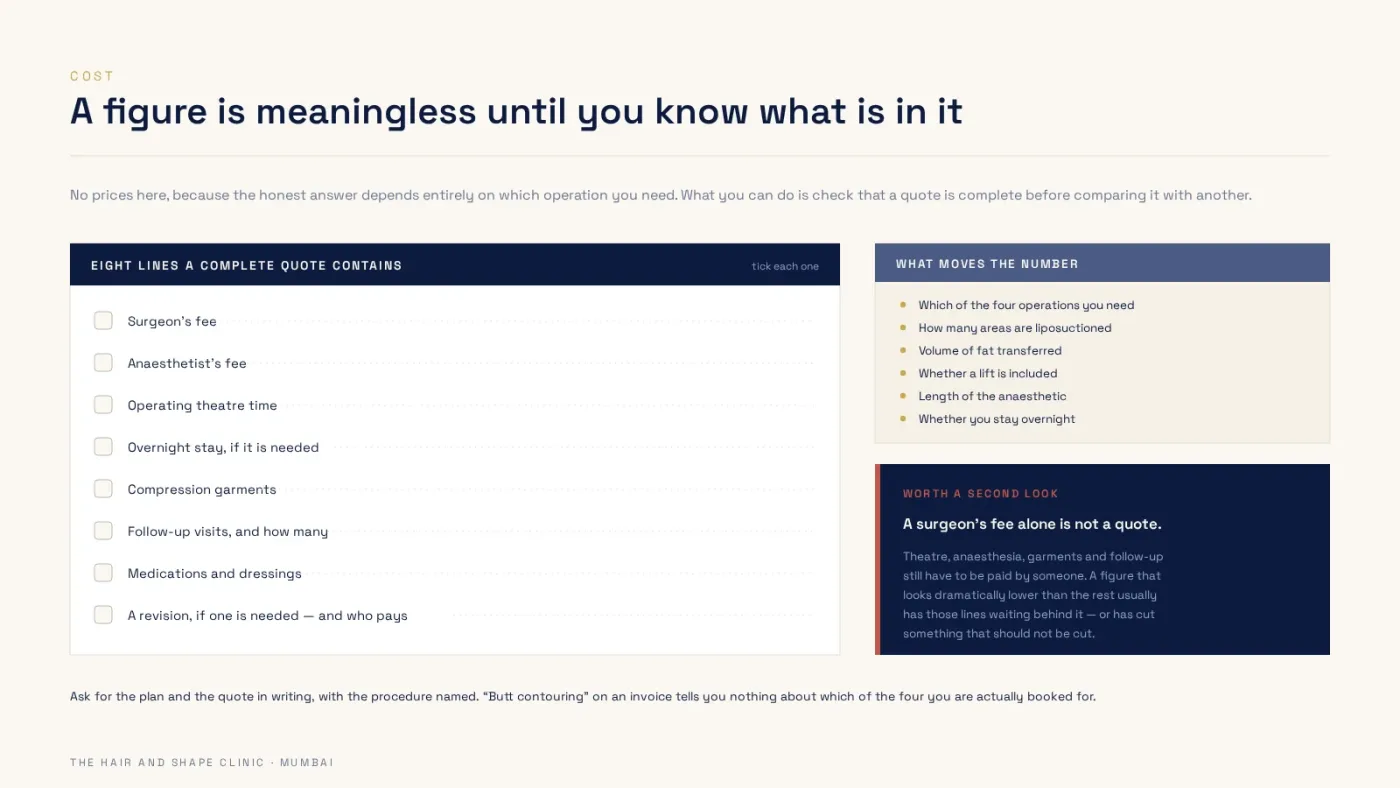
The cost of butt contouring varies depending on the type of procedure performed, the number of treatment areas, the amount of liposuction required, and whether fat grafting or lifting procedures are included.
Factors influencing treatment cost include:
Type of butt contouring procedure.
Liposuction treatment areas.
Fat grafting requirements.
Skin tightening or lifting procedures.
Anaesthesia.
Operating facility charges.
Compression garments.
Postoperative care.
Following a comprehensive consultation, your surgeon will prepare a personalized treatment plan outlining the recommended procedures, expected recovery, anticipated outcomes, and associated costs.
Why Choose Hair & Shape for Butt Contouring?
Successful butt contouring requires far more than increasing buttock size. It demands an in-depth understanding of lower body anatomy, fat distribution, body proportions, skin biomechanics, and safe fat grafting principles. Every contour must be carefully planned to create smooth transitions between the waist, hips, buttocks, and thighs while maintaining natural movement and balanced proportions.
At Hair & Shape Clinic, every patient undergoes a comprehensive body contour evaluation before surgery is recommended. Donor fat availability, gluteal anatomy, skin elasticity, pelvic structure, waist-to-hip proportions, and overall physique are carefully assessed to create a personalized surgical plan. Modern contouring techniques focus on achieving elegant, proportionate enhancement while preserving tissue health, maximizing safety, and delivering natural-looking long-term results.
Why Does Personalized Butt Contouring Planning Matter?
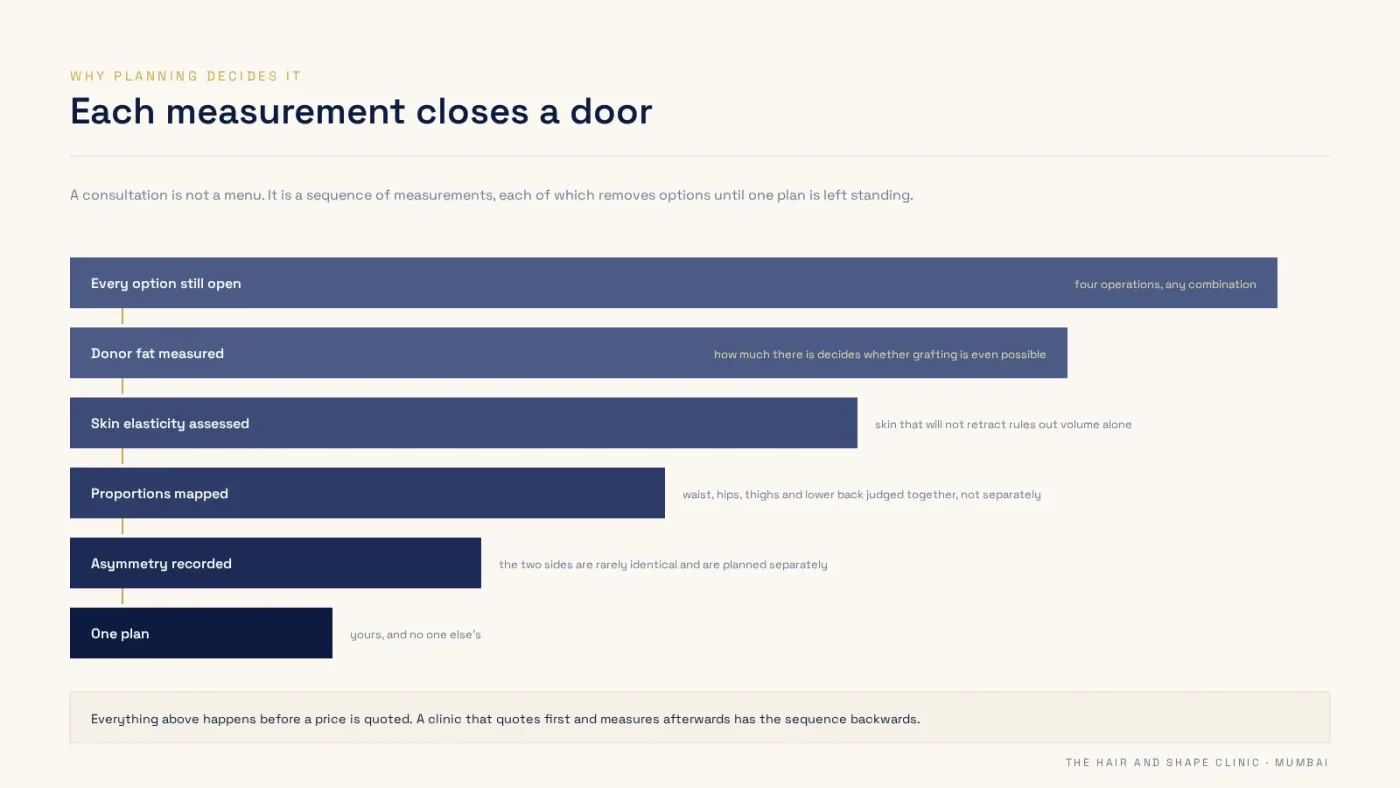
Every individual's lower body anatomy is unique, making customized surgical planning essential for achieving balanced and predictable results.
Donor Fat Availability Differs Between Patients
The amount of fat available for grafting influences the degree of enhancement that can be achieved using the patient's own tissue.
Skin Quality Determines the Best Technique
Patients with good skin elasticity often achieve excellent results with fat grafting alone, while those with significant skin laxity may benefit from combining contouring with a buttock lift.
Body Proportions Must Remain Balanced
The goal is to enhance the relationship between the waist, hips, buttocks, and thighs rather than simply increasing buttock volume.
Symmetry Requires Precision
Even subtle differences in fat placement can affect the overall appearance. Careful planning helps create smooth contours and balanced projection from every angle.
Long-Term Results Depend on Lifestyle
Maintaining a stable body weight, following a balanced diet, and staying physically active help preserve the improvements achieved through butt contouring over the long term.
International Patients Seeking Butt Contouring in Mumbai
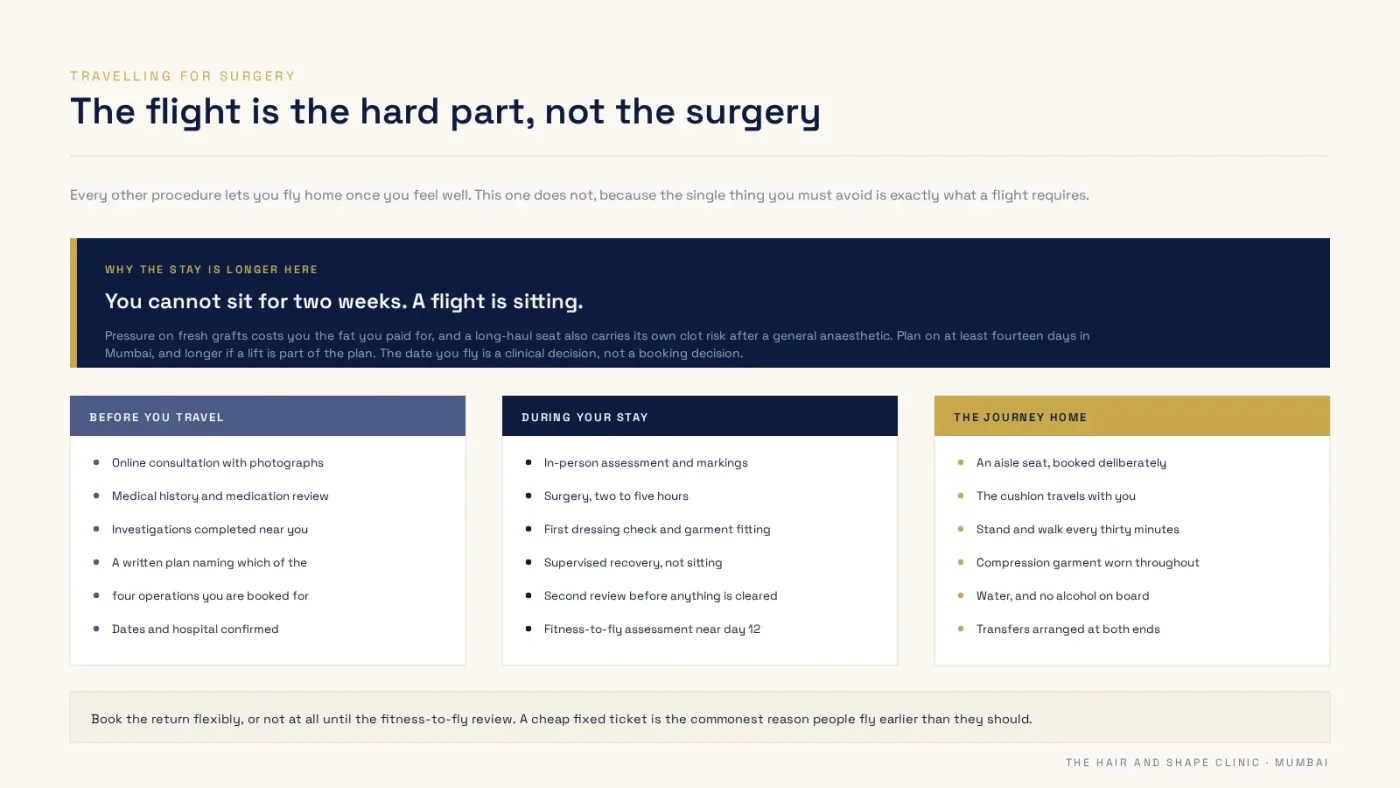
Hair & Shape Clinic welcomes patients from across India and around the world seeking advanced lower body contouring procedures.
Our international patient pathway is designed to provide a seamless experience from consultation through recovery.
Before You Travel
Virtual consultations, medical history review, body photographs, and discussion of your body contour goals help determine the most appropriate treatment plan before your visit.
During Your Stay
Your treatment includes an in-person consultation, comprehensive body contour evaluation, personalized surgical planning, butt contouring surgery, postoperative monitoring, compression garment guidance, wound care instructions, and recovery planning before returning home.
Returning Home
Follow-up consultations can often be conducted remotely. Continued guidance regarding sitting precautions after fat grafting, compression garment use, scar care, swelling management, activity progression, healing milestones, and long-term body contour maintenance helps support a safe and successful recovery wherever you live.
What to Expect
Consultation
A detailed assessment of your goals, suitability, and a personalised plan.
Preparation
Clear pre-treatment guidance so you arrive fully prepared and at ease.
The Procedure
Your treatment, performed by our specialists with comfort and safety first.
Aftercare
Structured recovery support and follow-ups to protect your results.
Frequently Asked Questions
Everything you need to know about Butt Contouring. Still curious? Our team is one message away.
How long do butt contouring results last?
Results are generally long-lasting when supported by a stable weight and healthy lifestyle. Natural ageing and future body changes may continue to influence body contour over time.
Can butt contouring be combined with other body contouring procedures?
Yes. Depending on your anatomy and treatment goals, butt contouring may be combined with procedures such as liposuction or other body contouring surgeries to improve overall lower-body harmony.
Will my results look natural?
That is always the goal. Every surgical plan is developed around your existing anatomy to create balanced, believable contours rather than exaggerated projection.
What are hip dips, and can they be improved?
Hip dips are natural inward curves that occur due to skeletal anatomy and soft tissue distribution. Depending on individual anatomy, body contouring procedures may improve their appearance by creating smoother transitions between the hips and buttocks.
Is butt contouring only about increasing size?
No. The primary objective is to improve proportion. Many patients benefit more from improving the relationship between the waist, hips, and buttocks than from increasing volume alone.
What is butt contouring surgery?
Butt contouring is a personalized body contouring procedure designed to improve lower-body proportion by enhancing volume, refining shape, improving hip transitions, or restoring contour depending on the patient's anatomy and treatment goals.
Begin Your Butt Contouring Journey
Book a consultation today and let our specialists craft a plan built entirely around you.