

Breast Reduction In Mumbai
Reduce breast size to relieve physical discomfort and improve proportion.
Introduction
For some women, very large or heavy breasts can cause more than an aesthetic concern. They may contribute to neck, shoulder and back pain, bra-strap grooves, skin irritation beneath the breasts, and difficulty with exercise or everyday activities.
Breast reduction, or reduction mammoplasty, is a surgical procedure that removes excess breast tissue, fat, and skin to create a smaller and more proportionate breast size. The remaining breast tissue is then reshaped and lifted to improve both comfort and contour.
Unlike a breast lift, which mainly addresses sagging, breast reduction focuses on reducing breast volume and weight, although lifting and repositioning are usually part of the procedure as well.
At Hair & Shape Clinic in Mumbai, breast reduction is planned according to factors such as breast size, degree of sagging, skin quality, body proportions, symptoms, and the amount of reduction required.
Dr. Umang Kothari, Founder and Director of Hair & Shape Clinic, has over 14 years of experience in aesthetic and reconstructive surgery and approaches breast procedures with attention to both functional concerns and overall proportion.
The aim of breast reduction is therefore not simply to achieve a smaller size, but to create lighter, better-proportioned breasts while reducing the physical discomfort associated with excessive breast volume.
What Is Breast Reduction Surgery?
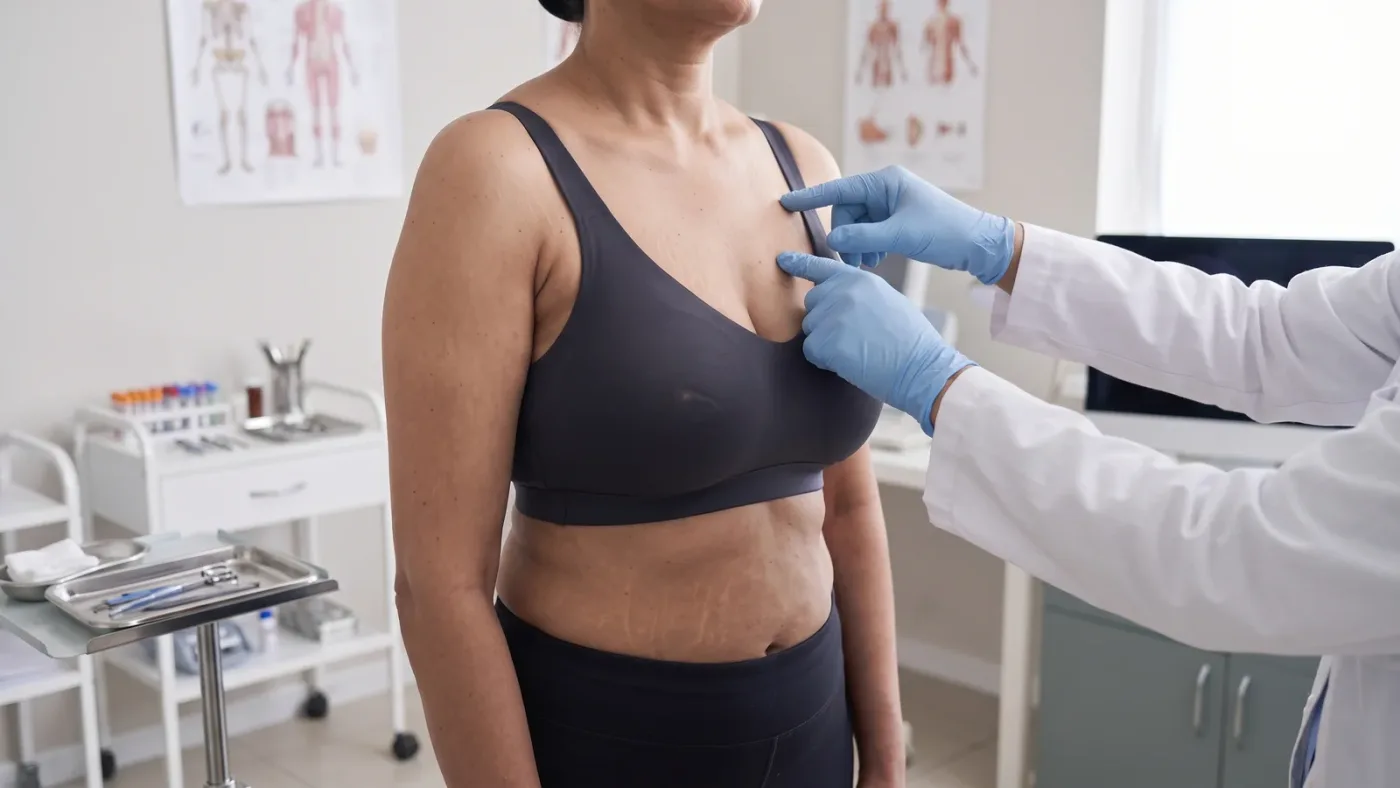
Breast reduction is a cosmetic and reconstructive surgical procedure that decreases breast size by removing excess glandular tissue, fat, and skin while reshaping the remaining breast tissue.
The procedure may improve:
Excessively large breasts.
Chronic neck pain.
Shoulder pain.
Upper and lower back pain.
Deep bra strap grooves.
Skin irritation beneath the breasts.
Difficulty exercising.
Poor body proportions.
Breast asymmetry.
Downward-pointing nipples associated with large breasts.
Unlike breast augmentation, which increases breast volume, breast reduction reduces breast size while simultaneously lifting and reshaping the breasts to create improved contour and symmetry.
The goal is to create lighter, proportionate breasts that improve comfort, mobility, and overall quality of life.
Why Do Some Women Develop Large Breasts?
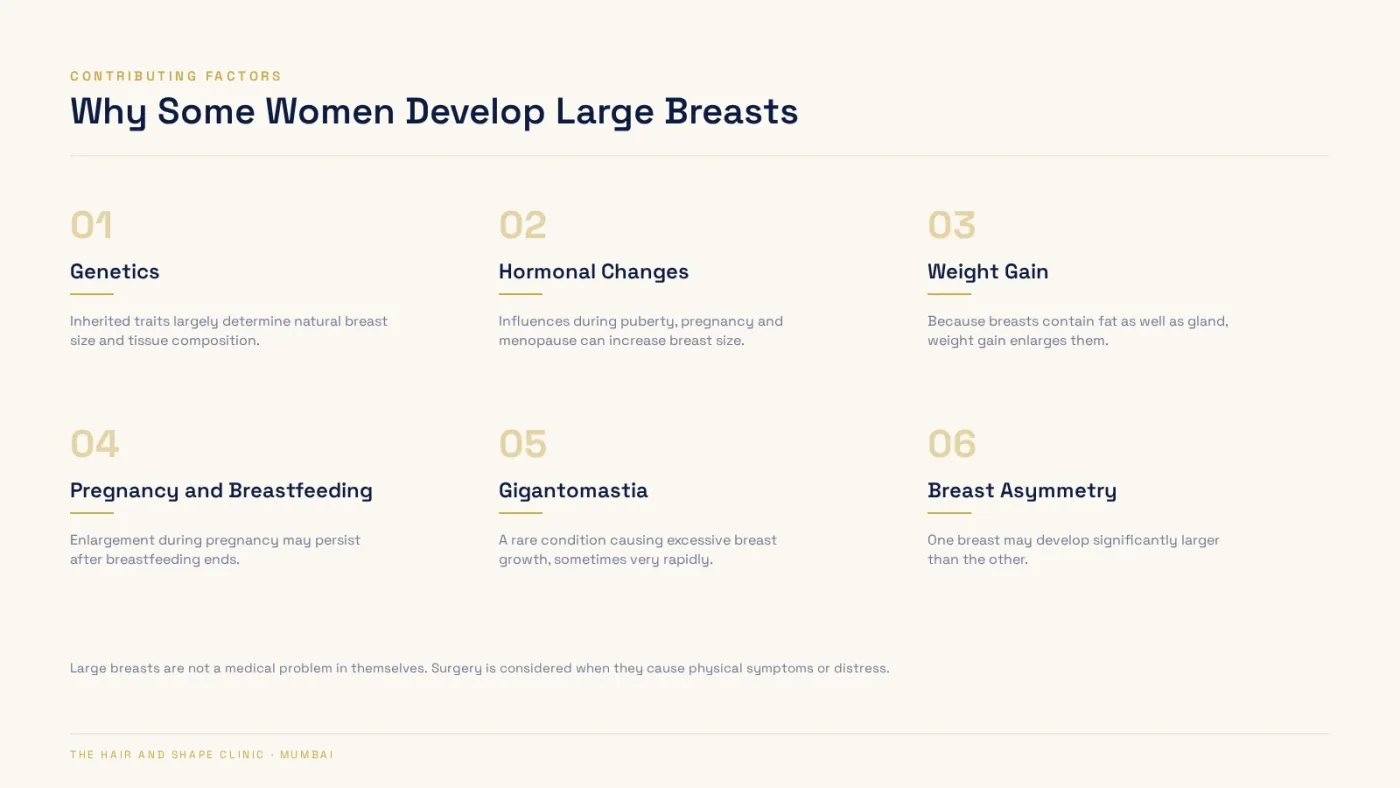
Breast size varies considerably between individuals due to several biological and lifestyle-related factors.
Genetics
Inherited traits largely determine natural breast size, breast tissue composition, chest width, and skin characteristics.
Some women naturally develop significantly larger breasts than others.
Hormonal Changes
Hormonal influences during puberty, pregnancy, and menopause can increase breast size by affecting glandular tissue development.
Weight Gain
Because breasts contain both glandular tissue and fat, significant weight gain may increase breast volume.
Pregnancy and Breastfeeding
Breast enlargement during pregnancy may persist after breastfeeding in some women.
Gigantomastia
A rare condition known as gigantomastia results in excessive breast enlargement due to abnormal breast tissue growth.
Breast Asymmetry
Some women develop one breast that is significantly larger than the other, creating imbalance and physical discomfort.
Understanding the underlying cause helps determine the most appropriate surgical approach and expected outcome.
Understanding Breast Anatomy
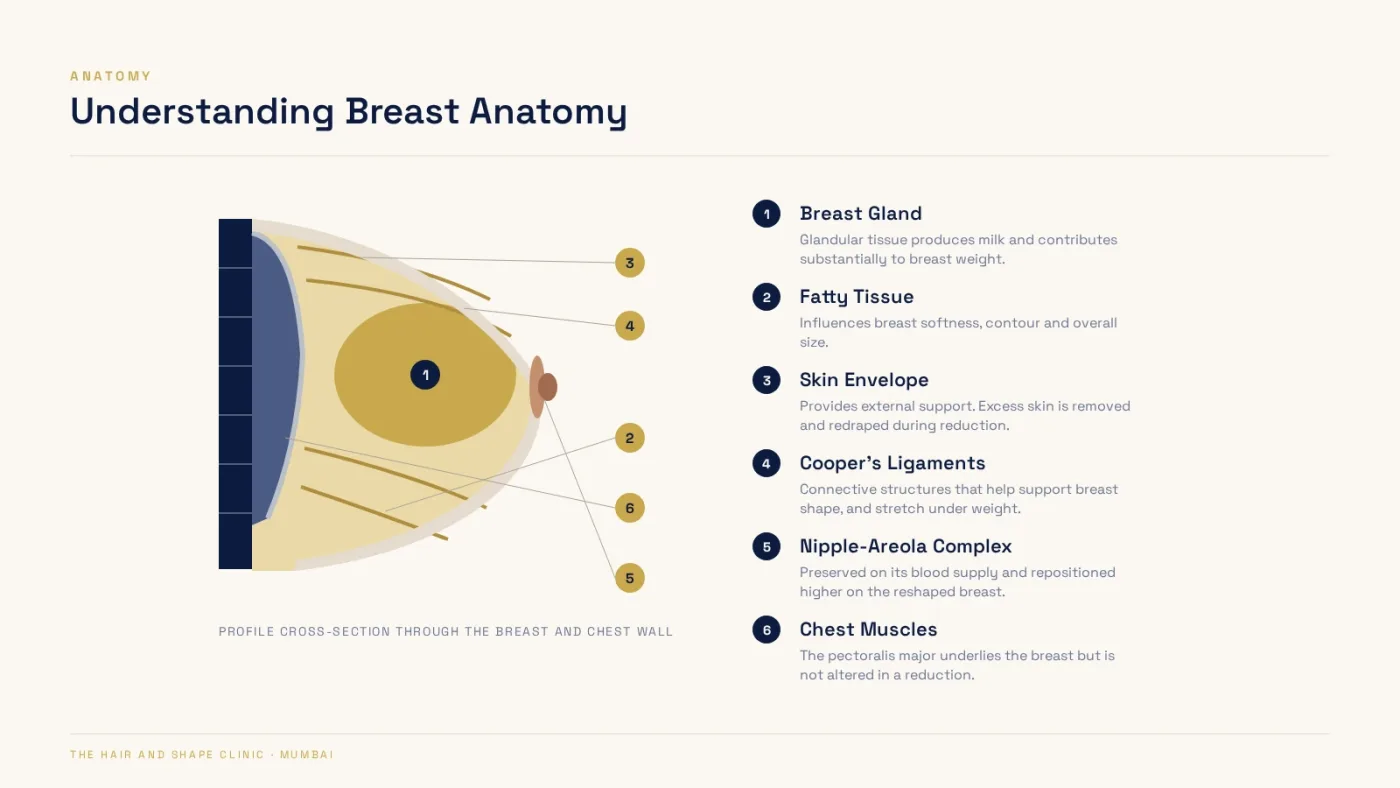
Successful breast reduction requires a comprehensive understanding of breast anatomy and the structures responsible for breast shape, function, and support.
Breast Gland
The glandular tissue produces milk during breastfeeding and contributes significantly to breast volume.
Fatty Tissue
Fat influences breast softness, contour, and overall size.
The proportion of fat varies between individuals.
Skin Envelope
The skin provides external support to the breasts.
Large breasts often stretch the skin over time, contributing to sagging.
Cooper's Ligaments
These connective tissue structures help support breast shape.
Excess breast weight gradually stretches these ligaments, contributing to breast ptosis.
Nipple-Areola Complex
The nipple and areola are carefully preserved and repositioned while maintaining their blood supply whenever possible.
Chest Wall and Muscles
The pectoralis muscles support the chest but are not directly responsible for breast size or position.
Understanding these anatomical structures allows surgeons to safely reduce breast volume while preserving breast function, circulation, and natural appearance.
How Does Breast Reduction Surgery Improve Breast Appearance and Comfort?
Breast reduction addresses both physical symptoms and cosmetic concerns by decreasing breast volume while restoring youthful breast proportions.
The procedure may provide several improvements.
Smaller, Lighter Breasts
Excess breast tissue is removed to reduce weight and improve overall comfort.
Better Breast Shape
The remaining breast tissue is reshaped to create firmer, more youthful contours.
Improved Nipple Position
The nipples are elevated to a more natural, forward-facing position.
Better Breast Symmetry
Differences in breast size and shape may be corrected during surgery.
Improved Body Proportions
Reducing breast size often creates better balance between the chest, waist, hips, and shoulders.
Relief from Physical Symptoms
Many patients experience improvement in neck pain, shoulder discomfort, back pain, skin irritation, and limitations during exercise following recovery.
The objective is to improve both physical well-being and aesthetic harmony while preserving natural breast contours.
Who Is a Good Candidate for Breast Reduction Surgery?
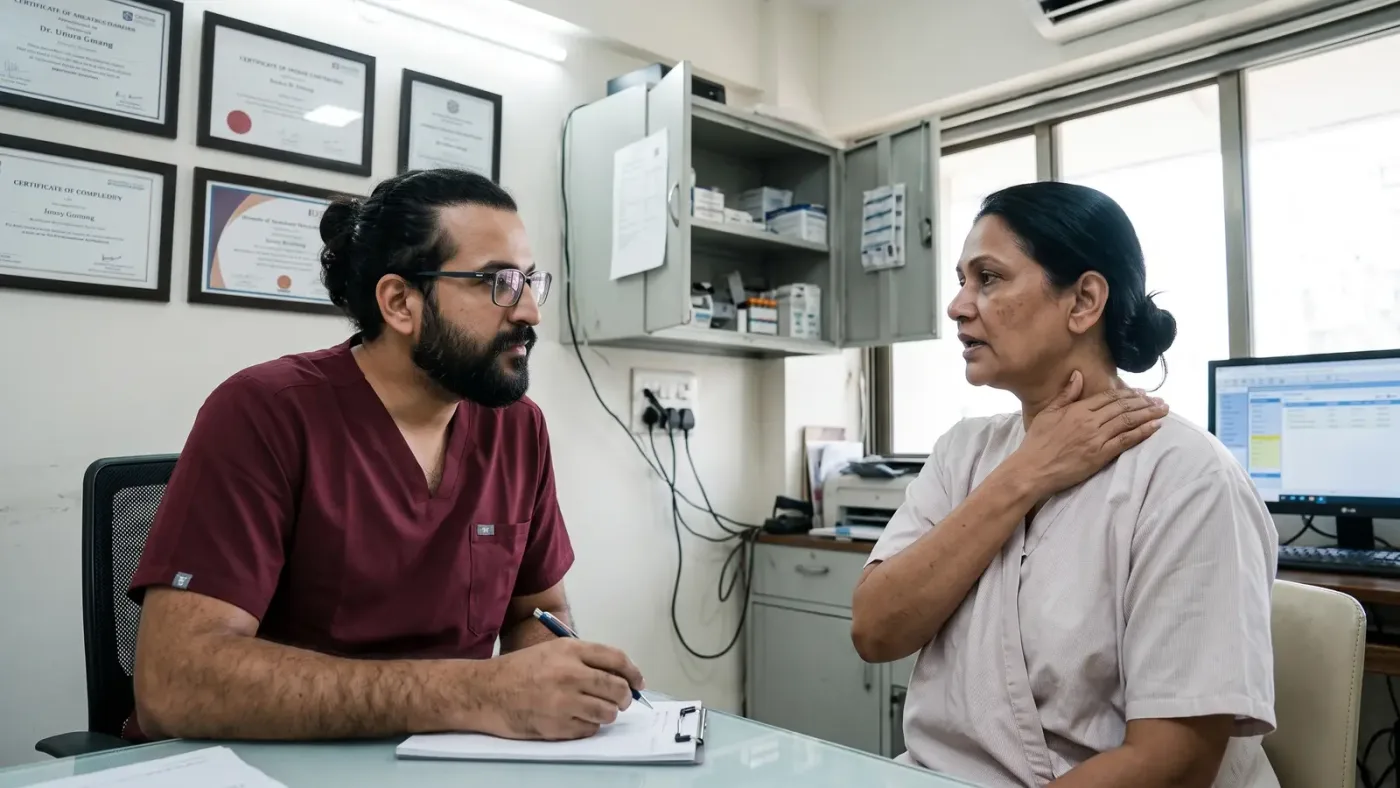
Breast reduction may be appropriate for women whose breast size causes physical discomfort or affects their quality of life.
You may be a suitable candidate if you:
Have excessively large breasts.
Experience chronic neck, shoulder, or back pain.
Notice bra strap grooves on your shoulders.
Develop recurrent skin irritation beneath the breasts.
Find physical activity uncomfortable because of breast size.
Have breast asymmetry.
Are in good general health.
Do not smoke or are willing to stop during recovery.
Have realistic expectations regarding surgical outcomes.
A comprehensive consultation helps determine whether breast reduction is the most appropriate treatment for your concerns.
What Concerns Can Breast Reduction Address?
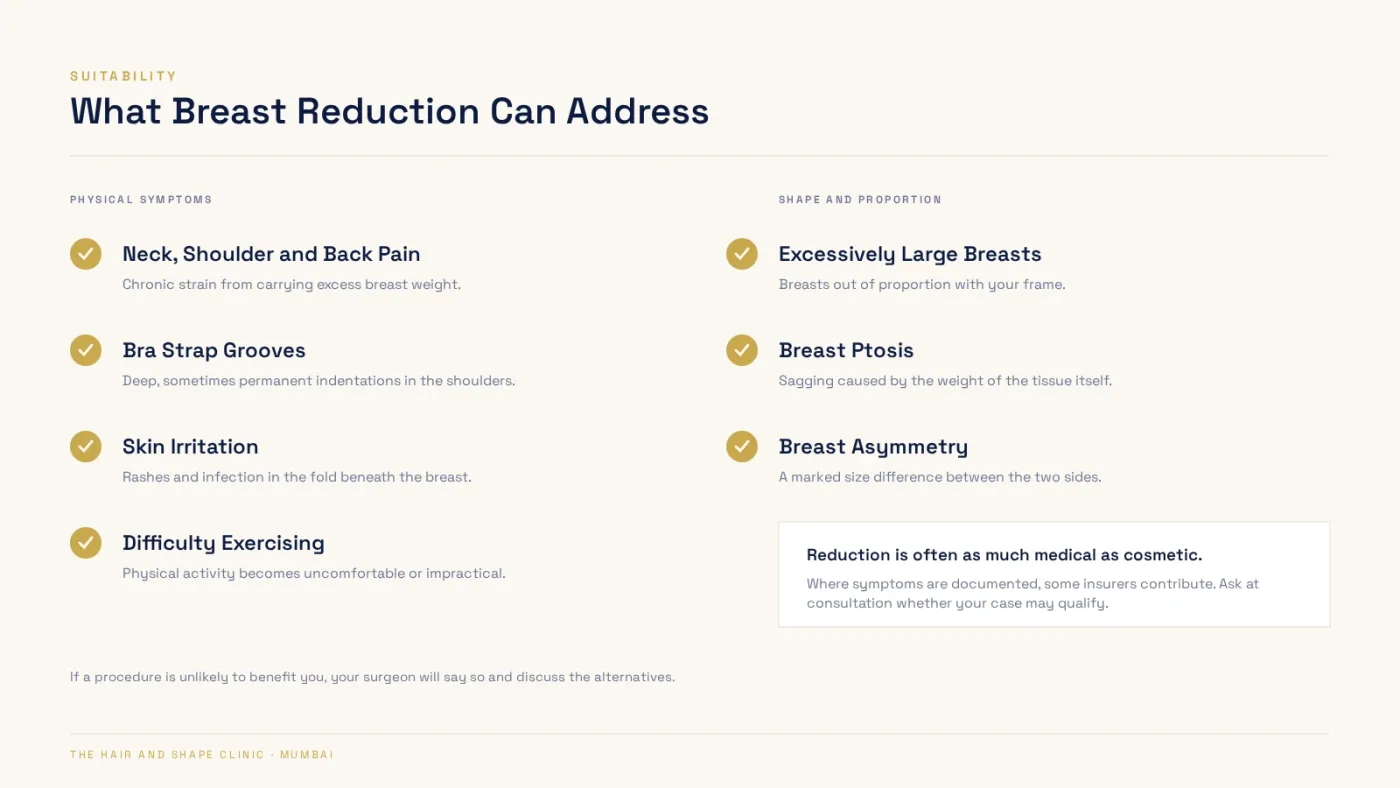
Breast reduction surgery may improve a variety of cosmetic and functional concerns.
Excessively Large Breasts
Reduces breast volume while maintaining natural proportions.
Breast Ptosis
Lifts sagging breasts during the reduction process.
Neck, Shoulder, and Back Pain
Reduces breast weight that contributes to chronic musculoskeletal discomfort.
Bra Strap Grooves
Decreases pressure on the shoulders caused by heavy breasts.
Skin Irritation
Improves persistent rashes and irritation beneath the breast folds.
Breast Asymmetry
Improves differences in breast size while creating balanced breast contours.
Difficulty Exercising
Makes many physical activities more comfortable following recovery.
Personalized Breast Reduction Planning
Every woman's anatomy, symptoms, and aesthetic goals are unique, making individualized surgical planning essential. Successful breast reduction requires much more than removing breast tissue. Chest width, breast base diameter, skin elasticity, nipple position, degree of ptosis, tissue composition, breast symmetry, and future pregnancy plans all influence the most appropriate surgical technique and the amount of tissue to be removed.
At Hair & Shape Clinic, every patient undergoes a comprehensive breast assessment before surgery is recommended. Detailed measurements, evaluation of physical symptoms, breast proportions, tissue quality, and body frame help determine the ideal breast size and shape for long-term comfort and aesthetic balance. The surgical plan is designed to relieve symptoms while preserving breast function, maintaining nipple viability whenever possible, and creating naturally proportioned breasts that complement the patient's physique.
What Happens During Breast Reduction Surgery?
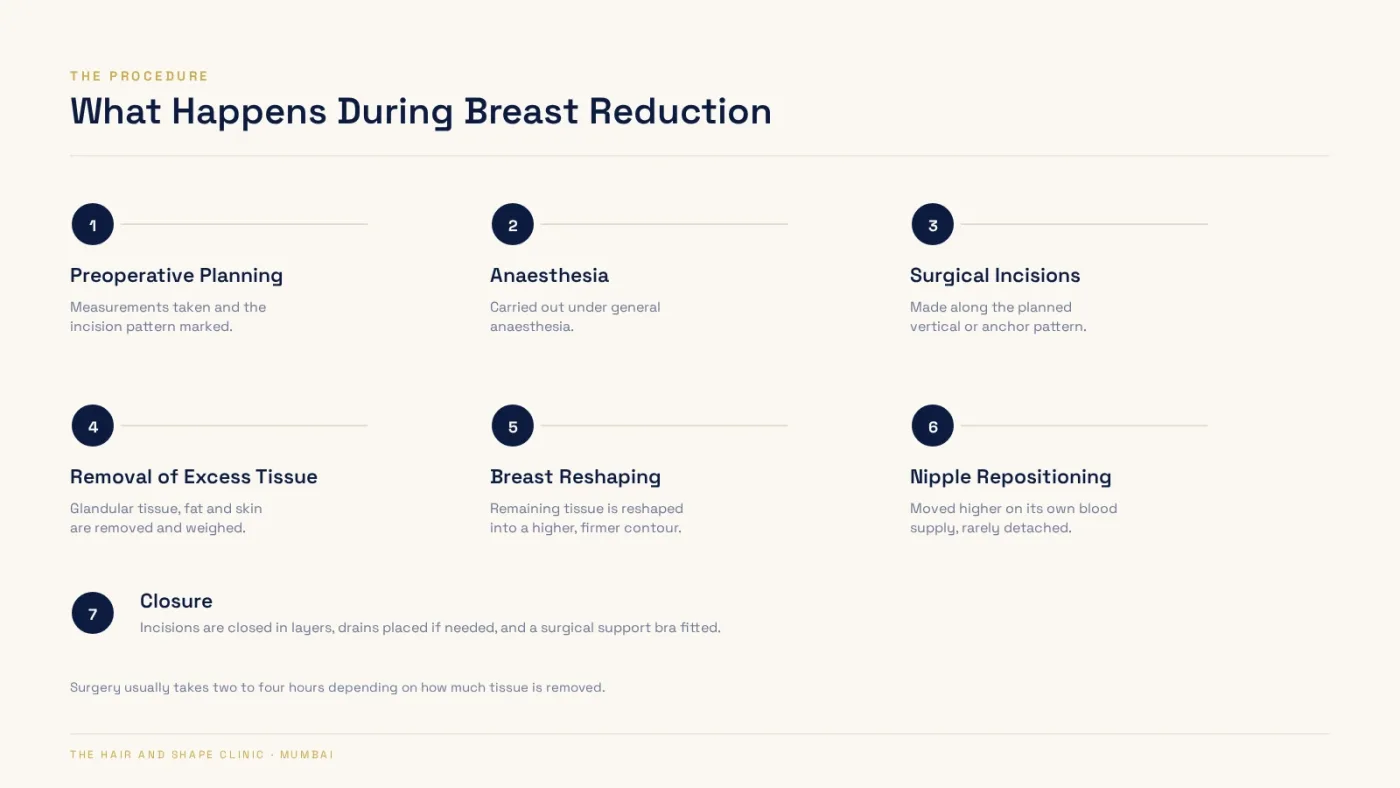
Breast reduction surgery is performed in an accredited operating facility under sterile conditions using carefully planned surgical techniques. Depending on the degree of breast enlargement, the amount of tissue being removed, and whether additional procedures are performed simultaneously, surgery generally takes between two and four hours.
Every breast reduction is individualized to achieve the desired balance between breast size, comfort, symmetry, and long-term aesthetic outcomes.
A typical breast reduction procedure includes the following stages.
Step 1: Preoperative Planning
Before surgery begins, detailed surgical markings are made while the patient is standing.
Your surgeon carefully evaluates:
Breast size.
Breast symmetry.
Nipple position.
Degree of breast ptosis.
Skin elasticity.
Chest wall anatomy.
Planned breast size after surgery.
Incision pattern.
These markings act as a surgical blueprint to achieve balanced, symmetrical results.
Step 2: Anaesthesia
Breast reduction surgery is usually performed under general anaesthesia.
Throughout the procedure, your heart rate, blood pressure, oxygen levels, and other vital signs are continuously monitored.
Step 3: Surgical Incisions
The incision pattern depends on breast size, the amount of tissue removal required, and the degree of breast sagging.
Common incision patterns include:
Vertical (Lollipop) incision.
Anchor (Inverted-T) incision.
The selected approach allows access to the breast tissue while facilitating reshaping and lifting.
Step 4: Removal of Excess Tissue
Excess glandular tissue, fatty tissue, and stretched skin are carefully removed.
The amount of tissue removed is individualized to relieve physical symptoms while maintaining balanced body proportions.
Step 5: Breast Reshaping
The remaining breast tissue is reshaped to create a firmer, more youthful contour.
Modern breast reduction techniques emphasize internal tissue reshaping rather than relying solely on skin tightening, helping provide improved long-term support.
Step 6: Nipple-Areola Repositioning
The nipple-areola complex is elevated to a more youthful anatomical position.
If necessary, enlarged areolas may also be reduced in size to improve overall breast proportions.
Every effort is made to preserve blood supply, sensation, and nipple viability whenever anatomically possible.
Step 7: Closure
The incisions are closed in multiple layers to support healing and reduce tension on the skin.
Dressings and a supportive surgical bra are applied before recovery begins.
Types of Breast Reduction Surgery
Several surgical techniques are available depending on breast size, degree of ptosis, and the patient's anatomy.
Vertical Breast Reduction
Also called the lollipop technique, this approach uses an incision around the areola and vertically down to the breast crease.
It is commonly used for moderate breast enlargement and provides excellent reshaping with relatively shorter scars.
Anchor Breast Reduction
The anchor or inverted-T technique adds an incision along the breast crease.
This method provides greater access for removing larger volumes of breast tissue and is often recommended for severe breast enlargement or significant breast ptosis.
Liposuction-Assisted Breast Reduction
Selected patients with predominantly fatty breast tissue and minimal sagging may benefit from breast reduction using liposuction alone.
This approach is suitable only for carefully selected candidates and does not significantly improve breast ptosis.
What Results Can You Expect After Breast Reduction Surgery?
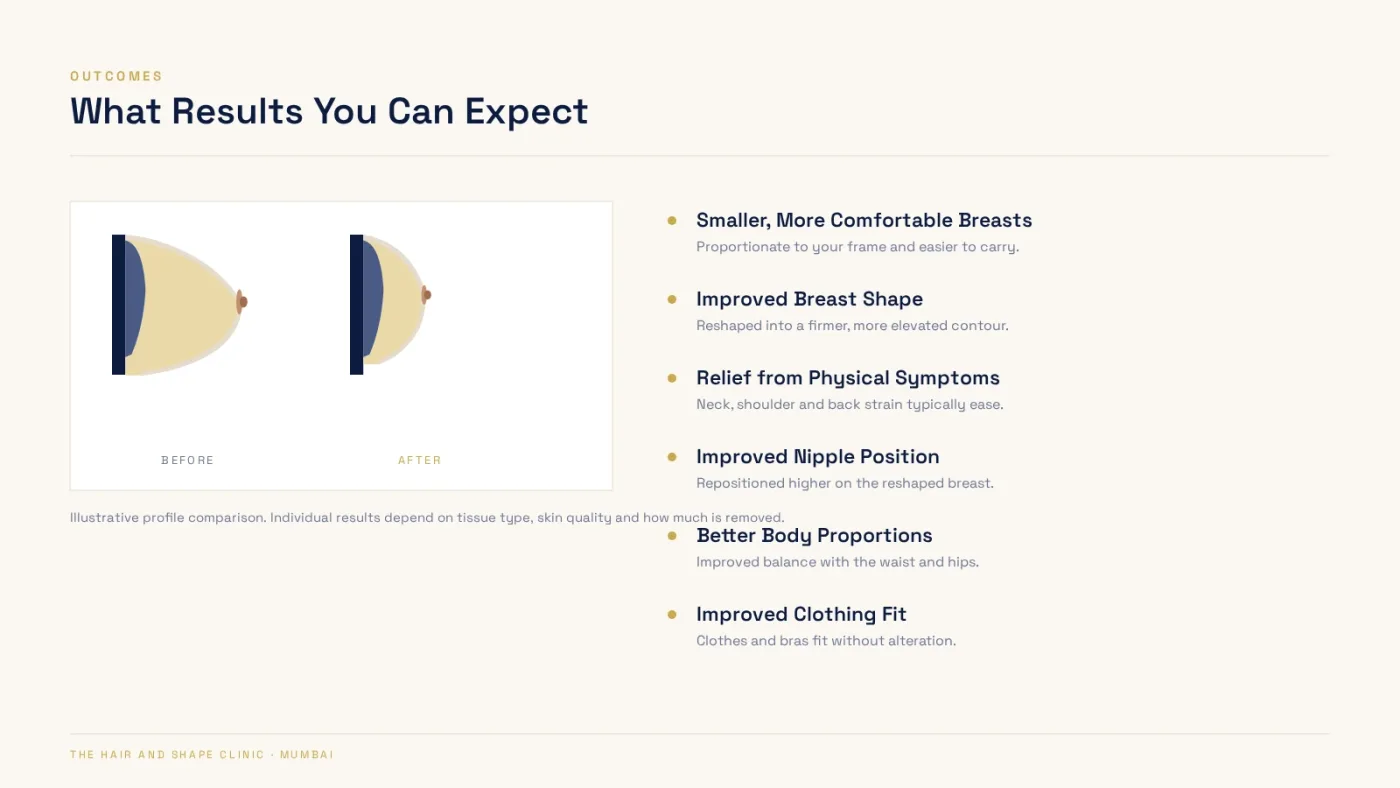
Breast reduction surgery produces immediate improvements in breast size and weight, although the final breast shape develops gradually as swelling resolves and healing progresses.
Patients commonly notice:
Smaller, More Comfortable Breasts
Reduced breast weight often provides immediate physical relief.
Improved Breast Shape
The breasts appear firmer, rounder, and more youthful.
Better Body Proportions
Reducing breast size creates improved balance between the chest, waist, hips, and shoulders.
Improved Nipple Position
The nipples sit higher on the breast and face forward naturally.
Relief from Physical Symptoms
Many patients experience improvement in:
Neck pain.
Shoulder discomfort.
Back pain.
Bra strap grooves.
Skin irritation beneath the breasts.
Limitations during exercise.
Improved Clothing Fit
Many women find bras, dresses, athletic wear, and fitted clothing become significantly more comfortable after surgery.
Final results continue to refine over several months as swelling subsides and the breast tissues settle naturally.
What Is Recovery Like After Breast Reduction Surgery?
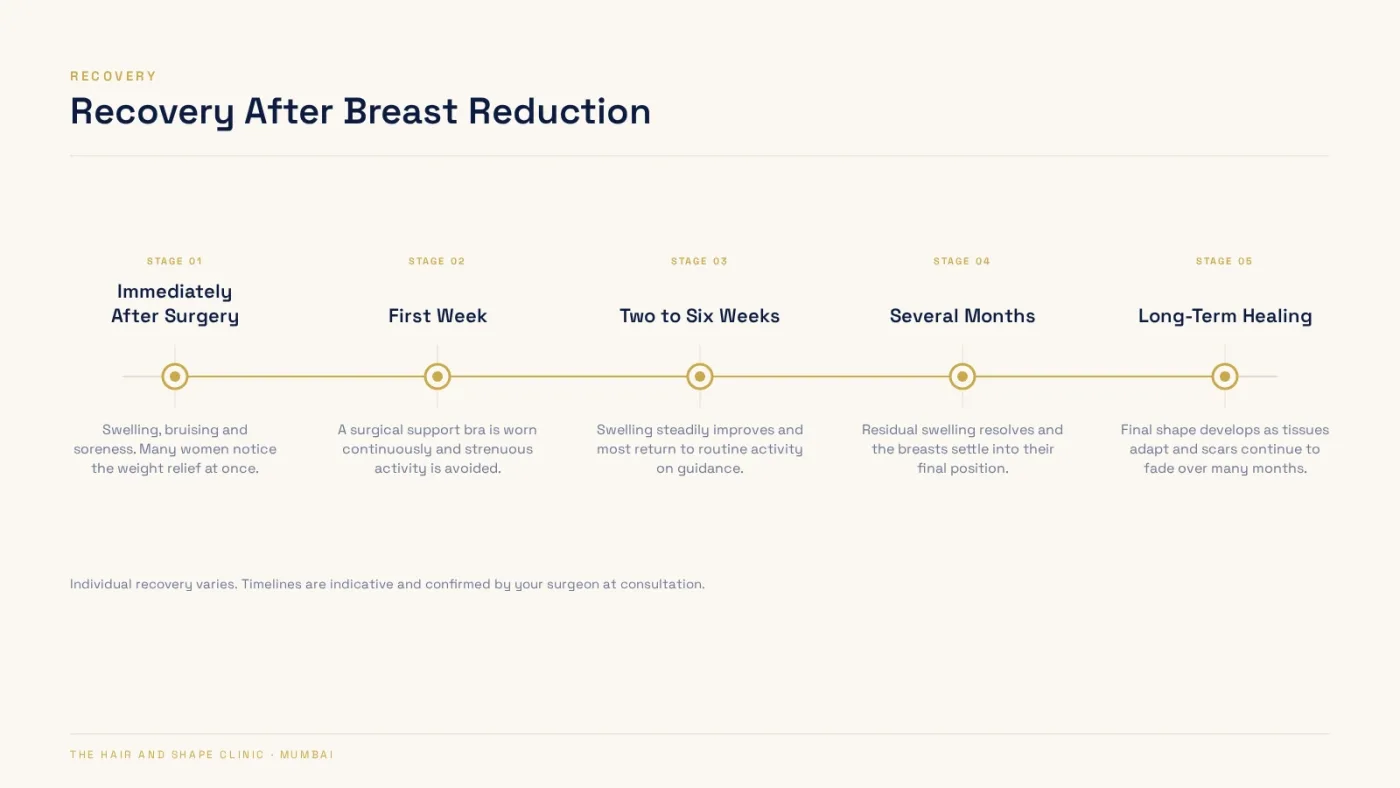
Recovery varies depending on the extent of tissue removal and individual healing characteristics.
Healing generally progresses through several stages.
Immediately After Surgery
Patients commonly experience:
Swelling.
Mild bruising.
Tightness.
Temporary discomfort.
Mild fatigue.
These symptoms are expected and improve steadily during recovery.
First Week
A supportive surgical bra is worn continuously.
Walking is encouraged soon after surgery to promote circulation, while lifting heavy objects and strenuous activities should be avoided.
Two to Six Weeks
Most swelling gradually decreases.
Many patients return to work and normal daily activities within a few weeks, depending on the nature of their occupation.
Exercise is resumed gradually according to the surgeon's recommendations.
Several Months
Scars begin to soften and mature.
The breasts continue settling into their final position and shape.
Long-Term Healing
Final breast contour develops over several months as tissues remodel and scars continue to fade.
Are There Any Risks or Limitations?
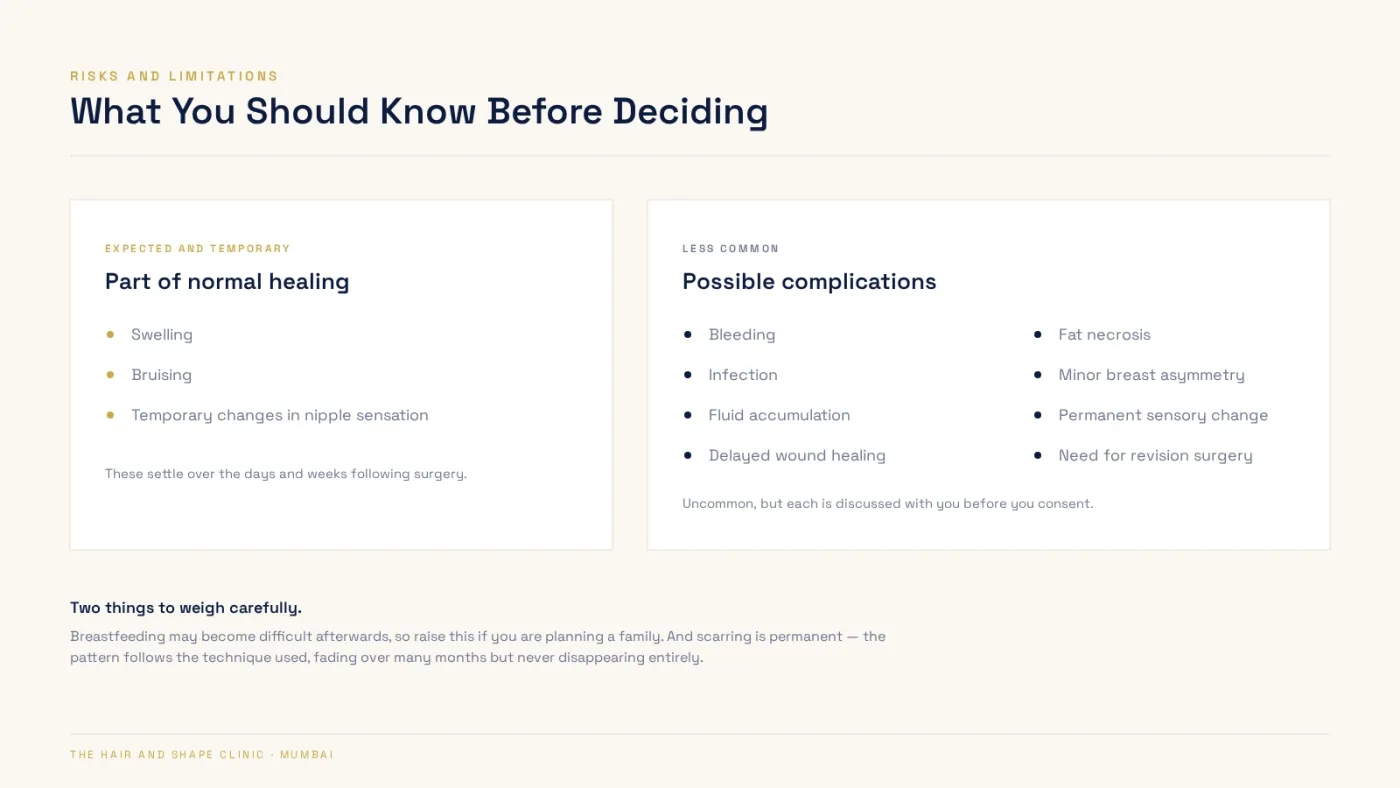
Breast reduction surgery is generally considered safe when performed by an experienced plastic surgeon, but all surgical procedures carry potential risks.
Possible complications include:
Bleeding.
Infection.
Swelling.
Bruising.
Delayed wound healing.
Temporary or permanent changes in nipple sensation.
Scar formation.
Minor breast asymmetry.
Fat necrosis.
Fluid accumulation.
Difficulty breastfeeding in some patients.
Need for revision surgery.
It is also important to understand the limitations of surgery.
Future pregnancy, breastfeeding, ageing, hormonal changes, weight fluctuations, and gravity may continue to influence breast size and shape over time.
Maintaining a stable body weight and wearing supportive bras may help preserve long-term results.
How Much Does Breast Reduction Surgery Cost in Mumbai?
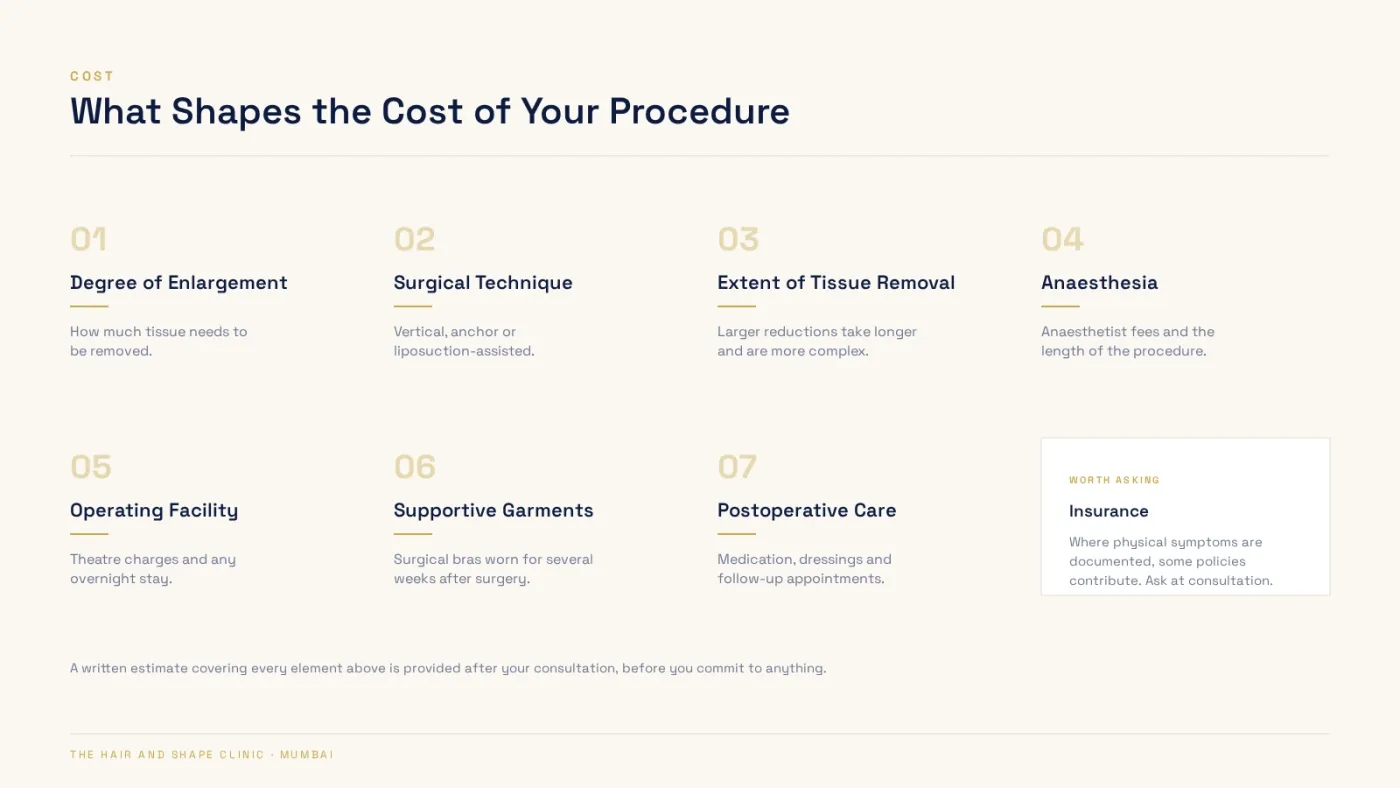
The cost of breast reduction surgery varies according to breast size, the amount of tissue removal required, the complexity of the procedure, and the surgical technique selected.
Factors influencing treatment cost include:
Degree of breast enlargement.
Surgical technique.
Extent of tissue removal.
Anaesthesia.
Operating facility charges.
Postoperative care.
Supportive garments.
Following a comprehensive consultation, your surgeon will provide a personalized treatment plan outlining the recommended procedure, expected recovery, anticipated outcomes, and associated costs.
Why Choose Hair & Shape for Breast Reduction Surgery?
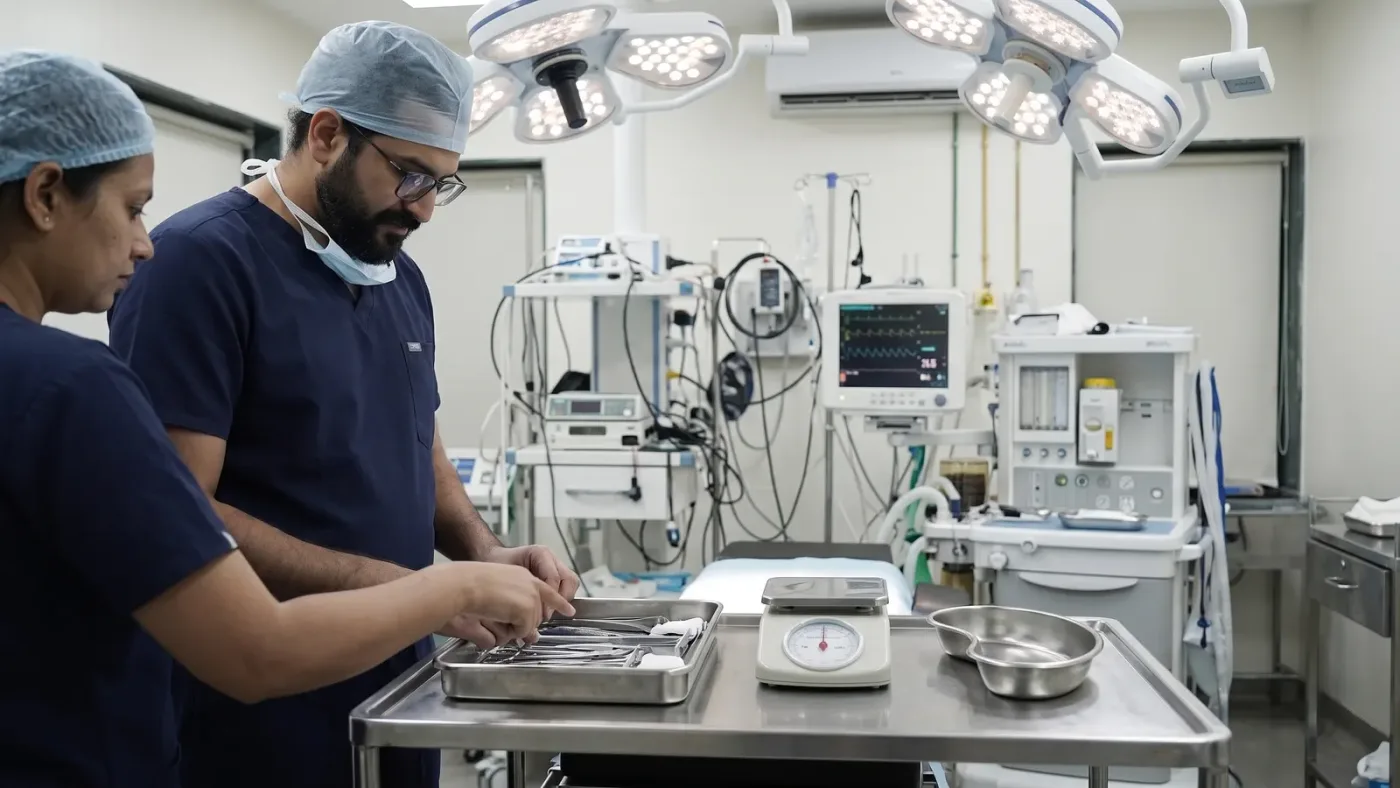
Successful breast reduction requires expertise in breast anatomy, reconstructive principles, aesthetic breast surgery, and long-term tissue support. The procedure is not simply about making the breasts smaller. It involves restoring comfortable, proportionate, naturally shaped breasts while preserving function, circulation, sensation, and long-term structural stability.
At Hair & Shape Clinic, every patient undergoes a comprehensive breast evaluation before surgery is recommended. Breast volume, tissue composition, skin quality, degree of ptosis, nipple position, chest proportions, and physical symptoms are carefully assessed to create an individualized treatment plan. The emphasis is on relieving discomfort while achieving balanced breast contours that complement the patient's body and support long-term quality of life.
Why Does Personalized Breast Reduction Planning Matter?
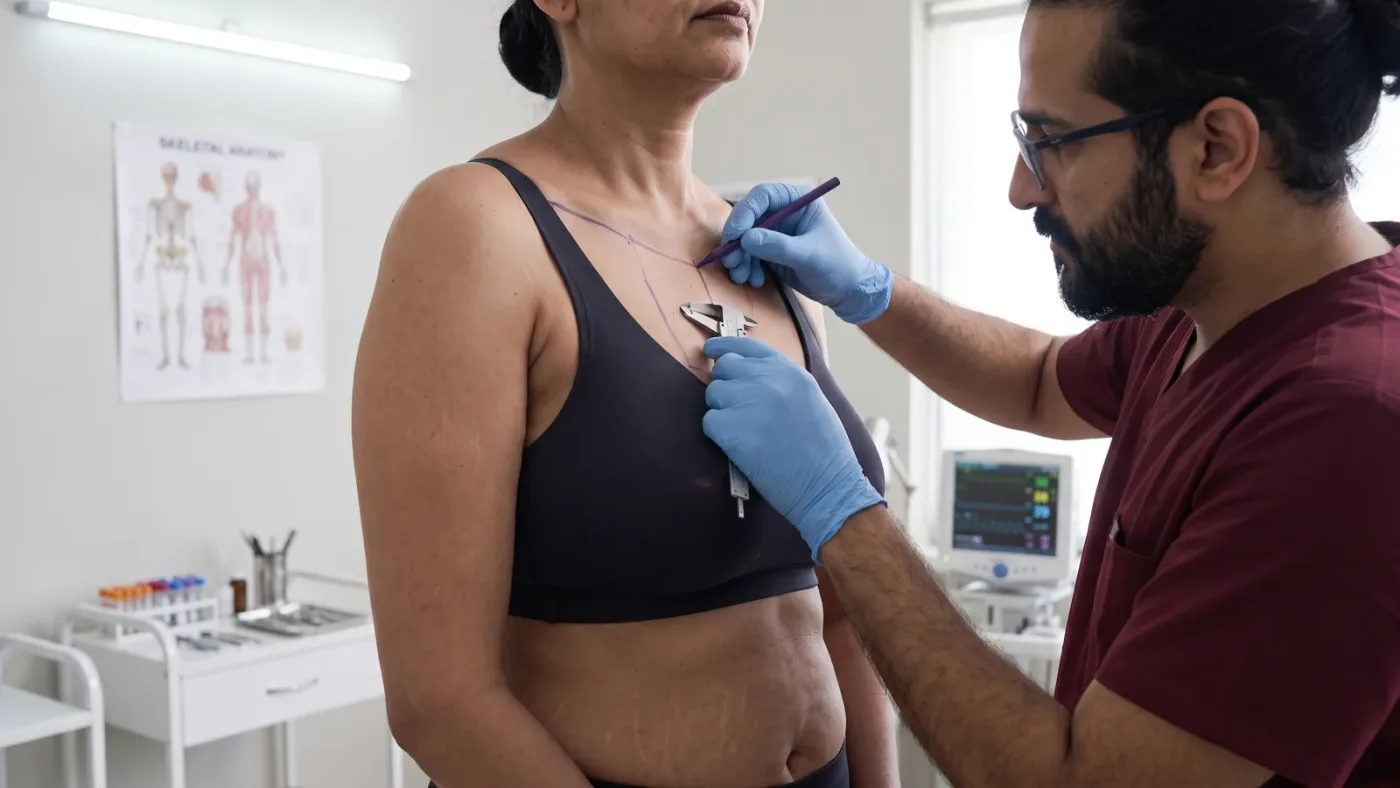
Every woman experiences breast enlargement differently, making individualized planning essential for achieving optimal functional and aesthetic outcomes.
Breast Size Should Match Body Proportions
The goal is not simply to reduce breast size but to create breasts that are balanced with the patient's height, chest width, shoulders, and overall physique.
Symptom Relief Requires Careful Tissue Removal
Removing too little tissue may not adequately relieve physical symptoms, while excessive reduction can compromise aesthetic balance.
Nipple Preservation Is a Surgical Priority
The nipple-areola complex must be repositioned while preserving blood supply and sensation whenever anatomically possible.
Internal Tissue Support Improves Long-Term Results
Modern breast reduction reshapes and supports the remaining breast tissue internally, helping maintain breast contour over time.
Long-Term Comfort and Natural Appearance Go Hand in Hand
Successful breast reduction improves posture, mobility, clothing fit, and physical comfort while creating naturally proportioned breasts that remain harmonious with the rest of the body.
International Patients Seeking Breast Reduction Surgery in Mumbai

Hair & Shape Clinic welcomes patients from India and around the world seeking advanced breast reduction surgery.
Our international patient pathway is designed to provide a smooth experience from consultation through recovery.
Before You Travel
Virtual consultations, medical history review, breast photographs, and discussion of your symptoms and aesthetic goals help determine whether breast reduction surgery is appropriate before your visit.
During Your Stay
Your treatment includes an in-person consultation, personalized surgical planning, breast reduction surgery, postoperative monitoring, supportive garment guidance, wound care instructions, and recovery planning before returning home.
Returning Home
Follow-up consultations can often be conducted remotely. Continued guidance regarding scar care, activity progression, supportive garments, healing milestones, and long-term breast health helps support a safe recovery wherever you live.
What to Expect
Consultation
A detailed assessment of your goals, suitability, and a personalised plan.
Preparation
Clear pre-treatment guidance so you arrive fully prepared and at ease.
The Procedure
Your treatment, performed by our specialists with comfort and safety first.
Aftercare
Structured recovery support and follow-ups to protect your results.
Frequently Asked Questions
Everything you need to know about Breast Reduction. Still curious? Our team is one message away.
Are the results long-lasting?
The structural changes achieved through breast reduction are generally long-lasting. Natural ageing, hormonal changes, pregnancy, and significant weight fluctuations may continue influencing breast appearance over time.
Can I breastfeed after breast reduction surgery?
Future breastfeeding depends on several factors, including surgical technique, breast anatomy, and individual healing. These considerations are discussed carefully during consultation when planning treatment.
Will scars be visible?
Every surgical procedure leaves scars. Incisions are carefully planned to achieve effective reduction and reshaping while allowing scars to mature naturally over time. Scar appearance generally continues improving during the healing process.
Can breast reduction be combined with a breast lift?
Yes. Breast reduction commonly includes reshaping and lifting the breasts as part of restoring natural proportion and long-term support.
Will breast reduction relieve neck and shoulder pain?
Many women experience improvement in symptoms related to excessive breast weight after surgery. The extent of relief varies according to individual anatomy, posture, muscle health, and other contributing factors.

Begin Your Breast Reduction Journey
Book a consultation today and let our specialists craft a plan built entirely around you.