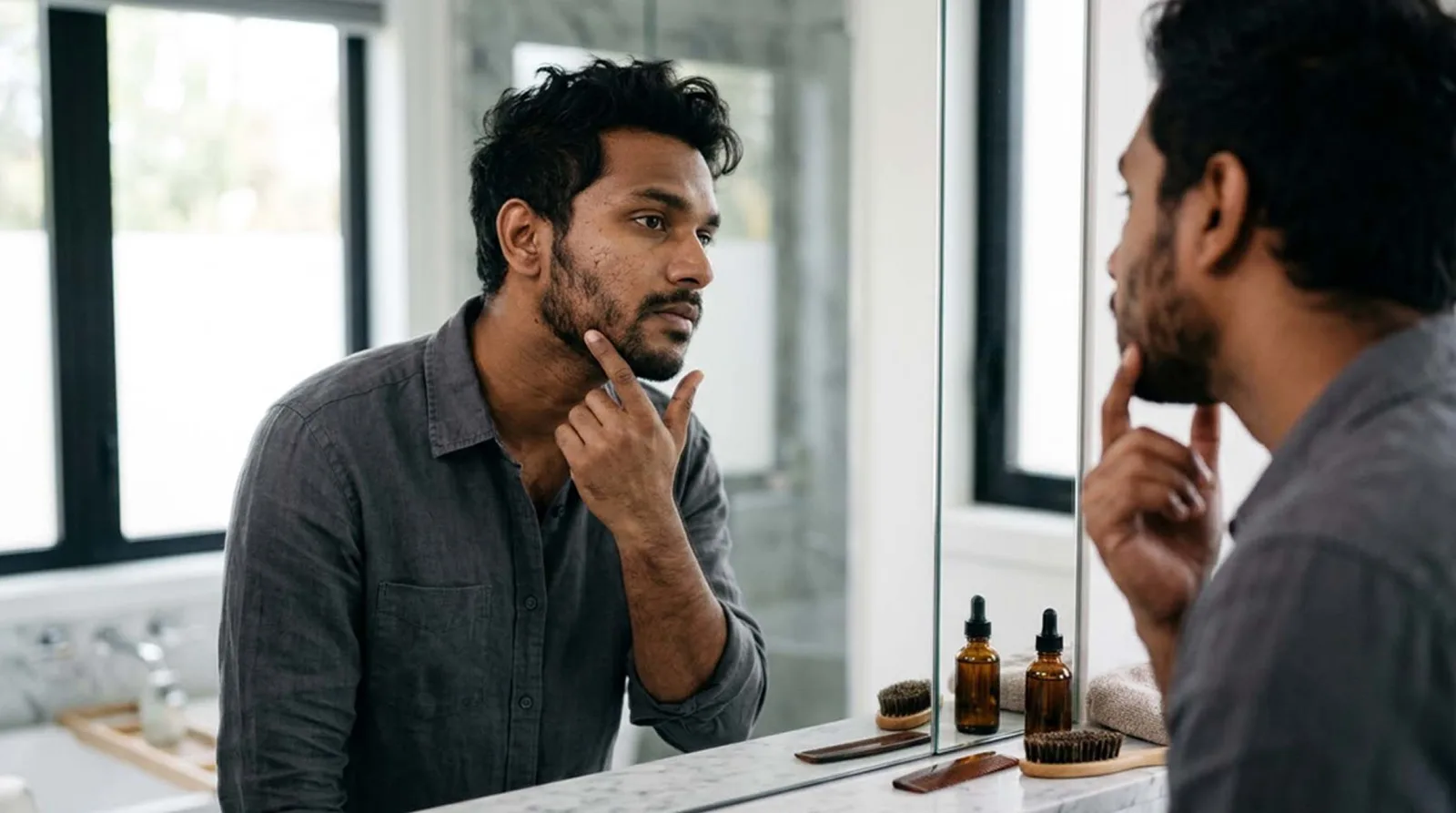
Can A Moustache Or Beard Transplant Look Natural If Facial Hair Is Patchy?
Introduction
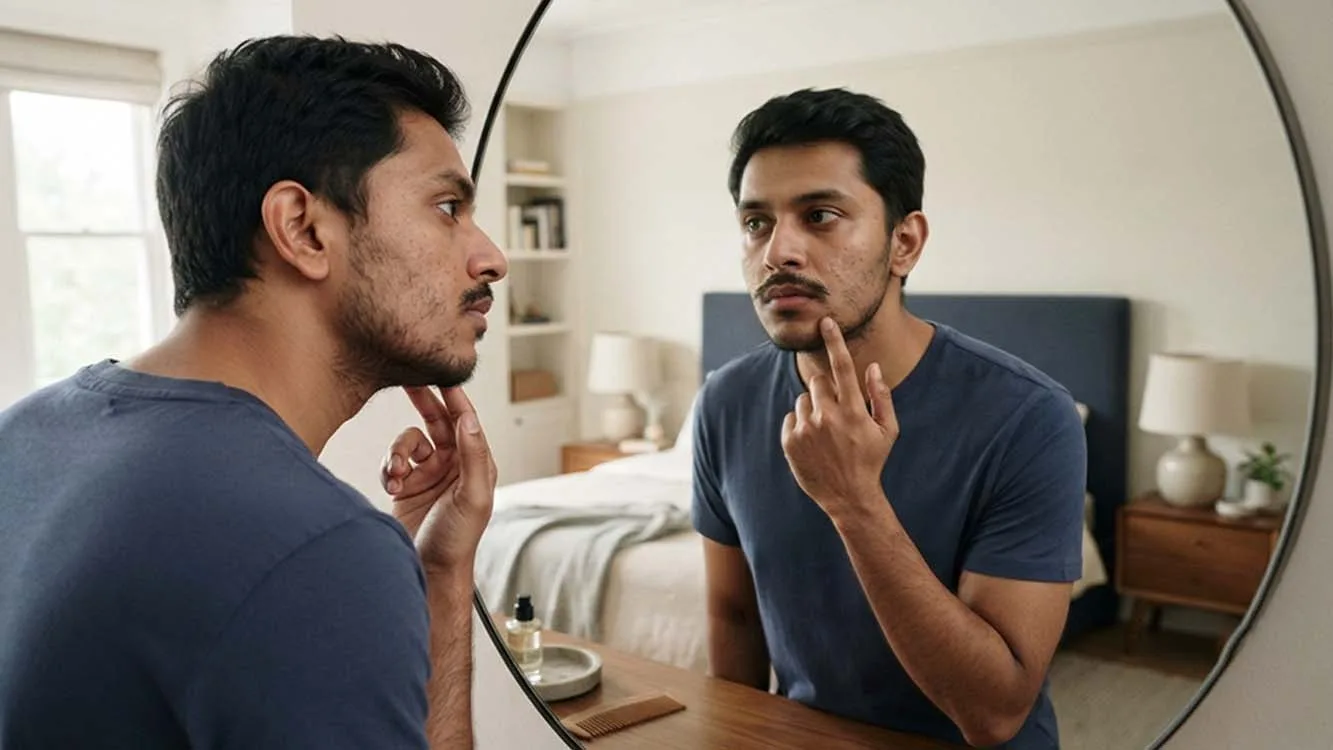
A moustache or beard transplant can improve patchy, thin or absent facial hair by moving suitable follicles from a donor area to the face. However, a natural result depends on much more than filling every visible gap with the highest possible number of grafts.
The direct answer is that a moustache or beard transplant can look natural when the design follows the patient’s facial proportions, existing hair pattern and natural direction of growth. The transplanted hairs must leave the skin at very flat angles and blend gradually with the surrounding beard.
A believable result depends on:
The cause of patchy facial hair
Stability of the hair-loss pattern
Donor-hair texture and thickness
Facial shape
Existing beard density
Moustache and beard boundaries
Graft angle and direction
Use of suitable single-hair grafts
Natural irregularity along the edges
Realistic density expectations
Protection of the scalp donor area
Long-term grooming preferences
Hair placed too upright, too densely or in a perfectly straight border may look artificial even when most grafts grow successfully. The objective should be a beard or moustache that looks appropriate when trimmed, grown longer and viewed from different angles—not merely a dense result in one frontal photograph.
What Is A Moustache Or Beard Transplant?
A moustache or beard transplant is a facial hair-restoration procedure in which individual follicular units are harvested from a donor area and implanted into selected parts of the face.
It may be used to improve:
A naturally sparse beard
Patchy cheek growth
Weak sideburns
An incomplete moustache
Gaps between the moustache and beard
A thin goatee
Hair loss caused by injury
Stable scars
Selected areas affected by previous surgery
Asymmetry between the two sides
The donor follicles are commonly obtained from the scalp using follicular unit excision. In selected cases, suitable beard hair from beneath the jawline may also be considered.
The grafts are then placed into carefully created recipient sites across the planned facial-hair pattern.
Facial hair reconstruction uses the same basic transplantation principle as scalp restoration, but the artistic and technical requirements are different. Facial grafts must be placed at much flatter angles and in rapidly changing directions to reproduce natural beard and moustache growth.
Is A Beard Transplant The Same As A Scalp Hair Transplant?
The harvesting process may be similar, but facial transplantation requires different planning.
Scalp restoration often focuses on:
Hairline design
Frontal density
Mid-scalp coverage
Crown direction
Long-term progression of baldness
Facial hair restoration must account for:
Cheek boundaries
Sideburn transitions
Moustache shape
Lip movement
Jawline definition
Chin density
Goatee pattern
Rapid direction changes
Grooming length
Facial symmetry
The hair on the face often exits the skin at a very acute angle. If the recipient sites are made too upright, the transplanted beard may project away from the face and become difficult to trim or style.
A successful scalp-transplant technique cannot simply be copied onto the moustache or cheeks without adapting the direction, graft selection and density.
Which Areas Can Be Improved With Facial Hair Transplantation?
Facial hair transplantation may be planned for one limited area or several connected zones.
Common treatment areas include:
Moustache
Central moustache
Moustache corners
Goatee
Chin
Under-lip region
Jawline
Upper cheeks
Lower cheeks
Sideburns
Connectors between the moustache and beard
The complete beard should not be treated as one flat surface.
Each region has its own:
Hair direction
Density
Shape
Transition pattern
Cosmetic importance
Relationship with facial movement
For example, the moustache requires particularly careful direction because hairs sit close to the lips and move during speaking and eating.
The upper cheek border usually needs a softer transition than the central chin or goatee region. A uniformly dense border may create a painted or stamped appearance.
Can A Beard Transplant Fill Naturally Patchy Growth?
Yes, selected patchy areas may be filled using transplanted follicles.
The procedure may be suitable when the patches are:
Long-standing
Stable
Surrounded by healthy facial hair
Not caused by active inflammation
Not changing rapidly
Compatible with the available donor supply
The existing beard should be assessed while grown to a visible length. This helps reveal:
True gaps
Differences in density
Natural direction
Hair calibre
Curl
Colour
Areas concealed when the beard is longer
Sometimes a beard appears patchy only when trimmed very short. Longer surrounding hairs may provide acceptable coverage without surgery.
A transplant should therefore be based on the patient’s normal grooming preference rather than one close-up image taken immediately after shaving.
Why Is The Cause Of Patchy Facial Hair Important?
Patchy beard or moustache growth can have several causes.
Possible explanations include:
Natural genetic density
Normal asymmetry
Previous injury
Burn scars
Surgical scars
Cleft-lip repair scars
Traction
Alopecia areata
Fungal infection
Inflammatory skin disease
Scarring alopecia
Habitual hair pulling
Hormonal or developmental factors
A transplant may be reasonable for naturally sparse but stable growth.
It should not be performed automatically over an unexplained patch without establishing why the hair disappeared.
Active inflammatory or autoimmune hair loss may continue damaging follicles after surgery. Transplanting into an unstable condition can lead to poor growth, recurrence or further loss around the grafts.
Is Every Smooth Beard Patch Alopecia Areata?
No. A smooth patch in the beard may have several possible causes.
Alopecia areata commonly creates well-defined areas of hair loss, but other conditions may resemble it.
Assessment may need to distinguish between:
Alopecia areata
Fungal infection
Scarring
Traction
Hair pulling
Inflammatory dermatitis
Natural low-density growth
Previous injury
A transplant is generally not the first step for active alopecia areata.
Some patches may regrow with medical treatment or spontaneously. Surgery should usually be considered only when the diagnosis is clear, the condition has remained stable and the likelihood of recurrence has been discussed.
Placing grafts into active disease does not treat the underlying immune process.
Can A Transplant Restore Facial Hair Over A Scar?
It may improve selected stable scars, but scar tissue behaves differently from normal skin.
Facial scars may result from:
Burns
Accidents
Cleft-lip surgery
Acne
Previous operations
Infection
Trauma
Transplantation into a scar can be more unpredictable because the tissue may have:
Reduced blood supply
Uneven thickness
Firm fibrosis
Surface irregularity
Distorted hair direction
Previous graft damage
A small test session may sometimes be considered before attempting dense reconstruction across a large scar.
The aim may be camouflage rather than complete disappearance. Even when transplanted hairs grow, the scar’s colour, texture or depression may remain visible.
Clinical reports support the use of follicular-unit transplantation for selected stable facial scars, including moustache and beard defects, but graft survival and density can vary according to scar quality.
What Makes A Beard Transplant Look Natural?
Naturalness depends on how the grafts relate to the existing facial hair and skin.
A convincing result usually has:
Very flat hair-exit angles
Direction matched to nearby beard hair
Gradual density changes
Fine single-hair grafts along visible borders
Slightly irregular cheek lines
Natural gaps and transitions
Greater density in central areas when appropriate
Symmetry without appearing mechanically identical
Hair texture that blends reasonably well
A design suited to the patient’s age and face
An artificial result may show:
Upright hairs
A perfectly straight cheek border
Thick grouped grafts at the edge
Sudden dense-to-bare transitions
Unequal moustache sides
Circular empty spaces
Hair pointing against natural growth
Excessively low cheek coverage
A beard shape copied from another person
Natural facial hair is not arranged like evenly spaced dots. It contains subtle irregularities, overlapping directions and gradual changes in density.
Why Are Hair Angle And Direction So Important?
Facial hair changes direction across very short distances.
The direction may shift:
Downward beneath the sideburns
Diagonally across the cheeks
Toward the mouth near the moustache connectors
Downward and outward along the jaw
Vertically or diagonally across the chin
Laterally across parts of the moustache
Into a central pattern beneath the lower lip
A graft placed only a few millimetres away from its ideal position may require a different angle.
If the transplanted hair points incorrectly, it may:
Stand away from the skin
Cross neighbouring hairs
Become difficult to shave
Look untidy at short lengths
Create unnatural shadows
Reveal the transplant under side lighting
Correct direction is more important than simply implanting a large number of grafts.
Why Are Single-Hair Grafts Important?
Natural facial hair commonly grows as individual visible shafts, particularly along the outer borders.
Single-hair grafts are valuable for:
Upper cheek transitions
Moustache edges
Sideburn borders
Jawline outlines
Scar camouflage
Softening the external beard shape
Multi-hair grafts may be used selectively in denser central zones when their thickness and direction are suitable.
Placing thick multi-hair units along the cheek border can create obvious clusters. This may look especially unnatural when the beard is trimmed short.
Published facial-hair reconstruction literature emphasises careful selection of single- and double-hair follicular units, with single-hair grafts playing a major role in natural moustache and beard restoration.
Where Does The Donor Hair Usually Come From?
The scalp is a common donor source for moustache and beard transplantation.
Potential donor regions may include:
Back of the scalp
Sides of the scalp
Area near the nape
Behind the ears in selected patients
The choice depends on which region provides hair that best matches the facial hair in:
Thickness
Colour
Curl
Growth rate
Number of hairs per follicular unit
Fine single-hair grafts from the nape or areas behind the ears may sometimes blend better along delicate facial borders.
Coarser scalp hair may be more appropriate for central beard density but could look too thick in a fine natural moustache.
The donor area should also be examined for miniaturisation and future scalp hair loss before grafts are removed.
Can Beard Hair Be Used As Donor Hair For The Face?
In selected cases, beard hair from a denser region—often beneath the jawline—may be used to improve another facial area.
Possible advantages include:
Similar facial-hair texture
Coarser shaft calibre
Better visual compatibility
Reduced dependence on scalp donor hair
However, beard-donor harvesting is limited.
Excessive extraction may produce:
Patchy thinning under the jaw
Visible pale dots
Uneven density
Difficulty maintaining a short beard
Reduced donor options for future procedures
Hair should not be removed from an area that is already sparse merely to fill another region.
The donor pattern must remain cosmetically acceptable after extraction.
Will Scalp Hair Behave Like Beard Hair After Transplantation?
Scalp follicles usually retain many of their original characteristics after transplantation.
This means transplanted scalp hair may continue to:
Grow longer than natural beard hair
Require regular trimming
Feel softer or finer
Curl differently
Grow at a different speed
The surrounding facial environment may influence the appearance, but the hair does not reliably become identical to native beard hair.
A patient may need to trim transplanted scalp-derived facial hair more frequently to keep it blended with the natural beard.
Texture mismatch is particularly noticeable when:
Scalp hair is very fine
Beard hair is very coarse
Hair colours differ
One is curly and the other is straight
The beard is worn extremely short
Donor selection should aim for the closest practical match rather than assuming all transplanted hair will transform after surgery.
Can A Moustache Transplant Look Natural?
Yes, but the moustache is one of the most technically demanding facial areas.
The result must account for:
Lip shape
Mouth width
Central moustache density
Hair direction
Moustache corners
Connection with the beard
Distance from the upper lip
Movement during speaking and smiling
Preferred grooming style
The hairs should generally lie close to the skin and follow the natural direction of existing growth.
An unnatural moustache may appear:
Too wide
Too low over the lip
Perfectly rectangular
Excessively dense
Unequal between the two sides
Disconnected from the beard
Upright or difficult to trim
A patient seeking only a narrow scar correction requires a different design from someone seeking complete moustache creation.
Can The Beard Shape Be Chosen From A Photograph?
A reference photograph may help explain preferences, but another person’s beard should not be copied exactly.
The same design may look different because of variations in:
Jaw width
Chin projection
Cheekbone shape
Mouth width
Facial length
Sideburn position
Existing hair
Donor supply
Hair texture
Natural asymmetry
A very high cheek border may suit one face and look excessive on another.
Similarly, a broad dense moustache may overpower a narrow upper lip or small lower face.
The final design should interpret the preferred style through the patient’s own anatomy.
Should Both Sides Be Perfectly Symmetrical?
The two sides should appear balanced, but perfect geometric symmetry is not always natural.
One side of the face may have:
A higher cheekbone
A different jaw angle
Stronger native growth
A wider moustache corner
A scar
Different hair direction
Greater facial movement
Placing grafts at identical measured coordinates may not create visual symmetry if the underlying face is asymmetric.
The objective should be to balance the complete facial appearance while respecting natural differences.
Small variation may make the result more believable. Major differences in height, density or direction may require correction after healing.
Does Facial Shape Affect Beard Design?
Yes. Beard design can alter how facial proportions are perceived.
Round Face
A slightly stronger chin and jawline pattern may create more definition, but an excessively wide cheek beard may increase the appearance of facial width.
Long Face
A very long pointed goatee may further lengthen the face. Balanced side coverage may be more appropriate.
Square Face
Jawline density can complement the natural structure, but the design should avoid making the lower face look overly heavy.
Narrow Chin
Strategic central density may improve balance, although grafts cannot change the underlying bone structure.
The transplant should enhance the face rather than simply maximise the area covered with hair.
Who May Consider A Moustache Or Beard Transplant?
A potential candidate may be a healthy adult who:
Has naturally sparse or patchy facial hair
Has a stable scar-related defect
Has realistic density expectations
Has an adequate donor area
Understands that scalp-derived hair may need regular trimming
Accepts the possibility of more than one session
Can follow facial aftercare
Does not have active inflammatory hair loss
Understands that not every graft is guaranteed to grow
Has a stable personal preference for facial hair
The decision should not be driven only by:
A temporary social-media trend
Pressure from another person
One heavily edited photograph
The belief that a dense beard will change every facial feature
Expectations of complete coverage in one session regardless of donor supply
The design creates a potentially lasting change to the person’s appearance and grooming routine.
When Should Facial Hair Transplantation Be Postponed?
The procedure may need to be delayed when there is:
Active alopecia areata
Fungal infection
Inflamed acne
Folliculitis
Active dermatitis
Open facial wounds
Unstable scarring hair loss
Recent facial surgery
Poorly controlled diabetes
A bleeding concern
Active smoking or nicotine use
Unrealistic expectations
Uncertainty about the desired beard shape
Inadequate donor hair
The patient should also disclose:
Previous facial fillers
Acne-scar procedures
Keloid tendency
Past beard transplantation
Hair-pulling behaviour
Current medicines
Skin-lightening or acne treatments
Previous poor wound healing
Proceeding only after the skin and hair-loss pattern are stable provides a safer foundation for transplantation.
How Is A Moustache Or Beard Transplant Planned?
Planning begins by examining the facial hair while it is long enough to reveal its natural pattern.
The assessment may include:
Existing beard density
Exact location of patchy areas
Hair calibre and curl
Direction of nearby hairs
Upper-cheek boundary
Sideburn transitions
Moustache width and height
Moustache-to-beard connectors
Chin and goatee density
Jawline shape
Facial asymmetry
Scars or active skin disease
Donor-hair quality
Preferred grooming length
The patient may be asked to show photographs of how the beard looks when freshly shaved, lightly grown and fully grown.
This helps determine whether the goal is:
Complete beard creation
Limited patch filling
Moustache reconstruction
Scar camouflage
Jawline enhancement
Greater central density
Better connection between existing zones
The design should be reviewed from the front, side and three-quarter angles. A beard that looks balanced from the front may appear too high, too low or too wide in profile.
How Is The Beard Shape Marked?
The proposed boundaries are usually marked while the patient is sitting upright.
The design may include:
Upper cheek line
Sideburn width
Lower beard border
Jawline transition
Chin and goatee zones
Moustache margins
Connectors beside the mouth
Areas of greater or lower density
The markings should not create a perfectly straight border.
Natural beard edges usually contain:
Fine scattered hairs
Small irregularities
Gradual density changes
Slight differences between the sides
Softer transitions near the cheeks
The patient should assess the design with a relaxed face and while smiling, speaking and turning the head.
Facial movement can alter the apparent position of the moustache and cheek borders.
How Many Grafts Are Needed For A Beard Or Moustache Transplant?
There is no single graft number suitable for every patient.
The requirement depends on:
Size of the treatment area
Existing native hair
Desired density
Hair calibre
Number of hairs in each graft
Donor availability
Scar tissue
Facial dimensions
Grooming preference
Whether one or several zones are treated
A small scar or isolated cheek patch may require relatively few grafts. Complete beard and moustache creation may require several thousand follicular units.
Approximate graft ranges found in published surgical descriptions should be treated only as planning references. Individual facial dimensions and existing hair can change the requirement considerably.
The objective is not to achieve the largest advertised number. Grafts should be distributed where they provide the greatest visual improvement while preserving the donor supply.
Why Is Density Not The Same Across The Entire Beard?
Natural facial hair is not uniformly dense.
Density often varies between:
Sideburns
Upper cheeks
Lower cheeks
Jawline
Chin
Under-lip region
Moustache
Moustache connectors
The chin and central goatee may naturally appear stronger than the upper cheek border.
Creating identical density everywhere can produce a heavy, painted appearance.
A natural transplant may use:
Lower density at the outer border
Gradual increase toward the central cheek
Greater density along the chin and goatee
Strategic reinforcement around moustache connectors
Softer density near scars or thin skin
The visual result also depends on hair thickness. Coarse hair can create stronger coverage with fewer grafts than fine hair.
How Is Donor Hair Harvested?
Donor follicles are commonly removed using follicular unit excision.
During FUE:
The donor hair is trimmed as required.
Suitable follicular units are identified.
A small circular punch separates each graft from surrounding tissue.
The graft is gently extracted.
The follicles are inspected and preserved before implantation.
The donor region may be located at the back or sides of the scalp. Selected finer hairs near the nape or behind the ears may be useful for softer facial borders.
Donor harvesting should be spread evenly to avoid:
Patchy scalp thinning
Visible circular scars
Uneven density
Depletion of future scalp-transplant reserves
Every extracted graft leaves a small healing site. FUE avoids one long linear scar but is not scarless.
Can The Donor Area Be Shaved Partially?
A complete shave is not always necessary.
Depending on the number of grafts and harvesting method, options may include:
Full donor trimming
Partial shaving hidden beneath longer hair
Small shaved windows
Limited no-shave harvesting in selected cases
Larger procedures may be easier to perform accurately with broader trimming because the follicular direction and extraction spacing are easier to assess.
The choice depends on:
Graft requirement
Hair length
Donor density
Hairstyle
Procedure duration
Extraction technique
Avoiding a visible shave should not compromise graft quality or encourage excessive harvesting from a small hidden area.
How Are Recipient Sites Created On The Face?
Recipient sites are tiny openings that determine where each graft will sit.
Their design controls:
Hair angle
Hair direction
Spacing
Density
Depth
Relationship with surrounding hairs
Facial sites must usually be made at a very acute angle so the hairs lie close to the skin.
Direction may need to change every few millimetres, particularly around:
Moustache corners
Jawline curves
Sideburns
Chin
Under-lip area
Cheek transitions
Published facial-hair transplantation guidance emphasises that recipient sites must follow the existing direction and maintain acute angulation to create a natural result. (PubMed Central (PMC))
How Are The Grafts Implanted?
Grafts may be placed into prepared sites using fine forceps or specialised implanter devices.
Each follicular unit must be handled carefully to protect:
The hair bulb
Follicular tissue
Surrounding graft tissue
Correct orientation
Moisture
The graft should sit at the correct depth.
Placement that is too shallow may contribute to:
Pitting
Raised grafts
Poor stability
Abnormal hair direction
Placement that is too deep may contribute to:
Buried grafts
Folliculitis
Surface irregularity
Poor growth
Facial skin can be mobile, so controlling depth and direction requires careful stabilisation during implantation.
Is Beard-Transplant Surgery Painful?
The procedure is usually performed under local anaesthesia.
The anaesthetic injections may cause brief stinging or pressure. Once the area is numb, patients may notice:
Touch
Pressure
Gentle pulling
Vibration
Awareness of movement
Tightness during site creation
Sharp pain should not continue after adequate anaesthesia has taken effect.
The moustache and areas close to the lips can feel more sensitive than the cheeks or jawline.
Discomfort may also increase during a long procedure as the anaesthetic begins to wear off. Additional local anaesthesia may be given within safe limits when required.
How Long Does A Beard Or Moustache Transplant Take?
The duration depends mainly on the graft number and number of facial zones treated.
A small scar correction may take considerably less time than complete moustache, cheek, jawline and chin reconstruction.
The appointment may include:
Final design
Donor trimming
Local anaesthesia
Graft extraction
Graft inspection and sorting
Recipient-site creation
Implantation
Immediate aftercare review
Large procedures may last many hours.
Surgical speed should not be prioritised over correct angulation, graft handling and donor preservation. Small directional errors repeated across hundreds of grafts can significantly affect the final appearance.
Can A Full Beard Be Created In One Session?
A complete beard may be created in one procedure when:
Donor supply is adequate
The required area is manageable
Realistic density is planned
The patient can tolerate the procedure
The skin is healthy
The graft number remains safe
However, one session may not provide the density imagined from naturally very thick beards.
A second procedure may be considered when:
The initial plan intentionally used conservative density
Some grafts did not grow
Scar tissue limited the first session
Additional central density is desired
One region remains weaker
The patient later expands the design
A staged approach can allow the first growth pattern to be assessed before more grafts are added.
What Happens Immediately After Facial Hair Transplantation?
Immediately after surgery, the recipient area may show:
Short implanted hair shafts
Small red or dark points
Mild swelling
Tiny crusts
Temporary unevenness
Redness around each graft
A clearly visible planned beard outline
The donor area may show:
Short trimmed hair
Small extraction points
Redness
Mild tenderness
Tiny crusts
The transplanted beard often appears darker and more sharply defined immediately after surgery than it will after healing.
This temporary appearance is caused by crusting, redness and closely trimmed graft shafts.
How Much Swelling Occurs After A Beard Transplant?
Mild facial swelling can occur during the first few days.
It may affect:
Cheeks
Upper lip
Lower lip
Jawline
Chin
Area beneath the eyes in selected cases
The amount depends on:
Number of grafts
Volume of local anaesthetic fluid
Moustache involvement
Skin sensitivity
Sleeping position
Extent of treatment
Swelling may appear unequal between the two sides.
It should gradually improve. Rapidly increasing swelling, severe pain, heat, pus or difficulty breathing requires prompt assessment.
How Should The Transplanted Grafts Be Protected?
The grafts are vulnerable during early healing.
Aftercare may include:
Avoiding touching or scratching the face
Sleeping on the back with the head elevated
Preventing the face from rubbing against pillows
Following the instructed washing method
Avoiding tight masks over grafts
Avoiding shaving until permitted
Avoiding direct high-pressure water
Avoiding heavy sweating
Protecting the area from strong sunlight
Taking prescribed medicines correctly
Patients should not repeatedly stroke the grafts to check whether they are secure.
The face should also be protected from young children, pets, helmets, tight collars and accidental rubbing during sleep.
Can You Wear A Face Mask After Surgery?
A mask can rub against grafts placed on the moustache, cheeks, jawline or chin.
When mask use is unavoidable, the type and timing should be discussed before surgery.
The mask should not:
Press against the transplanted zone
Catch crusts
Pull implanted hairs
Create repeated friction
Trap excessive sweat
Compress the moustache
A loosely positioned mask that avoids the treated area may sometimes be possible, but ordinary tight masks can disturb early grafts.
Patients whose work requires continuous mask use should plan adequate leave or discuss whether the transplant design conflicts with that requirement.
What Can You Eat After A Moustache Transplant?
Eating may feel awkward when grafts are close to the upper lip and mouth corners.
During early recovery, patients may prefer:
Soft foods
Smaller bites
Lukewarm meals
Foods that require limited mouth opening
Drinking carefully without rubbing the moustache
Foods that may be difficult include:
Very hot meals
Spicy food
Large sandwiches
Hard foods requiring wide bites
Sticky sauces
Foods that repeatedly touch the moustache
Alcohol during early healing
The mouth should be cleaned gently after eating without wiping or rubbing the implanted area.
Can You Talk And Smile Normally After Surgery?
Normal speaking cannot be avoided completely.
However, exaggerated facial movement may feel tight, particularly after dense moustache or connector transplantation.
Patients may temporarily limit:
Broad smiling
Prolonged laughing
Excessive chewing
Forceful lip stretching
Repeatedly checking the result through facial expressions
Ordinary movement does not automatically destroy the transplant, but repeated stretching and accidental contact should be minimised during early healing.
When Can The Face Be Washed?
The washing schedule depends on the technique and healing response.
Early care may involve:
A prescribed mist or spray
Gentle application of cleaning solution
Low-pressure rinsing
Avoidance of direct rubbing
Patting nearby skin carefully
Gradual softening of crusts
Crusts should not be picked off with fingernails.
Forceful removal can cause:
Bleeding
Graft trauma
Infection
Pigmentation
Small scars
The instructions for the donor scalp and facial recipient area may differ.
When Do The Crusts Fall Off?
Small crusts form around transplanted hairs and usually loosen gradually as healing progresses.
They may initially make the beard look:
Darker
Denser
Sharply outlined
Uneven
Rough in texture
Crusts should separate through the recommended washing process rather than aggressive scratching.
Persistent heavy crusting, increasing redness, discharge or an unpleasant smell may require assessment.
When Can You Shave After A Beard Transplant?
Shaving should be postponed until the grafts and surrounding skin have healed adequately.
Early shaving may:
Catch crusts
Pull grafts
Irritate recipient sites
Cause cuts
Increase folliculitis
Disturb healing
An electric trimmer may be permitted before a close razor shave, depending on recovery.
Patients should follow the specific timeline given for:
Scissors
Electric trimmer
Guarded clipping
Razor shaving
Beard colouring
Chemical grooming products
A razor should not be used over redness, active crusting or tender bumps.
Will The Transplanted Hairs Fall Out?
Yes. Many transplanted hair shafts shed during the weeks after surgery.
This is expected.
The follicles usually remain beneath the skin and later begin producing new hairs.
During this phase, the face may temporarily look similar to its preoperative state.
Some patients become concerned that the grafts were lost, but shedding of the visible shaft does not necessarily mean the follicle has failed.
New growth develops gradually and unevenly rather than appearing across the complete beard at once.
When Does New Beard Growth Begin?
Early new hairs may begin appearing after several months.
The growth may initially be:
Fine
Uneven
Sparse
Curly
Wiry
Different in length
More visible in one region than another
The beard generally continues maturing over additional months as more follicles enter active growth and the hair shafts become thicker.
Scarred areas may grow more slowly or less predictably than normal skin.
The final result should not be judged during the early shedding or sparse-growth phase.
Will Transplanted Scalp Hair Keep Growing Long?
Yes. Scalp-derived follicles may continue growing according to their original characteristics.
This means transplanted hairs may become longer than the surrounding natural beard and require regular trimming.
Patients may notice that the transplanted hair:
Grows faster
Feels softer
Curls differently
Requires more frequent trimming
Becomes more obvious when the beard is very short
Consistent grooming can help blend texture differences.
The procedure should not be planned with the promise that scalp hair will completely transform into natural beard hair.
Can Transplanted Beard Hair Be Shaved Normally?
After complete healing, transplanted hairs can generally be:
Trimmed
Shaved
Styled
Grown longer
Shaving does not remove the follicle beneath the skin.
However, the growth direction matters. Hairs implanted too upright or against the native pattern may be more difficult to shave cleanly and may contribute to irritation or ingrown hairs.
Patients prone to razor bumps may need to adjust shaving technique even after successful healing.
Can Ingrown Hairs Or Folliculitis Occur?
Yes. Small inflamed bumps may occur around transplanted follicles.
Possible causes include:
New hairs struggling to emerge
Curly hair
Occlusive products
Sweating
Early shaving
Bacterial inflammation
Buried grafts
Skin irritation
Folliculitis may appear as:
Red bumps
Tender spots
Small pustules
Itching
Localised swelling
Patients should avoid squeezing or opening these bumps at home.
Persistent or widespread folliculitis may require treatment. Hair-transplant literature recognises folliculitis, infection, altered sensation and recipient-site irregularities among possible complications.
Can Facial Hair Transplantation Cause Scarring?
Every recipient site and donor extraction creates a small wound.
Possible visible changes include:
Tiny facial dots
Temporary redness
Dark pigmentation
Small raised points
Pitting
Cobblestone-like texture
Donor extraction scars
Widened scars in susceptible patients
The likelihood may increase with:
Incorrect site depth
Large recipient openings
Infection
Picking crusts
Dense implantation
Keloid tendency
Poor healing
Excessive sun exposure
Correct recipient-site depth is important because sites that are too deep or shallow can contribute to pitting or raised texture.
Can Indian Skin Develop Dark Marks After The Procedure?
Yes. Medium and deeper Indian skin tones may develop post-inflammatory hyperpigmentation after redness, crusting or folliculitis.
Dark marks may be more noticeable when the patient:
Picks the grafts
Develops infection
Has active acne
Uses irritating products
Shaves too early
Exposes healing skin to strong sunlight
Has a previous tendency toward pigmentation
Pigmentation often improves gradually, but the timeline varies.
Skin-lightening creams, acids or scrubs should not be applied to fresh graft sites without guidance.
Can The Transplanted Hair Grow In The Wrong Direction?
Yes. Incorrect angulation or direction can cause a visibly unnatural result.
Problems may include hairs that:
Point outward
Grow vertically
Cross neighbouring hairs
Turn toward the lips
Grow upward on the jawline
Conflict with native sideburn direction
Create irregular shadows
Once a graft has established, its direction cannot be changed through brushing or training.
Correction may require:
Removal of selected grafts
Laser reduction
Electrolysis
Reimplantation
Additional grafts to improve blending
Improperly directed grafts are difficult to correct, making accurate initial placement essential.
What Happens If The Beard Border Is Too Straight Or Too High?
A geometric cheek line can make the transplant obvious.
A border that is too high may:
Cover an unnaturally large portion of the cheeks
Make the face appear wider
Require frequent grooming
Look disconnected from the moustache
Consume unnecessary grafts
A border that is too straight may resemble a drawn line rather than natural growth.
Correction may involve removing selected grafts and recreating a softer transition, but complete reversal can be difficult.
A conservative design is generally easier to expand later than an excessively large beard is to reduce.
Can Grafts Fail To Grow?
Yes. Not every transplanted follicle is guaranteed to survive.
Reduced growth may be associated with:
Graft transection
Dehydration
Rough handling
Prolonged storage
Incorrect implantation depth
Infection
Poor scar blood supply
Smoking or nicotine exposure
Significant crust trauma
Individual healing variation
A thin result may also occur even when many grafts grow if:
The hair is fine
The treated area is too broad
Density was spread too evenly
Scalp and beard textures do not match
Expectations were unrealistic
Growth should be assessed only after adequate maturation.
Can A Beard Transplant Look Too Dense?
Yes. Excessive or uniformly high density may produce:
A heavy cheek appearance
Poor blending
A painted border
Greater risk of graft popping during surgery
Increased tissue trauma
Competition for blood supply
More visible irregularity
Difficulty grooming the beard short
Natural density should increase gradually rather than beginning abruptly at the cheek edge.
More grafts do not automatically create a more natural result.
What Are The Main Risks Of Moustache And Beard Transplantation?
Possible risks include:
Bleeding
Bruising
Swelling
Pain
Infection
Folliculitis
Itching
Temporary numbness
Persistent altered sensation
Post-inflammatory pigmentation
Small scars
Pitting
Cobblestoning
Ingrown hairs
Poor growth
Uneven density
Incorrect direction
Excessively straight borders
Donor-area thinning
Need for revision
Recurrence of the underlying hair-loss condition
The technical demands of facial hair transplantation mean that successful graft growth alone is not enough. Direction, angle, depth and distribution determine whether the growth looks natural.
Which Symptoms Require Prompt Assessment?
Patients should seek assessment when they develop:
Increasing pain
Rapidly increasing swelling
Fever
Pus or unpleasant discharge
Spreading redness
Persistent bleeding
Dark or pale skin changes
Severe facial tightness
Difficulty opening the mouth
Difficulty swallowing or breathing
A rapidly enlarging lump
Significant donor-area pain
Widespread painful folliculitis
Mild redness, crusting and swelling may be expected, but symptoms should improve rather than progressively worsen.
Can An Unnatural Beard Transplant Be Corrected?
Correction may be possible, but it can require several steps.
Possible approaches include:
Removing selected grafts
Electrolysis
Laser hair reduction
Reimplanting extracted follicles
Adding finer grafts around a harsh border
Increasing density in patchy areas
Scar treatment
Staged redesign
Correction becomes more difficult when there are:
Deeply implanted grafts
Widespread incorrect direction
Dense geometric borders
Significant scarring
Limited donor supply
Pigment or texture changes
A conservative first design is easier to refine than an oversized or overly dense beard.
Is A Second Beard-Transplant Session Sometimes Needed?
Yes. Another procedure may be considered when:
Initial density was intentionally conservative
Scar tissue produced lower growth
Some areas remain patchy
The patient wants a broader design
One side appears weaker
Moustache connectors need refinement
A harsh border needs softening
The face and donor area should be reassessed after the first transplant has matured.
A second session should not be scheduled merely because the early shedding phase appears thin.
Common Myths About Moustache And Beard Transplants
“Every Smooth Beard Patch Can Be Transplanted”
Active alopecia, infection and inflammatory disease should be diagnosed and stabilised first.
“The Highest Graft Count Creates The Best Beard”
Direction, distribution, hair calibre and survival matter more than the number alone.
“Scalp Hair Automatically Turns Into Beard Hair”
It may retain its original length, texture and growth rate.
“The Beard Border Should Be Perfectly Straight”
Natural cheek borders contain irregularity and gradual transitions.
“A Beard Transplant Is Scarless”
Both donor extraction and recipient implantation create small healing wounds.
“All Transplanted Hairs Grow”
Some graft loss can occur despite careful treatment.
“A Full Dense Beard Is Possible For Everyone In One Session”
The result is limited by donor supply, facial area and hair characteristics.
“Incorrect Hair Direction Can Be Trained With Brushing”
The implanted angle is determined surgically and cannot usually be retrained.
“A Beard Transplant Treats Alopecia Areata”
Surgery does not control the underlying autoimmune process.
“The Result Never Needs Grooming”
Scalp-derived hairs may require frequent trimming.
Why Personalised Facial Hair Transplant Planning Matters
Facial hair restoration changes the appearance of the complete lower face.
Personalised planning considers:
Cause of hair loss
Stability of the condition
Facial shape
Existing beard pattern
Moustache anatomy
Hair angle and direction
Donor texture
Skin tone
Scar quality
Grooming preference
Donor capacity
Future scalp hair needs
Realistic density expectations
The safest recommendation may involve:
Filling only selected patches
Reconstructing a scar
Creating a moustache
Improving connectors
Conservative full-beard design
Medical treatment before surgery
A test session in scar tissue
Staged transplantation
No surgery
The aim is not to cover the largest possible area. It is to create facial hair that looks believable when shaved, trimmed, grown and viewed during normal facial movement.
Why Choose Hair & Shape For Moustache And Beard Transplant Planning In Mumbai?
At Hair & Shape Clinic, facial hair-transplant planning begins with assessment of the cause and stability of patchy growth.
The evaluation may include:
Existing moustache and beard density
Facial proportions
Cheek and jawline boundaries
Natural hair direction
Hair calibre and curl
Scar tissue
Alopecia or inflammatory conditions
Scalp donor quality
Beard donor suitability
Preferred grooming style
Realistic graft requirements
Risk of visible donor thinning
Patients should receive guidance about:
Early swelling and crusting
Temporary shedding
Gradual new growth
Regular trimming of scalp-derived hairs
Folliculitis and pigmentation
Possible graft loss
Directional irregularities
Need for a second session
Limitations of transplanting into scars or unstable disease
The objective is an individualised moustache or beard that blends with the face rather than a dense standard template applied to every patient.
Final Thoughts
A moustache or beard transplant can improve naturally sparse facial hair, stable scars and selected patchy areas.
The most important factors are not simply graft count and density. Naturalness depends on using suitable grafts, creating very acute exit angles and matching the rapidly changing direction of facial hair.
Scalp-derived follicles may continue growing longer and may require regular trimming. They do not always become identical to native beard hair.
The cause of patchy growth should be identified before surgery. Active alopecia areata, infection and inflammatory disease may continue affecting follicles and should not be treated as straightforward cosmetic gaps.
Recovery commonly involves temporary redness, swelling, crusting and shedding. New growth appears gradually over several months.
Possible complications include folliculitis, pigmentation, small scars, poor growth, uneven density and incorrectly directed hairs. Revision is possible in selected cases but can be difficult when the original beard was designed too high, too straight or too dense.
The most believable result should complement the patient’s facial proportions and natural grooming style rather than reproduce another person’s beard exactly.
Keep reading
PRP Vs Hair Transplant: When Each One Actually Works?
PRP and hair transplant work differently for hair loss. PRP supports weak but existing follicles, while hair transplant restores areas where follicles are permanently lost. This guide explains when PRP works, when transplant is needed, expected results, limitations and how to choose the right hair restoration approach.

BIG FUE Hair Transplant: Restoring Hair Density For Advanced Baldness
BIG FUE Hair Transplant is an advanced FUE-based hair restoration technique designed for individuals experiencing extensive hair loss and requiring a larger number of grafts. The procedure focuses on restoring coverage, creating a natural hairline, and achieving balanced density through detailed donor

Beard Hair Transplant: Complete Guide To Procedure, Recovery & Results
Beard Hair Transplant is an advanced facial hair restoration procedure that helps improve patchy or uneven beard growth using the individual's own hair follicles. This guide explains the beard transplant procedure, graft extraction, beard design, recovery timeline, benefits, candidate suitability, and factors that influence natural-looking long-term results at Hair & Shape Clinic, Mumbai.