What Does Gender-Affirming Surgery Involve, And How Is The Right Procedure Chosen?

Introduction
Gender-affirming surgery is not a single operation or a fixed pathway. It is a highly individualized group of procedures designed to help a person’s physical characteristics align more closely with their gender identity, personal goals and comfort. At Hair & Shape Clinic, Mumbai, the focus is on creating a treatment plan that respects each individual’s needs rather than following a standard template.
Some people may consider chest or breast surgery, genital reconstruction, facial procedures, hair restoration or removal, or body contouring, while others may choose only hormone therapy, social transition or no surgery at all. There is no requirement for every transgender or gender-diverse person to undergo the same treatments.
The right surgical plan depends on several factors, including existing anatomy, overall health, fertility plans, sexual-function priorities, expectations, available donor tissue and readiness for the recovery and long-term care associated with particular procedures.
At Hair & Shape Clinic, gender-affirming surgery in Mumbai is approached with emphasis on careful consultation, realistic expectations, privacy, safety and individualized surgical planning.
The goal is not to create a predetermined idea of how someone should look. It is to support the patient’s chosen identity, improve physical comfort and help achieve outcomes that are meaningful to them personally.
What Is Gender-Affirming Surgery?
Gender-affirming surgery refers to surgical procedures that modify physical features associated with sex or gender.
These operations may involve the:
Chest
Breasts
Genitals
Face
Neck
Voice box
Hairline
Body contours
Some procedures primarily affect appearance, while others may influence:
Urination
Sexual sensation
Penetrative function
Menstrual function
Fertility
Hormone requirements
Clothing comfort
Exercise
Social confidence
Each procedure has its own benefits, limitations, scars, recovery and possible complications.
A person considering chest surgery does not automatically need genital surgery. Similarly, someone seeking facial feminisation may not want hormone treatment or reproductive-organ surgery.
Is Gender-Affirming Surgery Necessary For Every Transgender Person?
No.
Gender identity is not determined by whether someone has undergone surgery.
A transgender or gender-diverse person may feel comfortable with:
Social transition alone
Changes in clothing or hairstyle
Voice training
Hormone therapy
One selected operation
Several staged procedures
No medical intervention
Surgery is a personal healthcare decision rather than a requirement for validating someone’s identity.
The appropriate plan should be guided by the individual’s goals and informed consent—not pressure from family, partners, society or healthcare providers.
What Types Of Gender-Affirming Surgery Are Available?
Gender-affirming surgery may be grouped according to the area being treated.
Chest And Breast Procedures
These may include:
Chest masculinisation
Breast removal
Nipple and areola repositioning
Breast augmentation
Breast shaping
Revision of previous chest surgery
Genital Procedures
These may include:
Vaginoplasty
Vulvoplasty
Orchiectomy
Penectomy as part of reconstruction
Metoidioplasty
Phalloplasty
Scrotoplasty
Urethral lengthening
Testicular implants
Penile implants
Hysterectomy
Removal of the ovaries
Removal of the vagina in selected procedures
Facial And Neck Procedures
These may include:
Forehead contouring
Brow reshaping
Rhinoplasty
Jaw and chin contouring
Hairline advancement
Facial fat grafting
Tracheal cartilage reduction
Facial masculinisation
Voice-Related Procedures
These may include surgery designed to alter vocal pitch or resonance, although voice therapy is often considered before or alongside surgery.
Body-Contouring Procedures
These may include:
Liposuction
Fat grafting
Waist contouring
Hip augmentation
Buttock contouring
Muscle-enhancing implants in selected cases
The complete treatment plan should prioritise safety rather than combining every desired procedure into one operation.
What Is The Difference Between Feminising And Masculinising Surgery?

Feminising procedures aim to create physical features that the patient associates with a more feminine appearance or function.
They may involve:
Breast development
Vaginal or vulval reconstruction
Softer facial contours
Reduced jaw prominence
Hairline adjustment
Waist and hip contouring
Reduction of a prominent neck contour
Masculinising procedures aim to create features associated with a more masculine appearance or function.
They may involve:
Flatter chest contour
Smaller repositioned nipples
Penile reconstruction
Scrotal reconstruction
Urethral lengthening
More angular facial features
Increased chin or jaw projection
Reduction of hip or thigh fullness
These categories are not rigid.
A non-binary patient may want a flatter chest without masculinised nipples, genital surgery without complete removal of existing structures or facial changes that remain intentionally androgynous.
How Is The Right Procedure Chosen?
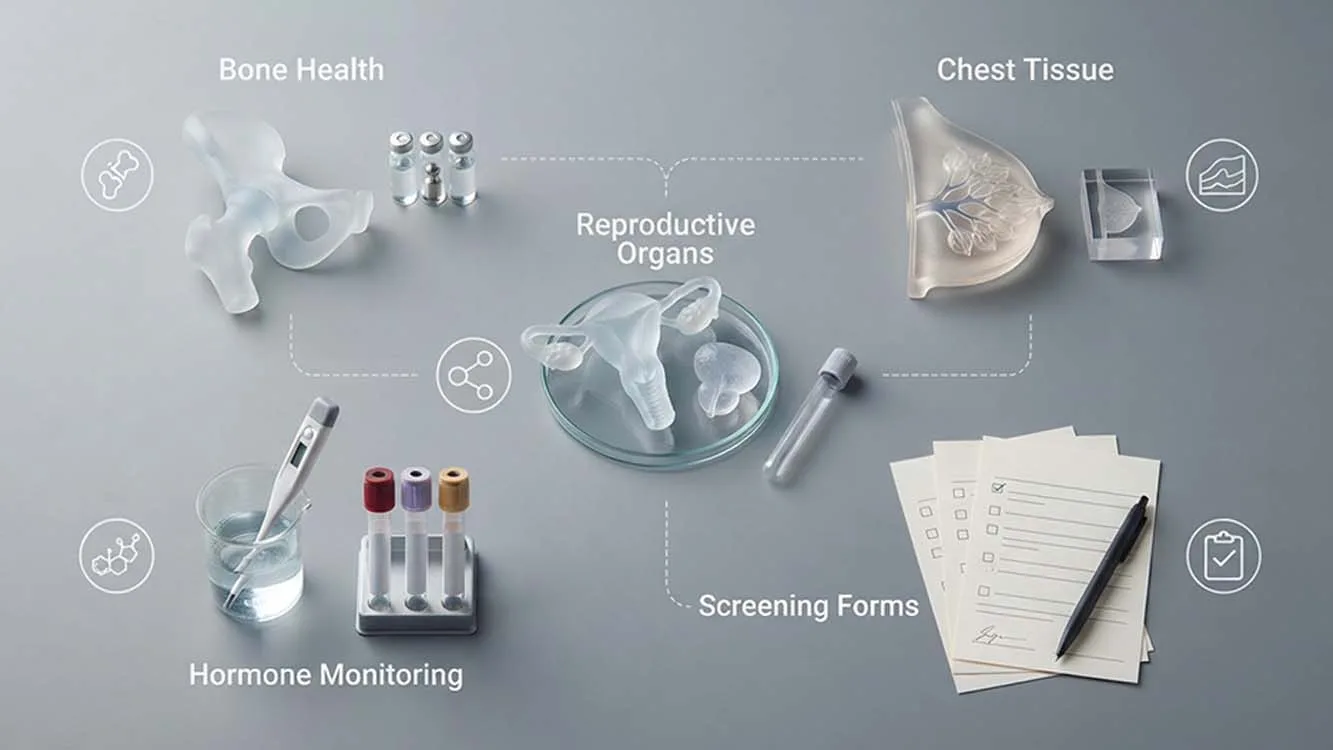
The procedure should be chosen according to the patient’s priorities rather than a standard transition sequence.
Planning may consider:
Which physical feature causes the most discomfort
Desired chest appearance
Desired genital appearance
Urination preferences
Interest in standing urination
Desire for vaginal penetration
Desire for penetrative sexual function
Importance of preserving sensation
Fertility plans
Willingness to accept visible scars
Ability to complete staged surgery
Capacity for long-term aftercare
Medical and anaesthetic health
Financial and travel considerations
Support available during recovery
A person may value sensation more than appearance, while another may prioritise standing urination or the ability to wear certain clothing comfortably.
No single procedure provides every possible functional and cosmetic goal without trade-offs.
What Is Informed Consent In Gender-Affirming Surgery?
Informed consent means the patient understands the proposed procedure and voluntarily agrees to it after discussing:
Expected benefits
Realistic limitations
Permanent physical changes
Scars
Recovery
Possible complications
Sexual function
Urinary function
Fertility effects
Need for revision
Alternative treatments
Consequences of choosing no surgery
Consent should be given without coercion.
The patient should have enough time to ask questions and reconsider the plan.
Signing a form alone is not sufficient. The person must understand what tissues will be removed, repositioned or reconstructed and which changes cannot be reversed reliably.
Is A Mental-Health Evaluation Always Required?
Requirements vary according to the procedure, healthcare setting, local regulations and insurance or funding policies.
A mental-health assessment may help evaluate:
Understanding of the procedure
Stability of the decision
Expectations
Emotional preparation
Existing anxiety or depression
Support during recovery
Ability to follow long-term care
Whether the decision is free from pressure
The purpose should not be to challenge or invalidate a person’s gender identity.
Mental-health conditions do not automatically prevent surgery. However, severe untreated symptoms that affect consent, safety or postoperative care may need support before an elective operation proceeds.
Does A Person Need Hormone Therapy Before Surgery?
Not every operation requires previous hormone therapy.
The answer depends on:
Procedure type
Patient goals
Anatomy
Medical suitability
Local clinical criteria
Whether hormonal changes may alter the surgical plan
Hormone therapy may influence:
Breast development
Fat distribution
Muscle mass
Skin quality
Hair growth
Menstrual function
Testicular size
Vaginal tissue
Emotional wellbeing
For example, a patient considering breast augmentation may be advised to allow hormone-related breast development to stabilise before choosing implant size.
A person who cannot or does not wish to use hormones may still be suitable for selected procedures after individual assessment.
Can Hormones Replace Gender-Affirming Surgery?
Hormones can produce meaningful physical changes, but they cannot create every desired anatomical result.
Feminising hormone therapy may influence:
Breast development
Body-fat distribution
Skin softness
Muscle mass
Body-hair growth
Sexual function
It generally cannot remove prominent facial bone structure or create a vagina.
Masculinising hormone therapy may influence:
Voice depth
Facial and body hair
Muscle development
Menstrual suppression
Clitoral growth
Fat distribution
It cannot remove breast tissue, create a penis or fully change skeletal hip structure after puberty.
Surgery may therefore be considered when hormones do not address the patient’s main concern or when the person does not want hormonal treatment.
Can Gender-Affirming Surgery Affect Fertility?

Yes. Some procedures can permanently remove or damage reproductive capacity.
Fertility may be affected by surgery involving:
Testes
Ovaries
Uterus
Fallopian tubes
Ejaculatory structures
Genital reconstruction
Hormone therapy may also reduce fertility, sometimes temporarily and sometimes unpredictably.
Before treatment, patients who may want genetically related children in the future should consider fertility-preservation options such as:
Sperm freezing
Egg freezing
Embryo freezing
Ovarian-tissue preservation in selected circumstances
Fertility preservation may require pausing or delaying hormone therapy and can involve additional cost, procedures and emotional decisions.
A person who currently does not want children may feel differently later, so irreversible fertility effects should be discussed clearly.
Can Reproductive Organs Be Preserved During Transition?
Sometimes.
A person may choose to retain selected organs depending on the desired procedure and medical safety.
Examples may include:
Keeping the ovaries during hysterectomy planning
Keeping the uterus while undergoing chest surgery
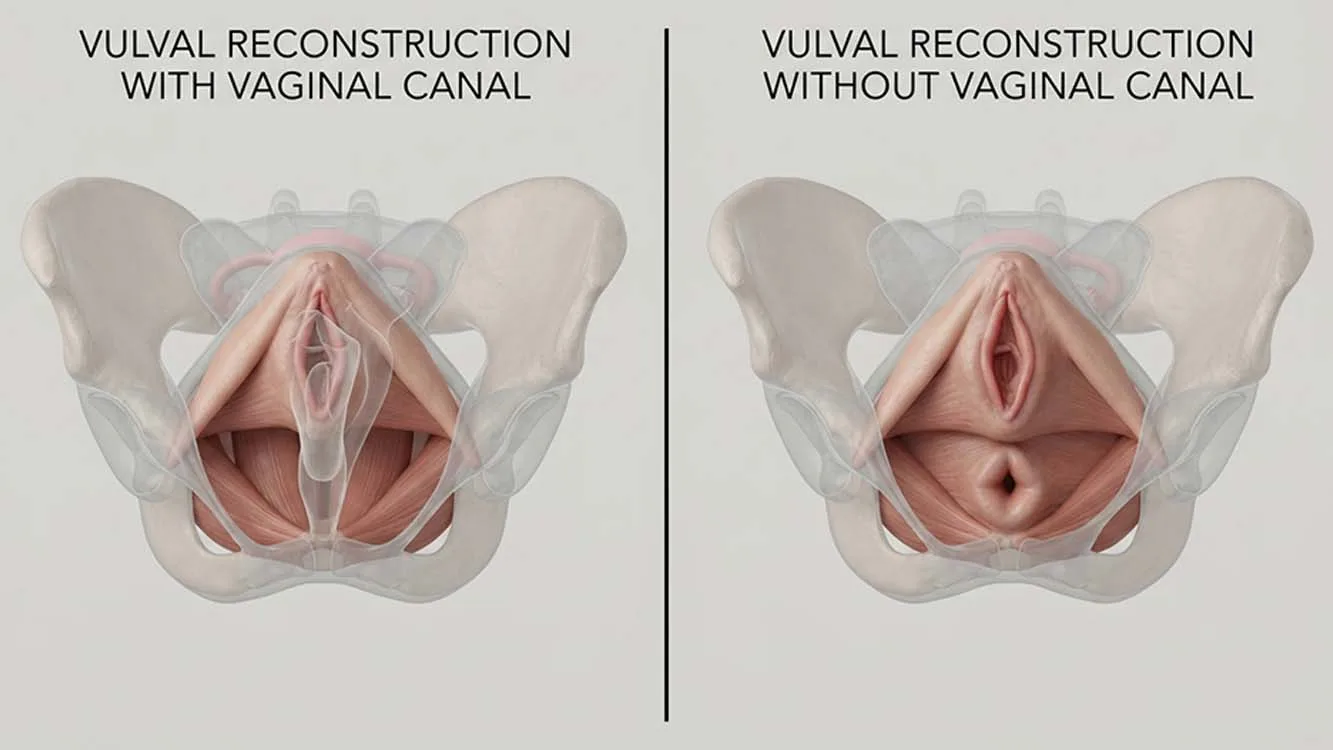
Choosing vulvoplasty without creating a vaginal canal
Choosing genital surgery that preserves selected external tissue
Postponing removal of the testes
Preserving reproductive organs may influence:
Fertility
Cancer screening
Hormone production
Menstruation
Future pregnancy options
Surgical planning
The patient should understand which screening examinations may still be required after transition.
What Is Chest Masculinisation Surgery?
Chest masculinisation surgery creates a flatter and more typically masculine chest contour.
It may involve:
Removal of breast tissue
Removal of excess skin
Repositioning of the nipples
Reduction of areola size
Liposuction around the chest
Contouring near the underarm
Reshaping the lower chest border
The technique depends on:
Breast size
Skin elasticity
Nipple position
Chest width
Desired scar pattern
Existing asymmetry
Patient preference regarding nipple preservation
A smaller chest with firm skin may suit an incision placed near the areola. A larger chest with loose skin may require longer horizontal scars and free nipple grafting.
A scar-minimising technique is not always capable of creating the flattest or most controlled contour.
Can Chest Masculinisation Be Performed Without Nipple Grafts?
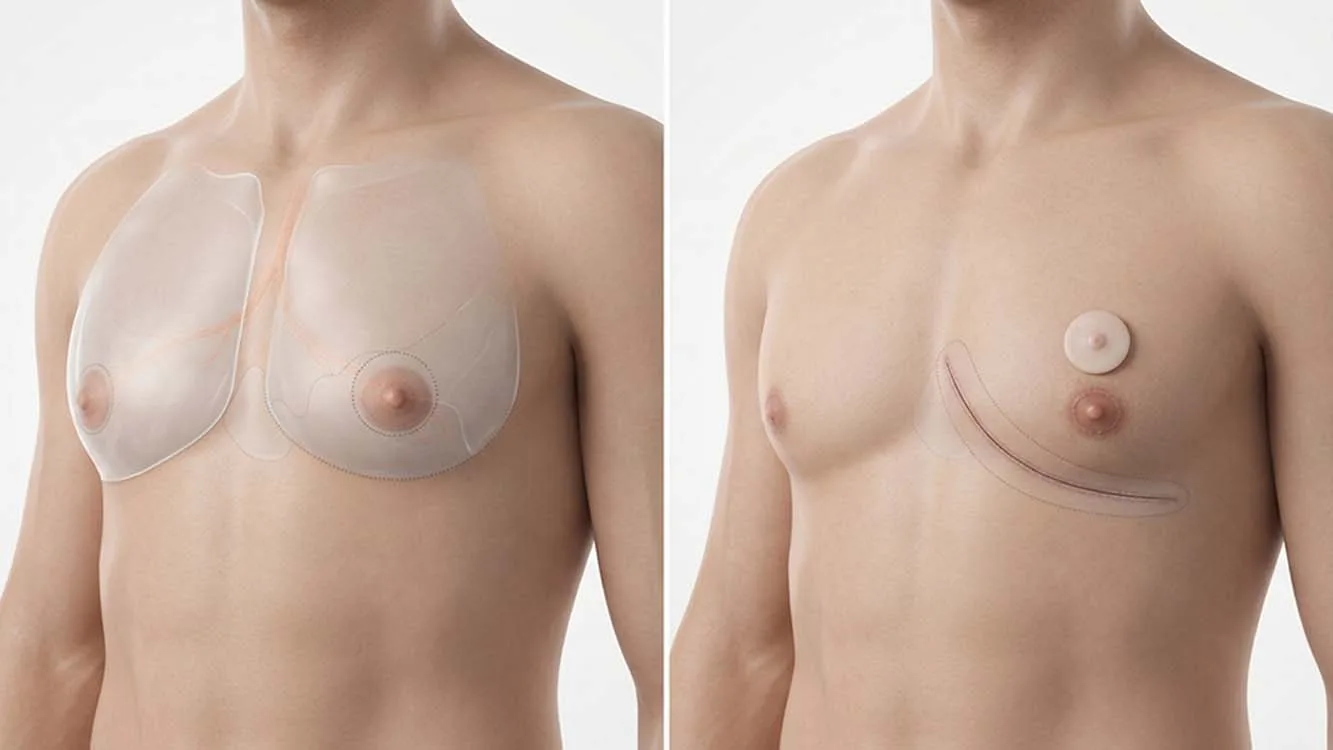
Yes, in selected procedures.
Possible approaches include:
Preserving the nipples on a tissue attachment
Repositioning them while maintaining blood supply
Using free nipple grafts
Removing the nipples entirely when this matches the patient’s preference
Free nipple grafting allows major repositioning but may lead to:
Reduced sensation
Partial pigment loss
Flattening
Uneven shape
Partial or complete graft loss
Some non-binary patients intentionally choose a nipple-free chest.
The design should follow the patient’s goals rather than assuming everyone wants the same masculine chest appearance.
Can Chest Masculinisation Preserve Nipple Sensation?
Sensation may be preserved partially, reduced or lost depending on the technique.
Factors include:
Amount of nipple movement
Nerve preservation
Incision pattern
Tissue thickness
Healing
Use of free nipple grafts
Free nipple grafts commonly lose direct nerve connections during transfer, so sensation may be reduced substantially.
Even when the nipple remains attached, normal sensation cannot be guaranteed.
The patient should understand the difference between preserving the visible nipple and preserving erotic or protective sensation.
What Is Breast Augmentation For Gender Affirmation?
Breast augmentation may be used to create greater breast volume when hormone-related development is insufficient for the patient’s goals.
The procedure may use:
Breast implants
Fat transfer
A combination of both
Planning considers:
Chest width
Existing breast tissue
Skin elasticity
Nipple position
Rib-cage shape
Desired projection
Cleavage expectations
Implant size and profile
Future revision requirements
A broader chest may require a different implant plan from that used in a cisgender woman with the same desired cup size.
The goal should be proportionate breast shape rather than selecting implants only according to volume.
Can Hormone-Developed Breasts Affect Implant Planning?
Yes.
Hormone therapy may create:
Variable breast volume
Different nipple positions
Limited lower-pole development
Wider spacing
Skin expansion
Asymmetry
Waiting for development to stabilise can improve implant planning.
Implants placed too early may become less suitable if natural tissue continues changing.
The surgeon should assess the complete chest and not simply add the same implant size to both sides.
What Is Facial Feminisation Surgery?

Facial feminisation surgery is a group of procedures used to modify facial features that the patient considers too masculine.
It may involve the:
Forehead
Brow ridge
Hairline
Nose
Cheeks
Lips
Jaw
Chin
Neck contour
Possible procedures include:
Forehead bone contouring
Brow reshaping
Hairline advancement
Rhinoplasty
Cheek augmentation
Lip lift
Jaw-angle reduction
Chin reshaping
Tracheal cartilage reduction
Not every patient needs every component.
The most influential procedure may differ according to facial anatomy. A person with a prominent forehead may gain more from upper-face surgery than from extensive jaw reduction.
What Is Facial Masculinisation Surgery?

Facial masculinisation aims to create stronger or more angular features.
It may involve:
Chin augmentation
Jaw augmentation
Cheek modification
Forehead contouring
Rhinoplasty
Fat reduction
Facial implants
Fat grafting in selected regions
Hormone therapy may already create changes through:
Facial hair
Muscle development
Fat redistribution
Skin thickness
Surgery may be considered when the underlying skeletal proportions remain inconsistent with the patient’s goals.
Facial masculinisation should not create excessive width or projection that overwhelms the patient’s natural features.
Can A Prominent Neck Contour Be Reduced?
Yes. Reduction of prominent laryngeal cartilage is sometimes called a tracheal shave or chondrolaryngoplasty.
The procedure aims to reduce the visible neck prominence while protecting the structures involved in voice production.
Excessive cartilage removal can risk:
Voice changes
Vocal weakness
Injury to nearby structures
Contour irregularity
Visible scarring
The operation changes external neck contour but does not necessarily raise vocal pitch.
Voice therapy or another voice-related procedure may be needed when pitch is the main concern.
Can Surgery Change The Voice?

Selected procedures can alter vocal pitch, but surgery does not automatically create the desired communication style.
Voice perception is influenced by:
Pitch
Resonance
Intonation
Speech pattern
Articulation
Loudness
Breathing
Non-verbal communication
Voice therapy may help develop these features without surgery or may support recovery after a procedure.
Voice surgery can carry risks such as:
Hoarseness
Reduced vocal range
Weakness
Unstable pitch
Scarring
Breathing problems in uncommon cases
The goal should be a functional voice the patient can use comfortably—not simply the highest or lowest possible pitch.
What Is Vaginoplasty?

Vaginoplasty is genital reconstruction that creates external vulval structures and, in many techniques, an internal vaginal canal.
The procedure may involve:
Removal or rearrangement of genital tissue
Creation of a vaginal opening
Formation of the clitoris
Formation of the labia
Shortening and repositioning of the urethra
Construction of a vaginal canal
Preservation of sensory nerves where possible
Different techniques may use:
Penile and scrotal skin
Peritoneal tissue
Intestinal tissue in selected cases
Additional grafts
The choice depends on available tissue, previous surgery, medical factors and the desired depth.
Vaginoplasty is a major operation requiring long-term wound care and, when a canal is created, regular dilation.
What Is Vulvoplasty?
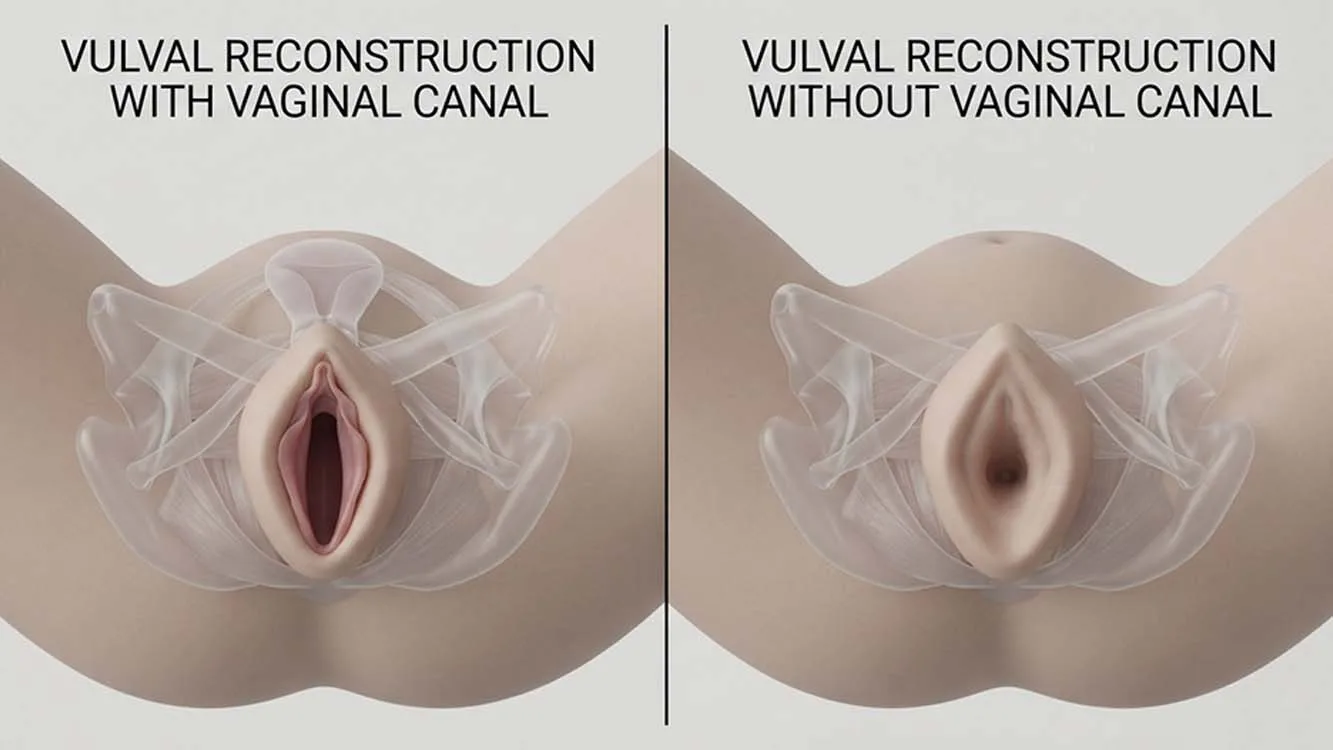
Vulvoplasty creates external vulval anatomy without constructing a deep vaginal canal.
It may be considered by someone who:
Does not desire vaginal penetration
Does not want long-term dilation
Has medical reasons to avoid a longer operation
Prefers lower internal surgical complexity
Wants external genital affirmation
Vulvoplasty may still involve:
Clitoral construction
Labial construction
Urethral repositioning
Significant healing
Risk of wound complications
Possible revision
Choosing no vaginal canal should be a deliberate preference rather than a decision made without understanding the difference.
What Is Orchiectomy?
Orchiectomy is removal of the testes.
It may be performed:
As a standalone gender-affirming procedure
Before later vaginoplasty
Alongside another genital operation
Possible effects include:
Loss of sperm production
Major reduction in testosterone production
Permanent infertility
Changes in hormone requirements
Reduction of testicular volume
Psychological relief for selected patients
After removal of the testes, ongoing hormone management remains important for bone, cardiovascular and general health.
A patient should not stop all hormones without medical supervision.
What Is Metoidioplasty?
Metoidioplasty uses hormonally enlarged clitoral tissue to create a small phallus.
The procedure may include:
Release of the clitoral tissue
Tissue rearrangement
Urethral lengthening
Scrotal reconstruction
Testicular implants
Removal of the vagina in selected cases
Potential advantages may include:
Use of existing sensitive tissue
Preservation of spontaneous erectile function
Avoidance of a large donor-site scar
A generally shorter reconstruction than phalloplasty
Limitations may include:
Smaller phallic size
Limited penetrative ability
Possible urinary complications
Need for staged surgery
Standing urination may be possible when urethral lengthening is successful, but it cannot be guaranteed.
What Is Phalloplasty?
Phalloplasty creates a penis using tissue transferred from another part of the body.
Common donor areas may include:
Forearm
Thigh
Back or side of the torso in selected techniques
The transferred tissue may be used to create:
Phallic shaft
Urethra
External contour
Sensory reconstruction
Phalloplasty often requires several stages and may include:
Urethral lengthening
Scrotoplasty
Testicular implants
Glans shaping
Penile implant placement
It is a complex reconstructive process rather than a single simple operation.
Important considerations include:
Donor-site scar
Urinary complications
Sensory recovery
Implant complications
Need for revision
Long recovery
Multiple operations
What Is Urethral Lengthening?
Urethral lengthening extends the urinary passage so that the patient may urinate through the reconstructed penis.
It may be performed during:
Metoidioplasty
Phalloplasty
The procedure can support standing urination, but it also introduces significant risk of:
Urethral fistula
Urethral narrowing
Spraying
Difficulty emptying the bladder
Infection
Need for catheterisation
Revision surgery
A patient who does not prioritise standing urination may choose a procedure without urethral lengthening to reduce urinary complexity.
Can Genital Surgery Preserve Sexual Sensation?
Preserving sensation is an important goal, but the outcome varies.
Sensation depends on:
Nerve preservation
Nerve connection
Healing
Scar tissue
Tissue used
Existing sensation
Complications
Time after surgery
After vaginoplasty, clitoral sensation may be preserved through careful use of sensitive genital tissue.
After metoidioplasty, the hormonally enlarged clitoral tissue usually remains central to sexual sensation.
After phalloplasty, protective and erotic sensation may develop gradually when nerves are connected successfully, but the degree and timing are unpredictable.
Orgasm may remain possible after several procedures, but it should never be guaranteed.
Can Gender-Affirming Surgery Guarantee Penetrative Sexual Function?
No.
Penetrative function depends on the procedure and healing.
After vaginoplasty, vaginal depth and comfort may depend on:
Surgical technique
Tissue availability
Dilation
Scar formation
Pelvic-floor function
Lubrication
Wound healing
After phalloplasty, penetrative rigidity commonly requires a penile implant placed after the reconstructed tissue has healed.
Implants can develop:
Infection
Erosion
Mechanical failure
Displacement
Need for replacement
Functional goals should be discussed specifically rather than assuming that external appearance guarantees penetrative ability.
Why Is Hair Removal Important Before Some Genital Procedures?
Hair-bearing skin may be used to create internal or external genital structures.
When hair-bearing tissue is placed inside a vaginal canal or urethra, persistent growth may cause:
Irritation
Odour
Discharge
Hair accumulation
Infection
Stone formation
Difficulty with hygiene
Permanent hair reduction may therefore be recommended in mapped donor areas before selected procedures.
The process can require many sessions and should be planned well before surgery.
Unnecessary hair removal outside the confirmed donor area can waste time and money.
Who May Be A Suitable Candidate For Gender-Affirming Surgery?

A potential candidate may be an adult who:
Has clearly considered their goals
Understands the permanent changes
Has realistic expectations
Can provide informed consent
Is medically fit for the proposed operation
Can stop nicotine when required
Can follow recovery instructions
Has adequate support
Understands fertility implications
Can attend long-term follow-up
Has considered procedure-specific complications
Suitability is based on the complete medical and personal situation—not on whether the patient appears sufficiently masculine or feminine to another person.
When Should Gender-Affirming Surgery Be Postponed?
Surgery may need to be delayed when there is:
Active infection
Poorly controlled diabetes
Significant untreated heart or lung disease
Severe anaemia
Poor nutritional status
Active nicotine use
Unstable housing or inadequate recovery support
Inability to follow wound care
Uncertainty about permanent changes
Untreated symptoms affecting informed consent
Recent major health changes
Unrealistic functional expectations
Postponement should be framed as improving safety and readiness—not as punishment or denial of gender identity.
A clear plan should explain which medical or practical concerns need to be addressed before reconsidering surgery.
Keep reading
PRP Vs Hair Transplant: When Each One Actually Works?
PRP and hair transplant work differently for hair loss. PRP supports weak but existing follicles, while hair transplant restores areas where follicles are permanently lost. This guide explains when PRP works, when transplant is needed, expected results, limitations and how to choose the right hair restoration approach.

BIG FUE Hair Transplant: Restoring Hair Density For Advanced Baldness
BIG FUE Hair Transplant is an advanced FUE-based hair restoration technique designed for individuals experiencing extensive hair loss and requiring a larger number of grafts. The procedure focuses on restoring coverage, creating a natural hairline, and achieving balanced density through detailed donor

Beard Hair Transplant: Complete Guide To Procedure, Recovery & Results
Beard Hair Transplant is an advanced facial hair restoration procedure that helps improve patchy or uneven beard growth using the individual's own hair follicles. This guide explains the beard transplant procedure, graft extraction, beard design, recovery timeline, benefits, candidate suitability, and factors that influence natural-looking long-term results at Hair & Shape Clinic, Mumbai.