Is BIG FUE Better For Advanced Hair Loss, Or Can Too Many Grafts Damage The Donor Area?
Introduction
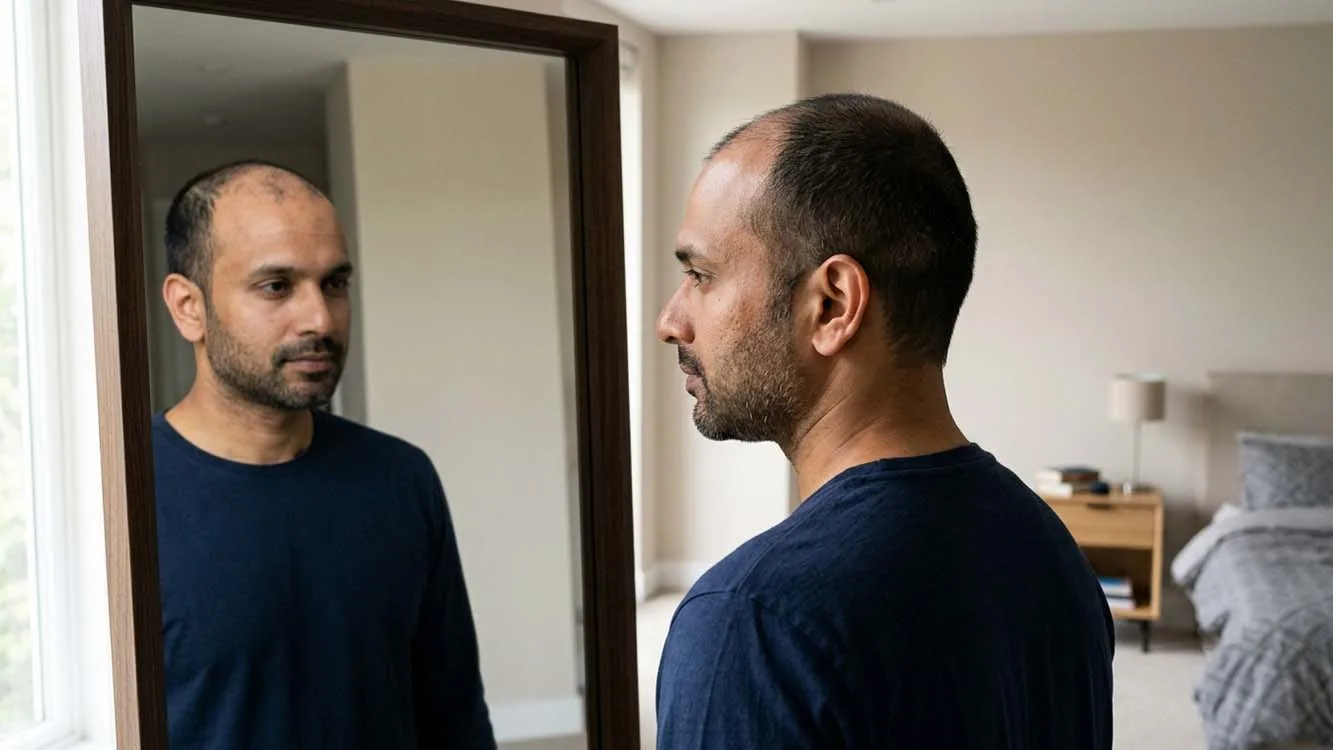
Men with advanced hair loss often want the maximum possible coverage in one hair-transplant procedure. This has led to growing interest in terms such as BIG FUE, large-session FUE and FUE megasession.
The direct answer is that BIG FUE is generally used to describe a large follicular unit excision procedure in which a comparatively high number of grafts are harvested and implanted over one long session or consecutive surgical days. It is not a universally standardised medical technique with one fixed graft count, device or protocol.
Some clinics may use the term for:
Higher-graft FUE sessions
Surgery performed over one or two days
Coverage of extensive frontal, mid-scalp and crown hair loss
Combined scalp and beard donor harvesting
Special graft-storage or implantation systems
A clinic-specific variation of conventional FUE
A larger procedure can be useful for an appropriately selected patient with advanced baldness and a strong donor area. However, transplanting more grafts is not automatically better.
The final result depends on:
Donor-area capacity
Graft quality
Hair calibre
Follicular-unit composition
Safe extraction pattern
Hair-loss grade
Recipient-area size
Hairline design
Graft handling
Time outside the body
Placement angle and direction
Existing miniaturised hair
Future progression of hair loss
The donor area contains a limited lifetime supply of transplantable follicles. Attempting to extract an excessive number in one procedure may produce visible thinning, patchiness or permanent donor depletion.
The goal of BIG FUE should therefore be maximum safe cosmetic improvement, not simply the highest graft number that can be advertised.
What Does BIG FUE Mean?
BIG FUE is not a universally defined surgical classification.
In general usage, it refers to a large FUE hair transplant in which individual follicular units are removed from the donor area and transferred to a broad area of hair loss.
Traditional FUE and BIG FUE follow the same basic harvesting principle:
Individual follicular units are identified in the donor region.
A small circular punch is used to separate each unit from the surrounding tissue.
The graft is gently extracted.
Harvested grafts are inspected and preserved.
Recipient sites are created or grafts are implanted using the selected technique.
The follicles are placed according to the required angle, direction and distribution.
The word “BIG” usually refers to the scale of the procedure rather than a completely different biological process.
Some providers may associate BIG FUE with specific punches, preservation solutions, cooling systems or implantation tools. These may influence workflow, but the name itself does not guarantee better graft survival, higher density or a safer donor result.
FUE is formally a donor-harvesting method in which follicular units are removed using small circular punches. The implantation stage may still be performed with blades, needles or implanter devices according to the surgical plan.
Is BIG FUE The Same As A Megasession?
The terms are often used similarly, although their definitions may vary between clinics.
A hair-transplant megasession generally refers to a procedure involving a large number of grafts completed during one extended session or across closely scheduled surgical days.
The International Society of Hair Restoration Surgery has historically described megasessions as procedures involving approximately 2,000 or more grafts, but modern clinics may use the term for considerably larger numbers. There is no single graft count that automatically makes a procedure safe, advanced or superior.
A BIG FUE procedure may involve:
One long surgical day
Two consecutive days
Several thousand grafts
Scalp donor harvesting
Scalp and beard donor combination
Coverage of multiple balding zones
A high graft count should not be selected before the donor area is measured.
Two patients with the same degree of baldness may have very different safe extraction limits because of differences in:
Donor density
Head size
Hair-shaft thickness
Follicular-unit grouping
Hair colour and skin contrast
Curl
Donor miniaturisation
Previous transplant surgery
Preferred future hairstyle
The term megasession describes the scale of surgery. It does not establish whether that scale is suitable for a particular patient.
How Is BIG FUE Different From Regular FUE?
The difference is mainly the number of grafts, duration of surgery and extent of planning required.
A smaller FUE procedure may focus on:
Hairline refinement
Temple restoration
A limited frontal area
Scar camouflage
Density improvement in a small zone
BIG FUE may aim to address:
Advanced frontal recession
Extensive mid-scalp thinning
Combined front and mid-scalp loss
Selected crown restoration
Higher Norwood-pattern hair loss
Previous under-corrected transplantation
A large session increases the importance of:
Donor mapping
Extraction distribution
Team coordination
Graft counting
Hydration and temperature control
Procedure duration
Anaesthetic planning
Patient positioning
Graft-storage time
Recipient-site strategy
Postoperative monitoring
A technically successful small FUE procedure cannot simply be multiplied into a large one without additional planning.
As graft numbers increase, small inefficiencies in extraction, handling or placement can affect a much larger number of follicles.
Does BIG FUE Always Provide More Density?
No. More grafts do not automatically create greater visible density.
The cosmetic effect depends on where and how the grafts are used.
For example, 3,500 strategically placed grafts may create a stronger visual result than 4,500 grafts spread thinly across an excessively large area.
Density is influenced by:
Size of the recipient area
Number of hairs within each graft
Hair calibre
Hair curl
Hair-to-skin colour contrast
Placement direction
Existing native hair
Distribution between frontal and crown zones
Hairline height
Survival of transplanted grafts
A follicular unit may contain:
One hair
Two hairs
Three hairs
Occasionally four or more hairs
Therefore, two patients receiving the same graft count may receive a different total number of hairs.
Single-hair grafts are often valuable for creating a soft hairline. Multi-hair grafts can contribute more visual density behind the frontal edge.
A graft count alone does not describe the quality of the surgical plan.
Can BIG FUE Cover The Front, Mid-Scalp And Crown In One Procedure?
It may be possible in selected patients, but complete dense coverage of every balding region is not always realistic.
The front, mid-scalp and crown together can create a very large recipient area.
Spreading a limited donor supply across all three zones may result in:
A weak frontal frame
Low density throughout the scalp
A visible crown despite extensive graft use
Insufficient grafts for future hair loss
Greater contrast between transplanted and thinning native hair
The frontal region generally produces the strongest cosmetic change because it frames the face and is visible during direct interaction.
The crown can consume a large number of grafts because of:
Its broad surface area
Spiral growth pattern
Multiple viewing angles
Light reflection from the scalp
Ongoing enlargement of the bald area
For some patients, a staged strategy may be more appropriate:
Establish the hairline and frontal frame.
Build mid-scalp coverage.
Reassess donor reserves and hair-loss stability.
Address the crown later when appropriate.
Attempting complete coverage in one session should not compromise the area that matters most cosmetically.
Who May Be Suitable For BIG FUE?
A potential candidate may have:
Advanced but clearly diagnosed pattern hair loss
A sufficiently dense and stable donor area
Good scalp laxity and skin health
Appropriate hair calibre
Realistic density expectations
No major donor miniaturisation
Adequate general health for prolonged surgery
A willingness to maintain existing hair medically when appropriate
An understanding that another procedure may still be needed later
The donor area should be assessed beyond simple visual inspection.
Evaluation may include:
Hair density per square centimetre
Follicular units per square centimetre
Average hairs per follicular unit
Hair-shaft diameter
Miniaturisation
Safe donor boundaries
Existing scars
Previous extraction pattern
Beard-donor suitability when relevant
Estimated future donor reserve
The safe donor zone is not unlimited. Published hair-restoration guidance emphasises that available donor hair places a direct limit on achievable coverage and density.
Who May Not Be A Good Candidate For A Large FUE Session?
BIG FUE may be unsuitable or require postponement when there is:
Low donor density
Extensive donor miniaturisation
Diffuse unpatterned hair loss
Active scarring alopecia
Unstable or rapidly progressing hair loss
Significant scalp inflammation
Unrealistic expectations of full teenage density
Insufficient permanent donor hair
A history of excessive FUE extraction
Poorly controlled medical illness
A bleeding disorder
Active infection
Inability to tolerate a lengthy procedure
Unwillingness to follow postoperative care
Young patients with early but rapidly progressing hair loss require particularly careful planning.
A low, dense hairline may look attractive initially but consume a large portion of the donor supply. If native hair continues thinning behind it, the patient may later develop an isolated transplanted hairline with inadequate grafts available for the remaining scalp.
The decision should account for the person’s likely lifetime hair-loss pattern rather than only the current photograph.
Why Is The Donor Area So Important In BIG FUE?
The donor area is the foundation of every hair transplant.
Follicles are usually harvested from the back and sides of the scalp because these areas are relatively resistant to the hormonal process responsible for common pattern baldness.
However, resistance does not mean that every hair across the back and sides is permanently safe.
The donor zone may contain:
Strong permanent follicles
Borderline follicles
Miniaturised hairs
Areas likely to thin with age
Lower-density regions
Previous extraction scars
Harvesting must remain within appropriately assessed boundaries.
A large recipient area cannot create new donor hair. Surgery only redistributes the patient’s existing follicles.
Once a graft has been removed from the donor region, another follicle does not grow in its original place.
This makes donor planning a lifetime resource-management decision.
Can Too Many FUE Grafts Be Removed?
Yes. Excessive extraction can produce donor overharvesting.
Overharvesting occurs when too many follicular units are removed or when extractions are concentrated too closely within a limited region.
Possible consequences include:
Patchy donor thinning
A moth-eaten appearance
Visible circular scars
Uneven density
Greater scalp visibility
Poor blending with short hairstyles
Reduced graft availability for future surgery
Permanent cosmetic damage
The risk depends not only on the total graft number but also on:
Original donor density
Punch size
Extraction spacing
Safe-zone boundaries
Skin-to-hair contrast
Hair length
Healing response
Previous procedures
Whether the extraction pattern is evenly distributed
A number that is safe for one patient may be excessive for another.
The surgeon should estimate how the donor area will look after extraction, not merely whether the desired number of grafts can technically be removed.
Does A Higher Donor Density Automatically Allow Unlimited Grafts?
No. A strong donor area may permit a larger harvest, but it still has biological and cosmetic limits.
Even a patient with high density must retain enough hair to:
Conceal extraction sites
Maintain a natural appearance at short hair lengths
Support possible future procedures
Compensate for progressive hair loss
Avoid visible differences between donor zones
The donor area should not be treated as a single uniform block.
Density may vary between:
Upper occipital scalp
Central occipital scalp
Lower occipital scalp
Areas above the ears
Temporal donor regions
Follicular-unit quality may also vary across these zones.
Safe extraction therefore requires mapping rather than removing the same percentage from every location.
Can Beard Hair Be Used During BIG FUE?
Beard hair may supplement scalp donor hair in selected patients, especially when advanced baldness requires additional coverage.
It is commonly harvested from the area beneath the jawline when the beard density and skin characteristics are suitable.
Beard grafts can provide:
Thicker hair shafts
Additional coverage
Greater visual bulk
Support for the mid-scalp or crown
Conservation of selected scalp grafts
However, beard hair differs from scalp hair in:
Texture
Growth cycle
Curl
Length
Feel
Colour
Number of hairs per graft
Because beard hair is often coarser, it may be unsuitable for the delicate leading edge of the frontal hairline.
It is more commonly blended behind scalp-hair grafts to improve visual density.
Using beard grafts should not be presented as creating an unlimited donor supply. The beard also has an extraction limit, and excessive harvesting may leave visible thinning or small scars beneath the jaw.
Can Chest Or Other Body Hair Be Used?
Body hair may be considered in highly selected cases when scalp and beard donor resources are insufficient.
Possible areas include:
Chest
Abdomen
Arms
Legs
However, body hair can differ substantially from scalp hair in:
Length
Thickness
Curl
Colour
Growth duration
Resting duration
Cosmetic predictability
Body-hair grafts may not grow as long as scalp hair and may retain some of their original characteristics after transplantation.
They are therefore generally considered supplementary rather than equivalent replacements for high-quality scalp donor grafts.
A small test procedure may sometimes be discussed before relying heavily on body hair for a large restoration.
Why Should Future Hair Loss Be Considered Before BIG FUE?
Hair transplantation does not stop the progression of pattern hair loss.
The transplanted follicles may remain, while surrounding native hair continues to thin.
Without long-term planning, a patient may develop:
Gaps behind the transplanted hairline
Progressive crown enlargement
Isolated dense patches
Uneven density
A need for additional surgery
Insufficient donor reserves for correction
The treatment plan should estimate:
Current hair-loss grade
Family history
Age
Miniaturisation pattern
Rate of progression
Likely future crown involvement
Response to medical treatment
Remaining donor reserve
A large first procedure can be appropriate, but it should not consume grafts that may be more important later.
The best immediate result is not always the best lifetime result.
How Is A BIG FUE Procedure Planned?
A large FUE procedure should begin with donor-capacity planning rather than a target graft number selected from a package.
The planning process may include:
Detailed scalp examination
Trichoscopic assessment
Measurement of donor density
Evaluation of hair-shaft calibre
Calculation of average hairs per follicular unit
Identification of miniaturised donor hair
Mapping of the safe donor zone
Assessment of beard or body donor options
Estimation of the recipient-area size
Review of future hair-loss progression
Discussion of medical hair-loss treatment
Creation of a long-term graft budget
The surgeon should determine how many grafts can be removed while leaving the donor area cosmetically acceptable.
This is different from asking how many grafts can physically be extracted during one operation.
A safe plan must account for:
The current procedure
Possible future hair loss
Potential second or third surgeries
The patient’s preferred hairstyle
Age-related donor thinning
The possibility of needing repair work later
The planned graft number may be reduced after donor examination, even when the balding area appears to require more coverage.
How Is The Safe Donor Zone Identified?
The safe donor zone generally refers to areas at the back and sides of the scalp that are expected to remain relatively resistant to pattern hair loss.
Its boundaries differ between patients.
The zone may become narrower when there is:
Extensive family history of baldness
High Norwood-pattern hair loss
Miniaturisation near the donor borders
Retrograde thinning above the neck
Thinning around the ears
Diffuse donor weakness
Previous harvesting outside stable areas
Hair should not be removed simply because it is currently visible and thick.
Follicles extracted from unstable donor borders may later thin after transplantation because they were not truly resistant to the underlying hair-loss process.
Donor mapping should therefore distinguish between:
Strong central donor follicles
Borderline peripheral follicles
Miniaturised hairs
Previously harvested areas
Regions that should be preserved
A fixed rectangular donor template cannot be applied safely to every patient.
How Is Donor Density Measured?
Donor density may be assessed by counting follicular units and hairs within a defined area of the scalp.
Important measurements can include:
Follicular units per square centimetre
Total hairs per square centimetre
Average hairs in each graft
Hair-shaft thickness
Percentage of miniaturised hairs
Variation between donor regions
These measurements provide more useful information than visual thickness alone.
For example, two patients may appear to have similarly dense donor hair, but one may have:
More three-hair follicular units
Thicker individual shafts
Greater curl
Lower scalp-to-hair contrast
That patient may achieve stronger visual coverage with fewer grafts.
Another patient may have many single-hair follicular units or fine, straight hair. Even with a reasonable graft count, the visual density may be lower.
The donor assessment should consider both the number of available grafts and the cosmetic value of each graft.
What Is A Lifetime Donor Graft Budget?
A lifetime donor graft budget is an estimate of how many follicular units may be safely harvested across all future procedures.
It is not an exact fixed number.
The estimate can change because of:
Ageing
Progression of donor thinning
Medical treatment response
Previous extraction quality
Changes in hairstyle
Development of scalp disease
Need for corrective surgery
Use of beard or body hair
A responsible budget helps prevent excessive graft use during the first procedure.
For example, using a very high number of grafts to create a low, dense hairline may leave too little donor supply for:
Mid-scalp loss
Crown expansion
Future temple recession
Repair of a previous transplant
Correction of donor scarring
The available donor supply should be distributed according to long-term cosmetic priorities rather than immediate enthusiasm.
How Many Grafts Can Be Safely Extracted In BIG FUE?
There is no universally safe graft number for every patient.
The limit depends on:
Donor density
Safe donor surface area
Hair calibre
Average hairs per follicular unit
Previous FUE procedures
Punch size
Extraction pattern
Scalp visibility
Hair colour and skin contrast
Preferred donor hair length
Future surgical needs
A patient with a strong, broad donor area may tolerate a larger harvest than someone with limited density or extensive miniaturisation.
The number should be calculated after examining the donor scalp directly.
Statements such as “everyone can receive 5,000 grafts” or “the maximum number is always better” ignore individual anatomy.
A safe session may involve fewer grafts than the patient hoped for. This can be a sign of conservative donor management rather than inadequate treatment.
Why Does The Extraction Percentage Matter?
The extraction percentage refers to the proportion of follicular units removed from a donor region.
Removing too large a percentage can reduce the remaining visual density.
The donor scalp must retain enough hair to:
Conceal the spaces left by extraction
Blend with adjacent areas
Cover small circular scars
Look acceptable under normal lighting
Remain presentable with shorter hairstyles
The same extraction percentage may look different in different patients.
A higher percentage may be more noticeable when the patient has:
Fine hair
Straight hair
Strong contrast between dark hair and light scalp
Low original density
Large punch scars
A preference for very short hair
Poor healing
Extraction should also be distributed evenly. Taking too many grafts from one visually accessible zone can produce patchiness even when the total number appears acceptable.
Why Is Uniform Donor Harvesting Important?
Uniform harvesting spreads extractions throughout the safe donor region rather than concentrating them in one small area.
Poor distribution may create:
Visible thin bands
Moth-eaten patches
Uneven density
Sharp differences between upper and lower donor zones
Difficulty wearing short hairstyles
A balanced pattern considers:
Natural variation in density
Safe donor boundaries
Previous extraction sites
Direction of hair growth
Scalp curvature
Areas hidden or exposed by common hairstyles
Uniform harvesting does not mean removing an identical number from every square centimetre.
Lower-density areas may require fewer extractions, while stronger regions may support a slightly higher harvest.
The extraction pattern should preserve visual continuity across the complete donor area.
Does Punch Size Affect The Donor Area?
Yes. The punch must be wide enough to release the follicular unit while limiting unnecessary removal of surrounding tissue.
A punch that is too small may increase:
Graft transection
Follicular damage
Difficulty extracting multi-hair units
Repeated attempts around the same graft
A punch that is unnecessarily large may increase:
Visible circular scars
Loss of surrounding tissue
Donor-area depletion
Healing time
Scalp visibility with short hair
The ideal size depends on:
Follicular-unit diameter
Hair curl
Skin firmness
Graft depth
Number of hairs per unit
Surgeon technique
Punch size should not be selected solely for marketing claims such as “smallest punch” or “scarless extraction.”
Every FUE extraction creates a small wound and leaves some degree of scar formation.
Can FUE Be Scarless?
No surgical extraction method is completely scarless.
FUE avoids one long linear donor scar, but each extracted follicular unit leaves a small circular wound.
After healing, these sites may appear as tiny pale dots.
Their visibility depends on:
Punch size
Skin tone
Healing response
Extraction density
Hair length
Donor overharvesting
Previous procedures
Sun exposure
Individual scarring tendency
With conservative harvesting and adequate hair coverage, the scars may be difficult to notice during ordinary viewing.
They may become more visible when:
The head is shaved very closely
The donor area is depleted
Extraction sites are clustered
Larger punches were used
The patient develops hypopigmented scars
Multiple procedures have been performed
Patients planning to maintain a skin-fade or completely shaved hairstyle should discuss this before surgery.
What Is Graft Transection?
Graft transection occurs when part of a follicular unit is cut or damaged during extraction.
A transected graft may contain:
A severed hair shaft
Damaged follicular tissue
Fewer viable follicles than expected
No usable follicle in severe cases
Transection can be influenced by:
Hair curl beneath the skin
Incorrect punch angle
Excessive punch depth
Inadequate visualisation
Scarred donor tissue
Very tight skin
Surgical fatigue
Speed-focused extraction
A low transection rate is particularly important during BIG FUE because even a small percentage of damage can represent many lost follicles when thousands of grafts are harvested.
Discarded or non-viable grafts still leave extraction wounds in the donor area. They therefore consume donor tissue without contributing to the result.
Why Does Procedure Duration Matter?
Large FUE procedures may take many hours or continue over consecutive days.
A longer operation can affect:
Patient comfort
Team concentration
Graft storage time
Hydration
Anaesthetic exposure
Swelling
Surgical fatigue
Consistency of extraction and implantation
The procedure should be organised so that grafts are not left outside the body longer than necessary.
Large sessions may be divided into coordinated stages:
Harvesting one donor region
Sorting and storing the grafts
Creating recipient sites
Implanting the harvested group
Continuing with another planned donor section
The exact workflow varies, but efficiency should protect graft quality rather than prioritise speed alone.
A procedure lasting longer is not automatically more advanced, and a faster procedure is not automatically safer.
Why Is Graft Storage Important?
After extraction, grafts temporarily lose their natural blood supply.
During this period, they must be protected from:
Dehydration
Excessive warmth
Mechanical trauma
Prolonged time outside the body
Inappropriate handling
Contamination
Grafts are generally kept in a suitable preservation solution under controlled conditions until implantation.
The team should maintain:
Accurate graft counts
Appropriate moisture
Controlled temperature
Separation of delicate single-hair grafts
Careful handling of multi-hair units
Efficient implantation
A high harvested number has little value if grafts are damaged during storage or placement.
Survival depends on the complete chain of care from extraction to implantation.
Can A BIG FUE Procedure Be Completed Over Two Days?
Yes. Some large procedures are planned over two consecutive days.
A two-day approach may help:
Reduce the duration of each surgical day
Improve patient comfort
Limit team fatigue
Organise large graft numbers
Treat separate recipient zones methodically
Reassess donor appearance between stages
However, two-day surgery is not automatically safer.
It still requires careful consideration of:
Total extraction percentage
Cumulative anaesthetic exposure
Swelling
Sleeping position
Protection of implanted grafts
Donor healing
Graft distribution
Patient fitness
The second day should not become an opportunity to exceed the safe donor plan because the first day appeared technically successful.
The total procedure must remain within the original lifetime donor strategy.
How Is Local Anaesthesia Managed During A Large FUE Session?
FUE is commonly performed using local anaesthesia, allowing the patient to remain awake.
During a large session, anaesthesia may be administered to:
The donor scalp
The recipient area
Additional beard donor areas when used
The treatment team should account for:
Total anaesthetic dose
Patient weight
Medical conditions
Duration of surgery
Additional medicines
Fluid balance
Blood pressure
Patient comfort
Local anaesthesia reduces pain, but the patient may still feel:
Pressure
Movement
Pulling
Vibration
Changes in position
Temporary tightness
Long procedures require planned breaks, hydration and positioning.
A high graft target should never override safe anaesthetic limits or the patient’s ability to tolerate the session.
Can Sedation Be Used During BIG FUE?
Mild sedation may be considered in selected settings, but it is not required for every patient.
The decision depends on:
Anxiety level
Procedure duration
Medical history
Treatment setting
Monitoring facilities
Other medicines
Ability to remain still
Sedation introduces additional safety considerations and should be administered with appropriate monitoring.
A patient should still be able to follow positioning instructions when required.
Sedation should not be used simply to make an excessively long or poorly planned procedure easier to tolerate.
How Is The Recipient Area Designed?
Recipient planning determines where the limited graft supply will produce the greatest visual benefit.
The design may include:
Frontal hairline
Temporal transitions
Frontal forelock
Mid-scalp
Crown
Existing thinning zones
Areas reserved for future loss
The hairline is generally designed before surgery while considering:
Age
Facial proportions
Forehead height
Degree of baldness
Donor supply
Future recession
Hair characteristics
Ethnic and individual facial features
A conservative hairline can preserve grafts and remain appropriate as the patient ages.
A low juvenile hairline may require thousands of additional grafts and create long-term planning problems.
Why Are Single-Hair Grafts Used At The Hairline?
A natural hairline does not begin as a dense, straight wall of thick hair.
The leading edge usually contains:
Fine individual hairs
Irregular spacing
Small natural breaks
Gradual increase in density behind the front
Single-hair follicular units are therefore valuable for creating a soft transition.
Placing thick multi-hair grafts at the very front may produce:
A plug-like appearance
Harsh density
An unnatural straight border
Visible grouped hairs
Difficulty styling the hairline naturally
Multi-hair grafts are usually more useful behind the frontal edge, where they can contribute visual density.
During BIG FUE, graft sorting becomes especially important because thousands of grafts must be assigned to appropriate zones.
How Are Grafts Distributed Between The Front And Crown?
The distribution depends on cosmetic priorities and donor capacity.
The frontal region often receives greater priority because it:
Frames the face
Influences appearance from the front
Affects everyday social interaction
Can be styled to help conceal areas behind it
The crown may require many grafts to produce moderate visual improvement.
A plan may allocate:
Higher density to the frontal forelock
Moderate density through the mid-scalp
Lower or delayed density in the crown
Conserved grafts for future progression
A patient with advanced hair loss may prefer broader coverage, while another may choose stronger frontal density and leave the crown thinner.
These choices should be discussed before surgery rather than discovered during implantation.
Why Can Crown Transplantation Consume So Many Grafts?
The crown has a circular or spiral growth pattern that exposes the scalp from multiple directions.
Its cosmetic demands are affected by:
Large surface area
Whorl direction
Light reflection
Viewing from above
Ongoing expansion of hair loss
Need to blend with the mid-scalp
Dense filling of a large crown may consume grafts that could create a stronger frontal result.
The crown should also be assessed for existing miniaturised hair. Placing grafts densely among fragile native follicles may not prevent those native hairs from thinning later.
In some patients, crown restoration is postponed until the pattern becomes clearer or the frontal and mid-scalp regions have been stabilised.
Can Existing Native Hair Be Damaged During Implantation?
Yes. Implantation into an area containing miniaturised native hair requires care.
Possible concerns include:
Physical injury to existing follicles
Temporary shock shedding
Excessive recipient-site density
Reduced blood supply in heavily packed areas
Inflammation
Accelerated visual thinning if weak native hairs shed
Temporary shedding may recover, but severely miniaturised hairs may not return fully.
Preoperative assessment should identify whether the recipient zone contains:
Strong native hair
Miniaturised hair
Scar tissue
Active inflammation
Previous grafts
Unstable diffuse thinning
Medical treatment may be discussed to support existing hair when appropriate, but no medication can guarantee that shock loss will not occur.
Does Dense Packing Always Produce A Better Result?
No. Dense packing means placing many recipient sites within a limited area.
It may be useful in selected frontal zones when:
The donor supply is adequate
The scalp has good blood flow
The skin is healthy
Grafts are placed carefully
The design remains realistic
Excessive packing can increase:
Competition for blood supply
Graft popping
Bleeding
Tissue trauma
Prolonged surgery
Risk to existing native follicles
Uneven growth
Cosmetic density is influenced not only by the number of grafts per square centimetre but also by hair calibre, direction, curl and graft survival.
A moderate density with excellent growth may look better than a very high planned density with poor survival.
Why Do Hair Angle And Direction Matter?
Natural scalp hair does not grow vertically in every region.
The angle and direction vary across:
Hairline
Temples
Frontal scalp
Mid-scalp
Crown whorl
Side transitions
Incorrect placement may cause hair to:
Stand upright
Point in conflicting directions
Look difficult to style
Form an unnatural crown pattern
Expose the scalp despite adequate graft numbers
Hairline grafts generally require a flatter, more acute angle.
Crown grafts must follow the patient’s natural whorl or a carefully designed replacement pattern.
A high graft count cannot compensate for incorrect direction.
What Happens Immediately After BIG FUE?
After surgery, the recipient area may show:
Small implanted grafts
Redness
Tiny crusts
Mild bleeding points
Tightness
Swelling
The donor area may show:
Numerous small extraction sites
Redness
Tenderness
Temporary numbness
Small crusts
Patchy short hair from shaving
Swelling may move from the scalp toward the forehead and around the eyes during the first few days.
The patient may also feel tired after a prolonged procedure.
The early appearance does not reflect the final density. The implanted area commonly looks fuller before the transplanted shafts shed.
How Should The Grafts Be Protected During Early Recovery?
The grafts are most vulnerable during the early healing period.
Aftercare may include:
Avoiding touching or scratching the recipient area
Sleeping with the head elevated
Using prescribed sprays or washes
Following the instructed washing technique
Avoiding tight caps or helmets
Preventing direct pressure
Avoiding strenuous exercise
Limiting excessive sweating
Protecting the scalp from strong sunlight
Taking prescribed medicines correctly
Patients should not attempt to remove crusts forcefully.
A graft that is accidentally touched does not always become dislodged, but active bleeding after trauma should be reported.
The exact timeline for washing, headwear and activity depends on the surgical method and healing response.
When Do The Transplanted Hairs Shed?
Many transplanted hair shafts shed during the weeks after surgery.
This is an expected part of the recovery process.
The follicles remain beneath the skin and may begin producing new hairs later.
During the shedding phase, the scalp may appear:
Similar to the preoperative state
Temporarily thinner
Uneven
Patchy
Red or pink in selected patients
Some existing native hairs may also shed temporarily.
Patients should not judge graft survival from early hair-shaft loss.
New growth commonly begins gradually rather than appearing all at once.
When Does New Hair Growth Begin?
Early new growth may begin after several months.
The timeline varies between patients and scalp regions.
Typical changes may include:
Fine early hairs
Uneven growth
Different growth speeds
Temporary curl or texture changes
Progressive thickening
Improved coverage over time
The crown may mature more slowly than the frontal area.
A result should not be judged too early because:
Some follicles remain in a resting phase longer.
New hairs may initially be thin.
Density improves as shafts mature.
Different regions grow at different rates.
Substantial cosmetic change often develops gradually over many months, with continued maturation beyond the first visible growth.
Can Transplanted Hair Initially Look Thin Or Wiry?
Yes. New transplanted hairs may initially appear:
Fine
Light
Curly
Wiry
Uneven
Difficult to style
This can occur because the follicles are restarting growth after surgical handling and temporary resting.
As successive growth cycles occur, many hairs become:
Thicker
Longer
More consistent
Better aligned with surrounding hair
Texture changes may take time to settle.
Persistent abnormal direction or severe irregularity may be related to implantation angle rather than ordinary maturation.
What Is Shock Loss After A Large Hair Transplant?
Shock loss is temporary shedding that may affect native or donor-area hair after surgery.
It may occur because of:
Surgical stress
Inflammation
Recipient-site creation
Anaesthetic injections
Reduced local blood flow
Trauma around miniaturised follicles
Dense implantation
Shock loss may affect:
Existing hair near the recipient area
Hair surrounding donor extraction sites
Previously transplanted hair in revision cases
Strong non-miniaturised hair often has a better chance of returning.
Weak, heavily miniaturised hair may not recover completely.
The possibility should be discussed when transplanting into an area that is thinning rather than completely bald.
Can BIG FUE Cause Donor Shock Loss?
Yes. Donor shock loss may appear as temporary thinning around extraction sites.
It can be related to:
Dense harvesting
Local trauma
Swelling
Anaesthesia
Reduced blood supply
Pre-existing donor miniaturisation
The donor area may temporarily look more depleted than expected.
Recovery can take several months, but not every case is completely reversible.
When the donor zone was already weak or overharvested, apparent shock loss may reveal permanent reduction rather than temporary shedding.
This is another reason donor miniaturisation should be assessed before a large session.
What Are The Main Risks Of BIG FUE?
Possible risks include:
Bleeding
Swelling
Pain
Infection
Folliculitis
Prolonged redness
Scalp numbness
Itching
Donor shock loss
Recipient shock loss
Visible FUE scars
Patchy donor thinning
Overharvesting
Graft transection
Poor graft growth
Uneven density
Unnatural hairline design
Incorrect hair direction
Cobblestoning or surface irregularity
Pigment change
Keloid or hypertrophic scarring in susceptible patients
Need for corrective surgery
The risks may increase when a large session is performed without:
Adequate donor measurement
Appropriate team support
Controlled graft handling
Reasonable procedure duration
Safe extraction distribution
Long-term planning
The fact that FUE does not create a linear scar does not make it a minor or risk-free procedure.
What Is Donor Overharvesting And Can It Be Repaired?
Donor overharvesting creates visible thinning or patchiness after excessive or poorly distributed extraction.
Repair options may include:
Wearing the donor hair longer
Scalp micropigmentation
Transplanting selected grafts back into the donor area
Using beard or body hair for camouflage
Corrective redistribution
Accepting a more limited hairstyle
Repair is difficult because additional grafts must come from an already limited supply.
Scalp micropigmentation may reduce visual contrast but does not replace missing hair.
Transplanting into the donor area can improve selected defects, but it consumes grafts that might otherwise be used on the top of the scalp.
Prevention is therefore considerably easier than correction.
Can An Overharvested Donor Area Be Hidden With Longer Hair?
Longer donor hair may conceal mild or moderate thinning by overlapping the extraction sites.
However, concealment depends on:
Remaining donor density
Hair calibre
Curl
Colour contrast
Location of the depleted region
Severity of patchiness
A very short haircut may reveal:
Circular pale scars
Uneven density
Thin extraction bands
A moth-eaten pattern
Patients who strongly prefer short hairstyles should discuss the likely donor appearance at that hair length before surgery.
A donor area that looks acceptable with three-centimetre hair may look clearly depleted when clipped to one millimetre.
Can BIG FUE Fail To Produce The Expected Density?
Yes. Reduced density may result from:
Poor graft survival
Transection
Dehydration
Prolonged storage
Rough handling
Excessively dense placement
Infection
Smoking or nicotine exposure
Significant scalp disease
Inadequate graft numbers for the treated area
Progressive loss of native hair
Unrealistic expectations
The result may also look thin even when graft survival is reasonable if:
The recipient area is very large.
Hair shafts are fine.
Most grafts contain only one hair.
Hair-to-scalp contrast is high.
The crown received a limited allocation.
The hairline was positioned too low.
An unsuccessful cosmetic result does not always mean no grafts grew. The grafts may have been distributed in a way that did not create sufficient visual coverage.
Can Smoking Or Nicotine Affect Hair-Transplant Healing?
Nicotine can constrict blood vessels and may negatively affect tissue healing.
Smoking may also increase exposure to:
Carbon monoxide
Inflammation
Reduced oxygen delivery
Coughing and pressure changes
Delayed wound healing
Nicotine exposure may come from:
Cigarettes
Vaping
Nicotine pouches
Chewing tobacco
Nicotine-replacement products
Patients should disclose all nicotine use rather than mentioning only smoking.
The recommended period of avoidance should be discussed with the surgical team.
A patient should not assume that vaping is harmless to graft healing simply because it does not produce cigarette smoke.
Why Is Medical Treatment Still Relevant After BIG FUE?
Hair transplantation redistributes follicles but does not stop ongoing pattern hair loss.
Medical management may help preserve existing native hair in suitable patients.
Treatment may be discussed to:
Slow further miniaturisation
Protect hair behind the transplant
Reduce future contrast
Delay additional surgery
Support long-term planning
The choice depends on:
Diagnosis
Age
Sex
Medical history
Side-effect profile
Pregnancy considerations
Patient preference
Medication should not be presented as mandatory for every patient, but future hair loss should be discussed honestly.
A patient who chooses not to use medical treatment may require a more conservative hairline and greater donor reserve.
When Might A Second Hair Transplant Be Needed?
Another procedure may be considered when:
Hair loss progresses
Crown baldness expands
The first session intentionally prioritised the front
Density remains insufficient
A scar or donor defect requires correction
Previous grafts were poorly designed
The patient wants additional refinement
Beard or body grafts are needed for supplementary coverage
A second surgery should not be assumed before the first result has matured adequately.
The donor area must be reassessed because the first procedure changes:
Remaining density
Scar distribution
Extraction options
Safe graft count
Cosmetic appearance
The second plan should use the remaining donor supply carefully rather than repeating the first graft target automatically.
Is One Large Session Better Than Two Smaller Sessions?
Neither approach is universally superior.
A large session may offer:
Broad improvement from one operative period
Fewer separate recovery phases
Earlier overall coverage
Efficient use of suitable donor capacity
Two staged procedures may offer:
More conservative donor use
Opportunity to assess graft growth
Better adaptation to future hair loss
Shorter individual surgery days
Ability to refine density later
Reduced pressure to cover every zone at once
The decision depends on:
Donor capacity
Recipient-area size
Health
Age
Hair-loss stability
Expected future progression
Patient tolerance
Cosmetic priorities
A staged approach is not necessarily evidence that the clinic lacks the ability to perform large sessions. It may reflect safer long-term planning.
Common Myths About BIG FUE
“BIG FUE Is A Completely Different Hair-Transplant Technique”
It is generally a large-scale application of FUE rather than a universally standardised separate procedure.
“The Highest Graft Count Always Gives The Best Result”
Placement strategy, graft quality and survival matter more than the number alone.
“Everyone With Advanced Hair Loss Can Receive The Same Number Of Grafts”
Safe capacity varies according to donor density, miniaturisation and hair characteristics.
“FUE Leaves No Scars”
FUE leaves many small circular scars rather than one linear scar.
“Beard Hair Creates An Unlimited Donor Supply”
Beard hair is limited and differs from scalp hair in texture and growth.
“The Crown Should Always Be Covered In The First Session”
Prioritising the front and mid-scalp may create a stronger result and conserve grafts.
“A Dense Low Hairline Is Always More Youthful”
An excessively low hairline can consume donor grafts and become inappropriate with ageing.
“All Extracted Grafts Will Grow”
Survival depends on extraction, handling, storage, implantation and healing.
“A Two-Day Procedure Means Twice As Many Grafts Are Safe”
The total extraction must still remain within the patient’s donor limit.
“Transplanted Hair Stops Future Baldness”
Native, non-transplanted hair can continue thinning.
Why Personalised BIG FUE Planning Matters
A successful large FUE procedure requires management of a limited biological resource.
Personalised planning considers:
Current hair-loss pattern
Future progression
Donor density
Hair calibre
Follicular-unit composition
Safe donor boundaries
Previous surgery
Beard or body donor suitability
Recipient-area size
Hairline position
Crown priority
Medical-treatment preferences
Future graft reserve
The safest plan may involve:
Fewer grafts than initially requested
A conservative hairline
Delayed crown restoration
A staged procedure
Combined scalp and beard grafts
Preservation of donor reserves
Medical stabilisation before surgery
The objective is not to extract the largest possible number. It is to achieve the strongest sustainable cosmetic result while preserving future options.
Why Choose Hair & Shape For BIG FUE Planning In Mumbai?
At Hair & Shape Clinic, a large FUE procedure should begin with assessment of donor capacity and lifetime hair-loss planning.
The evaluation may include:
Scalp and donor examination
Donor-density assessment
Hair-shaft calibre
Follicular-unit quality
Miniaturisation
Safe donor boundaries
Previous FUE extraction
Beard-donor suitability
Recipient-area measurement
Hairline and crown priorities
Future progression
Realistic density expectations
The proposed graft number should be based on what the donor area can safely provide rather than a predetermined package.
Patients should also receive guidance about:
Shedding
Gradual growth
Donor scarring
Shock loss
Future native-hair thinning
Possible maintenance treatment
Need for additional surgery
Limitations of complete crown coverage
The objective is balanced restoration that improves appearance without sacrificing the donor area for an unnecessarily high one-time graft count.
Final Thoughts
BIG FUE can offer meaningful coverage for advanced hair loss when the patient has a strong donor area, realistic expectations and a carefully designed long-term plan.
The term generally describes a large FUE session rather than a universally standardised technique. Its value cannot be judged from the advertised graft count alone.
The donor area contains a limited lifetime supply of transplantable follicles. Excessive or concentrated extraction can create permanent patchiness, visible scars and reduced options for future surgery.
Graft survival also depends on careful extraction, preservation, handling and implantation. A high number of harvested grafts does not guarantee high density when the recipient area is too large or the grafts are poorly distributed.
For many patients, prioritising the frontal frame and mid-scalp creates a stronger cosmetic result than spreading the donor supply thinly across the front, mid-scalp and crown.
The safest BIG FUE plan aims for maximum sustainable improvement—not the maximum number of grafts that can be removed in one procedure.
Keep reading
Laser Hair Removal: Complete Guide To Procedure, Benefits, Recovery & Results
Laser Hair Removal is an advanced aesthetic treatment designed to reduce unwanted hair growth and provide smoother skin with long-lasting results. This guide explains how laser hair removal works, treatment areas, procedure steps, benefits, recovery, number of sessions required, candidate suitability, and the importance of choosing an experienced aesthetic clinic at Hair & Shape Clinic, Mumbai.

BIO FUE vs BIG FUE vs FUT: Which Hair Transplant Technique Is Right for You?
BIO FUE, BIG FUE and FUT are different approaches to hair transplantation, each with unique advantages depending on hair loss stage, donor availability and restoration goals. This guide explains how these techniques differ, who may benefit from each method, recovery expectations, graft planning and choosing the right hair transplant approach.

Mustache Hair Transplant: Complete Guide To Procedure, Recovery & Results
Mustache Hair Transplant is an advanced facial hair restoration procedure that helps improve patchy or uneven moustache growth using the individual's own hair follicles. This guide explains the moustache transplant procedure, graft extraction, moustache design, recovery timeline, benefits, candidate suitability, and factors that influence natural-looking long-term results at Hair & Shape Clinic, Mumbai.