How Often Should You Get A HydraFacial, And Can Too Many Sessions Damage The Skin Barrier?

Introduction
HydraFacial has become one of the most popular skin treatments for achieving a quick, refreshed glow—but more frequent treatment does not always mean better skin. At Hair & Shape Clinic, Mumbai, we believe HydraFacial should be planned according to your skin’s actual needs, not a fixed monthly schedule.
While the treatment can help improve surface dehydration, dullness, mild congestion and rough skin texture, the ideal frequency varies from person to person. Your skin type, barrier strength, acne or rosacea, active skincare ingredients, pigmentation tendency, lifestyle and previous treatment response all matter.
Our approach at Hair & Shape Clinic is focused on healthy, balanced skin rather than simply repeating treatments for temporary glow. Every HydraFacial plan should have a clear purpose—improving your skin while avoiding unnecessary exfoliation, irritation and repeated barrier disruption.
If you are considering a HydraFacial in Mumbai, the right question is not “How often can I get one?” but “How often does my skin actually need one?”
What Is A HydraFacial Designed To Do?
HydraFacial is a device-assisted facial procedure that commonly combines:
Cleansing
Controlled surface exfoliation
Mild chemical resurfacing
Suction-based extraction
Hydrating serum application
Selected topical boosters
The procedure mainly works on the surface and upper layers of the skin.
It may temporarily improve:
Dull appearance
Mild dehydration
Superficial roughness
Oily T-zone congestion
Some blackheads
Flaky buildup
Uneven makeup application
It is not primarily designed to treat:
Deep acne scars
Severe inflammatory acne
Significant loose skin
Deep wrinkles
Advanced melasma
Structural facial ageing
Persistent vascular redness
Frequency should therefore be based on whether the concern is genuinely suitable for repeated surface treatment.
Why Do HydraFacial Results Appear Immediate?
The immediate change usually comes from a combination of:
Removal of superficial dead skin cells
Temporary reduction in surface oil
Hydration of the outer skin
Smoother light reflection
Removal of some loosened pore debris
Moisturising finishing products
The skin may look:
Brighter
Smoother
Plumper
Less flaky
More even under makeup
This does not mean deep tissue has been permanently changed.
The glow may reduce as:
Oil returns
Skin cells naturally accumulate again
Sebaceous filaments refill
Hydrating ingredients wear off
Pollution and sweat build up
The regular skincare routine resumes
A temporary result is not a reason to repeat the treatment immediately.
Is A Monthly HydraFacial Necessary?
No.
Monthly treatment may be suitable for selected patients, but it is not medically necessary for everyone.
A fixed monthly schedule may be unnecessary when:
The skin remains stable between sessions
Home skincare controls congestion
The patient has minimal blackheads
There is no persistent dullness
The barrier becomes sensitive after treatment
The benefits last only briefly
Another condition requires targeted medical treatment
Some patients may benefit from treatment:
Before selected events
During occasional periods of congestion
When seasonal dryness develops
As part of a carefully spaced skincare plan
Others may not need repeated HydraFacial sessions at all.
The schedule should be based on skin response rather than marketing packages.
How Often Can Normal Skin Have A HydraFacial?
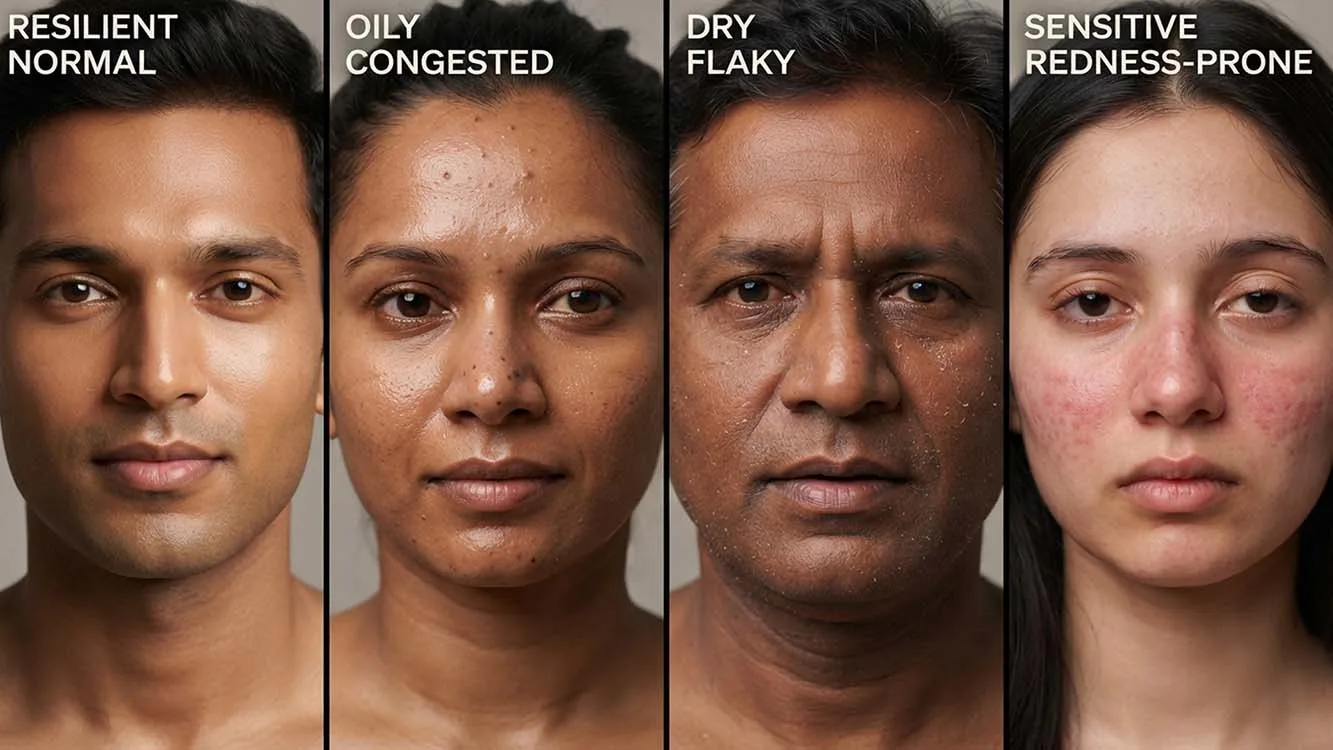
Resilient normal skin may tolerate occasional HydraFacial treatment when the protocol is gentle.
Frequency depends on:
Amount of exfoliation
Acid strength
Number of suction passes
Use of boosters
Current skincare
Sun exposure
Previous reaction
A patient with healthy skin should still be monitored for signs of over-treatment.
Normal skin does not need repeated exfoliation simply because it can tolerate it.
The treatment should produce a clear benefit such as improved hydration or mild congestion control. When the difference is minimal, extending the interval may be more appropriate.
How Often Can Oily Skin Have A HydraFacial?
Oily skin may benefit from periodic cleansing and controlled extraction, but frequent treatment does not permanently reduce oil production.
Sebaceous glands continue producing oil according to:
Genetics
Hormones
Climate
Stress
Acne activity
Skincare products
Certain medicines
Repeating HydraFacial too often may strip surface oils and disturb the barrier.
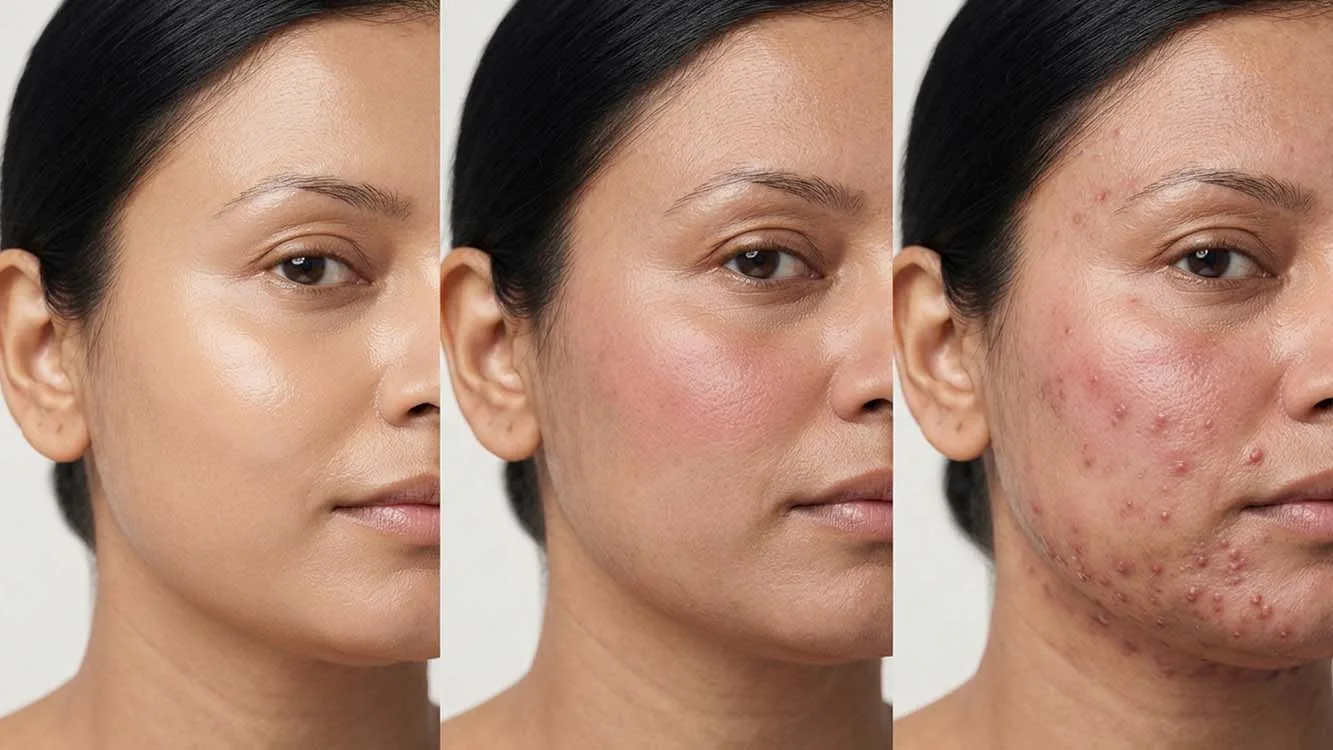
This may lead to:
Tightness
Irritation
Increased shine
Sensitivity
Breakouts
Rebound greasiness
Long-term oily-skin control may require:
Gentle cleansing
Appropriate salicylic acid
Retinoids when suitable
Non-comedogenic moisturiser
Sunscreen
Medical acne treatment when needed
HydraFacial should support this routine rather than replace it.
How Often Can Dry Skin Have A HydraFacial?
Dry skin may appear temporarily softer and more hydrated after treatment, but it can also become irritated by repeated exfoliation.
Dry skin has reduced oil, while dehydrated skin lacks water. These concerns may overlap but are not identical.
A HydraFacial may help when there is:
Mild flaking
Dull surface buildup
Temporary dehydration
Rough makeup texture
It may worsen the condition when:
Acids are too strong
Suction is excessive
The session removes too much surface lipid
The patient already has eczema
Barrier-supportive skincare is inadequate
A consistent moisturising routine generally matters more than frequent hydrating facials.
How Often Can Sensitive Skin Have A HydraFacial?
Sensitive skin usually requires longer recovery intervals and a modified treatment protocol.
The session may need:
Lower suction
Fewer passes
Reduced acid strength
Minimal extraction
Fragrance-free products
Fewer boosters
A calming finish
Sensitive skin should not be treated according to a standard schedule.
Another session should be delayed if the skin remains:
Tight
Red
Itchy
Dry
Easily irritated
Painful with ordinary skincare
Repeated treatment before full recovery can gradually weaken the barrier.
Can Rosacea-Prone Skin Have Regular HydraFacials?
Rosacea-prone skin may not tolerate frequent suction, friction or acids.
A carefully modified hydrating treatment may occasionally suit mild, stable rosacea. However, HydraFacial does not treat the underlying vascular and inflammatory condition.
Regular sessions may trigger:
Flushing
Burning
Persistent redness
Sensitivity
Pustules
Visible capillaries
Barrier disruption
Treatment should be postponed during an active flare.
A rosacea-focused plan may require:
Gentle skincare
Trigger management
Prescription treatment
Vascular procedures in selected cases
Daily sun protection
The frequency should be determined by disease stability, not by a general facial-maintenance calendar.
Can Acne-Prone Skin Have Frequent HydraFacials?
HydraFacial may help selected patients with mild blackheads and comedonal congestion.
It should not be repeated aggressively over:
Painful acne
Cysts
Nodules
Open lesions
Excoriated skin
Active infection
Frequent extraction and suction can increase:
Inflammation
Redness
Pigmentation
Folliculitis
Skin picking
Tenderness
Acne is an ongoing follicular condition. Removing existing pore material does not stop new blockages from forming.
Medical acne treatment may be more important than frequent facials.
Can HydraFacial Be Done Every Week?
Weekly HydraFacial treatment is usually unnecessary for routine skin maintenance.
The skin requires time to restore:
Surface lipids
Barrier proteins
Normal hydration balance
Inflammatory stability
Weekly treatment may increase the risk of:
Over-exfoliation
Persistent redness
Dryness
Burning
Sensitivity
New breakouts
Pigmentation
Visible capillaries
Product intolerance
A brief improvement in glow does not prove that the skin has fully recovered internally.
Very frequent treatment should not be justified only by the absence of dramatic peeling.
What Is The Skin Barrier?
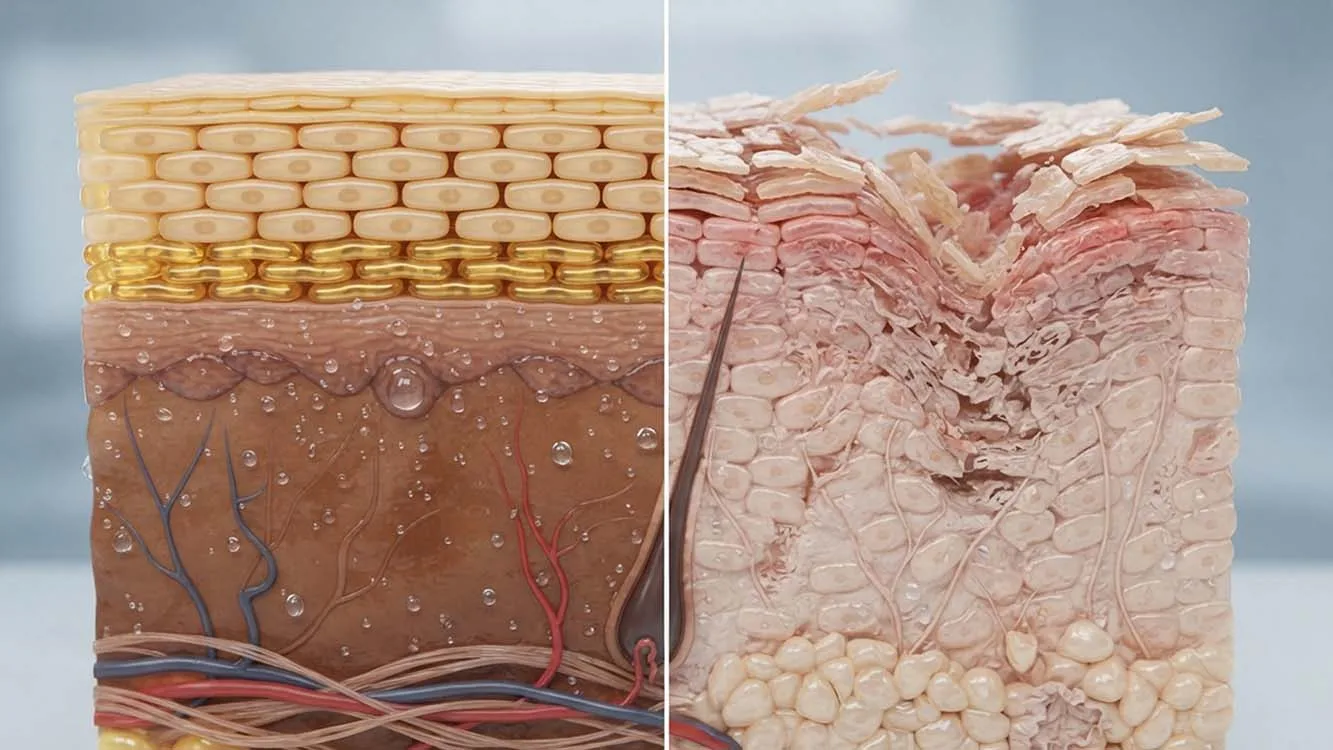
The skin barrier is the outer protective layer that helps:
Retain water
Prevent excessive dryness
Protect against irritants
Reduce allergen entry
Limit microbial penetration
Maintain comfortable skin function
It contains skin cells and protective lipids arranged in a structured layer.
A healthy barrier allows the skin to tolerate ordinary cleansing, weather changes and skincare products.
When it is damaged, the skin may become:
Dry
Tight
Reactive
Red
Itchy
Flaky
Acne-prone
Sensitive to products that were previously comfortable
HydraFacial treatment affects this surface layer through exfoliation, acids and suction.
How Can Too Many HydraFacials Damage The Barrier?
Barrier damage may occur when repeated exfoliation removes surface cells and protective oils faster than the skin can restore them.
Risk may increase when HydraFacial is combined with:
Retinoids
Glycolic acid
Salicylic acid
Benzoyl peroxide
Vitamin C acids
Scrubs
Chemical peels
Microneedling
Laser procedures
Waxing or threading
The patient may not realise the cumulative effect because each treatment is performed separately.
The skin may become gradually more reactive even when no single session caused an obvious burn.
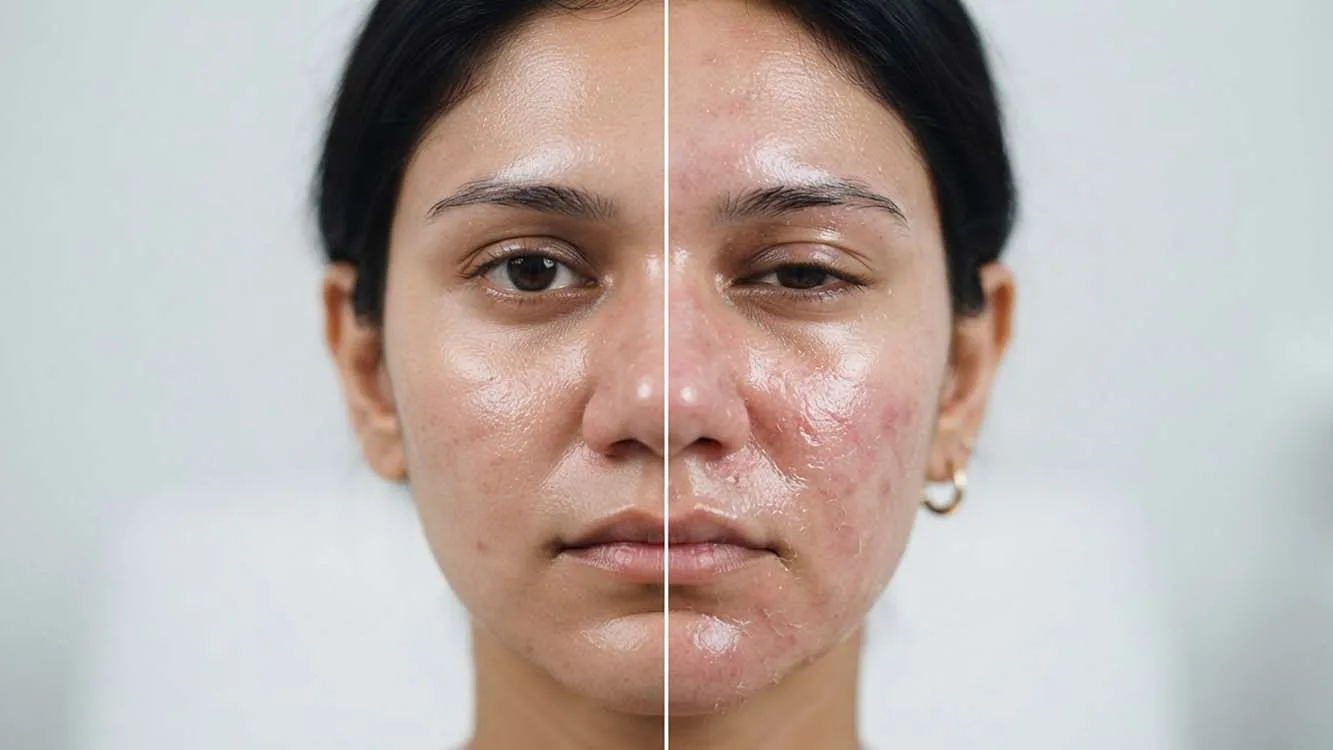
What Are The Signs Of Over-Exfoliation?
Possible signs include:
Burning during cleansing
Persistent tightness
Fine peeling
Red or dark irritated patches
Shiny but dehydrated skin
Increased sensitivity to sunscreen
Stinging with moisturiser
Sudden intolerance to active products
Repeated small breakouts
Increased oiliness with underlying dryness
Worsening pigmentation
Over-exfoliated skin may initially look unusually smooth or glossy.
This should not be confused with healthy hydration.
A glass-like shine accompanied by tightness or burning may indicate barrier stress.
Can Over-Exfoliated Skin Become More Oily?
Yes.
When the surface becomes dry and irritated, oily skin may still continue producing sebum.
This creates a combination of:
Surface shine
Tightness
Flaking
Congestion
Sensitivity
Makeup separation
The patient may respond by cleansing more aggressively or scheduling another extraction session, which can worsen the cycle.
The appropriate response may involve reducing exfoliation and rebuilding the barrier rather than removing more oil.
Can Frequent HydraFacials Cause Breakouts?
Yes.
Breakouts may occur because of:
Barrier irritation
Excessive serum layers
Occlusive finishing products
Follicular inflammation
Frequent extraction
Contaminated equipment
Product sensitivity
Early return to heavy makeup
Existing uncontrolled acne
A breakout should not automatically be described as detoxification or purging.
Painful, widespread or persistent acne suggests that the treatment or product selection may not suit the skin.
What Is Purging, And Does HydraFacial Cause It?
Purging refers to an accelerated appearance of existing microcomedones after ingredients that increase skin-cell turnover are introduced.
It is more commonly associated with:
Retinoids
Salicylic acid
Certain exfoliating acids
Not every post-facial breakout is purging.
A reaction may instead represent:
Irritation
Folliculitis
Allergy
Occlusion
Infection
Acne progression
Breakouts appearing in unusual areas, becoming increasingly painful or continuing after repeated sessions should not be dismissed as normal adjustment.
Can Frequent Suction Cause Bruising?
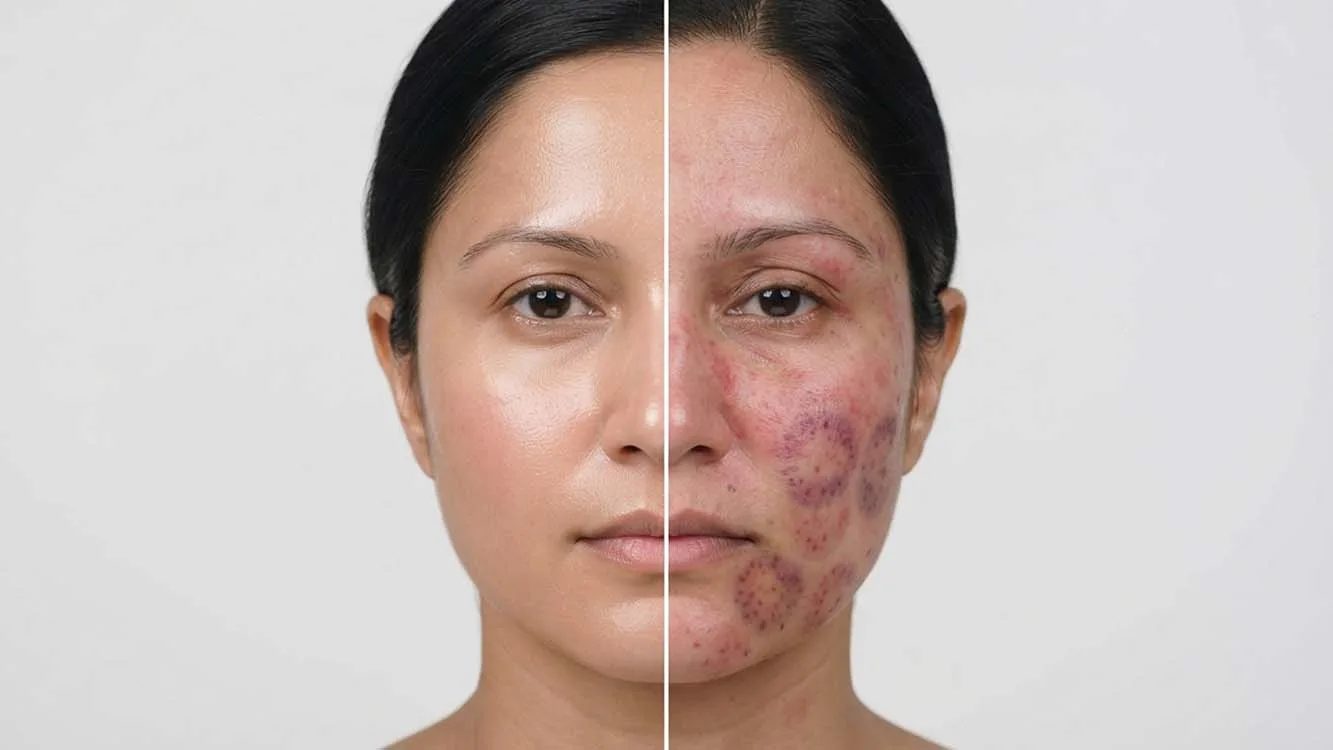
Yes.
Suction may cause bruising when:
Settings are too strong
Multiple passes are made
Skin is thin
Visible capillaries are present
The patient bruises easily
Blood-thinning medicine is used
The treatment is repeated before recovery
Sensitive areas include:
Under the eyes
Upper cheeks
Sides of the nose
Temples
Bruising indicates tissue trauma rather than deeper cleansing.
Increasing suction to remove resistant blackheads may cause more harm without clearing the blockage effectively.
Can Frequent HydraFacials Break Capillaries?
Strong suction and repeated mechanical stress may make superficial vessels more visible in susceptible skin.
The risk may be greater in people with:
Rosacea
Thin skin
Existing facial veins
Previous steroid overuse
Frequent flushing
Sun-damaged skin
Easy bruising
Visible capillaries are not removed by additional suction.
Vascular redness may require a different treatment plan.
Can Too Many Sessions Cause Pigmentation In Indian Skin?
Yes.
Medium and deeper Indian skin tones may develop post-inflammatory hyperpigmentation after irritation.
Triggers may include:
Strong suction
Excessive acids
Repeated passes
Manual squeezing
Bruising
Barrier damage
Sun exposure after treatment
Picking or rubbing
Darkening may appear as:
Brown extraction points
Uneven patches
Increased acne marks
Darkened irritated areas
Worsened melasma
The safest protocol should minimise inflammation rather than create visible peeling for the sake of stronger results.
Can HydraFacial Worsen Melasma?
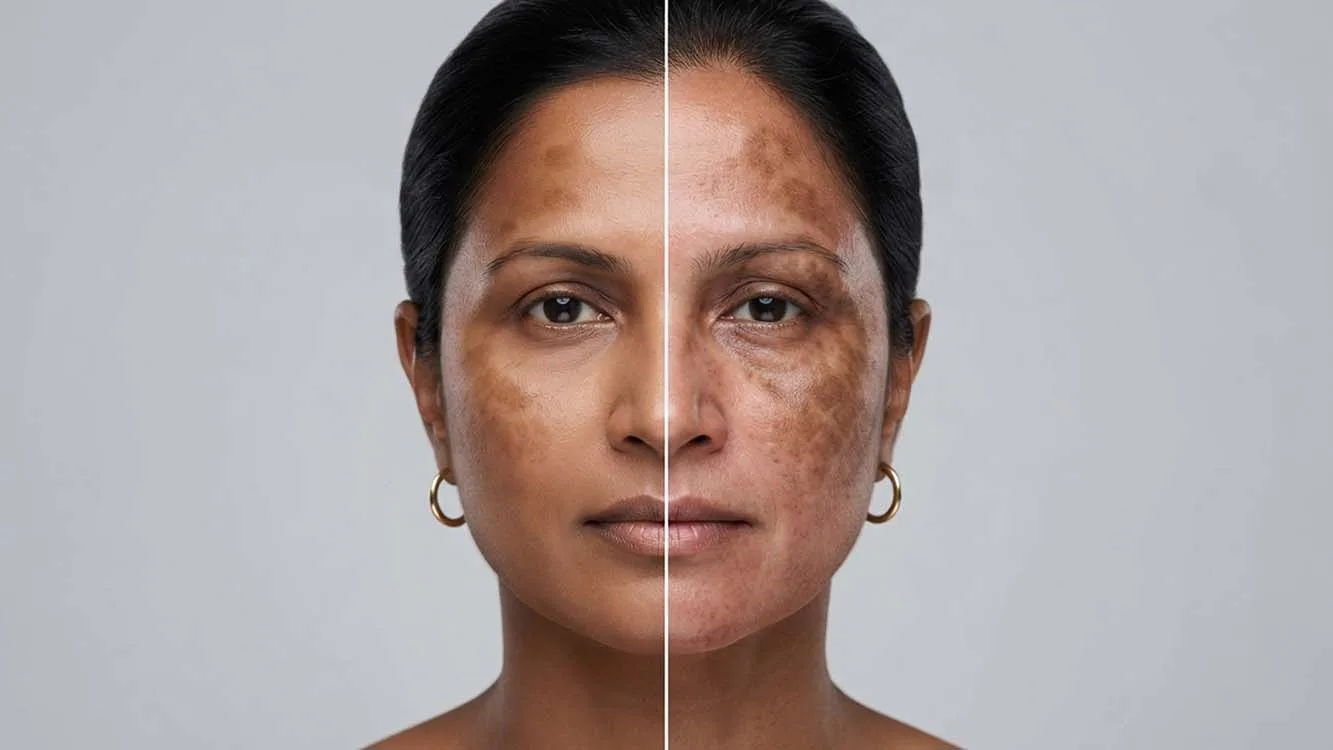
It may worsen melasma when treatment creates:
Heat
Irritation
Barrier damage
Inflammation
Inadequate post-treatment sun protection
Melasma is influenced by sunlight, visible light, hormones, genetics and inflammation.
A temporary surface glow may make the skin appear brighter, but it does not mean the deeper pigment process has been controlled.
Frequent HydraFacials should not replace a long-term melasma treatment plan.
Can Repeated HydraFacials Make Skin Thinner?
HydraFacial does not normally remove deep layers of skin when performed appropriately.
However, repeated aggressive exfoliation may make the surface feel fragile and reactive.
The patient may notice:
Increased sensitivity
Fine peeling
Reduced product tolerance
Persistent redness
Easy irritation
Greater pigment response
This is generally related to barrier disruption rather than literal surgical thinning of the complete skin.
The treatment schedule should be reduced when the skin is not recovering fully.
How Long Should The Skin Recover Between Sessions?
There is no universal recovery interval.
The next treatment should be considered only when:
Redness has resolved
The skin no longer feels tight
Ordinary products do not sting
Peeling is absent
Breakouts have settled
The barrier appears stable
The previous session produced a useful benefit
A person whose skin remains reactive should wait longer and review the treatment protocol.
A calendar date alone does not prove that the skin is ready.
Can HydraFacial Be Alternated With Chemical Peels?
It may be included within a broader skincare plan, but the procedures should be spaced appropriately.
Both treatments can exfoliate the skin.
Performing them too closely may increase:
Burning
Peeling
Redness
Sensitivity
Pigmentation
Barrier disruption
The interval depends on:
Peel depth
HydraFacial intensity
Skin type
Current products
Recovery
Pigmentation risk
HydraFacial should not be used to scrape or suction away peeling skin after a chemical peel.
Can HydraFacial Be Alternated With Microneedling?
Yes, in selected treatment plans, but not without recovery time.
Microneedling creates controlled micro-injuries to stimulate deeper repair, while HydraFacial mainly affects the surface.
Performing them too closely may cause:
Inflammation
Infection risk
Product sensitivity
Pigmentation
Delayed healing
The skin should be calm and fully healed before another procedure is added.
Can HydraFacial Be Done Around Laser Sessions?
HydraFacial should not be performed over recently lasered skin until healing is complete.
Laser-treated skin may have:
Redness
Dryness
Peeling
Heat sensitivity
Microscopic injury
Increased pigment risk
Suction and acids may interfere with recovery.
The appropriate interval depends on whether the patient underwent:
Laser hair removal
Vascular laser
Pigment laser
Fractional resurfacing
Ablative laser
A superficial laser-hair-removal session and a deep resurfacing procedure do not require the same precautions.
Can HydraFacial Be Done With Retinoid Use?
Retinoids may increase skin sensitivity and exfoliation.
The treatment plan should review:
Prescription tretinoin
Adapalene
Retinol
Retinaldehyde
Oral isotretinoin history
Combining retinoids with a strong HydraFacial may increase:
Burning
Peeling
Redness
Barrier damage
Pigmentation
The pause required depends on the product strength, frequency and skin response.
Prescription medicine should not be stopped for extended periods without guidance.
Can HydraFacial Be Done Before Every Event?
Repeated event-based treatment can become excessive when social occasions occur frequently.
A patient may schedule facials before:
Weddings
Festivals
Photoshoots
Vacations
Professional events
This may be reasonable occasionally when the treatment has been tolerated before.
However, frequent event preparation can lead to several sessions within a short period.
The skin should not be repeatedly exfoliated merely because temporary glow is desired for photographs.
How Far Before An Event Should HydraFacial Be Planned?
Timing should reflect the patient’s previous response.
Potential reactions include:
Redness
Breakouts
Dryness
Bruising
Swelling
Product sensitivity
A first session should not be scheduled immediately before an important event.
A previous treatment history gives a better indication of how long the skin needs to settle.
The goal is to arrive at the event with calm skin rather than active irritation covered by makeup.
Can Home Skincare Reduce The Need For Frequent HydraFacials?
Yes.
A suitable home routine may control many concerns that lead patients to schedule repeated sessions.
It may include:
Gentle cleanser
Non-comedogenic moisturiser
Broad-spectrum sunscreen
Salicylic acid for suitable congested skin
Retinoid treatment when appropriate
Pigmentation treatment when prescribed
Consistent makeup removal
HydraFacial may then be used occasionally rather than as the main method of keeping pores clear.
Consistency usually provides more lasting benefit than one intensive session followed by poor daily care.
Who May Benefit From Periodic HydraFacials?
Periodic treatment may suit an adult with:
Mild surface dehydration
Occasional congestion
Superficial blackheads
Stable skin
An intact barrier
No active inflammatory disease
Realistic expectations
Previous good tolerance
The treatment may be used as supportive maintenance rather than a cure.
The person should still understand that pores refill, oil returns and the glow fades naturally.
Who Should Avoid Frequent HydraFacials?
Frequent sessions may be unsuitable for someone with:
Rosacea
Active eczema
Severe sensitivity
Recurrent barrier damage
Inflamed acne
Melasma triggered by irritation
Frequent cold sores
Visible fragile capillaries
Recent resurfacing procedures
Multiple active skincare products
Previous pigmentation after facials
The safest option may be a gentler skincare plan or another treatment that directly addresses the underlying concern.
When Should The Next HydraFacial Be Postponed?
The next session should be delayed when the skin has:
Redness
Burning
Tightness
Peeling
Active rash
Painful acne
Sunburn
Cold sores
Cuts
Recent waxing injury
Unexplained swelling
New pigmentation
Sensitivity to moisturiser or sunscreen
It should also be postponed after a recent laser, peel or microneedling session until the skin has recovered fully.
Treating unstable skin can prolong inflammation rather than refresh it.
How Should A Safe HydraFacial Schedule Be Decided?
A safe schedule should be based on how the skin responds after each session rather than on a preset package.
The assessment may consider:
How long the visible benefit lasts
Whether redness settles quickly
Whether ordinary skincare begins to sting
Whether blackheads return rapidly
Whether breakouts follow treatment
Whether pigmentation becomes darker
Whether the skin feels tighter or more sensitive
Whether several other exfoliating products are being used
Whether the patient has an upcoming peel, laser or microneedling session
A patient with resilient, mildly congested skin may tolerate periodic treatment more easily than someone with rosacea, melasma or an impaired barrier.
The next session should be scheduled only when the skin has recovered fully and there is a clear reason to repeat the treatment.
Is There An Ideal Number Of Weeks Between HydraFacials?
There is no single interval that suits everyone.
Some patients may tolerate treatment approximately once every four to six weeks. Others may benefit from much longer gaps or only occasional event-based sessions.
The interval may need to be extended when:
Skin remains dry after treatment
Redness lasts longer than expected
Pigmentation develops
The patient uses prescription retinoids
Recent procedures have increased sensitivity
Rosacea or eczema becomes active
Results are minimal
The skin remains stable without another session
The safest interval is the one that allows complete recovery without unnecessary treatment.
What Should Be Checked Before Repeating A HydraFacial?
Before another session, the skin should be reassessed rather than assuming that the previous protocol should be repeated.
Questions may include:
Did the skin become calmer or more reactive?
How long did the glow last?
Did congestion improve?
Were there new breakouts?
Did any dark marks appear?
Was there bruising?
Did moisturiser or sunscreen begin to sting?
Were new active products introduced?
Was there recent sun exposure?
Has the patient undergone another procedure?
The next treatment may require:
Lower suction
Fewer extraction passes
Weaker acids
Fewer boosters
Treatment of selected zones only
A longer interval
Postponement
Repeating the same settings despite a negative response can gradually worsen barrier damage.
Can The Suction Strength Be Reduced Over Time?
Yes.
The strongest tolerated suction is not automatically the best setting.
Lower suction may be preferable when the patient has:
Thin skin
Visible capillaries
Rosacea
Easy bruising
Sensitive cheeks
Recent irritation
Previous suction marks
Under-eye fragility
The nose and chin may tolerate a different setting from the cheeks.
A customised treatment may use:
Limited suction on the nose
Minimal suction on the cheeks
No suction over inflamed lesions
No treatment over broken skin
The device should follow the skin’s needs rather than treating the complete face with one intensity.
Should Every HydraFacial Include A Peel?
No.
A peel solution may support exfoliation and help loosen superficial congestion, but it is not necessary for every patient or every session.
It may be reduced or avoided when the skin is:
Sensitive
Dry
Recently exfoliated
Using retinoids
Prone to rosacea
Recovering from sun exposure
Experiencing barrier damage
Already clear and uncongested
A hydrating session with limited exfoliation may be more appropriate than a full multi-step protocol.
Adding acids automatically can increase cumulative irritation without adding meaningful benefit.
Should Every Session Include Extraction?
No.
Extraction is useful only when visible, suitable congestion is present.
It may be unnecessary when the skin has:
Minimal blackheads
No significant pore blockage
Active inflammation
Fragile capillaries
Rosacea
Recent bruising
Open lesions
Severe sensitivity
Repeatedly suctioning clear pores does not prevent future congestion.
It may instead cause:
Redness
Sensitivity
Bruising
Temporary swelling
Increased visibility of vessels
Extraction should be targeted rather than routine.
Can HydraFacial Be Performed Only On The T-Zone?
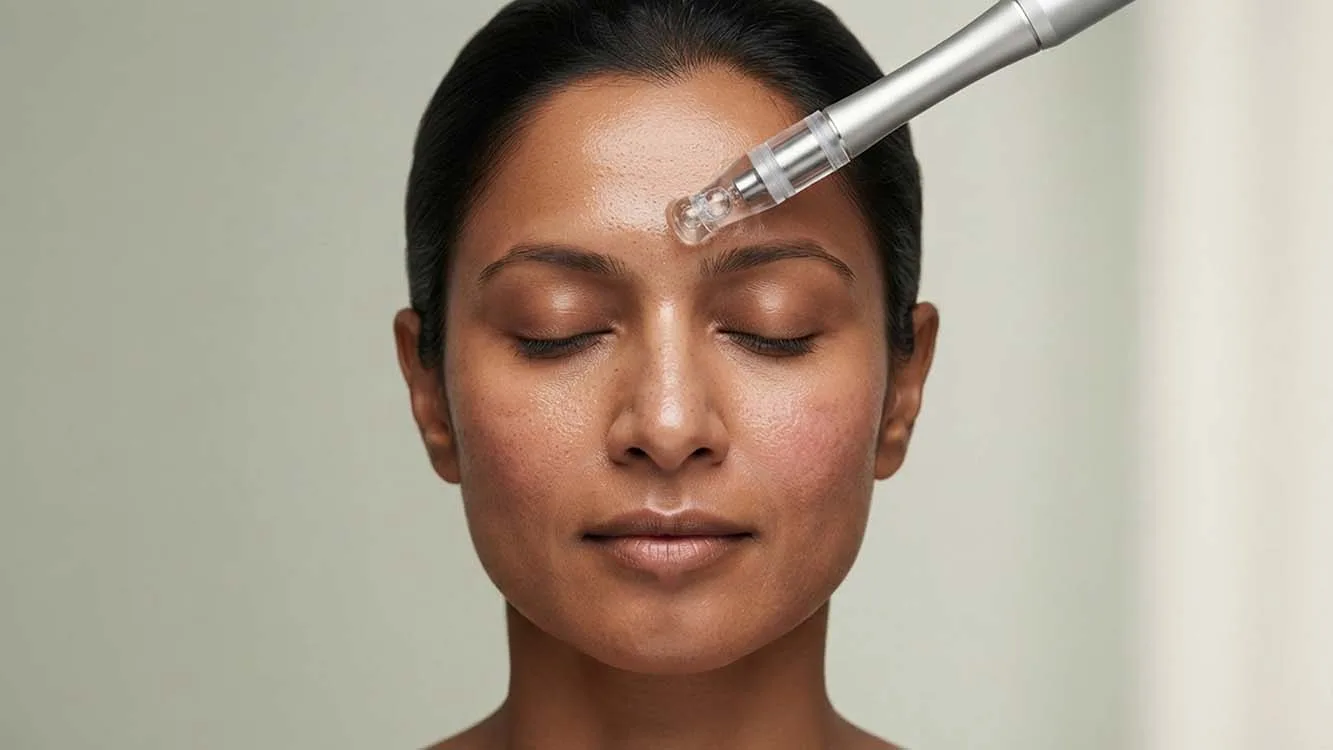
Yes.
A zone-based treatment may be suitable when the forehead, nose and chin are oily or congested while the cheeks are dry or sensitive.
The protocol may involve:
More cleansing in the T-zone
Limited extraction around the nose
Reduced suction on the cheeks
Hydrating serum over dry areas
Avoidance of acids near irritated skin
Combination skin should not be treated as if every facial region behaves the same way.
Selective treatment can reduce unnecessary irritation.
What Happens If The Skin Barrier Is Already Damaged?
When the barrier is impaired, even ordinary products may sting.
Possible signs include:
Burning after cleansing
Tightness
Fine peeling
Redness
Itching
Increased oiliness with dryness
Sudden product sensitivity
Recurrent small bumps
HydraFacial should usually be postponed until the skin becomes stable.
Continuing with suction and acids may prolong:
Inflammation
Dryness
Pigmentation
Breakouts
Product intolerance
The priority should be barrier repair rather than immediate glow.
How Is A Damaged Skin Barrier Supported?
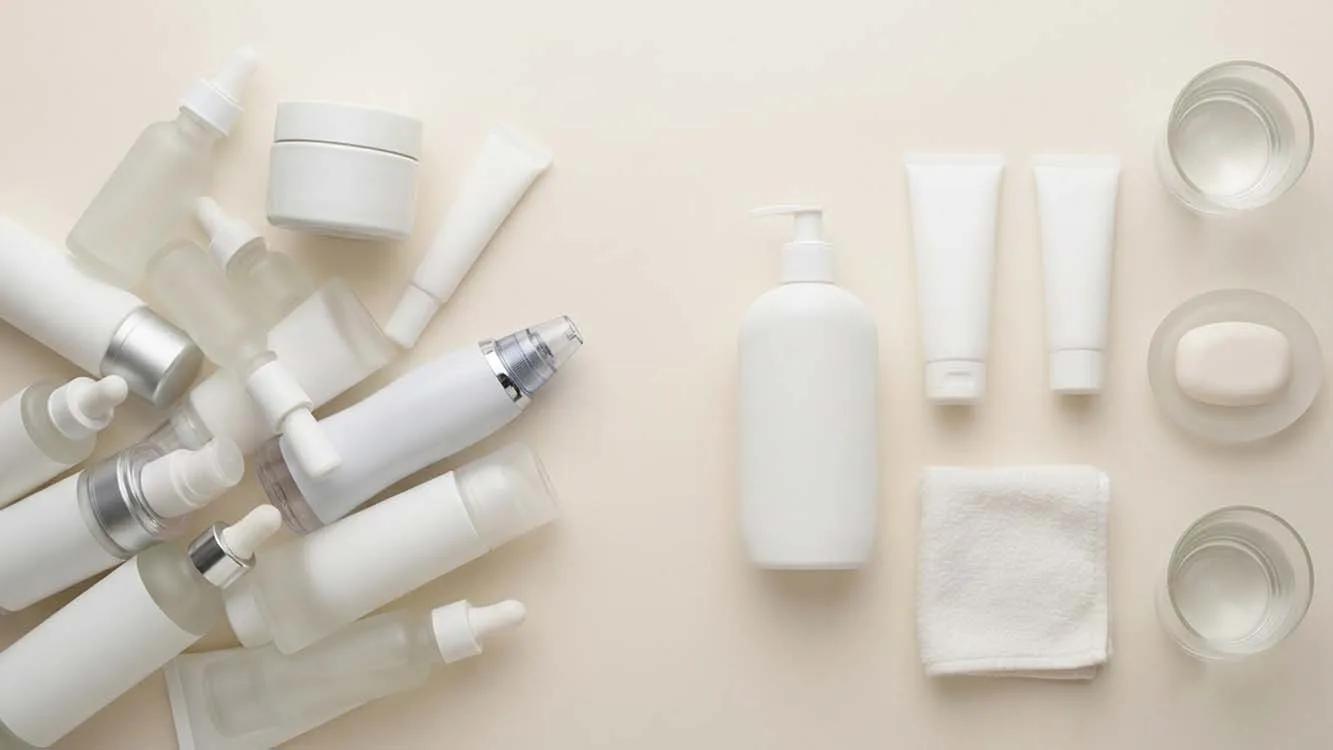
A simple routine may be more appropriate during recovery.
It may include:
Gentle fragrance-free cleanser
Barrier-supportive moisturiser
Broad-spectrum sunscreen
Avoidance of scrubs
Temporary reduction of exfoliating acids
Careful review of retinoid use
Avoidance of facial devices
Lukewarm rather than hot water
The skin may need several days or longer to recover depending on the severity of irritation.
Persistent burning, rash or peeling may require medical assessment rather than repeated product changes.
Can Ceramides Help After Over-Exfoliation?
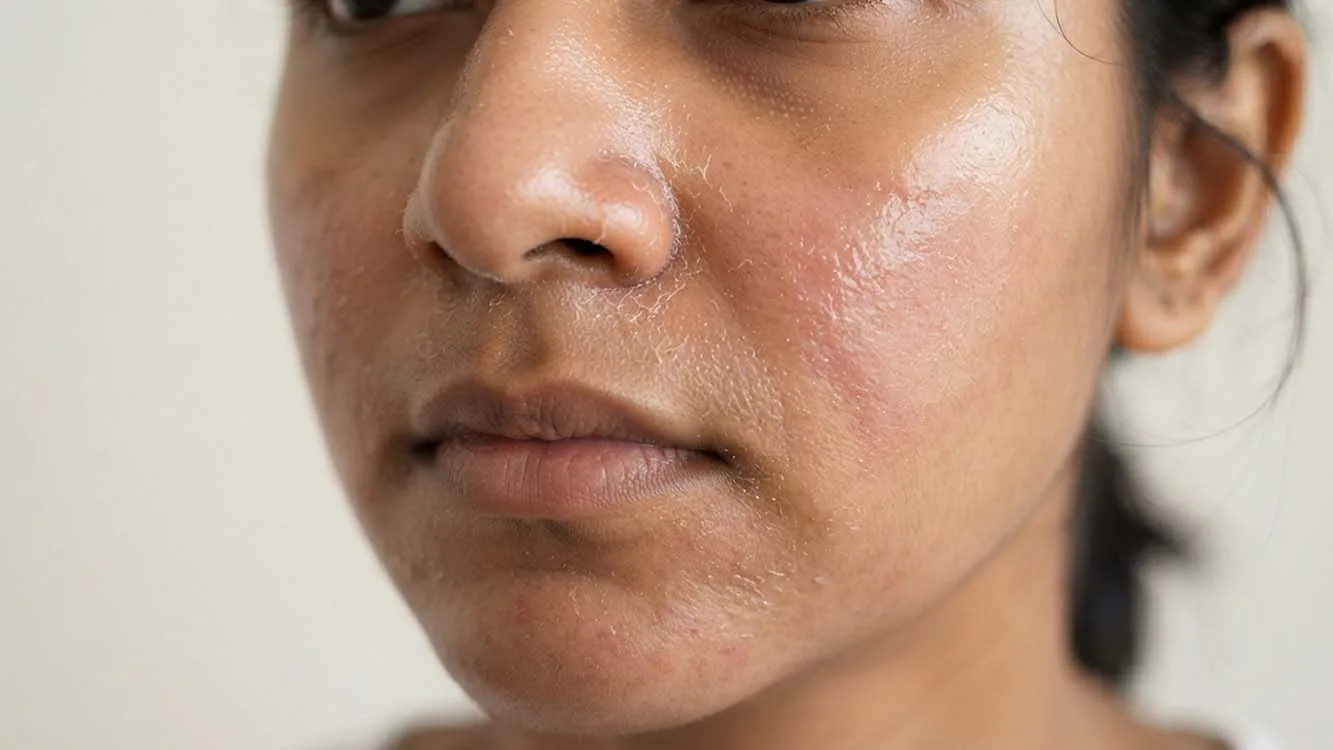
Ceramides are lipids naturally found within the skin barrier.
Ceramide-containing moisturisers may help support:
Water retention
Reduced dryness
Improved comfort
Barrier repair
Better tolerance of basic skincare
Other useful ingredients may include:
Glycerin
Petrolatum
Squalane
Panthenol
Hyaluronic acid
Colloidal oatmeal in selected sensitive skin
A long ingredient list is not necessary.
Simple, well-tolerated products are often preferable while the skin is reactive.
Should Active Skincare Be Stopped After HydraFacial?
Some active products may need a temporary pause.
These may include:
Retinoids
Salicylic acid
Glycolic acid
Lactic acid
Benzoyl peroxide
Strong vitamin C formulas
Pigmentation creams
Exfoliating masks
Physical scrubs
The pause depends on:
Treatment intensity
Skin response
Product strength
Medical need
Whether the medicine is prescribed
Prescription treatments should not be stopped for long periods without guidance.
The aim is to prevent cumulative irritation while maintaining control of acne or pigmentation.
Can HydraFacial Be Combined With A Home Exfoliating Routine?
It can be combined carefully, but the total exfoliation load must be considered.
A patient may already be using:
Salicylic-acid cleanser
Glycolic toner
Retinoid
Exfoliating mask
Scrub
Acne treatment
Adding a HydraFacial may push the skin beyond its tolerance even when each product seems mild on its own.
The complete weekly routine should be reviewed before treatment.
Reducing home exfoliation around the session may be safer than stacking every active product together.
Is A Strong Post-Treatment Glow A Sign Of Healthy Skin?
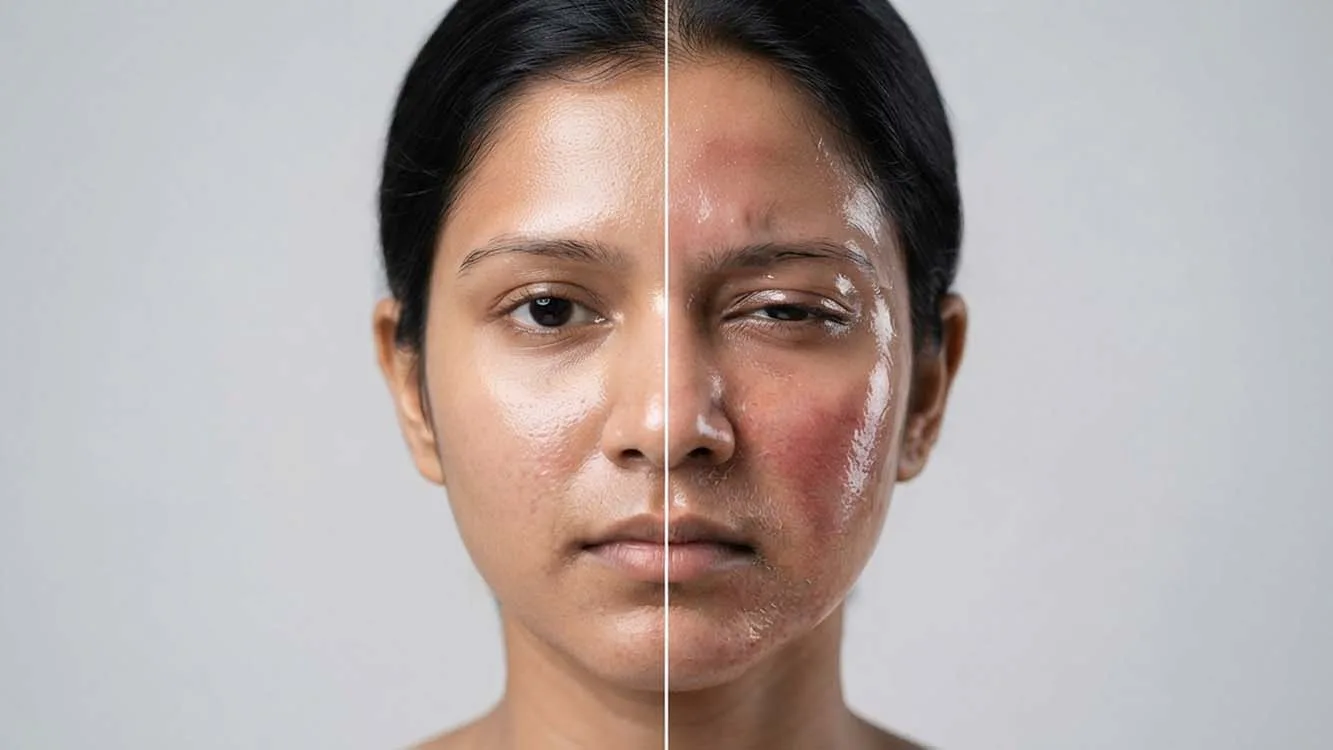
Not always.
Healthy post-treatment skin may appear:
Calm
Hydrated
Smooth
Comfortable
Mildly radiant
A glossy appearance accompanied by:
Tightness
Burning
Persistent redness
Excessive sensitivity
Peeling
may indicate barrier stress rather than healthy hydration.
The quality of the result should be judged by comfort and stability, not shine alone.
Can Frequent HydraFacials Cause Long-Term Sensitivity?
Repeated irritation may make the skin increasingly reactive.
The patient may begin noticing:
Stinging with previously tolerated products
Redness after cleansing
Flushing
Increased dryness
Greater sun sensitivity
Recurrent dermatitis
Pigmentation after minor irritation
These symptoms may improve when treatment frequency and active skincare are reduced.
Ignoring them and continuing frequent sessions may make recovery slower.
Can Frequent HydraFacials Worsen Rosacea Permanently?
HydraFacial does not directly cause rosacea in every patient, but repeated irritation may aggravate an existing tendency.
Frequent suction, acids and friction may contribute to:
Persistent flushing
Burning
Visible capillaries
Pustules
Increased product sensitivity
Rosacea-prone skin should be treated only when stable and with a modified protocol.
If symptoms are becoming more frequent, the treatment plan should shift toward rosacea control rather than continued facial maintenance.
Can HydraFacial Cause Rebound Dryness?
Yes.
Temporary hydration may be followed by dryness when:
Exfoliation is too strong
Barrier lipids are removed
Moisturiser use is inadequate
Hot water is used
Active products are resumed too early
Weather is dry
The patient has eczema-prone skin
The skin may initially feel smooth and later become tight or flaky.
A repeat HydraFacial is not necessarily the solution. The barrier may require time and moisturising support instead.
Can It Cause Rebound Oiliness?
Yes.
An oily skin type may continue producing sebum even when the surface has been over-exfoliated.
The result can be:
Excess shine
Tightness
Flaking
Congestion
Sensitivity
Breakouts
This combination is sometimes mistaken for dirty skin that needs another extraction.
The safer approach may be to reduce exfoliation and restore the barrier.
Can Frequent HydraFacials Worsen Acne Marks?
Yes, when sessions cause inflammation.
Indian skin may develop darker post-acne marks after:
Strong suction
Picking
Bruising
Aggressive extraction
Acid irritation
Sun exposure
Repeated treatment over active acne
Treating inflamed pimples aggressively may create longer-lasting pigmentation even when the original lesion settles.
Acne control should take priority over immediate extraction.
Can HydraFacial Be Used During Oral Isotretinoin Treatment?
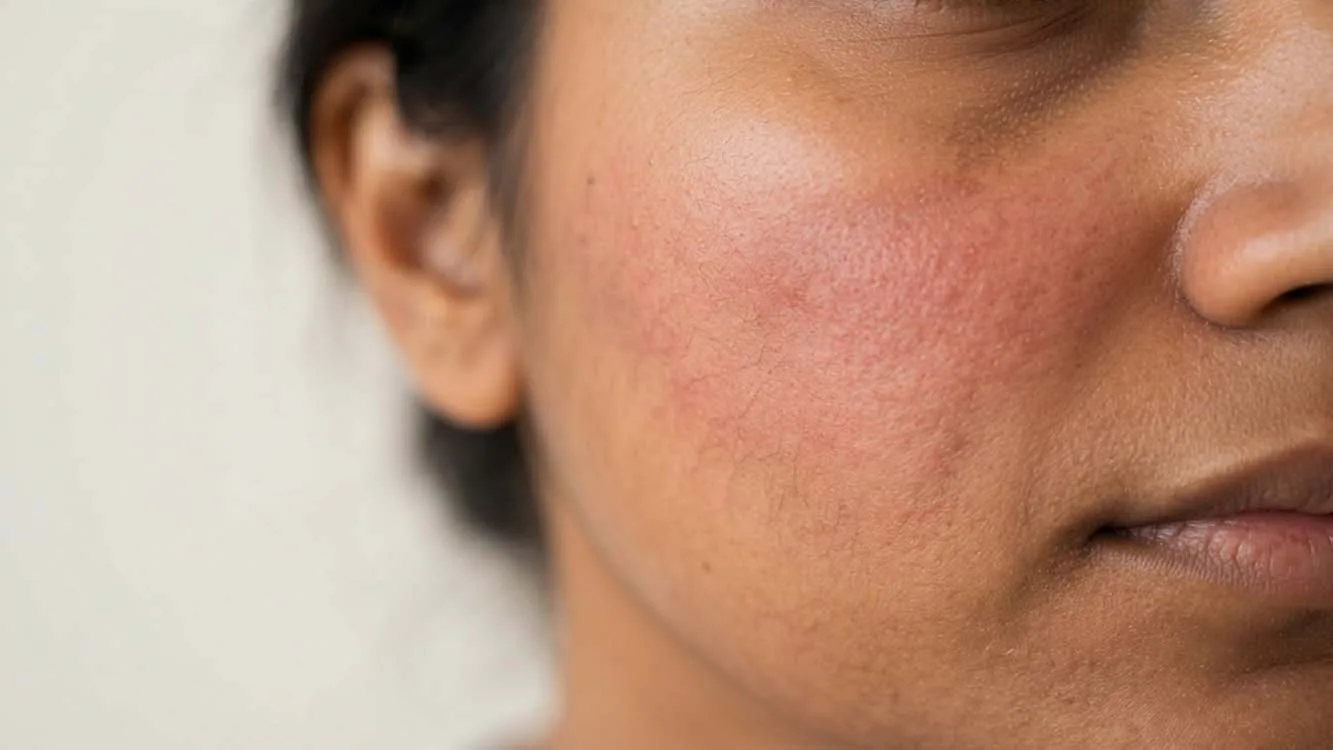
This requires individual assessment.
Oral isotretinoin can make the skin:
Dry
Fragile
Sensitive
Easily irritated
More vulnerable to peeling
A standard HydraFacial with acids and strong suction may be unsuitable.
Any treatment should be conservative and coordinated with the clinician managing the acne.
A facial should not interfere with a medically necessary acne plan.
Can HydraFacial Be Performed After Stopping Isotretinoin?
The skin may remain dry or sensitive after treatment has ended.
Suitability depends on:
Current barrier condition
Remaining dryness
Active acne
Recent dose
Healing response
Planned procedure intensity
The decision should be based on current skin health rather than a universal waiting period alone.
Can HydraFacial Be Done During An Eczema Flare?
No. Active eczema should not undergo routine suction, acid exfoliation or extraction.
Treatment may worsen:
Burning
Itching
Redness
Cracking
Infection risk
Barrier damage
Even areas that appear clear may be more sensitive during a broader flare.
The eczema should be controlled first.
Can HydraFacial Be Performed Over Active Cold Sores?
No.
An active cold sore can spread through contact and treatment over nearby skin.
The session should be postponed when there is:
Tingling
Burning near the lip
A fresh blister
Crusting
Recent outbreak
People with frequent cold sores should disclose their history before facial procedures.
Does Pregnancy Change HydraFacial Frequency?
Pregnancy can make the skin more reactive.
Changes may include:
Melasma
Acne
Flushing
Dryness
Sensitivity
Increased pigmentation after irritation
A conservative hydrating treatment may be considered when ingredients are appropriate, but frequent exfoliation is not automatically advisable.
Every booster and peel solution should be reviewed rather than assuming the entire branded protocol is suitable.
Does Mumbai Humidity Change How Often HydraFacial Is Needed?

Humidity can increase sweating and surface oil, but it does not automatically mean the skin needs more frequent extraction.
Mumbai weather may contribute to:
Oily T-zone
Sweat buildup
Sunscreen residue
Friction
Folliculitis
Makeup congestion
However, aggressive treatment may still damage the barrier.
A practical routine involving gentle cleansing, suitable moisturiser and non-comedogenic sunscreen may reduce the need for frequent sessions.
Can Monsoon Weather Increase Congestion After HydraFacial?
Yes.
During humid weather, congestion may return because of:
Sweat
Oil
occlusive sunscreen
Makeup
Pollution
Friction from masks or helmets
This does not mean the previous facial failed.
Pores continue functioning normally.
Long-term management depends on daily care rather than repeated extraction alone.
Should HydraFacial Be Avoided During Peak Summer?
Not necessarily, but sun exposure and sweating require careful planning.
After treatment, the skin may be more sensitive to:
Ultraviolet exposure
Heat
Sweat
Friction
Pollution
A patient who cannot avoid prolonged outdoor exposure may benefit from postponing the session.
The timing should fit the person’s routine rather than forcing treatment into a fixed monthly date.
Can Men Schedule HydraFacials More Frequently Because Their Skin Is Thicker?
Not automatically.
Men may have thicker, oilier skin on average, but individual sensitivity still varies.
Frequent treatment may cause:
Razor irritation
Folliculitis
Ingrown hairs
Redness
Bruising
Dryness
Shaving habits, beard density and acne should be considered.
A thicker beard does not protect exposed facial skin from over-exfoliation.
Can HydraFacial Help With Shaving-Related Ingrown Hairs?
It may help loosen superficial buildup around selected follicles, but it does not correct every ingrown hair.
Repeated aggressive suction may worsen inflammation.
Long-term management may involve:
Adjusting shaving technique
Avoiding excessively close shaving
Suitable salicylic acid
Retinoids when appropriate
Laser hair reduction in selected cases
Treatment of folliculitis
The cause should be addressed rather than relying only on facial extraction.
Are HydraFacial Packages Worth Buying?
A package may be reasonable only when:
The patient has tolerated previous sessions
Treatment provides a consistent benefit
The interval remains flexible
Unused sessions can be postponed
The protocol can be changed
The patient is not pressured into unnecessary treatment
A package becomes problematic when it encourages sessions despite:
Active irritation
Recent procedures
Minimal benefit
Acne flare
Barrier damage
New pigmentation
Skin condition should take priority over package expiry dates.
When Should A HydraFacial Plan Be Stopped Completely?
Repeated treatment should be reconsidered when it consistently causes:
Persistent redness
Pain
Breakouts
Pigmentation
Bruising
Burning
Barrier damage
Rosacea flares
No meaningful improvement
The concern may require a different approach.
Examples include:
Medical acne treatment
Pigmentation-focused skincare
Rosacea management
Scar treatment
Barrier repair
A simpler home routine
Continuing an ineffective procedure because it is popular is unlikely to improve the outcome.
What Are The Main Risks Of Excessive HydraFacial Frequency?
Possible risks include:
Over-exfoliation
Barrier disruption
Dryness
Persistent sensitivity
Redness
Burning
Bruising
Visible capillaries
Breakouts
Folliculitis
Rosacea flares
Cold-sore reactivation
Post-inflammatory pigmentation
Worsened melasma
Product intolerance
Unnecessary expense
Most of these risks can be reduced through proper spacing, conservative settings and treatment only when the skin is stable.
Which Symptoms Need Medical Assessment?
Assessment is important when there is:
Severe burning
Persistent pain
Blistering
Significant swelling
Widespread rash
Pus or crusting
Increasing redness
Fever
Darkening patches
Painful acne flare
Cold-sore outbreak
Eye irritation
Difficulty breathing
Facial swelling suggesting an allergic reaction
Mild temporary pinkness should settle. Symptoms that become progressively worse should not be described as normal detoxification.
Common Myths About HydraFacial Frequency
“Everyone Needs A HydraFacial Every Month”
Frequency should depend on skin type, recovery and treatment benefit.
“Weekly Sessions Create Faster Improvement”
Very frequent treatment may cause over-exfoliation and barrier damage.
“Oily Skin Needs Constant Extraction”
Oil production continues regardless of how often pores are suctioned.
“Sensitive Skin Can Tolerate HydraFacial Because It Is Gentle”
Sensitive skin may still react to acids, friction, suction and boosters.
“Redness Means The Treatment Is Working”
Persistent redness may indicate irritation.
“A Stronger Suction Setting Cleans Deeper”
Higher suction can cause bruising and visible capillaries without clearing deep blockages.
“Every Breakout Is Purging”
Breakouts may represent irritation, folliculitis, allergy or uncontrolled acne.
“Shiny Skin Means The Barrier Is Healthy”
Glossy but tight or burning skin may be over-exfoliated.
“Packages Should Be Completed On Schedule”
Sessions should be postponed when the skin is unstable.
“More Treatments Produce Longer-Lasting Results”
The glow remains temporary, and excessive frequency may worsen skin quality.
Why Personalised HydraFacial Frequency Matters
The ideal schedule depends on the skin rather than the calendar.
Personalised planning considers:
Skin type
Barrier strength
Congestion
Acne
Rosacea
Melasma
Pigmentation tendency
Current skincare
Recent procedures
Previous reactions
Climate
Event timing
Duration of benefit
The most appropriate recommendation may involve:
A gentle periodic session
Treatment only before selected events
T-zone-only extraction
Reduced suction
No peel step
Longer intervals
Barrier repair
Medical acne treatment
A different procedure
No further HydraFacial sessions
The objective is to maintain comfortable, stable skin rather than repeatedly chasing short-term shine.
Why Choose Hair & Shape For HydraFacial Frequency Planning In Mumbai?
At Hair & Shape Clinic, HydraFacial scheduling begins by assessing whether the skin has recovered from previous exfoliation and whether another session is likely to provide a useful benefit.
The evaluation may include:
Skin type
Barrier strength
Blackheads and congestion
Active acne
Rosacea
Melasma
Pigmentation tendency
Current retinoid or acid use
Recent peels, laser or microneedling
Previous redness, bruising or breakouts
Mumbai climate and commuting exposure
Event timing
Patients should receive clear guidance about:
Why monthly sessions are not essential for everyone
Signs of over-exfoliation
Safe treatment spacing
When suction or acids should be reduced
When a session should be postponed
How to repair an irritated barrier
Which concerns require medical treatment instead
Why treatment packages should remain flexible
The aim is a controlled, low-downtime skin refresh without creating a cycle of repeated irritation and recovery.
Final Thoughts
HydraFacial can provide temporary improvement in dullness, mild congestion, dehydration and surface roughness, but frequent sessions are not necessary for every patient.
The ideal schedule depends on skin type, barrier health, treatment intensity, current skincare and response to the previous session.
Weekly treatment is generally unnecessary for routine maintenance. Even monthly sessions may be excessive for sensitive, rosacea-prone, melasma-prone or over-exfoliated skin.
Warning signs such as burning, tightness, peeling, persistent redness, new breakouts and increased product sensitivity may indicate barrier damage. The correct response is usually to pause treatment and simplify skincare—not schedule another extraction session.
Strong suction and repeated acids can cause bruising, visible capillaries, irritation and post-inflammatory pigmentation, particularly in Indian skin.
A HydraFacial should be repeated only when the skin is calm, recovered and likely to benefit. The goal is not to perform the most sessions possible. It is to maintain healthy-looking skin without weakening the barrier.
Keep reading
Lip Augmentation/Reduction: Complete Guide To Lip Surgery, Recovery & Results
Lip Augmentation and Lip Reduction are aesthetic procedures designed to improve lip volume, shape, symmetry, and facial balance. This guide explains lip enhancement and reduction techniques, procedure steps, recovery timeline, benefits, candidate suitability, and the importance of choosing an experienced plastic surgeon at Hair & Shape Clinic, Mumbai.

Buccal Fat Removal: Complete Guide To Cheek Contouring Procedure, Recovery & Results
Buccal Fat Removal is a facial contouring procedure designed to reduce cheek fullness and enhance facial definition by carefully removing a portion of the buccal fat pad. This guide explains the procedure, candidate suitability, recovery timeline, benefits, results, and the importance of choosing an experienced plastic surgeon at Hair & Shape Clinic, Mumbai.
Dimple Creation: Complete Guide To Dimpleplasty Procedure, Recovery & Results
Dimple Creation, also known as Dimpleplasty, is a minimally invasive facial aesthetic procedure designed to create natural-looking cheek dimples by modifying the connection between skin and cheek muscle. This guide explains the dimple creation procedure, types of dimples, recovery timeline, benefits, candidate suitability, and the importance of choosing an experienced plastic surgeon at Hair & Shape Clinic, Mumbai.