Can Depigmentation Treatment Create An Even Skin Tone In Extensive Vitiligo?

Introduction
Depigmentation treatment is a specialized option for selected people with extensive, stable vitiligo. It is not a routine skin-lightening treatment for tanning, melasma, ordinary pigmentation or a small number of white patches. At Hair & Shape Clinic, Mumbai, this treatment is considered only after careful evaluation of the extent of vitiligo, previous treatment response and the patient’s long-term expectations.
Unlike repigmentation therapies, depigmentation does not restore lost colour. Instead, it works by gradually lightening the remaining naturally pigmented areas so they blend more closely with skin that has already lost pigment.
Because the colour change is generally intended to be permanent, the decision requires detailed counselling. Patients need to understand the possibility of uneven lightening, irritation, increased sun sensitivity, lifelong sun protection, maintenance treatment and the emotional impact of a significant change in appearance.
At Hair & Shape Clinic, depigmentation treatment in Mumbai is approached as a major medical and personal decision rather than a cosmetic shortcut for achieving lighter skin.
The goal is not simply to change skin colour. It is to help carefully selected patients with widespread vitiligo achieve a more uniform appearance while fully understanding the long-term commitment, limitations and consequences of treatment.
What Does Depigmentation Mean?
Depigmentation means a reduction or loss of melanin, the pigment responsible for much of the skin’s colour.
It may occur naturally because of conditions such as vitiligo, where pigment-producing cells are lost or damaged.
The term may also describe a medical treatment that intentionally reduces the pigment remaining in unaffected skin.
These are different situations:
Natural Depigmentation
This may appear as white or pale patches caused by:
Vitiligo
Previous inflammation
Injury
Certain infections
Chemical exposure
Scarring
Rare genetic conditions
Medical Depigmentation Therapy
This aims to lighten the remaining normally pigmented skin in a person who already has extensive vitiligo.
The objective is visual uniformity, not restoration of normal pigment production.
Is Depigmentation The Same As Skin-Lightening Treatment?
No.
Cosmetic skin-lightening treatments generally aim to reduce excess pigmentation, tanning, melasma or dark spots while preserving the person’s overall natural skin colour.
Medical depigmentation for extensive vitiligo has a very different goal. It intentionally removes or suppresses the remaining normal pigment to match large areas that have already become white.
It should not be confused with treatments used for:
Melasma
Acne marks
Sunspots
Uneven tanning
Post-inflammatory pigmentation
Underarm darkness
Facial dullness
Freckles
Using strong depigmenting medicines for ordinary cosmetic lightening can cause:
Permanent pale patches
Irritation
Uneven colour
Chemical burns
Scarring
Increased sun sensitivity
Psychological distress
Depigmentation therapy should be medically supervised and reserved for carefully selected circumstances.
When Is Depigmentation Considered For Vitiligo?
Depigmentation may be discussed when vitiligo affects most of the visible skin and the remaining darker areas create a striking contrast.
It may be considered when:
Vitiligo covers a very large body surface area
The condition has been present for a long time
Repigmentation treatments have provided limited benefit
Remaining darker patches are cosmetically distressing
The patient understands the permanent nature of treatment
Expectations are realistic
The person can commit to lifelong sun protection
Active skin disease has been assessed
Emotional readiness has been carefully considered
There is no single percentage that automatically makes someone suitable.
The distribution of vitiligo matters as much as the total area. A person with extensive depigmentation on the face, hands and limbs may experience more visible contrast than someone with a similar percentage in less exposed areas.
Is Depigmentation Suitable For A Few White Patches?
Usually not.
When vitiligo is limited, the usual objective is to stabilise the condition and encourage repigmentation rather than remove the remaining normal skin colour.
Possible approaches for limited disease may include:
Topical medicines
Phototherapy
Targeted light treatment
Camouflage products
Medical treatment for active disease
Surgical repigmentation in selected stable cases
Sun protection
Depigmenting the complete surrounding skin for a few localised patches would usually be disproportionate and could create a much larger permanent change than the original concern.
The cause of every white patch should also be established before treatment. Not every pale area is vitiligo.
How Does Skin Produce Pigment?
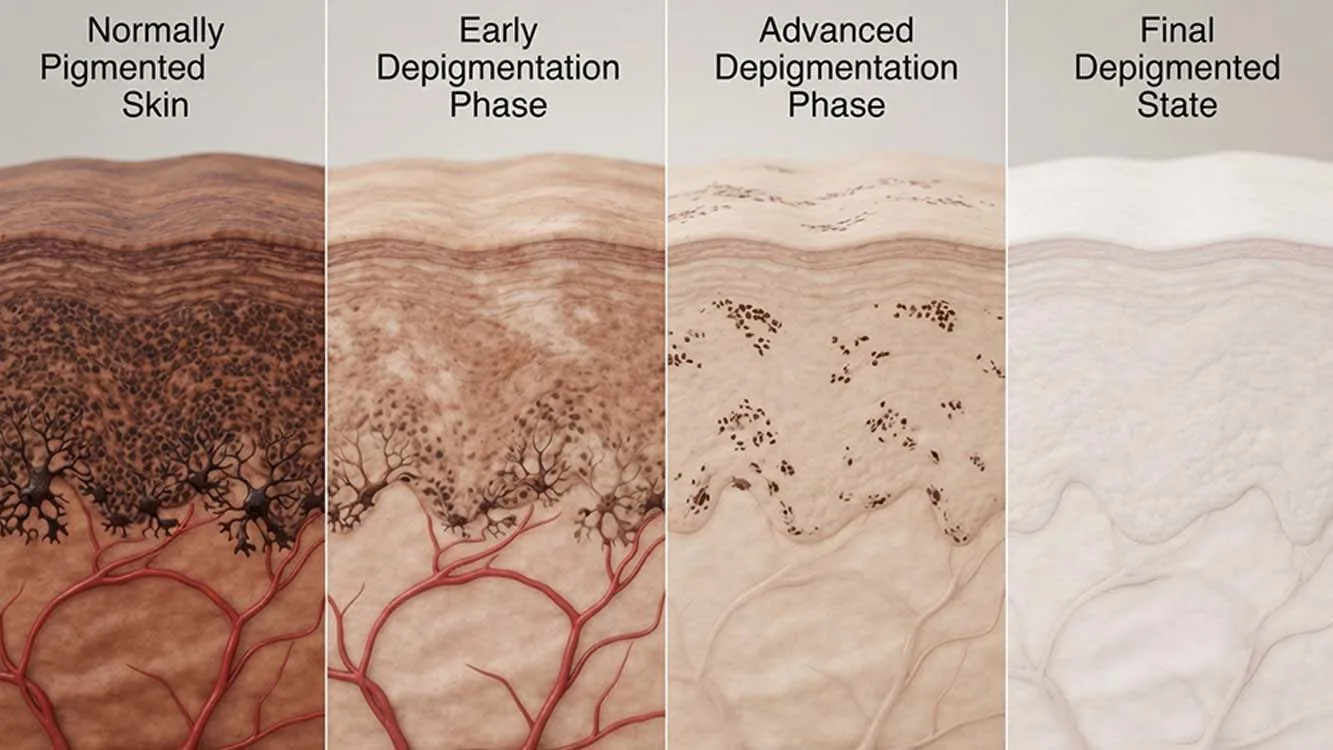
Skin colour is influenced by melanin produced by specialised cells called melanocytes.
Melanocytes transfer pigment-containing structures to nearby skin cells. The amount, type and distribution of melanin influence visible skin tone.
Melanin also provides some natural protection from ultraviolet radiation.
In vitiligo, functioning melanocytes are reduced or lost in affected areas. This causes sharply lighter or white patches.
Depigmentation treatment works by reducing the activity or survival of melanocytes that remain in normally coloured areas.
Because the treatment affects pigment-producing cells rather than merely removing surface colour, the change may be long-lasting or permanent.
How Does Medical Depigmentation Work?
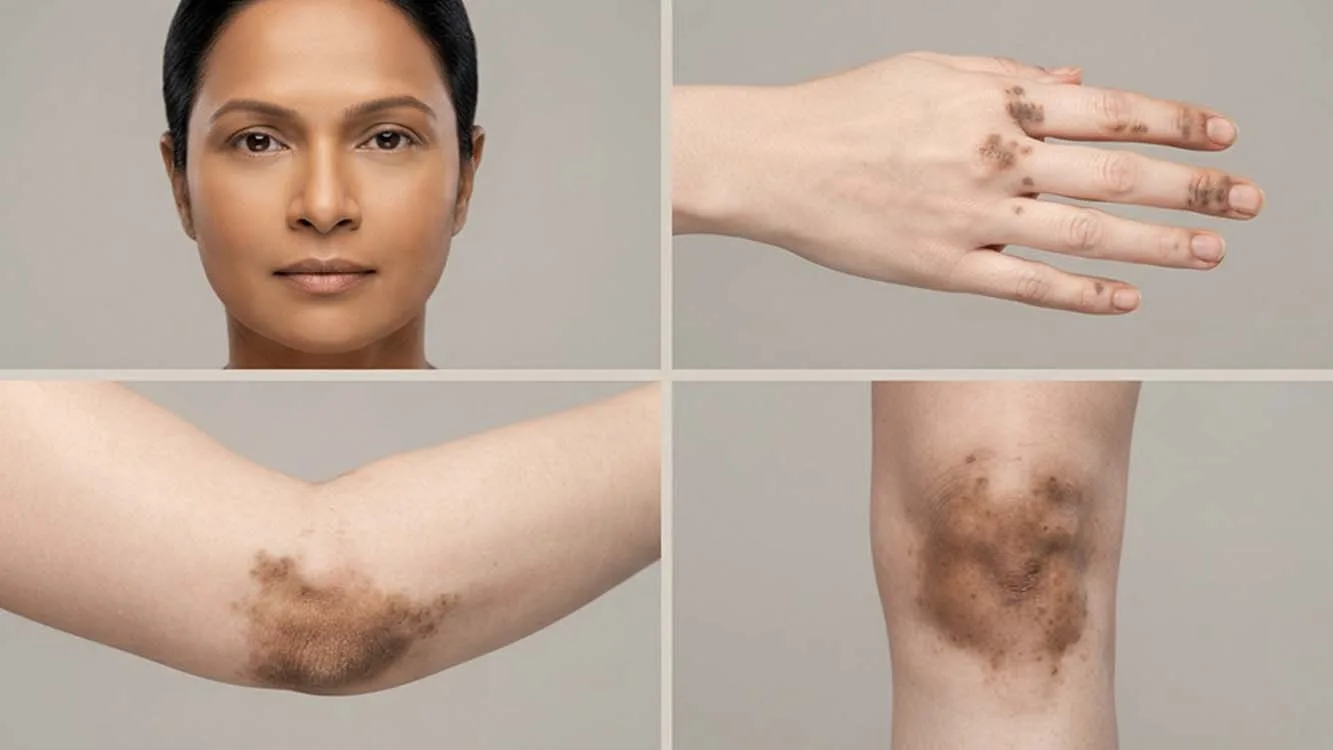
Medical depigmentation generally uses a prescribed topical agent applied to selected normally pigmented skin.
The medicine gradually reduces melanin production and may damage or eliminate remaining melanocytes.
The process is usually:
Slow
Progressive
Individualised
Monitored over time
Applied to limited test areas initially
Expanded only when the response is acceptable
Lightening may begin as scattered pale spots rather than one smooth colour change.
Different areas may respond at different speeds because the number and activity of melanocytes vary across the body.
The face and neck may respond differently from the hands, elbows, knees or trunk.
Is The Result Immediate?
No.
Medical depigmentation is usually a gradual process that may take many months or longer.
Early changes may include:
Mild lightening
Small pale spots
Uneven borders
Temporary redness
Dryness
Itching
Increased contrast before blending improves
The skin may initially look more patchy because treated areas begin losing colour at different rates.
A person considering treatment should be emotionally prepared for this transitional stage.
Applying more medicine than prescribed does not guarantee faster or more even results and may increase irritation or skin injury.
Is Depigmentation Permanent?
It is generally intended to be permanent.
Some treated areas may remain depigmented for many years, while others may develop small areas of repigmentation.
Repigmentation may appear as:
Small brown dots
Freckle-like spots
Irregular darker islands
Pigment around hair follicles
Colour returning after sun exposure
These areas may require reassessment or maintenance treatment.
Even when pigment partially returns, the original natural skin tone may not be restored evenly.
Patients should not begin treatment with the expectation that the complete process can easily be reversed later.
Can Depigmented Skin Regain Its Original Colour?
Reliable complete reversal is not expected.
Once melanocytes have been significantly reduced or destroyed, restoring the original uniform colour may be difficult or impossible.
Small areas may repigment spontaneously, but this can produce irregular darker spots rather than the previous even complexion.
Possible attempts to restore pigment may have limited and unpredictable results.
This is why the decision should be made only after discussing:
Future appearance preferences
Cultural and personal identity
Family or social concerns
Occupational exposure
Sun sensitivity
Emotional readiness
Long-term maintenance
Depigmentation should not be started as a temporary experiment.
Which Medicines Are Used For Depigmentation?
Medical depigmentation has traditionally involved strong prescription agents designed to reduce melanocyte activity.
The exact product and concentration depend on:
Country-specific availability
Skin type
Treatment area
Previous reactions
Medical history
Extent of vitiligo
Clinical supervision
Some agents used for depigmentation are related to hydroquinone but act more strongly and are not interchangeable with ordinary cosmetic pigmentation creams.
These medicines should never be:
Purchased casually online
Mixed at home
Shared with another person
Applied to normal skin for general fairness
Used without diagnosis
Applied more frequently to speed the result
Incorrect use may cause widespread permanent colour loss.
Can Ordinary Hydroquinone Completely Depigment The Skin?
Ordinary hydroquinone is mainly used under medical guidance for selected hyperpigmentation concerns.
It is not the same as a formal depigmentation plan for extensive vitiligo.
Unsupervised use of high-strength hydroquinone over large areas can cause:
Irritation
Uneven lightening
Rebound pigmentation
Persistent discolouration
Exogenous ochronosis
Sensitivity
Patchy pigment loss
Depigmentation therapy should not be attempted by applying strong pigmentation creams repeatedly across the body.
The concentration, treatment duration and purpose must be medically appropriate.
Can Depigmentation Cream Be Applied To The Whole Body At Once?
Usually, treatment is introduced cautiously rather than applied to every remaining pigmented area immediately.
A test area may help assess:
Skin sensitivity
Degree of irritation
Speed of lightening
Emotional response to visible colour change
Ability to follow the routine
Likelihood of uneven results
Treating a very large area at once may increase:
Irritation
Inflammation
Difficulty monitoring reactions
Uncontrolled spread to nearby skin
Emotional distress
Problems identifying which area reacted first
A staged plan allows the response to be reviewed before treatment is expanded.
Why Can Depigmentation Become Uneven?
Different parts of the skin contain different numbers of active melanocytes and respond differently to treatment.
Unevenness may also occur because of:
Inconsistent application
Rubbing onto surrounding areas
Variable skin thickness
Sun exposure
Friction
Sweating
Missed applications
Irritation
Hair-follicle pigment
Natural differences in treatment response
Some body areas may be more resistant, including:
Hands
Fingers
Feet
Elbows
Knees
Areas around hair follicles
Achieving a completely identical tone across every body area may not be possible.
Can The Medicine Lighten Skin That Was Not Intended To Be Treated?
Yes.
Transfer can occur when the medicine comes into contact with other areas.
Unintended exposure may happen through:
Hands
Clothing
Towels
Bedding
Skin-to-skin contact
Sweat
Inaccurate application
This may create pale patches outside the planned treatment zone.
Careful application and hand-washing instructions are therefore important.
The medicine should also be stored away from children and other household members.
Can Depigmentation Treatment Affect Another Person Through Touch?
Direct transfer shortly after application may expose another person’s skin to the medicine.
Precautions may include:
Allowing the medicine to absorb fully
Washing hands after application
Avoiding immediate skin-to-skin contact
Keeping treated areas covered when advised
Using separate towels
Preventing contact with children
Avoiding sharing applicators
The exact precautions depend on the prescribed product and treated area.
A medication capable of reducing pigment should never be treated like an ordinary moisturiser.
What Side Effects Can Occur During Treatment?
Possible local reactions include:
Redness
Dryness
Itching
Burning
Stinging
Peeling
Swelling
Contact dermatitis
Increased sensitivity
Uneven colour loss
Some people may develop a strong inflammatory reaction.
Continuing treatment through severe irritation can increase the risk of:
Skin breakdown
Infection
Scarring
Persistent pigmentation changes
Worsening discomfort
The treatment schedule may need to be reduced, paused or changed according to the skin response.
Can Depigmentation Cause Allergic Contact Dermatitis?
Yes.
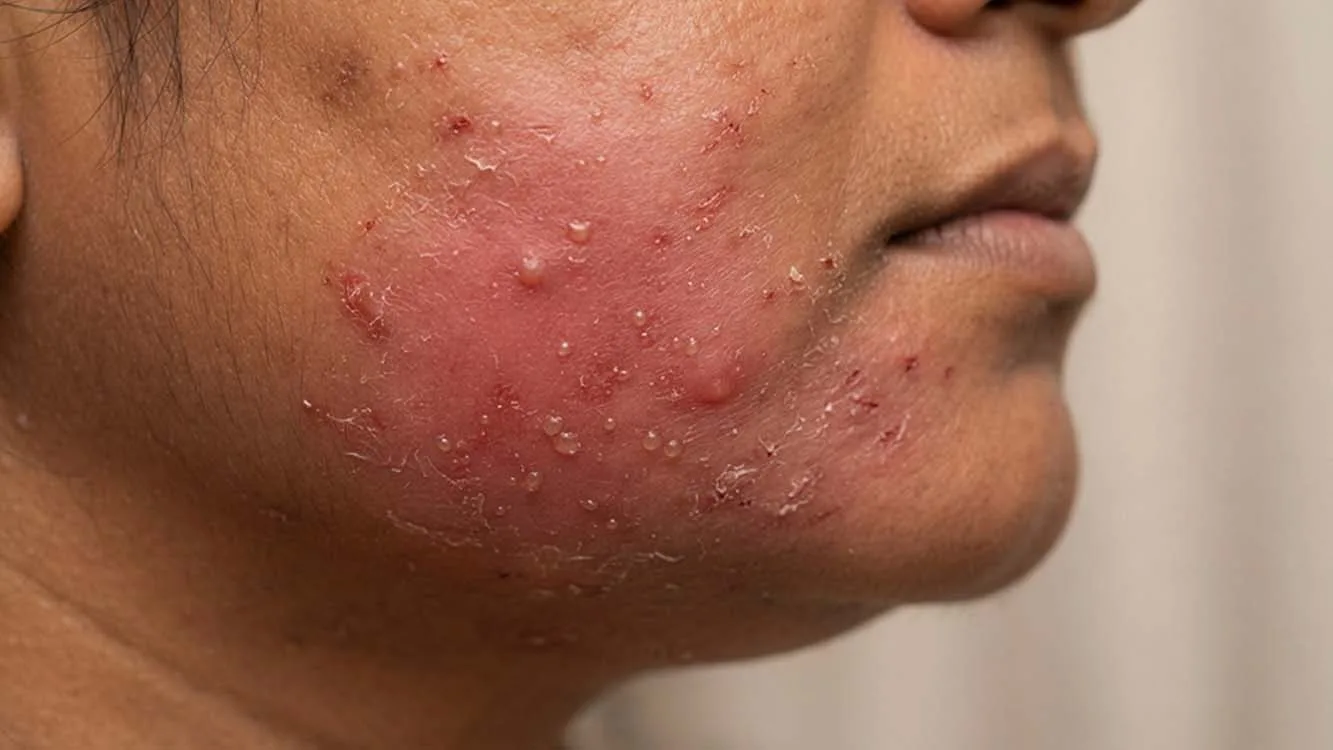
A person may develop an allergic reaction to the active medicine or another ingredient in the formulation.
Possible signs include:
Intense itching
Persistent redness
Swelling
Blisters
Oozing
Rash spreading beyond the application area
Increasing sensitivity after repeated use
Allergic dermatitis is different from mild temporary dryness.
Treatment should be stopped and assessed when the reaction is severe or progressively worsening.
Reapplying the product to “test” the skin repeatedly can intensify an allergic response.
Does Depigmentation Make Skin More Sensitive To Sunlight?
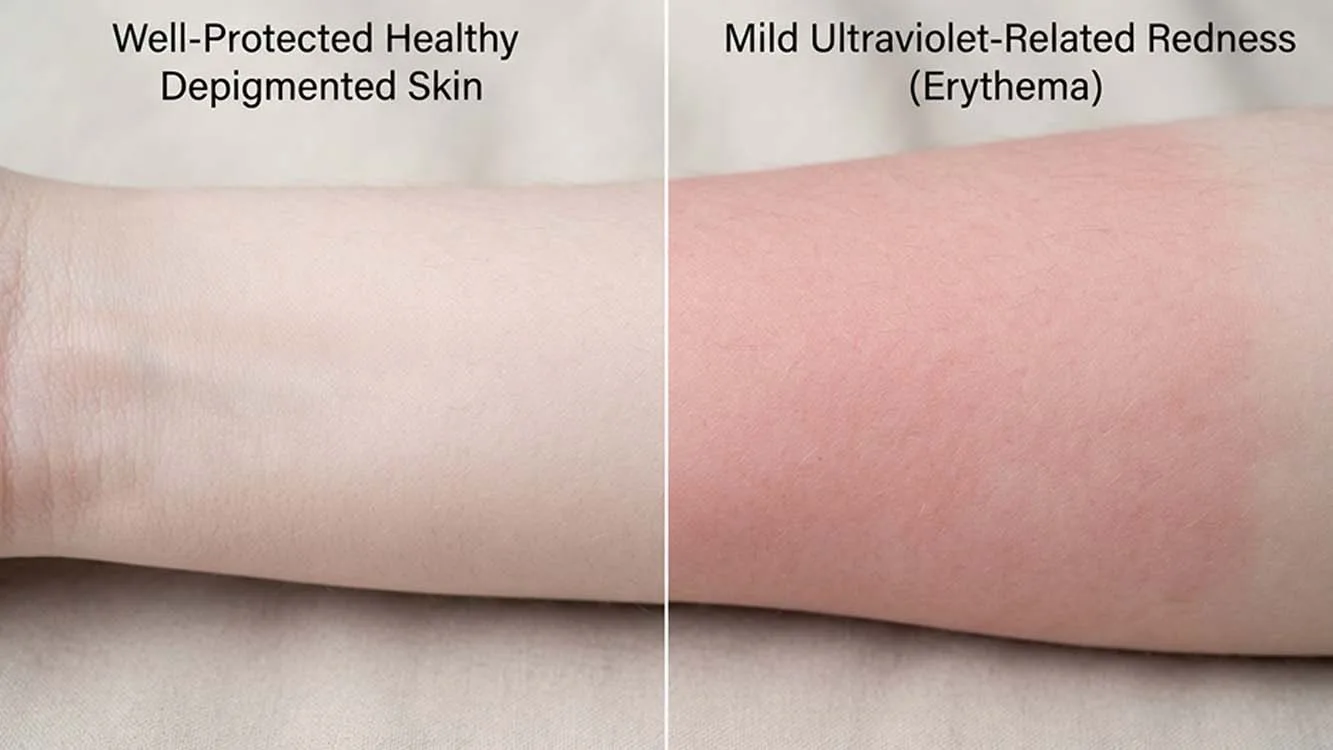
Yes.
Melanin helps absorb and reduce some ultraviolet exposure. Depigmented skin has less natural protection.
After treatment, the skin may:
Burn more easily
Become red rapidly
Develop irritation
Show freckles or repigmentation
Experience greater ultraviolet damage
Require more careful outdoor planning
Sun protection becomes a long-term requirement rather than a temporary aftercare step.
Even brief daily exposure during commuting can affect untreated and treated areas differently.
What Sun Protection Is Needed After Depigmentation?
Sun protection may include:
Broad-spectrum sunscreen
Adequate sunscreen quantity
Regular reapplication
Hats
Umbrellas
Full-sleeved clothing
Shade
Avoiding peak ultraviolet exposure
Protecting skin during travel
Reapplying after sweating
In Mumbai, sun exposure may occur during:
Commuting
Walking between buildings
Driving
Outdoor exercise
Beach visits
Work-related travel
Cloudy weather does not eliminate ultraviolet exposure.
Sunscreen alone may be insufficient when prolonged outdoor exposure is expected.
Can Sun Exposure Cause Pigment To Return?
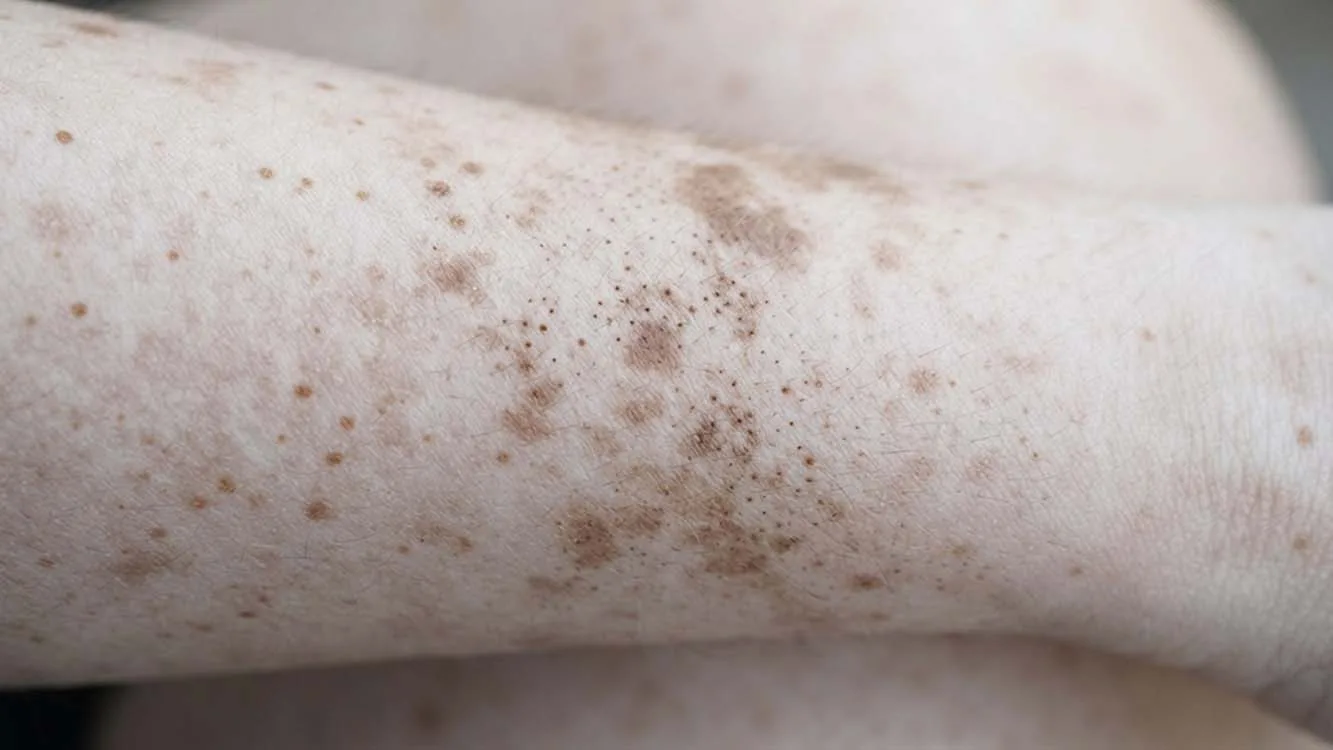
Yes. Sun exposure may stimulate surviving melanocytes and contribute to small areas of repigmentation.
The returning pigment may not appear evenly.
It may form:
Dark dots
Freckled areas
Irregular patches
Borders around treated skin
Pigment around hair follicles
This can recreate contrast between different areas.
Strict sun protection may reduce this risk, but it cannot guarantee that pigment will never return.
Can Depigmentation Treatment Be Used On The Face?
The face may be treated in selected patients, but it requires careful planning.
Facial skin is highly visible and may react with:
Redness
Dryness
Irritation
Uneven lightening
Increased sun sensitivity
Contrast around the hairline
Pigment differences near the lips and eyes
The treatment should be kept away from sensitive structures unless specifically instructed.
Accidental contact with the eyes, lips or mucosal surfaces can cause significant irritation.
Facial depigmentation may also create a major change in identity and social perception, which should be considered before beginning treatment.
Can Depigmentation Be Used Around The Eyes?
The skin around the eyes is thin and sensitive.
Medication applied too close to the eyelids may cause:
Burning
Swelling
Irritation
Tearing
Redness
Accidental eye exposure
Treatment near the eyes should be performed only according to a medically defined plan.
The product should not be allowed to enter the eye.
Accidental eye exposure requires immediate rinsing and medical guidance according to the symptoms and medicine used.
Can Hair Lose Colour During Depigmentation?
Skin depigmentation does not necessarily remove pigment from every hair shaft.
However, vitiligo itself may cause white hair in affected areas when hair-follicle melanocytes are involved.
Hair colour may differ from the surrounding skin, including:
Dark scalp hair over depigmented skin
White facial hair
Mixed eyebrow colour
White eyelashes
Patchy beard greying
Depigmentation treatment should not be expected to make all hair uniformly white.
Hair dye and cosmetic camouflage may be considered separately when appropriate.
Does Depigmentation Treat Active Vitiligo?
Depigmentation changes the remaining skin colour but does not necessarily control the biological activity of vitiligo.
Active vitiligo may continue producing new white patches.
Before treatment, the assessment should consider:
Recent spread
New patches
Enlargement of existing patches
Trauma-related lesions
Inflammation
Previous treatment response
Family history
Associated autoimmune conditions
In some patients, disease stabilisation remains an important part of management even when depigmentation is being considered.
Should Repigmentation Treatments Be Tried First?
In many patients, reasonable repigmentation options should be considered before intentionally removing the remaining pigment.
Possible treatments may include:
Topical anti-inflammatory medicines
Phototherapy
Targeted light treatment
Surgical grafting for selected stable patches
Camouflage
Medical treatment for active disease
However, the choice depends on:
Extent of vitiligo
Location
Stability
Hair colour within the patch
Previous response
Time commitment
Medical suitability
Patient priorities
A person with extremely extensive vitiligo may decide that prolonged repigmentation attempts are unlikely to provide the desired uniformity.
The decision should be individual rather than based only on body-surface percentage.
Can Depigmentation Be Combined With Phototherapy?
Depigmentation aims to reduce remaining pigment, while conventional vitiligo phototherapy usually aims to encourage repigmentation.
These goals can conflict.
Phototherapy is therefore not automatically continued in the same way once complete depigmentation has been chosen.
Light-based approaches may have specialised roles in selected resistant areas, but they require careful medical planning because ultraviolet exposure also increases skin-damage risk.
Patients should not combine home light devices, tanning or sun exposure with depigmentation medicines without guidance.
Can Laser Treatment Remove The Remaining Pigment?
Selected laser or light-based methods may be considered for resistant pigmented areas after topical treatment.
They are not the first choice for everyone.
Possible concerns include:
Pain
Inflammation
Burns
Scarring
Uneven results
Post-treatment colour changes
Need for repeated sessions
Cost
Limited suitability for large areas
Laser treatment should not be confused with ordinary pigmentation removal.
The objective in this context is reduction of normal melanocytes, which creates permanent sun sensitivity.
Is Depigmentation Suitable For Children?
Permanent depigmentation is generally approached with extreme caution in children and adolescents.
Young people may experience changes in:
Vitiligo extent
Personal identity
Emotional understanding
Social environment
Future preferences
Ability to follow lifelong sun protection
A child may not be able to provide mature informed consent for an irreversible appearance change.
Management usually focuses on:
Accurate diagnosis
Disease control
Repigmentation where appropriate
Camouflage
Psychological support
Family education
Sun protection
Any discussion of irreversible treatment requires specialist assessment and careful consideration of long-term consequences.
Can Pregnant Or Breastfeeding Women Use Depigmentation Medicines?
Depigmentation treatment is generally postponed during pregnancy because safety information for strong pigment-reducing agents may be limited.
Breastfeeding also requires caution, particularly when medication could:
Contact the infant
Transfer through treated skin
Be applied near the breast
Be absorbed over a large body area
Pregnancy-related skin and immune changes may also alter vitiligo activity and treatment response.
A long-term elective depigmentation plan is usually better considered when pregnancy and breastfeeding have concluded.
Who May Be A Suitable Candidate For Depigmentation?
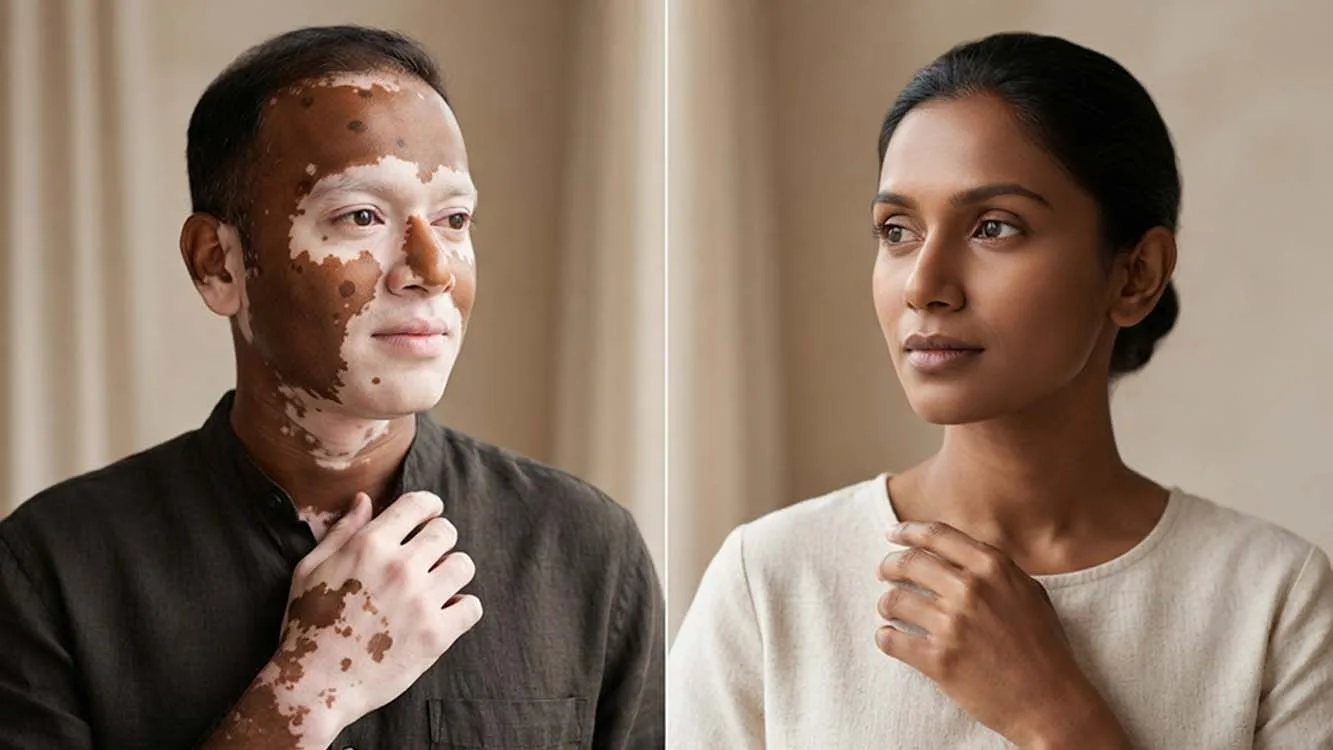
A potential candidate may be an adult who:
Has extensive vitiligo
Has relatively little normal pigment remaining
Has realistic expectations
Understands the permanence of treatment
Accepts lifelong sun protection
Has considered repigmentation options
Can follow a prolonged treatment plan
Understands that the result may initially be uneven
Is emotionally prepared for a major appearance change
Can attend regular follow-up
Has no untreated skin infection or severe active dermatitis
Suitability is not based only on appearance.
The decision must also account for lifestyle, occupation, outdoor exposure, family support and psychological readiness.
Who May Not Be Suitable For Depigmentation?
Treatment may be unsuitable or require postponement when there is:
Limited vitiligo
Uncertain diagnosis
A temporary desire for lighter skin
Unrealistic expectations of immediate uniformity
Inability to use lifelong sun protection
Active severe dermatitis
Skin infection
Pregnancy
Breastfeeding
Significant uncertainty about permanent colour loss
Pressure from family or society
Poor treatment adherence
Untreated emotional distress related to appearance
A person who wants to “try it on the complete face” before deciding may not fully understand the irreversible nature of treatment.
A limited medically supervised test area is different from casual experimentation.
Why Is Psychological Readiness Important?
Depigmentation can change how a person recognises themselves and how others respond to them.
The emotional impact may involve:
Identity
Confidence
Family reactions
Cultural perceptions of skin colour
Workplace interactions
Public attention
Fear of regret
Adjustment to photographs and mirrors
Concerns about relationships
Some people experience relief when contrast is reduced. Others may struggle with the permanent loss of their original pigment.
Psychological discussion does not imply that the person’s concern is imaginary. It helps ensure that the decision remains personally meaningful and informed.
When Should Depigmentation Treatment Be Postponed?
Treatment may need to be delayed when there is:
Unclear diagnosis
Recent rapid change in vitiligo
Active skin infection
Severe eczema or dermatitis
Open wounds
Recent sunburn
Pregnancy
Breastfeeding
Upcoming prolonged sun exposure
Inability to attend follow-up
Uncertainty about the permanent outcome
Major emotional stress
Pressure to change skin colour for another person
The patient should have enough time to consider the decision without being rushed into treatment.
How Is Depigmentation Treatment Planned?
Planning begins with confirming that the lighter areas are caused by vitiligo and determining how much normally pigmented skin remains.
The assessment may include:
Extent and distribution of vitiligo
Recent spread or stability
Facial and body involvement
Pigment remaining around hair follicles
Previous repigmentation treatment
Skin sensitivity
History of eczema or contact allergy
Outdoor exposure
Occupation and lifestyle
Ability to follow lifelong sun protection
Emotional readiness for permanent colour change
Clinical photographs may help document the starting pattern and monitor progress.
The plan should also identify which areas will be treated first. Highly visible areas may seem like the obvious starting point, but beginning with a limited test zone can provide useful information about skin tolerance and the likely pattern of lightening.
Why Is A Test Area Important?
A small test area can help assess how the skin responds before treatment is expanded.
It may reveal:
Irritation
Allergic contact dermatitis
Speed of depigmentation
Uneven colour loss
Pigment returning after treatment
Sensitivity to sunlight
Emotional response to the visible change
The test area should be observed for an adequate period rather than judged after only a few applications.
A mild initial response does not guarantee that large-area treatment will remain irritation-free. Reactions may increase as more skin is exposed or as treatment continues.
How Is The Medicine Applied?
The prescribed depigmenting agent is generally applied only to the remaining normally pigmented areas.
Application instructions may include:
Using a small measured amount
Applying a thin, even layer
Avoiding already white skin when directed
Keeping the medicine away from eyes and lips
Washing hands immediately afterwards
Allowing the product to dry before dressing
Preventing contact with other people
Following the exact frequency prescribed
Applying a thicker layer does not necessarily improve the response.
Excessive application may increase:
Burning
Redness
Peeling
Dermatitis
Accidental spread
Uneven depigmentation
The treatment schedule may be modified according to tolerance.
Which Areas Are Usually Treated First?
The order depends on the remaining pigment pattern and the patient’s priorities.
Treatment may begin with:
A small concealed area
One side of the body
A resistant darker island
A highly visible facial contrast
A limited body region that can be monitored easily
Starting on the entire face and body simultaneously can make reactions difficult to control.
Different regions may also require different treatment frequencies because facial skin may be more sensitive than thicker skin on the elbows, knees or hands.
Why Do Some Areas Respond More Slowly?
Certain areas may contain more resistant melanocytes or receive more repeated stimulation from sunlight and friction.
Slow-response regions may include:
Hands
Fingers
Feet
Elbows
Knees
Hair-bearing areas
Skin around the mouth
Areas exposed regularly to sunlight
Pigment around hair follicles may remain visible as small darker dots.
These spots can be difficult to remove completely because follicular melanocytes may survive deeper within the skin.
The presence of a few resistant areas does not mean the patient should apply excessive quantities or use unapproved combinations.
What Happens During The First Few Weeks?
Early treatment may produce more contrast before the skin becomes more uniform.
The patient may notice:
Small pale spots
Patchy fading
Dryness
Mild itching
Temporary redness
Uneven borders
Increased visibility of untreated islands
This stage can be emotionally challenging because the skin may look more irregular than it did before treatment.
Photographs taken under similar lighting can help distinguish genuine progress from daily changes caused by dryness, tanning or camera exposure.
How Long Can Complete Depigmentation Take?
The timeline varies widely.
Some areas may lighten over several months, while resistant regions may take considerably longer.
Treatment duration depends on:
Amount of pigment remaining
Body area
Skin thickness
Melanocyte activity
Consistency of application
Sun exposure
Irritation
Treatment interruptions
Individual response
Complete uniformity is not guaranteed even after prolonged treatment.
Patients should be cautious about anyone promising full-body depigmentation within a fixed short period.
Can Treatment Be Paused?
Yes. Treatment may need to be paused when the skin becomes significantly irritated or when the patient needs time to reassess the decision.
A pause may be considered for:
Persistent redness
Severe itching
Burning
Blistering
Skin cracking
Infection
Emotional distress
Upcoming intense sun exposure
Difficulty following precautions
Stopping temporarily does not necessarily reverse the colour change already achieved.
The decision to restart should be based on skin recovery and renewed understanding of the long-term outcome.
Can Depigmentation Spread Beyond The Treated Area?
Unintended lightening can occur beyond the exact application zone.
Possible reasons include:
Product transfer
Rubbing
Sweat
Contact with clothing
Application too close to untreated skin
A strong individual response
In some people, lightening may extend beyond the visibly treated boundary.
This is another reason why the medicine should not be used as a casual spot-lightening product.
What Is Contact Leukoderma?
Contact leukoderma refers to loss of pigment caused by exposure to certain chemicals.
It may appear as:
Pale patches
Confetti-like white spots
Colour loss extending beyond the contact area
Depigmentation after repeated exposure
Patches shaped like the application pattern
Strong depigmenting agents can intentionally create a similar loss of pigment in selected patients with extensive vitiligo.
However, accidental chemical leukoderma in someone without extensive vitiligo can be cosmetically distressing and difficult to reverse.
Can Depigmentation Cause Skin Burns?
Severe irritation or chemical injury is possible when products are used incorrectly.
Risk may increase with:
Excessive concentration
Frequent application
Mixing multiple agents
Applying to broken skin
Using after exfoliation
Combining with acids or retinoids
Applying after waxing
Using unregulated products
Continuing despite severe burning
Warning signs include:
Intense pain
Blistering
Oozing
Raw skin
Rapid swelling
Dark crusting
Skin breakdown
These symptoms require prompt assessment.
Can Moisturiser Be Used During Treatment?
A gentle moisturiser may help manage dryness and irritation.
Suitable products are generally:
Fragrance-free
Non-exfoliating
Free from strong acids
Free from bleaching ingredients
Designed for sensitive skin
The timing of moisturiser in relation to the prescribed depigmenting medicine should follow the treatment plan.
Harsh scrubs, peels and home remedies can worsen inflammation and increase uneven colour changes.
Which Skin-Care Products Should Be Avoided?
During active depigmentation, the skin may be more sensitive.
Products that may require avoidance or careful supervision include:
Strong retinoids
Glycolic acid
Salicylic acid
Chemical peels
Bleaching mixtures
Abrasive scrubs
Fragranced products
Essential oils
Unregulated fairness creams
Strong hair-removal creams
Home bleaching agents
Using several active products together can make it difficult to identify which one caused irritation.
Can Waxing, Threading Or Laser Hair Removal Be Done?
Hair-removal methods can irritate depigmented or actively treated skin.
Waxing may cause:
Surface injury
Inflammation
Burns
Pigment changes
Increased sensitivity
Threading may create friction and temporary redness.
Laser hair removal requires additional caution because treatment relies partly on pigment within the hair and can affect surrounding skin differently when the skin is depigmented.
Hair-removal planning should consider:
Skin condition
Hair colour
Treatment area
Current medication
History of burns
Degree of depigmentation
Procedures should not be performed over actively inflamed skin.
Can Makeup Or Camouflage Be Used During Treatment?
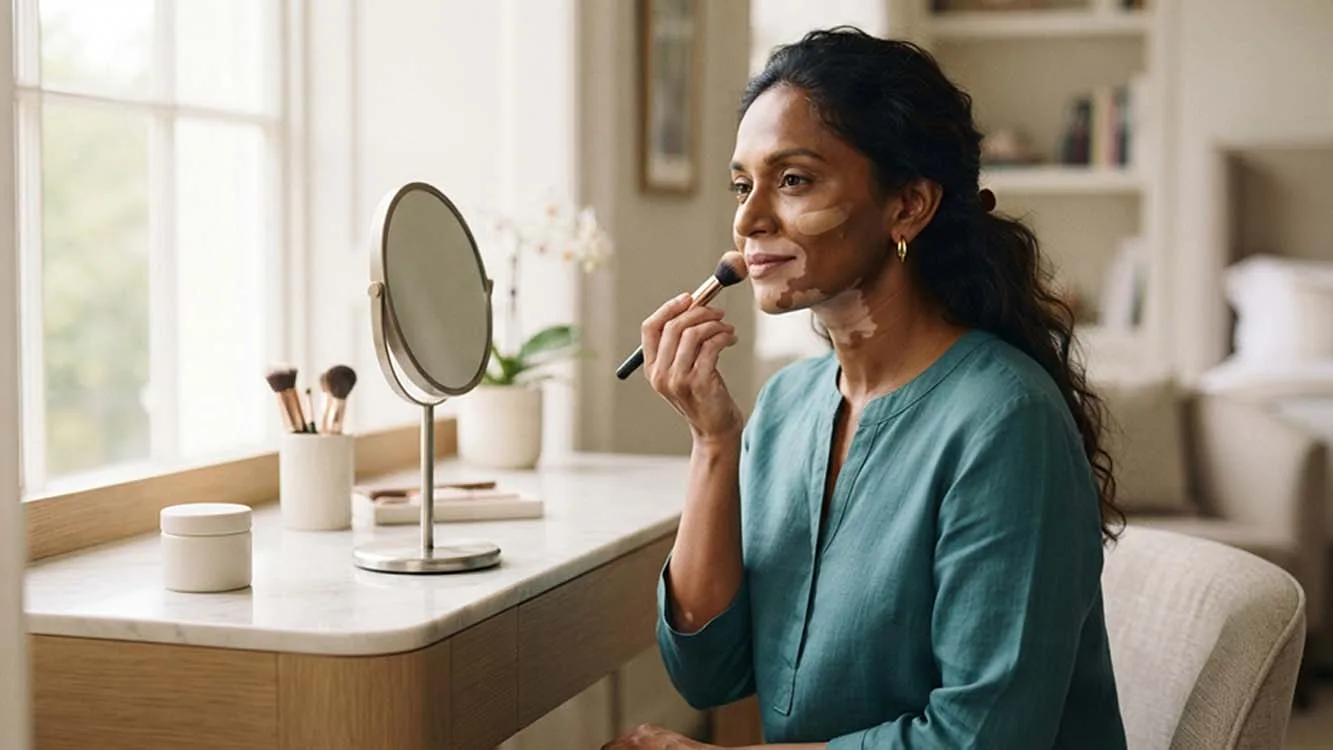
Cosmetic camouflage can reduce visible contrast while depigmentation progresses.
Products may include:
Skin camouflage creams
Tinted sunscreens
Transfer-resistant makeup
Body foundation
Camouflage should be applied gently and removed without harsh rubbing.
The patient should ensure that the product does not interfere with the medication schedule or cause irritation.
Camouflage remains a valid long-term option for patients who decide not to continue permanent depigmentation.
Can Depigmented Skin Tan?
Fully depigmented skin cannot tan normally because functioning melanocytes are reduced or absent.
Instead, it may:
Burn
Become red
Develop irritation
Show temporary inflammation
Accumulate ultraviolet damage
Any remaining melanocytes may produce scattered darker spots after sun exposure.
This can make the skin appear uneven again.
Tanning beds and deliberate sun tanning should be avoided.
Is Vitamin D Deficiency A Concern?
Strict sun avoidance may reduce natural vitamin D production in some people.
Vitamin D status may be considered according to:
Diet
Sun exposure
Skin coverage
Medical history
Symptoms
Blood testing when appropriate
Sunburn should not be used as a method of maintaining vitamin D.
Dietary intake or supplementation may be considered under appropriate medical guidance when deficiency is identified.
Does Depigmentation Increase Skin-Cancer Risk?
Loss of melanin reduces some of the skin’s natural ultraviolet protection.
This makes careful sun protection important.
Long-term ultraviolet exposure may contribute to:
Sunburn
Premature skin ageing
Precancerous skin changes
Skin cancer
The exact risk is influenced by skin type, cumulative exposure, geography, occupation and protective behaviour.
Regular skin checks may be appropriate, particularly for people with extensive outdoor exposure or a history of severe sunburn.
How Should Depigmented Skin Be Monitored?
Long-term monitoring may include looking for:
New darker spots
Persistent irritation
Non-healing wounds
Unusual growths
Recurrent dermatitis
Changes after sun exposure
New vitiligo activity
Pigment returning around follicles
Patients should not automatically treat every darker spot with additional depigmenting medicine.
A new pigmented lesion may require examination before any product is applied.
Can Pigment Return Years Later?
Yes. Small areas of repigmentation may appear long after treatment.
Possible triggers include:
Sun exposure
Surviving melanocytes
Pigment from hair follicles
Incomplete treatment
Individual biological variation
Returning pigment may be scattered and irregular.
Maintenance treatment may be considered, but repeated application still carries irritation and contact-transfer risks.
What Happens If The Patient Regrets The Treatment?
Complete restoration of the original skin colour may not be possible.
Support may focus on:
Psychological counselling
Cosmetic camouflage
Makeup
Sun protection
Managing irregular repigmentation
Exploring selected medical options
Supporting adjustment to appearance
This possibility should be discussed before treatment begins.
A patient who remains uncertain about losing their natural pigment should not be rushed into irreversible therapy.
Can Depigmentation Affect Mental Health?
The treatment may improve wellbeing in some people by reducing visible contrast and the daily effort of camouflage.
Others may experience:
Grief over loss of natural skin colour
Identity concerns
Social anxiety
Regret
Fear of public attention
Difficulty recognising themselves
Stress during the uneven treatment phase
Emotional responses can change over time.
Mental-health support may be helpful before, during or after treatment, particularly when appearance concerns are causing major distress.
How Can Family Support Help?
Family members should understand that depigmentation is not an ordinary fairness treatment.
They can help by:
Respecting the patient’s decision
Avoiding pressure
Supporting sun protection
Helping monitor skin reactions
Preventing medication contact with children
Supporting treatment adherence
Avoiding insensitive comments during transition
The final decision should remain with the informed patient.
Can Depigmentation Be Stopped Once A Uniform Tone Is Reached?
Active treatment may be reduced or stopped when the desired level of depigmentation has been achieved.
However, ongoing care may still include:
Sun protection
Monitoring for repigmentation
Occasional maintenance treatment
Management of dryness
Skin examinations
Camouflage for resistant spots
The end of active application does not mean that long-term precautions are no longer required.
What Are The Main Risks Of Medical Depigmentation?
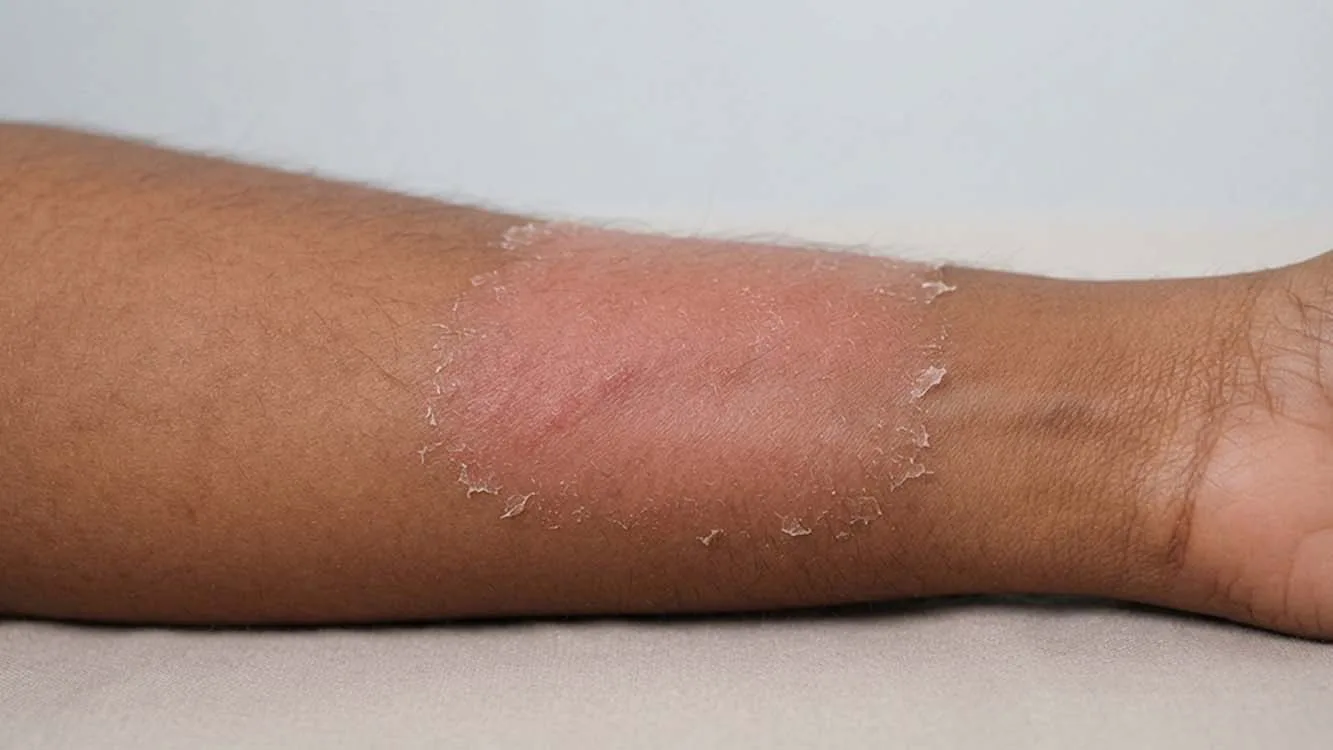
Possible risks include:
Permanent colour loss
Uneven depigmentation
Irritant dermatitis
Allergic contact dermatitis
Burning
Blistering
Dryness
Accidental spread
Repigmentation
Increased sun sensitivity
Sunburn
Long-term ultraviolet damage
Psychological regret
Social and identity concerns
Difficulty reversing the result
The most important risk is that the treatment can create a lasting change that may not match the patient’s future preferences.
Which Symptoms Require Prompt Assessment?
Medical review is important when there is:
Severe burning
Blistering
Oozing
Skin breakdown
Rapid swelling
Widespread rash
Intense itching
Eye exposure
Painful facial swelling
Signs of infection
Unexpected widespread colour loss
Significant emotional distress
Eye exposure should be managed immediately according to the medicine involved and the severity of symptoms.
Common Myths About Depigmentation Treatment
“Depigmentation Is A Fairness Treatment”
It is a medical option for selected people with extensive vitiligo, not a general method for lighter skin.
“The Original Skin Colour Can Easily Be Restored”
The treatment is generally intended to be permanent and may not be reversible.
“Applying More Medicine Speeds Up The Result Safely”
Excess use can cause burns, dermatitis and uneven lightening.
“Every Area Will Become The Same Colour At The Same Time”
Body regions respond at different speeds, and resistant spots may remain.
“Sun Protection Is Needed Only During Treatment”
Depigmented skin requires long-term protection because it has less natural melanin.
“A Few White Patches Should Be Treated By Lightening The Rest Of The Body”
Limited vitiligo is usually managed with stabilisation, repigmentation or camouflage rather than complete depigmentation.
“The Medicine Cannot Affect Another Person”
Transfer through hands, clothing or direct contact can cause unintended exposure.
“Once Pigment Is Removed, It Never Returns”
Small darker spots or follicular repigmentation may develop later.
“Laser Treatment Can Quickly Finish The Process Without Risk”
Light-based treatment can cause burns, scarring and uneven colour and is not suitable for everyone.
“The Decision Is Only Cosmetic”
It affects sun protection, identity, lifestyle and long-term skin care.
Why Personalised Depigmentation Planning Matters
Medical depigmentation requires more than selecting a strong cream.
Personalised planning considers:
Extent of vitiligo
Remaining natural pigment
Disease stability
Previous repigmentation attempts
Skin sensitivity
Outdoor exposure
Occupation
Pregnancy plans
Ability to follow sun protection
Family environment
Emotional readiness
Long-term maintenance
Possibility of regret
The most appropriate recommendation may involve:
Continuing repigmentation treatment
Stabilising active vitiligo
Cosmetic camouflage
Treating only resistant darker islands
A medically supervised test area
Gradual staged depigmentation
Psychological support
Postponing treatment
No depigmentation
The objective is not simply to create lighter skin. It is to reduce contrast safely in a patient who has knowingly chosen a permanent change.
Why Choose Hair & Shape For Depigmentation Planning In Mumbai?
At Hair & Shape Clinic, depigmentation planning begins with confirming the diagnosis and evaluating whether extensive vitiligo makes permanent pigment reduction a reasonable option.
The assessment may include:
Extent and distribution of vitiligo
Recent disease activity
Previous treatment response
Remaining pigmented areas
Skin sensitivity
Sun exposure
Lifestyle and occupation
Emotional readiness
Ability to follow long-term precautions
Risk of irritation and accidental transfer
Patients should receive a clear explanation of:
The permanent intention of treatment
The likelihood of uneven early lightening
Possible dermatitis and skin injury
Need for careful application
Lifelong sun protection
Possibility of repigmentation
Limited reversibility
Alternative repigmentation and camouflage options
The aim is a medically responsible and carefully considered plan rather than unsupervised skin lightening.
Final Thoughts
Medical depigmentation may help selected adults with extensive vitiligo achieve a more uniform appearance by gradually reducing the remaining natural pigment.
It does not restore melanocytes or return the skin to its original colour. Instead, it intentionally lightens normally pigmented areas, and the change is generally intended to be permanent.
Treatment may take many months and can initially make the skin appear more uneven. Different body areas respond at different speeds, and resistant darker spots may remain around hair follicles, hands, feet, elbows or knees.
Possible complications include irritation, allergic dermatitis, accidental transfer, burns, uneven colour and later repigmentation. Depigmented skin also has less natural protection from ultraviolet radiation, making lifelong sun protection essential.
The decision should be made only after considering repigmentation options, lifestyle, outdoor exposure, emotional readiness and the possibility of future regret.
The most appropriate outcome is not simply the lightest possible skin. It is a carefully planned reduction in contrast that the patient understands, accepts and can manage safely over the long term.
Keep reading
Lip Augmentation/Reduction: Complete Guide To Lip Surgery, Recovery & Results
Lip Augmentation and Lip Reduction are aesthetic procedures designed to improve lip volume, shape, symmetry, and facial balance. This guide explains lip enhancement and reduction techniques, procedure steps, recovery timeline, benefits, candidate suitability, and the importance of choosing an experienced plastic surgeon at Hair & Shape Clinic, Mumbai.

Buccal Fat Removal: Complete Guide To Cheek Contouring Procedure, Recovery & Results
Buccal Fat Removal is a facial contouring procedure designed to reduce cheek fullness and enhance facial definition by carefully removing a portion of the buccal fat pad. This guide explains the procedure, candidate suitability, recovery timeline, benefits, results, and the importance of choosing an experienced plastic surgeon at Hair & Shape Clinic, Mumbai.
Dimple Creation: Complete Guide To Dimpleplasty Procedure, Recovery & Results
Dimple Creation, also known as Dimpleplasty, is a minimally invasive facial aesthetic procedure designed to create natural-looking cheek dimples by modifying the connection between skin and cheek muscle. This guide explains the dimple creation procedure, types of dimples, recovery timeline, benefits, candidate suitability, and the importance of choosing an experienced plastic surgeon at Hair & Shape Clinic, Mumbai.